Blog Nº 64
“Animals don’t behave like men,’ he said. ‘If they have to fight, they fight; and if they have to kill they kill. But they don’t sit down and set their wits to work to devise ways of spoiling other creatures’ lives and hurting them. They have dignity and animality.”
Readers of this blog will know that I believe certain children’s books can hold their own in the field of classic literature and Watership Down is definitely one of them. At the risk of sounding cliché, whenever I delve back into nineteenth and twentieth century children’s writing I tend to think, “they don’t make ‘em like they used to.”

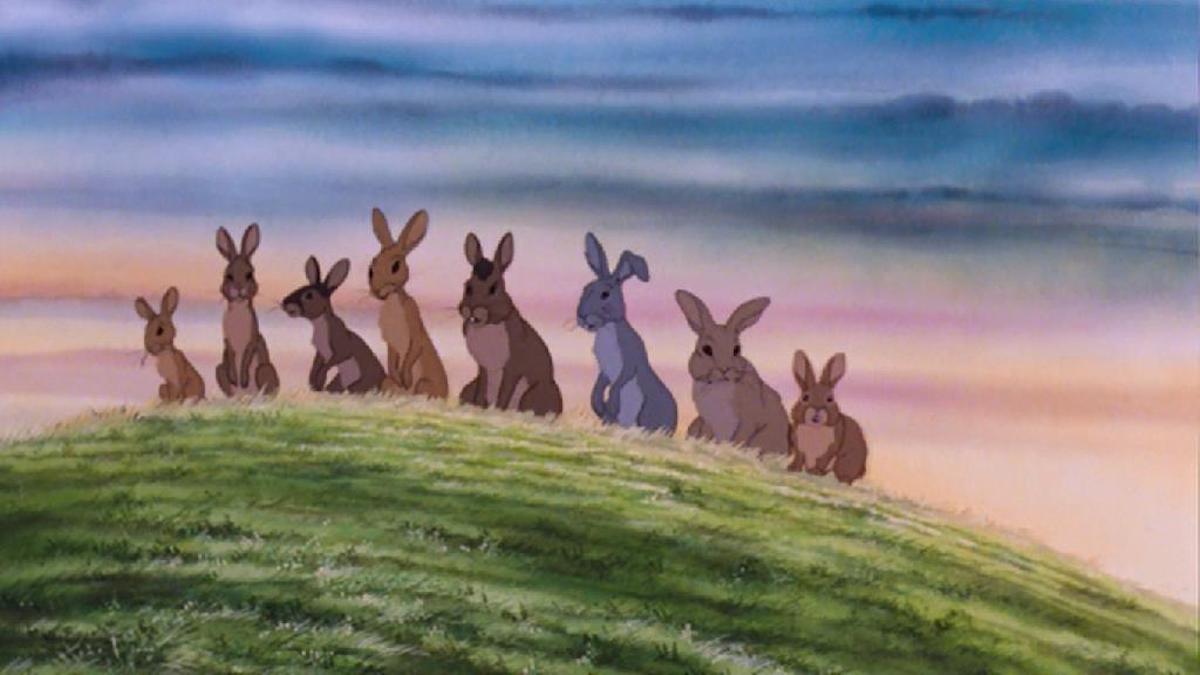
Far more than just a children’s adventure story, Watership Down uses the perilous journey of a band of rabbits to explore leadership, survival, community and the brutality of the natural world. The tale begins when young rabbit Fiver has a premonition of impending doom for his warren, following which he, his brother Hazel and a few other rabbits set out into the world to escape this fate. Along the way the rabbits encounter not only other rabbits and warrens but also foes from ‘The Thousand’ and the encroaching threat of humanity, all while they search for a safe place to call home.
The author always insisted that Watership Down was ‘just about rabbits’ but most critics would say otherwise. Adams served as a lieutenant during WWII and many draw parallels between his wartime experiences and the way the rabbits operate in the novel. The patrols, reconnaissance and defence of the warren are all reminiscent of small-unit infantry tactics. Furthermore Chief Rabbit Hazel is resourceful, brave and compassionate in his leadership. This directly contrasts with the dictatorial General Woundwort who leads his Efrafa warren as a police state. Even the very start of the novel, when Fiver and the gang flee their warren before it is smoked out with poison gas by humans, has been compared to refugees fleeing the Holocaust or war-torn cities. The allegory to wartime still carries relevance today with conflicts ongoing around the world, showing that Watership Down is a cleverly nuanced novel that continues to resonate with adults and children alike.

While there are some female rabbit characters introduced later in the novel, as Hazel and co build their thriving new home, Adams does not do much to develop these characters. Rather than becoming fully fledged members of the band, the does are simply ‘acquired’ from a farm close to the new warren and from Efrafa. During these rescue missions, the does are often gormless, feeble and afraid. Even once settled in the new warren we don’t really hear from them or get any insight into their lives, bar hearing about which ones are having litters. This is a shame as the does are pivotal to how the story develops. And yet, Adams will wax lyrical for several pages about the mythical El-ahrairah folk hero (aka ‘the prince of rabbits’) when the group are telling each other stories. The androcentrism is blatant and there is debate about whether Adams’ attitude towards the does reflects personal prejudices symptomatic of the time of writing or a genuine attempt to reflect naturalistic rabbit behaviour.

While much of this may go over the heads of young readers, for whom it may just be a story about rabbits, Watership Down is rich in interesting and thought-provoking ideas for adult readers. This is why children’s classics like this should not be ignored; they are often multi-faceted and layered in a way that ‘grown-up’ books are not.
Happy reading,
Imo x

