Categories
English literature

ImoReads… ‘Flashman at the Charge’ (1973) by George MacDonald Fraser

Blog 52

“It ain’t always easy, if your knees knock as hard as mine, but you must remember the golden rule: when the game’s going against you, stay calm – and cheat.”

Harry Flashman

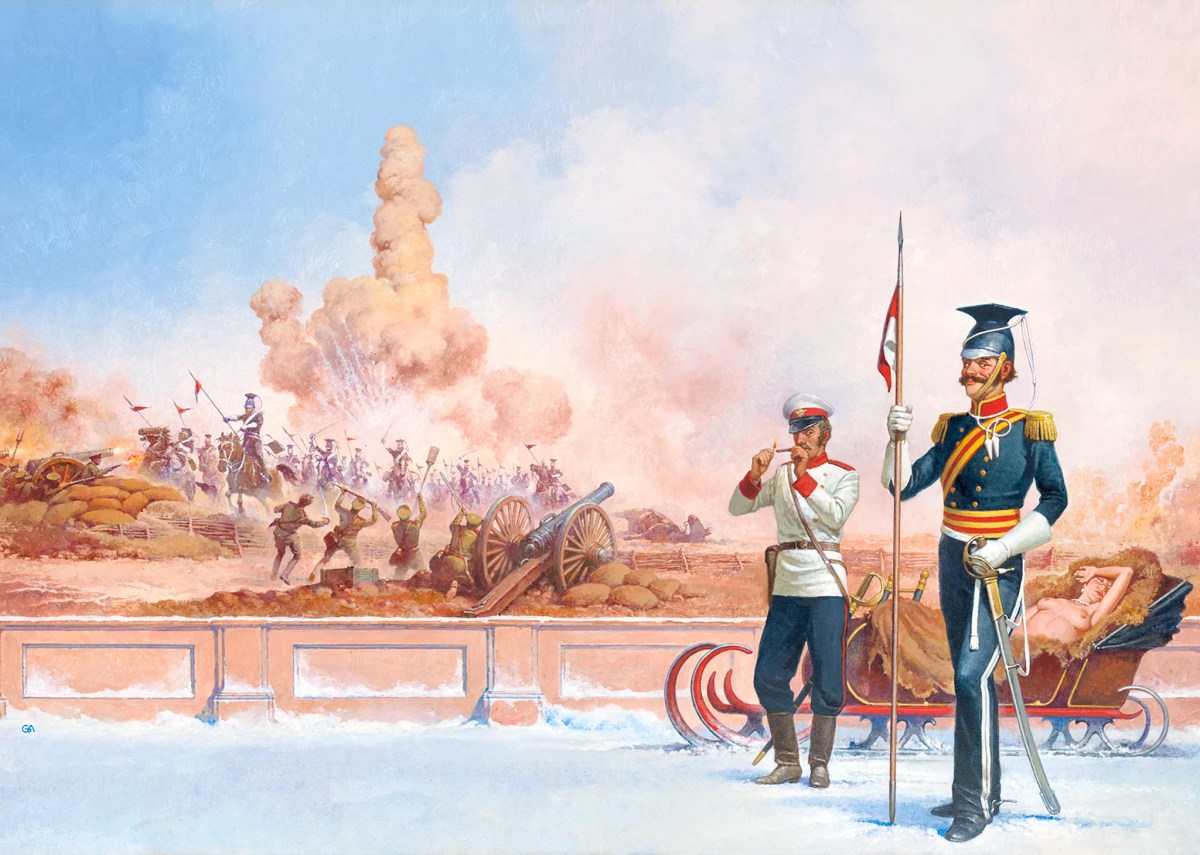
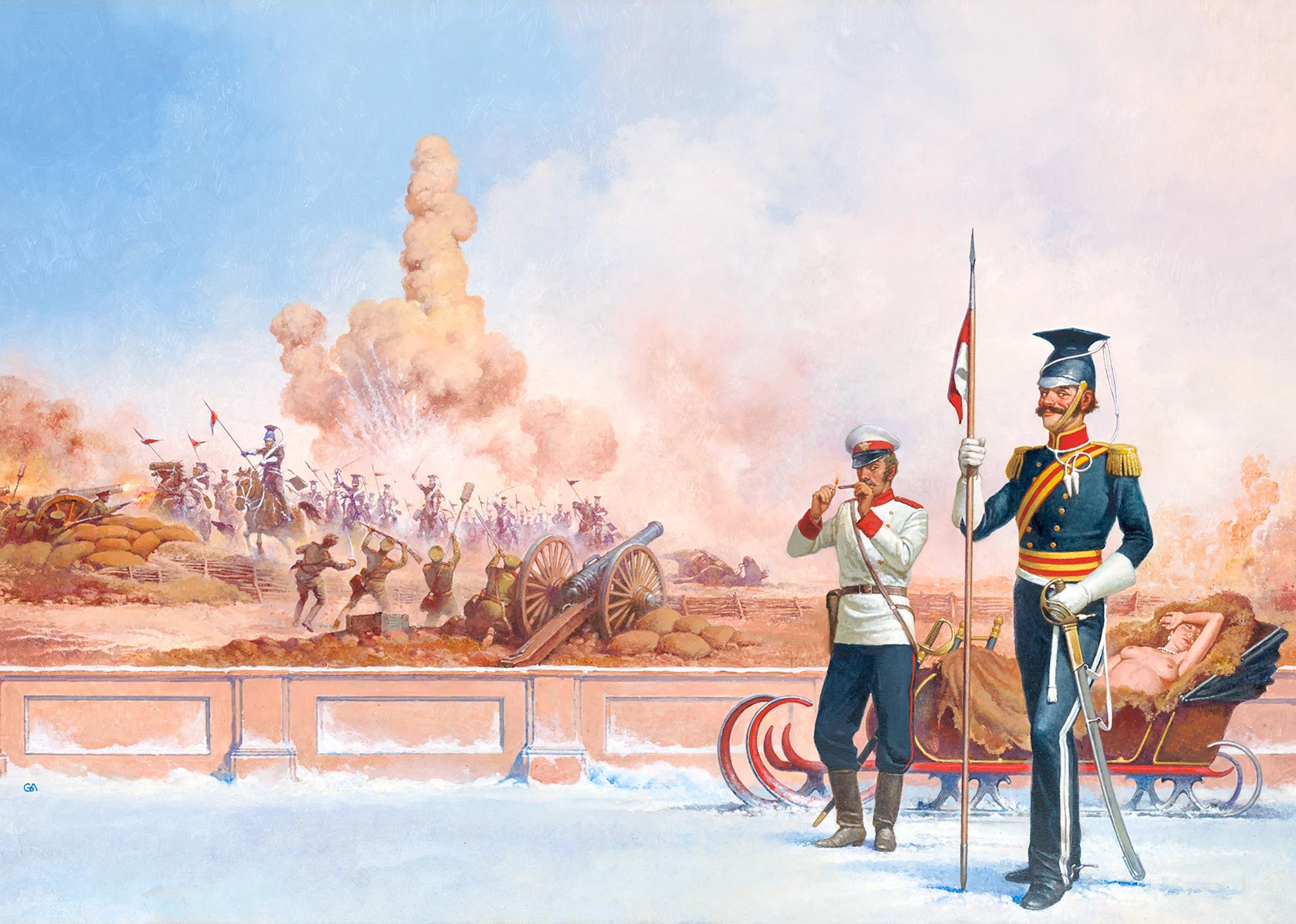
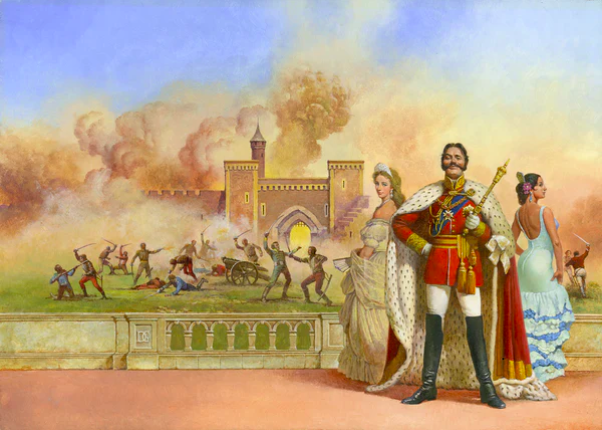
I am always delighted to reunite with our morally ambiguous Victorian hero Harry Flashman, this time in Flashman at the Charge. This instalment of the Flashman Papers sees our friend unwillingly wrapped up in some of the British Army’s most famous offensive and defensive actions of the Crimean War, and of all time.

The novel opens with Harry once again enjoying a debaucherous existence in London. He unwittingly meets one of Queen Victoria’s young cousins, William of Celle, in a billiards hall, only to later on be assigned as his mentor and protector by Prince Albert, on account of his valiant reputation as a soldier (which we the reader know to be questionable). As a direct consequence of this, Harry finds himself being shipped off to the Crimean War to show young William what soldiering is all about. Despite William’s untimely death on the battlefield, Flashy is not spared from further military action. He is directly involved in The Thin Red Line, the Charge of the Heavy Brigade and the Charge of the Light Brigade. Powered only by fear and flatulence he reaches the Russian guns ahead of the other surviving chargers where he promptly surrenders and is taken to Russia. 

Imprisoned comfortably in Count Pencherjevsky’s castle, he reunites with old schoolfriend Scud East who has also been taken prisoner. A failed escape attempt sees Flashy imprisoned with warrior Yakub Beg, who are both rescued by fellow Uzbek and Tajik resistance fighters. Many adventures ensue which eventually see Russian supplies being taken out by Congreve rockets and Flashman arriving safely in British India, armed with yet another heroic tale.

Like the other Flashman instalments, Flashman at the Charge is full of wit, amusing but sound societal commentary and Flashman’s unabashed desire to save his own skin by any means necessary. Flashy once again manages to manoeuvre through some of history’s key events – with a good dose of female company, drunkenness and cunning thrown in – to further cement his repuation as a brave and gallant British military hero.

As ever, I look forward to delving into the next chapter in the Flashman saga to see what one of my favourite literary characters gets up to next.

Happy reading,

Imo x

Categories
English literature

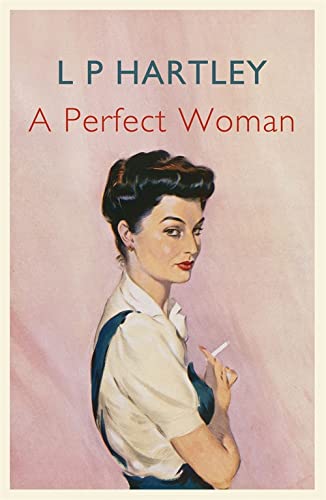
ImoReads… ‘A Perfect Woman’ (1955) by L.P Hartley

Blog 51

“This was likely to happen when a woman of slightly superior social standing, decidedly superior brains and greatly superior imaginative capacity married a dullish man and lived in the provinces”

I’m a big fan of L.P Hartley so I always look forward to reading one of his novels. A Perfect Woman is a story of an ordinary husband and wife becoming entangled in an extraordinary situation. As ever, Hartley draws us in to this compelling story with wit and literary grace.

A Perfect Woman follows the Eastwoods – Harold, a conventionally-minded chartered accountant and his wife Isabel, who has a keen interest in the arts and literature. They have two children and are living out an unremarkable middle-class married life in the fifties. Until one day, when Harold chances to meet charismatic novelist Alexander Goodrich on a train. Alec finds Harold’s knowledge of income tax useful so the two of them begin a business relationship. When Alec comes to visit the Eastwood home, Isabel is immediately smitten, so entranced by his embodiment of a cultured, literary gentleman. However, it is Austrian barmaid Irma that takes Alec’s fancy when he and Harold visit the local pub. Isabel embarks on a mission to procure Irma for Alec, persuading Harold to take her out to dinner to discuss the idea with her. However, Harold soon starts an affair with Irma while Isabel begins a relationship with Alec on her trips to London. While initially improving their marriage, Isabel’s discovery of Alec’s latest manuscript means things take an unexpected and shocking turn.

Hartley is an astute social commentator, and A Perfect Woman is a classic example of what can happen in marital apathy. And yet, I was still astonished by how easily both Harold and Isabel began their affairs, and how not guilty they felt about it. On first appearance it is certainly an advert for what not to do in marriage, although later on it is revealed as the key for Harold and Isabel rediscovering their fondness for each other. Both Irma and Alec live up to typical stereotypes for illicit partners desired by men and women – one a young, foreign, attractive barmaid and the other a wordly, intelligent creative in touch with his emotions. The novel indicates that any relationship can be rocked by the arrival of sexy new strangers.

A Perfect Woman is an excellent social drama filled with unexpected twists and turns, and I would highly recommend it.

Happy reading,

Imo x

Categories
American Literature World literature

ImoReads… ‘Demon Copperhead’ (2022), by Barbara Kingsolver

Blog 50

“A kid is a terrible thing to be, in charge of nothing.”

Demon Copperhead

I had high hopes for Demon Copperhead based on how much I enjoyed Kingsolver’s The Poisonwood Bible, and it did not disappoint. The novel is a re-telling of Dickens’ quasi-autobiographical Bildungsroman David Copperfield; it’s a brave thing for Kingsolver to transpose such a popular, quintessentially English novel to her home turf of Appalachia in the States but she does it extremely well in this powerful, considered novel.

The novel’s hero Damon Fields, known as Demon and nicknamed Copperhead for his ginger hair, is born to a drug-using teenage single mother in a trailer in Lee County, Virginia. Even in such a deprived neighbourhood, Demon and his mother are particularly destitute. The kind-hearted Peggot family act as Demon’s secondary caregivers as his mother is in and out of rehab or shacking up with merciless boyfriends, but there is only so much outsiders can do for a child in such circumstances. Those familiar with the plot of David Copperfield may guess what happens next, but we follow Demon to young adulthood through the apathy and incompetence of the foster care system, the good and bad influences of friends he makes along the way, the struggle against the opioid crisis sweeping America and his ultimate battle to transcend the failure of those around him.

As a reader, you can’t help but feel shocked at what Demon and swathes of children like him must deal with from such a young age. He is born into a dead-end situation which reeks of the failed American Dream – for Demon, simply surviving against the odds is success when you’re born into a life without choices. The themes of idealism and social justice chime with Dickens’ own impassioned social criticism, and while what we deem as immoral has shifted greatly since the mid-nineteenth century, the earnest critique of institutional poverty and its detrimental impact on children is as relevant as ever. For me, Demon Copperhead also bears striking similarities to Donna Tartt’s The Goldfinch, where a young boy also falls victim to the failings of modern America – drugs, poverty, apathy – after the loss of a parent, and must struggle on to adulthood alone.

Kingsolver has created a masterful retelling of a classic novel which is both faithful to the source material and tells its own story, making the reader question whether anything has really changed for the better in the past 150 years for those less fortunate.

Happy reading,

Imo x
Categories
French Literature

ImoReads… ‘A Bookshop in Algiers’ (2017) by Kaouther Adimi (translated by Chris Andrews)

Blog Nº 49

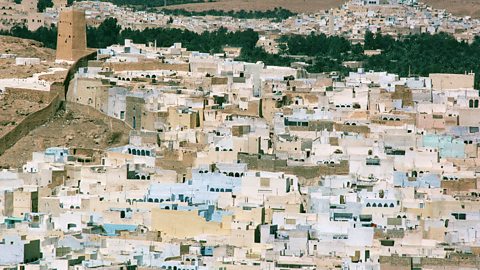
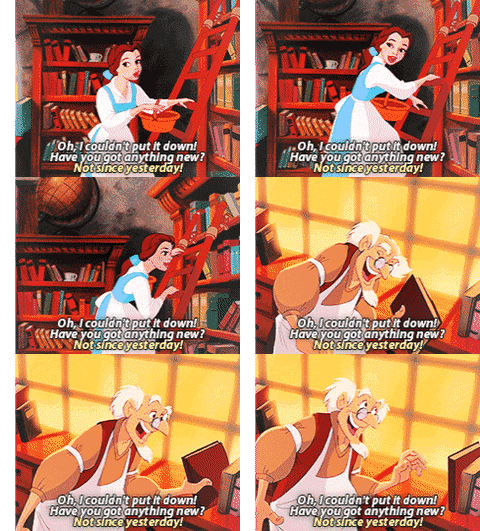
A Bookshop in Algiers, the third novel from young Algerian author Adimi (and the first to be translated to English),is a true love letter to literature, written through the changing fortunes of a small bookshop in Rue Hamani, formerly Rue Charras, in Algiers. This short but moving story is a celebration of bookshops, literature, creativity and those who dare to dream.

The novel revolves around Les Vraies Richesses bookshop, first opened in 1936 by young dreamer Edmond Charlot. Through diary entries we follow the shop through history – it was the heart of Algerian cultural life where Camus launched his first book and the Free French printed propaganda during the Second World War. The bookshop exists through the political drama of Algeria’s turbulent twentieth century of war, revolution and independence with Charlot and many important authors still working tirelessly to publish manuscripts, launch magazines and more. By the time young student Ryad comes to clear out Les Vraies Richesses in the modern day it has been operating only as a government lending library for years, but now is to be shuttered forever. Not a keen reader himself and just keen to get the job done and get back to Paris as soon as possible, even Ryad starts to understand that a bookshop can be much more than a shop that sells books.

Adimi is clearly a remarkable researcher – using archives, books, interviews, documentaries and meeting with Charlot’s friends to bring the French-Algerian publisher and editor to life through fictional but entirely plausible diary entries. Charlot was a truly remarkable individual who should be admired for his commitment to literature and discovering new writers. I had not heard of him before but I’m glad to have read A Bookshop in Algiers to learn about such a significant French cultural figure.

Edmond Charlot

Happy reading,

Imo x

Categories
English literature

ImoReads… ‘The Confessions of Frannie Langton’ (2019) by Sara Collins

Blog Nº 48

“No one knows the worst thing they’re capable of until they do it.” 

The Confessions of Frannie Langton is an astonishing debut from Sara Collins. It’s a fast-paced, authentic gothic novel that you won’t be able to put down.

The novel is written as a monologue from Frannie to her lawyer – she is on trial at the Old Bailey in 1826 for allegedly killing Mr and Mrs Benham, to whom she was a housemaid, though she has no recollection of the murders. The damning testimonies against her range from slave to seductress to whore, but this is not the whole truth. To discover what really happened at the Benham household, Frannie takes us back to the beginning of her story when she was a young girl learning to read on a Jamaican sugar plantation. Through her fevered confessions and examination of her life, Frannie repeatedly asks herself the question – could she have killed the only person she really loved?

One of the key elements of The Confessions of Frannie Langton is slavery, which was still legal across the British Empire in 1826. We learn that Frannie, who is mixed race, grew up as a maid in the main house of a sugar plantation ironically named Paradise in Jamaica. She is taught to read and then forced to work for the Mengele-esque plantation owner as a lab assistant on his horrific experiments designed to prove that Africans are not human. She is intelligent but brought up in a terrible life with no real outlet to express herself, so she often comes across as awkward due her stifled cleverness. Even though technically freed by the law when she is brought over to England by her master, she finds herself a new sort of slave in the Benham household. It is here that she meets her Mistress, Benham’s wife, a morally ambiguous opium-eater who Frannie is soon enamoured with, though Mistress’s affections for Frannie are soon diverted to a rival. Then, in unknown circumstances, the Benhams are murdered.

Sara Collins has given us all the elements of the original gothic novel in The Confessions of Frannie Langton, while also echoing other brilliant novels like Sarah Waters’ Fingersmith and Margaret Atwood’s Alias Grace. It’s gripping, thought-provoking and dark and I look forward to seeing what Sara Collins does next.

Happy reading,

Imo x

Categories
English literature

ImoReads… ‘Royal Flash’ (1970) by George MacDonald Fraser

Blog Nº 46

“…I take some pride in the fact that while thrones were toppling and governments melting away overnight, I was heading for home with a set of crown jewels. There’s a moral there, I think, if I could only work out what it was.”

Having previously read and blogged about three Flashman novels that I had in an omnibus volume, I was delighted to revisit one of the most engaging characters in literature in another Flashman adventure, Royal Flash. This is the second novel chronologically in the series and as hoped, our hero Harry Flashman is no less roguish, scoundrelly or cunning than before.

Royal Flash has two sections which take place between 1842 – 43 and 1847 – 88. In the first section, Harry is enjoying being off military duty in London, still surfing on his heroic reputation from his escapades in Afghanistan (which readers of Flashman will know are not quite as they seem to the general public). It is here he has a dalliance with the beautiful Lola Montez and meets the dastardly Otto Von Bismarck. 

It is not until section two however that Flashman comes to realise how much he regrets having met Bismarck in the first place. Unwittingly delivered to him in Germany by femme fatale Lola, Flashman needs all his cunning, seductive charm and impressive will to escape in order to extricate himself from a fiendish plot that will ultimately decide the fate of Europe. Flashman takes the reader on an exciting, amusing adventure through the dungeons and throne-rooms of Europe, engaging in swordplay, amours, disguise and deceit to escape his desperate situation and return to London.

With the risk of sounding like a broken record, the Flashman novels are magic because of the Harry Flashman character himself. A self-confessed coward and rascal keeping up the façade of a  brave, respectful British Officer, in his memoirs he is unapologetically honest about his escapades and how he is always looking out for himself above all else. He is witty and refreshingly blunt to the reader, but always manages to maintain a heroic image to his unsuspecting foes. You can’t help but like him, and paradoxically he often ends up being the hero people think he is because the situations he finds himself in require courage to escape, even though like his enemies he is never averse to using underhand tactics, treachery and cunning to do so.

Royal Flash is a rollicking adventure across the continent, and once again George MacDonald Fraser has seamlessly integrated our fictional hero into real historical events with real characters, making you wish Flashy really had locked horns with the likes of Bismarck.

Happy reading,

Imo x
Categories
English literature

ImoReads… ‘The Citadel’ (1937) by A.J. Cronin

Blog 45

“If we go on trying to make out that everything’s wrong outside the profession and everything is right within, it means the death of scientific progress.”

I have now read The Citadel twice; I can say without a doubt that it ranks on my top ten favourite books of all time. Cronin is a skilled storyteller who in this novel draws on his own experience as a doctor to paint an unsparing picture of medical ethics in pre-NHS Britain.

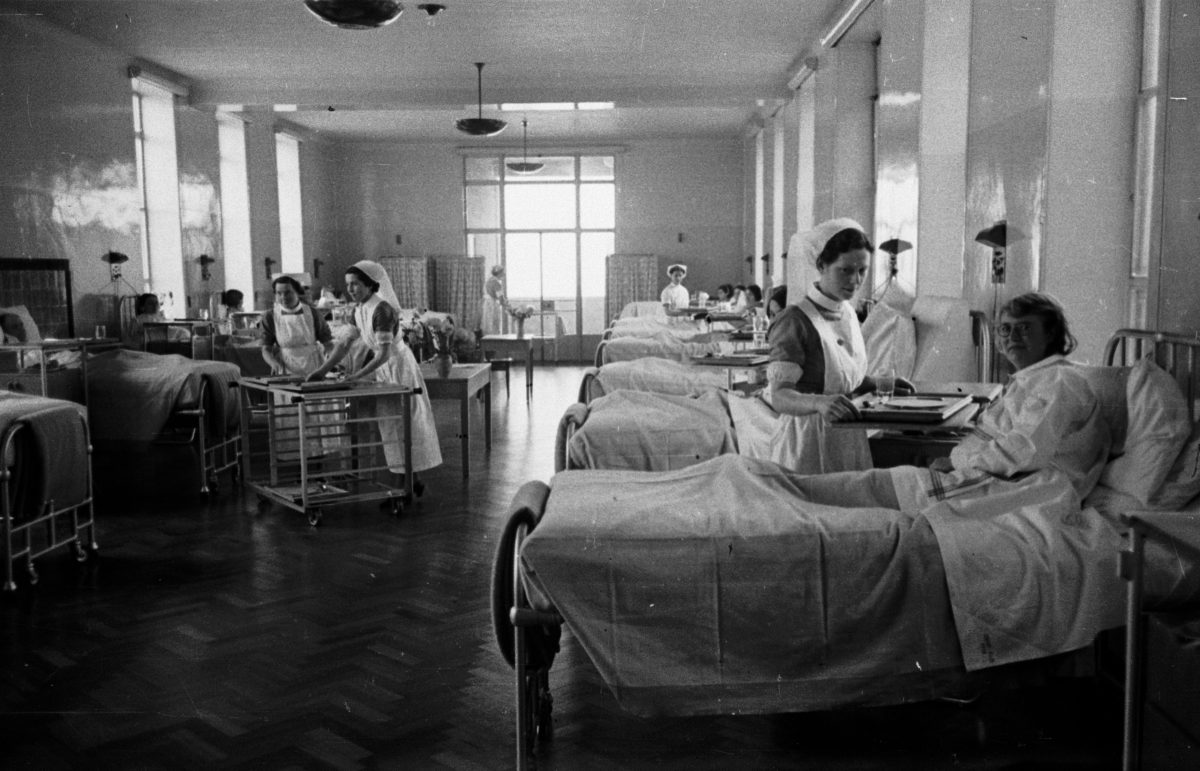
The Citadel takes place over a number of years, opening in 1924 when idealistic young doctor Andrew Manson has just qualified from university in Scotland and takes up an assistant job to a Dr Page in the South Wales mining town of Drineffy. Realising on arrival that Dr Page is medically incapacitated, he has to take on the entire practice for a meagre salary. Andrew is appalled at the unsanitary conditions faced by the townspeople and, eager to improve the lives and health of his patients, works to change things, helped by surgeon Phillip Denny. His next post in South Wales is as an assistant doctor for a medical aid scheme in the mining town of Aberalaw. On the strength of this new position he marries junior schoolteacher Christine Barlow whom he met in Drineffy. They are very happy together. Andrew remains committed to improving the lives of the miners and dedicates many hours to his research on the link between lung disease and coal mining. He is granted the MRCP and an MD when his research is published. Though this leads to a post with the Mines Fatigue Board in London Andrew resigns after six months, frustrated at the lack of action taken on issues discovered in his research and being cooped up in an office.

The next part of the novel sees the gradual estrangement of Andrew and Christine after Andrew sets up a private practice in London. At first Andrew does not receive many patients and those that he does receive are poor so cannot pay much for treatment. However, ultimately Andrew is seduced by the thought of easy money from wealthy, hypochondriac patients and seemingly abandons all morals in pursuit of status and wealth. The more wealthy Andrew becomes, the more Christine longs for their previous life. To her, money does not equal happiness; she would be happy with a simple country practice with the moral and committed Andrew she once knew and loved. Andrew is frustrated that Christine cannot be pleased by all that they can now afford – cars, fancy meals out, new clothes and acquaintances in high places. It takes a truly horrifying incident which lays bare the unethical system he has become party to to shock Andrew back to his true self, though he has much still to face before the novel’s end.

The fact that Cronin was a doctor himself adds serious credibility to The Citadel. Its treatment of medical ethics was groundbreaking at the time and is credited for laying the foundations for the NHS which was created just a decade later. Cronin once stated in an interview, “I have written in The Citadel all I feel about the medical profession, its injustices, its hide-bound unscientific stubbornness, its humbug … The horrors and inequities detailed in the story I have personally witnessed. This is not an attack against individuals, but against a system.” 

The more personal storyline of Andrew and Christine’s relationship only heightens the reader’s anguish. We not only witness a heartbreaking disintegration of a once strong marriage between two characters we have grown to like, but also understand the severity of Andrew’s descent into immorality by contrasting it with Christine’s staunch goodness and incorruptibility. As is true in so many books, films, TV shows and indeed real instances, money and hollow success often lead only to misery.

Cronin is a master writer – even if you are not remotely interested in British medical history you will become invested in The Citadel after just a few pages. Additionally, as I have said in previous blogs the English of the 20s and 30s is a joy to read and makes me wish people still spoke like that today. Read this book – you won’t regret it!

Happy reading,

Imo x
Categories
English literature

ImoReads… ‘Stepping Westward’ (1965) by Malcolm Bradbury

Blog 44

“The English are polite by telling lies. The Americans are polite by telling the truth.”

I am fortunate to be able to work in the world of books, and one day when a publisher had spare books to give away during a warehouse relocation, my colleagues and I were able to take home our choice for free. I was lucky enough to spot Stepping Westward; the title and cover art by Stephen Martin piqued my interest. I instantly liked this novel – Bradbury is known for his satirical wit and it shines through in this amusing and observant campus story.

Stepping Westward opens in Nottingham in the 60s. James Walker is a liberal author with three ‘promising’ novels to his name and lives with his wife and daughter. A little overweight, lacking drive and commitment and socially inadequate, Walker is a man mildly irritated with his drab life. Then one day he is invited to Benedict Arnold University in America’s Midwest as its Creative Writing Fellow for the year. We follow Walker on his journey to America, the people he meets en route and through his first term in post, all while determining whether he is quite up to the role he has been asked to fill. Stepping Westward is a comic, shrewd observation of a clash of cultures and mocks both British and American ideals as the story unfolds.

Bradbury has created a sharply funny novel. Throughout Stepping Westward Walker’s ‘Britishness’ is caricatured, whether it be discomfort at displaying or interpreting emotions, wearing the wrong suit, getting a cold or failing to acclimatise to the weather. ‘Americanness’ is also not let off the hook. The university is located n the fictional town of Party. There is no alcohol sold in Party even though everybody drinks and the university is still in the grip of McCarthyism and staunch loyalty to America. The push pull between 50s reservation and 60s modernism is apparent in the different staff factions, and this is exacerbated when Walker refuses to sign the university’s loyalty oath by dint of his Britishness. Both Walker and the American professors who hired him had different visions of what the experience of Walker being the Creative Writing Fellow would be like and this sets up an engaging and knowing story about social interaction, academia and cultural differences.

I would highly recommend this book to anyone interested in witty, astute social and cultural observation, in a novel that is still relevant today.

Happy reading,

Imo x
Categories
Australian Literature World literature

ImoReads… ‘The Thorn Birds’ (1977) By Colleen McCullough

Blog 43

“When we press the thorn to our chest we know, we understand, and still we do it.”

I was so glad to be able to read The Thorn Birds for a second time for the blog. It is one of those novels that stays with you a long time after you finish reading it. Australia’s best-selling novel to date, this epic story spanning five decades is a tale of family, hard work and relationships set against the intoxicating backdrop of the beautiful but unforgiving New South Wales.

The central character of The Thorn Birds is Meggie Cleary, though several characters get their own sections. We begin in 1915 on Meggie’s 4th birthday. The Clearys – parents Paddy and Fee and their children Bob, Jack, Hughie, Stu, Meggie and Frank (Fee’s son from a previous relationship) – are a poor but hard-working family living in New Zealand. In 1921, Paddy’s wealthy sister Mary Carson offers Paddy a job on her huge sheep farming station in New South Wales, Australia. Drogheda, after its namesake in Ireland, is where most of the novel takes place.

It is here that we meet the ambitious young priest, Father Ralph de Bricassart, who is described as a ‘beautiful man’. He is a frequent visitor to Mary Carson in the hope that a large financial bequest from her will see him rise up in the Catholic Church and freed from the remote parish of Gillanbone, not far from Drogheda. He immediately develops a fondness for Meggie, and their complex relationship over the years is central to the novel.

Across the fifty-year span of The Thorn Birds the Clearys encounter birth, death, marriage, heartbreak, separation and the untamed might of the Australian wilderness in this truly absorbing novel.

A standout feature of The Thorn Birds for me are the descriptions of the Australian landscape. Whether it’s tumbling hibiscus and Bougainvillea, ghost gum and bottle trees standing tall or the endlessly sprawling paddocks of Drogheda, it is hard not to be mesmerised by such a rich environment. It also becomes very apparent how much humans are at the mercy of nature. Across the novel we see how drought and heat can cripple a community, while intense torrents of rain can be relentless all wet season. During one tragic moment, one strike of lightning engulfs much of Drogheda in a blazing fire, causing loss and heartache for all the Clearys. The environmental aspect of the novel emphasises that though it is beautiful, the kind of life led by the Clearys is neither gentle nor easy.

The novel’s central storyline is the relationship between Meggie and Ralph. When they meet, Meggie is nine years old and Ralph is twenty-seven. There is an immediate chemistry between them; Meggie is instantly enchanted by Ralph, while Ralph becomes extremely infatuated with and protective of her. As Meggie grows into womanhood, their relationship grows more complex. It is quite clear that Ralph desires a sexual and romantic relationship with Meggie, but his vow of celibacy as a priest forbids him from pursuing this. Meggie has been in love with Ralph in one form or another since her childhood, and this also becomes a romantic and sexual desire in her late teens.

When I first read the novel several years ago, I think I was more taken with the common view that their love story was tragically romantic. Ralph is consistently described as a very handsome, kind man who even for the love of his life will not abandon his vow. For many years Meggie will not give any other man the time of day and has dreamed of only Ralph since her childhood.

However, upon second reading I found the relationship to be much more disturbing. What is abundantly clear to me is that Ralph de Bricassart, an adult for the entire story, manipulates Meggie Cleary from her childhood for an eventual sexual relationship once both are adults. During their first time having sex, Ralph admits to himself that he groomed or “molded” Meggie all along, albeit unconsciously. 

Truly she was made for him, for he had made her; for sixteen years he had shaped and molded her without knowing that he did, let alone why he did. And he forgot that he had ever given her away, that another man had shown her the end of what he had begun for himself, had always intended for himself, for she was his downfall, his rose; his creation.”

Father Ralph de Bricassart

The Thorn Birds was written in the 1970s and the focus is on a romanticised struggle between Ralph’s duty to the church and his feelings towards Meggie as a mere mortal man. The repeated emphasis on Ralph’s handsomeness and his rise up the church portrays him as being alluring and forbidden – it is playing into the trope of priests being fetishized due to their celibacy. Meggie’s lifelong love and pursuance of Ralph could also be seen as enduringly romantic and something to root for.

However, through the modern lens it is difficult to see it this way, particularly given the numerous stories that have been unearthed about sexual abuse within the Catholic church. The idea of fetishising a priest these days would therefore be wholly unusual. The large age gap also raises concerns for the modern reader. Meggie’s entire misguided idea of what love is, is based on Ralph. From girlish daydreams to repeated attempts to get him to break his vow. Ralph does not instil appropriate boundaries with her when she is an impressionable child; he is overbearingly affectionate, protective and it is something that would not be acceptable in today’s society.

Despite this, The Thorn Birds remains a captivating and emotionally charged novel, with every character gaining the reader’s sympathy, pity and disdain at various points throughout the story. I would absolutely recommend this novel – it is an unputdownable epic novel.

Happy reading,

Imo x
Categories
American Literature World literature

ImoReads… ‘My Monticello’ (2021) by Jocelyn Nicole Johnson

Blog 42

“The seas are rising, whatever you believe. Soon we will all be wet together, and together we will gasp for air.…”

My Monticello is Johnson’s debut novel, and it is a truly American tragedy. It explores racist violence in the nation and how its controversial history is still impacting ideologies and attitudes in the modern day. 

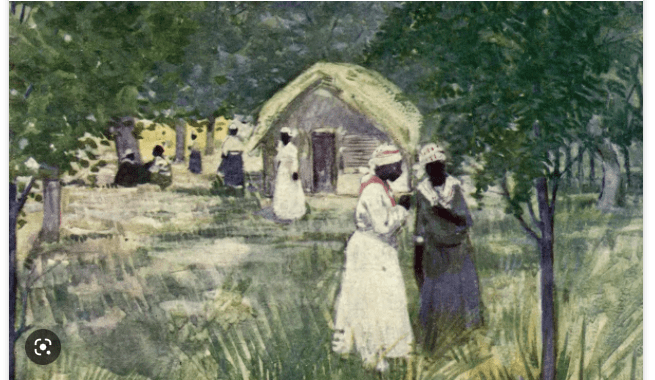
The novel covers a period of only nineteen days, though things escalate quickly. Power outages and storms are battering America when the neighbourhood of First Street in Charlottesville, Virginia is attacked by white supremacists. A motley crew of residents manage to flee the scene by commandeering an empty city bus and seek refuge at Monticello, the nearby historic plantation-home of Thomas Jefferson. Narrated by student Da’Naisha Love, a young black descendant of Jefferson and Sally Hemings, one of his slaves, she and the other escapees have a complex relationship with the plantation. The group must shelter within its walls, forage the grounds and think about their next move, as the terror from the town creeps ever closer. My Monticello is a stark criticism of past and present racism, and its characters tell a story of courage, reclamation, resistance, community and hope.

The chilling aspect of My Monticello is that you could relate the events of the story to any period in modern American history, indicating that race relations have not much improved since the era of slavery. Indeed, Charlottesville did face a racist attack in 2017 when a white supremacist drove headlong into a crowd peacefully protesting against a Unite the Right rally in the city, killing one and injuring many others. My Monticello spirals out from here, set in the near future when the impact of climate change is being keenly felt, with the resulting blackouts and floods providing opportunities for white supremacist groups to once again lay siege to Charlottesville’s black neighbourhoods with little intervention from police. It is a worrying look into the future for America as racial tensions continue to escalate and warnings about irrevocable damage to the planet become more urgent. There is a terrible irony about Da’Naisha and the others, including her elderly grandmother, having to seek refuge in the Monticello mansion house – they are driven up there by the cold and looming threat of the attacks after initially remaining down in the outbuildings. It is a macabre homecoming for these descendants of Jefferson and only adds to the American nightmare they are suffering.

Johnson’s narrative style for Da’Naisha is precise and remains graceful despite the fearful situation of the group. Short sentences, brief and incomplete dialogue exchanges and the air of concern for the future among the refugees adds to the urgency of their situation. Readers will be impressed by the group’s pragmatism and resistance despite their being heavily outnumbered and out-resourced by the encroaching attackers, mirroring historic resistance from black slaves against their white owners. And yet, the reader is also horrified by the hopelessness of their situation in a country that is seemingly unravelling.

My Monticello is a severely critical take on racism past and present, highlighting many of America’s issues in only 178 pages. It is a unique and thought-provoking debut novel that tackles uncomfortable subject matter in an imaginative and memorable way.

Happy reading,

Imo x