Categories
Australian Literature World literature

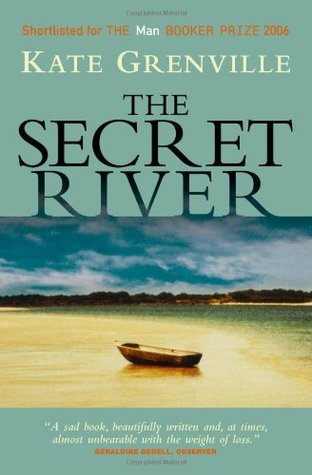
ImoReads… ‘The Secret River’ (2005) by Kate Grenville

Blog 8

“Ain’t nothing in this world just for the taking… A man got to pay a fair price for taking… Matter of give a little, take a little” – Thomas Blackwood

As a British colonial history enthusiast, I found The Secret River deeply thought-provoking in its portrayal of the settlement of Australia by British convicts sentenced to transportation in the nineteenth century. I actually read this novel about a year ago, but I recently went to see the critically acclaimed Sydney Theatre Company’s stage adaptation of it at the National Theatre. Unlike most of the critics, I was left somewhat disappointed by the stage version, so I was inspired to write this blog in the format of ‘novel vs play’ (hence the longer post).

Sadly, the flaws in the play begin in the first scene; astoundingly, it opens with lead character William Thornhill and his family arriving at their secluded 200 acre plot of land up the Hawkesbury River in New South Wales, which he has persuaded his wife Sal that once settled and cultivated, will make them their fortune. I had to do a double take; where indeed was the journey up to this point? Arriving at ‘Thornhill’s Point’ as it comes to be known, is a landmark event in the plot and yet the exclusion of all that comes before completely lessens the impact of this moment. We are missing the whole first section of Grenville’s novel, detailing William’s Dickensian poverty-stricken upbringing in Southwark, London and his constant struggle to rise above his lowly class and status. We miss his marriage to Sal and how an icy winter bars him from working as a boatman, and how this change in fortunes forces him to turn to stealing. He is caught and sentenced to transportation along with Sal, his son Willie, and unborn child.

And then, it is not as if William could simply walk onto a 200 acre plot of land on arrival. He arrives a convict, and over 12 months works tirelessly in the colony until he can buy his freedom. Here we see a crucial change in William’s attitude; he is befriending those above his station, he is mimicking their dress and manners, and most importantly he begins to feel a personal sense of authority and superiority over his peers. The family’s move to Thornhill’s Point is not easy; Sal’s heart is set on returning to London, and agrees only on the basis that they will stay five years maximum to make their fortune before going ‘home’. William agrees, but with his newfound ‘status’ it is clear he has other ideas.

The play erases some very crucial plot and character development points here and this causes a problem for what it chooses to leave in. For example, Sal’s daily tally for how many days they have been there, her constant pining for London and singing of folk songs like ‘The Bells of St Clements’ doesn’t really make sense without the backstory. The play gives William his superior attitude over his peers, but it has not altered his dress, manner or speech from destitute London beggar so it appears confusing and inconsistent, and again nonsensical without the context. 

In the stage version, we are thrown straight into the Thornhills settling their land and the encounters they begin to have with the Aboriginal population. The portrayal of the Aboriginals is something the play should be applauded on. As the novel is told from the perspective of the Thornhills, naturally we are not given much insight into the lives or claims on the land of the Aboriginals. Onstage, we see them living their lives and interacting, lessening the idea of them being the ‘other’ to be feared in the eyes of the audience. The cast playing the Dharug tribal family are Aboriginal performers, and the music and staging was conceived in collaboration with Aboriginal artists, so the play has done well in terms of representation and diversity. Furthermore, the actors playing the Thornhills have ghoulish white paint on their bodies and faces; I thought this was a very effective way of demonstrating how strange and how freakishly white settlers must have looked to Aboriginal peoples, showing that white skin is only ‘normal’ in the eyes of those who have white skin themselves.

The interactions between the Thornhills (plus other white settlers along the river) and the Dharugs are done well; they are sometimes tense, sometimes curious, sometimes funny and always slightly cautious. The prejudice-free childhood friendship between Thornhill’s youngest son Dick and an Aboriginal boy of around the same age is heartwarming to see. This brings me to the other fatal flaw the play has made in terms of adapting the plot. In the novel, following the settlers’ massacre of the Aboriginals (more on this below), Dick cannot forgive his father for his role in this crime. He leaves his family and goes to live upriver with Blackwood, a settler who had already made a life with an Aboriginal woman. He never speaks to his family again and to me this plot point is very effective in showing the stark horror of what the settlers had done, i.e. of what much of colonial settlement was. Of course, in the book the characters age, so Dick is old enough to understand what has happened and make this choice. The actors/characters do not age in the play, which is a shame because the full impact of the massacre in terms of betrayal is not realised. That is, the settlers and Aboriginals were neighbours for years before this assault, whereas in the play their relationship appears much more brief.

However, the massacre itself was staged extremely well. It was emotional, heart-wrenching and almost too difficult to watch. Each Aboriginal was cut down in slow motion, one by one, with the white characters blowing powder from their hands to represent gunshots. Paired with the music and lighting, this was a raw and guilt-tripping depiction of colonial violence. The music and lighting were superb throughout the production in fact, and really helped bring out the setting and emotion of key scenes.

To conclude then, if I were Kate Grenville I’m not sure I would be especially happy with this production. I think her novel is excellent (so I would definitely recommend reading it), and I appreciate what the play tries to do in terms of bringing her moral messages about nineteenth-century colonial activity in Australia to light. But, the careless and almost lazy adaptation of the plot in this production takes away from the progressive steps it takes to do this. It’s an excellent story that needs to be told, but I think in this instance it could have been told much better (sorry, script-writers).

Happy reading,

Imo x

Categories
Antiquity

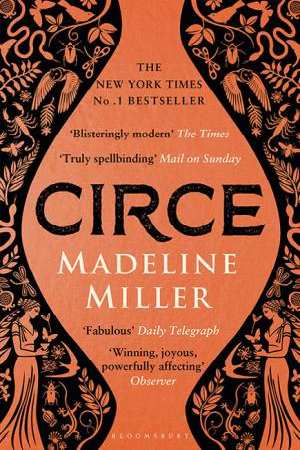
ImoReads… ‘Circe’ (2018) by Madeline Miller

Blog 7

“Humbling women seems to me a chief pastime of poets. As if there can be no story unless we crawl and creep”

DISCLAIMER: please read my blog on The Odyssey before reading this one 🙂

Alongside Emily Wilson, Madeline Miller is another female author who must be praised for her sensationally modern twist on Homer’s The Odyssey. Her novel centres on the life of nymph and sorceress Circe, who is dealt with in but a few lines in Homer’s work.

From the start, it is clear that despite being a goddess, Circe’s life is not luxurious and languorous. Nymphs are the lowest of the gods and their function is fundamentally to be married off to strengthen the power of their family; ‘in our language, it [nymph] means not just goddess but bride’. She is deemed unattractive, uninspiring and just downright strange by her father Helios and her mother Perse, so they are cruel to her and pretty much completely dismiss her. A dalliance with a mortal fisherman, Glaucos, sets Circe’s story in motion. Her efforts to turn him into a god despite not having the divine powers of her father reveal that she is a witch; she successfully uses pharmaka (sorcery) for the first time to change him. With his newfound powers, Glaucos scorns her without a second glance in favour of beautiful sea nymph Scylla. In a fit of jealousy and hurt, Circe uses pharmaka once more to turn Scylla into a hideous sea monster (that Odysseus will later encounter), and it is for this that she is banished to the island of Aiaia for all eternity. And yet, the story does not end here; this is where it begins. Miller has brought Circe to life as the woman who will not be silenced or caged as Zeus and her father desire.

Sadly, as Homer passes over Odysseus’ encounter with Circe so briefly, there is little even Emily Wilson could do to give her character more depth. In The Odyssey, she is simply an unpredictable, lonely witch who turns all men that come to her island into swine and of course, Odysseus is the one who can seduce her and keep his crew from this fate. Miller has given their relationship the airtime it deserves, as Odysseus stays on Aiaia for months (despite being ‘desperate’ to return home to his wife and son). I enjoyed the fact that in Miller’s modern re-telling, unsurprisingly Odysseus is not the be all and end all of charm and seduction. Circe has several lovers over the course of the novel, and each time it is her choice, and often by her own initiation. Furthermore, we learn that her tradition so to speak of turning men to pigs is a defence mechanism after she was once brutally raped by the captain of a passing crew. In the patriarchal (and dare I say misogynistic) society of Ancient Greece, it is likely that the concept of rape did not exist in the eyes of most men; Circe’s experience starkly demonstrates its everyday occurrence. 

Aside from her relationship with Odysseus, Miller shows us how Circe plays a role in many famed Greek myths, so if you want a round trip of the greats, this book is for you. For example, as a child she was the only one in her father’s court to show kindness to Prometheus during his first round of punishment. When her sister Pasiphae spawns the minotaur, it is down to Circe to create a spell to temper it while Daedalus builds the labyrinth to imprison it in. Indeed, her role in Scylla-gate (which has many versions) led to the creation of one of the most legendary monsters in Greek myth. An invisible player she may sometimes be, but she is undoubtedly a very important one. Bringing her to life as Miller has done as ‘the good witch’ is revolutionary in the sense that it starts eroding the idea that all the greats of Greek myth are male. 

On a technical level, I was extremely impressed by the language of the novel. Evocations of antiquity through Miller’s tone, vocabulary and writing style are faultless; I felt like I was reading a text written in the same year as The Odyssey despite its unwaveringly modern take on Circe’s story. The level of detail and knowledge weaved seamlessly into the story (as if it was created on Daedalus’ loom no less) is a credit to Miller and her research. 

Circe is a story that will dazzle your imagination with the big guns of Greek mythology and the world of the Ancient Greek Empire. This is reason enough to give it a read, but it is Circe herself that will leave the most enduring impression upon you. Her trials and tribulations are somehow both ancient and modern, relatable and godlike, optimistic and harrowing; they undeniably show that yes, she does matter, no, she will not be kept down and that yes, she is more than what she was designated to be by men such as Homer and Ovid.

Happy reading,

Imo x

Categories
French Literature

ImoReads… ‘Maria Chapdelaine’ (1914) by Louis Hémon

Blog 6

“La terre est bonne; mais il faut se battre pour l’avoir”

Upon publication, this novel – although written by a français de France – was hailed as a completely accurate representation of the idyllic rural Quebecois lifestyle centred on religion, family values, and land cultivation, that was supposedly at the heart of the French-Canadian ethos. I must admit, I was not inspired to eschew modernity and take flight for the woods after reading it. This novel is great, but not because of the apparent pastoral paradise it depicts. It is great because of the ominous and quite frankly disturbing presence of the forest, and the fact that actually, the human characters are locked in hopeless struggle with the cruel and vindictive wilderness for the land that leaves readers feeling tense and uneasy.

Maria Chapdelaine tells the story of the Chapdelaine family. We have Samuel, Laura and their children, who include eighteen-year-old Maria. They are habitants intent on faire de la terre to fulfil their French-Canadian rural destinies. In search of good land, they have pushed so far into the wilderness that the nearest town is eight miles away and they are completely surrounded by the looming forest. Three suitors vie for Maria’s hand in marriage, most notably François Paradis. François lives the coureur du bois lifestyle which exists in stark contrast to the Chapdelaines’ ideology. He lives and trades off the land and is always on the move; to him the woods are everything. Maria loves him for the freedom and adventure he would bring to her life. And yet, when he tragically perishes in the woods during a punishing winter, Maria is left devastated and disillusioned.

Despite the novel being titled Maria Chapdelaine, she is not given much air time. It is all about the battle with the wilderness. The forest is the enemy that blocks the Chapdelaines from their future prosperity. They are ‘des gens qui commencent une longue guerre’ and seem to always be at the land clearance stage of proceedings. This book is many things, but I found it impossible to escape the overwhelming sense of bleakness. Hémon scorns human attempts to dominate the land; ‘la petitesse de l’église de bois, la petitesse des quelques maisons de bois’ emphasises that they are not but insignificant specks on this vast hinterland. What really unnerved me was that at every turn, the characters are faced with ‘la lisière sombre du bois’, always gloomy, always impenetrable, always watching. It must be mentioned at least thirty times throughout. 

As I read on, I came to realise that it was not a battle between humans and the wilderness at all; the wilderness is personified as having a ‘sévérité divine’ against which the humans ‘n’avaient aucune révolte, même pas d’amertume’, in fear of worse retribution. When poor Maria’s true love François is cruelly taken away from her, we hear that ‘le froid assassin et ses acolytes se sont jetés sur lui comme sur une proie’. If this would not instil the fear of God into you as a reader about venturing into the Canadian woodland then I don’t know what would.

I realise that perhaps I am not selling this book; if you want something that will send shivers down your spine and leave a distinct impression on you, then I would strongly recommend it. And don’t forget, to be hailed as a novel representing a glorious rural idyll, there must be some evidence of this in the text.

Even I admit, Maria Chapdelaine has its moments, and all of these moments come in the short and sweet summer months. The wilderness becomes a beautiful, romantic backdrop for Maria and François’ budding romance and there is jovial sense of purity and simple living for this family in the woods. So perhaps it is the long Canadian winter rather than the wilderness itself that is the master of cruelty? I’ll leave that up to you to decide…

Happy reading,

Imo x