Blog Nº 18
“Naturally they were not a happy family, but they had good hearts, and did their best to console each other in bereavement and impoverishment.”
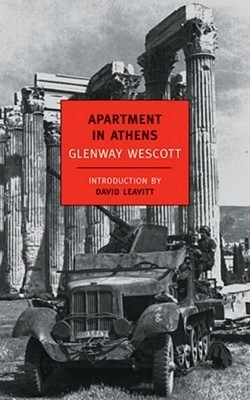
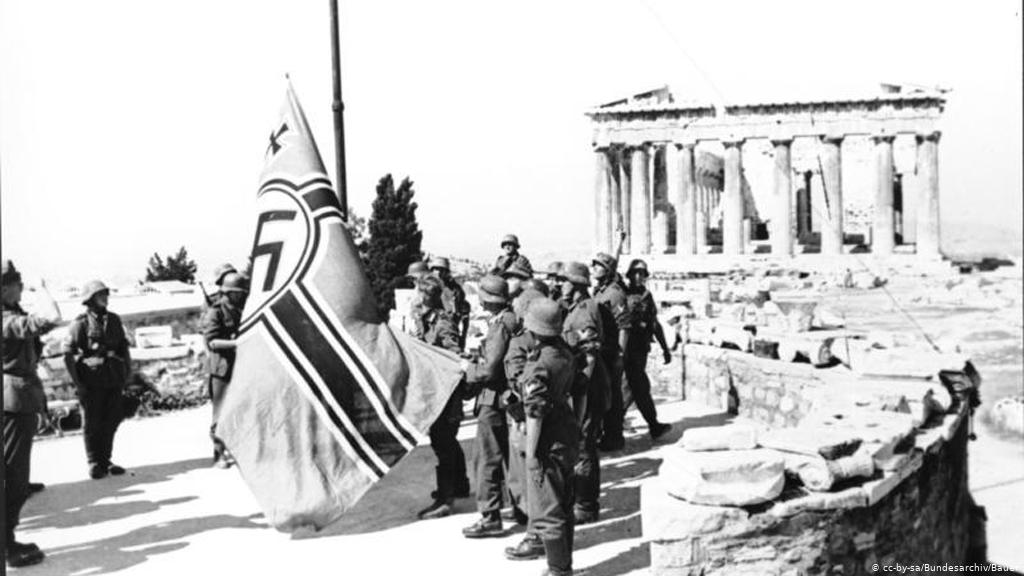
After reading Apartment in Athens for the first time, I am wholly convinced that it should be more widely-known and read as one of the great novels to come out of World War Two. I didn’t know much about Germany’s occupation of Greece during WWII and as such, Apartment in Athens was an educational and eye-opening read. In addition, I was surprised and enthralled by Wescott’s unique narrative style. It’s extremely frank, and this style compliments the plot beautifully to build up an atmosphere of tension, high emotion and exhaustion in an apartment in war-torn Athens.

Wescott’s novel focuses on Greek couple Mr and Mrs Helianos who are struggling to get by in Nazi-occupied Athens. Their favourite son Cimon has been killed in the Battle of Greece, leaving them with their two younger children – sickly Alex who wants to kill a German and simple Leda who is plain and strange, neither of whom the Helianos’ particularly love or understand. The family is forced to share their modest apartment with German officer Kalter who is not shy about his clear and unadulterated disgust for Greeks. The novel takes place exclusively between the walls of this small apartment in Athens, and within this space Wescott stages a disquieting and intense triangular drama between Mr Helianos, Mrs Helianos and Kalter, with the added collateral of the children. As the novel goes on the issues of accommodation and rejection, resistance, and compulsion reach a boiling point; Wescott effectively depicts a great and terrible war through the lens of one family’s everyday existence. The plot takes some unexpected turns, and despite Wescott’s starkness of language it is almost impossible to decipher between triumph and defeat in this unusual tale of spiritual struggle.
As I mentioned, the language in Apartment in Athens is striking for its ability to multitask as being so simple and frank yet so demonstrative of emotion. On a practical level, Wescott was writing the novel as the war played out meaning that paper was hardly in ample supply – it would have been difficult to publish a novel in a more unwieldy and passionate style. Besides, I think the language style he has used is extremely effective in stressing the intensity of emotion experienced by the Helianos’ throughout the novel; sometimes silences and fewer words say more than long and impassioned speeches. The simplicity of language even extends to the characters themselves – never do we find out the first name of Mrs Helianos, and we are only told once that Mr Helianos is called Nikolas right towards the end of the book. They are just referred to as Mr and Mrs Helianos or even just ‘Helianos’ and it’s up to the reader to distinguish who is being talked about.

Language and setting combined are what make Apartment in Athens a potent tale of repressed emotions reaching an unbearable boiling point. Setting the novel strictly in the apartment means that interestingly, the wider war itself does not really get much airtime. It is all about one German officer invading the space of one Greek family, which of course mirrors Germany’s invasion of Greece as a nation, but for the reader it creates an atmosphere of high drama, claustrophobia and emotion in one tiny cross-section of the war. Relationships between the conquerors and the conquered were a popular literary topic during the war, with one notable French novel being La Silence de la Mer (1942) by Jean Bruller (under the pseudonym Vercors). This novel is also a striking read in terms of language because the old man and his niece who must house a German officer show resistance to his presence by refusing to speak a single word to him for the duration of his stay.

A key turning point in Apartment in Athens is Kalter’s sudden change of attitude towards the family from disgust to civility and almost kindliness after suffering a personal tragedy. At first this bodes well for the Helianos’, but it eventually leads to their hopeless disintegration as a family between the crushing walls of their apartment. As a reader you can’t help but hope for a happy outcome for the Helianos’ but the novel ends abruptly and ambiguously as the family deals with its helpless situation. Of course, Wescott was writing in 1944 so he himself could not know the outcome of the war or Germany’s occupation of Greece, and he perhaps represents this through ending his novel on a cliffhanger.
I have read many books and watched many films set in WWII and I always find that stories which revolve around individuals are just as important as those that take in the war as a whole. This is because stories like Apartment in Athens are impactful to our understanding of individual human experience of the conflict rather than the political, economic and cultural impact on a global scale.
I thoroughly recommend Apartment in Athens; it’s an intense and gripping read which will see you ensconced in one of the many human struggles that contributed to WWII.
Happy reading,
Love Imo x
 ImoReads