Categories
English literature nineteenth century

ImoReads… ‘She’ (1887) by H. Rider Haggard

Blog 33

“Mistrust all men, and slay him whom thou mistrustest overmuch; and as for women, flee from them, for they are evil, and in the end will destroy thee.”

She is without a doubt an extraordinary novel, one which will leave you deep in thought for days after finishing it. Haggard uses the English language in a thoroughly captivating way to tell this tale of myth, imperialism, horror and fascination, which has remained so popular with readers that it has never gone out of print since its first release over 130 years ago.

The novel is narrated by protagonist Horace Holly, and tells the tale of how he, a Cambridge professor, and his ward Leo Vincey came to be in the presence of Ayesha, the mysterious white queen of a Central African tribe. Her full title, She-who-must-be-obeyed, is a testament to how she can at once mesmerise with her eternal beauty and magical powers, but also be cruel and manipulative whenever the mood takes her. Holly and Leo’s journey to her hidden realm – which they are unsure is even real because it’s based on a 2,000-year-old quest – sees them battle shipwreck, fever, starvation and cannibals all to reach the goal of finding She. Both men are at once horrified and entranced by Ayesha, symbolising her as one of the most compelling and ambivalent figures in Western mythology – a female who is both monstrous and desirable, and without a doubt, more deadly than the male.
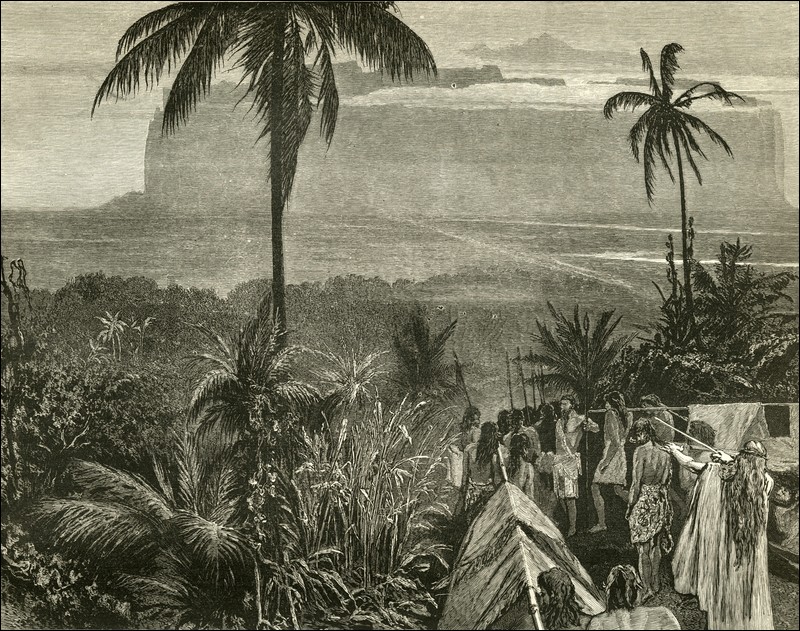
She is a vivid example of imperialist literature. As such, it embraces many hallmarks typical of this genre including ideas of racial and cultural hierarchy that were popular in the late Victorian period and adventuring to a ‘lost world’ (Haggard developed many conventions of this genre), in this case deep in the wild interior of Africa. Before writing this novel Haggard lived in South Africa for seven years, working in a very senior position of the British colonial administration, and he was heavily inspired by his time there when writing She. The sense of adventure in this novel is intoxicating, and since its publication She has been popular with readers across the age and gender spectrum. Like Holly and Leo, we are intrigued by this secret tribe living in an arresting, undiscovered pocket of land in Central Africa, and even more intrigued as to how they are so entirely ruled over by an eternal, beautiful, magical queen who commands power, fear and obedience with as little as a title, She-who-must-be-obeyed

Significantly, She provides us with an interesting exploration of themes including female authority and womanhood. Some scholars have noted that the publication of She coincided with Queen Victoria’s Golden Jubliee and suggested that She is an ominous literary tribute to the Queen on her 50 years on the throne. Both women are also chaste and devoted to one man – Victoria to Albert and Ayesha to Kallikrates, an ancient lover for whom she has waited patiently for 2,000 years to return to her. While Victoria is seen as a benign figure, Ayesha embodies late Victorian fears of a feminist movement desiring absolute female independence and absolute control over men. Anxiety over all-consuming female authority is present throughout the novel, particularly when both Holly and Leo – who represent ‘superior’ male intellect and physicality respectively – quickly fall under her will. Even their rational minds and Holly’s self-confessed misogyny are no defence against Ayesha, and they both worship her “as never woman was worshipped”. Even in the tribe that She rules over, women are respected and not subservient to men and there is no such thing as monogamy. Women select their partners, and they can have as many as they like. In one sense this is positive, because we see women taking control of their lives in a time where they were largely oppressed and thought of as the inferior sex. However, Ayesha also falls into the category of seductive femme fatale, which is a part of a centuries-old tradition of Western male sexual fantasy that includes other characters such as Homer’s Circe, Flaubert’s Salammbô, and Shakespeare’s Cleopatra

In conclusion She is a novel which will take hold of you, as it has taken hold of many generations since its publication in 1887; it is not only the characters that become fascinated by the unknowable She-who-must-be-obeyed. Experience romance, adventure, danger, horror and get a intriguing insight into the Victorian imperial mindset with this astonishing work of fiction.

Happy reading,

Imo x
Categories
English literature

ImoReads… ‘Flashman, Flash for Freedom! & Flashman in the Great Game’ (1969 – 1975) by George MacDonald Fraser

Blog 31

“I’ve been a Danish prince, a Texas slave-dealer, an Arab sheik, a Cheyenne Dog Soldier, and a Yankee navy lieutenant in my time, among other things, and none of ’em was as hard to sustain as my lifetime’s impersonation of a British officer and gentleman.”

Flashman and the Great Game

It is difficult to know how to start this blog – in a nutshell, this collection of stories is just brilliant, and has earned itself a place in my top 5 books of all time. This particular omnibus includes three of the series of novels entitled ‘The Flashman Papers’, and I’m already chomping at the bit to read the rest. The stories are the memoirs of the fictional character General Sir Harry Paget Flashman, VC, KCB, KCIE, who is slotted into a series of real historical events between 1839 to 1894.

This edition contains the very first novel, Flashman (1969), which sees the young Harry Flashman, newly expelled from Rugby School, join the 11th Dragoons. With this regiment he is reluctantly sent off to fight in the first Anglo-Afghan War, where we first discover his extraordinary ability for self-preservation through any means necessary.

In Flash for Freedom! (1971), we reconvene with Flashman in his late 20s, where we find him pressganged into crewing on slave ship the Balliol College, hiding out in New Orleans, being on the run with an escaped slave and bumping into up and coming politician Abraham Lincoln.

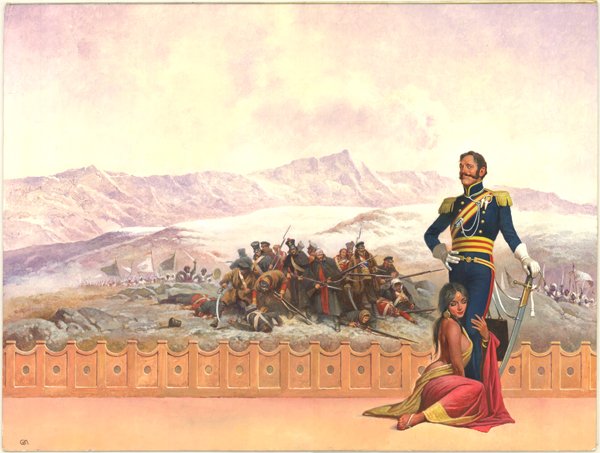
Finally, in Flashman in the Great Game (1975), we are transported across to British India, in which Flashman finds himself spying for the British government, becoming enamoured with a ruthless Maharani and getting caught up in the brutal Sepoy Rebellion of 1857.

What makes these books so brilliant is the character of Flashman himself. Up until this point it would seem obvious to assume that ‘Flashy’ is a gallant military hero. In fact, he is a self-confessed rogue, scoundrel, liar, cheat, coward and womaniser, who in every instance is just trying to save his own skin, but happens to have the charm, wit and good luck to fool those around him that he is in fact the hero he appears to be. He will happily screw over those around him in pursuit of self-preservation and is entirely truthful in what he relays to the reader. And yet he is totally and utterly likeable. His honesty is refreshing and comical to read, but also when he tells of his exploits it really does seem like he escaped each situation in the only possible way. Flashman puts it all down to his heartlessness, but in many situations it does also show him as choosing duty to his country over personal feelings towards others. Of course, he would always do whatever it takes to survive, but quite often this supposed coward does have to act with extreme courage and intelligence simply in the interest of self-preservation. By the end, Flashman has almost become the hero he says that he isn’t, in spite of himself and his actions. Furthermore, though his behaviour is audacious, completely self-centred and deplorable, he is often the voice of sanity and reason in a world full of corruption, stupidity and false piety. His wit, sarcasm and pragmatism cuts through the craziness around him which is very entertaining to read. You are guaranteed to enjoy reading how Flashman romps his way through decades of Victorian history, and how through spectacular acts of spinelessness he manages to win military glory and nationwide respect.

The character of Flashman is brought even more to life by Fraser’s unbelievably accurate replication of swaggering Victorian English, particularly when discussing his numerous exploits with various women throughout the books, which cements his reputation as a cad and a rake. In fact, Fraser’s accuracy in all elements of these books is something to be applauded. He manages to seamlessly insert Flashman and other fictional characters into real historical events without causing a ripple in the factual accuracy of the given moment. The way each battle or political event and the opinions surrounding them is relayed is so precise that you would not believe these books were written a century after they were set. On first publication, Fraser prefaced his novel with the discovery of the Flashman Papers at a house auction in Ashby, Leicestershire in 1965, and named himself only as the humble editor of the twelve instalments of the Flashman memoirs, which he called ‘packets’. He also surrounded the text with explanatory notes and scholarly additions such as maps and appendices, always using an editorial voice reminiscent of an assiduous bibliographer or archivist. Paired with the perceived accuracy and detail of the novel, almost half the initial book critics believed the Flashman novels to be real memoirs of a forgotten soldier in their reviews.

Fraser’s genius is making the historical accuracy of the Flashman stories come to life through the abounding use of comedy throughout. We have the aforementioned sarcastic, witty and outrageous voice of Flashman himself, but there is also sexual farce and intrigue, satirical dialogue and gallows humour. Fraser also expertly utilises syntax to provide humour throughout the novel, choosing just the right words to describe situations or people in an amusing manner. And yet, because he does not shy away from the awfulness, death and bloodshed encountered by Flashman and others throughout the series, the perceived reality of the memoirs remains intact. The books are undeniably entertaining and suspenseful, but the harsh historical realities of each period are illustrated truthfully. For example, Flash for Freedom! contains one of the most shocking and harrowing portrayals of the slave trade that I have ever read, while Flashman in the Great Game lays bare the horror of the Indian mutineers’ massacre of the wives and children of British military men during the Sepoy rebellion. Fraser has a knowledge of Victorian social and military history that is simply staggering for someone who is an amateur historian, and he manages to interweave this with a fictional narrative to create an astounding series of adventure, intrigue and mischief.

These books are an absolute joy to read – you will grow fond of the roguish Harry Flashman while getting a stellar education about important events of nineteenth-century history relating to the British Empire and antebellum America. In fact, you will almost be disappointed that Flashy is only fictional, as his life story really is one of the most astonishing out there.

Happy reading,

Imo x

Categories
English literature nineteenth century

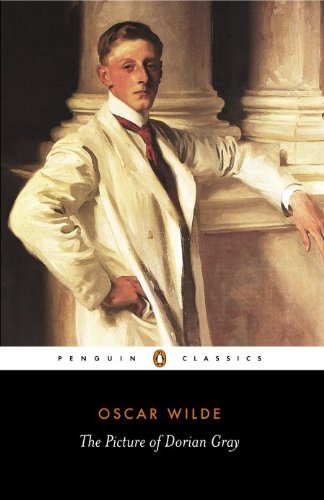
ImoReads… ‘The Picture of Dorian Gray’ (1890) by Oscar Wilde

Blog 9

“The horror, whatever it was, had not yet entirely spoiled that marvellous beauty”

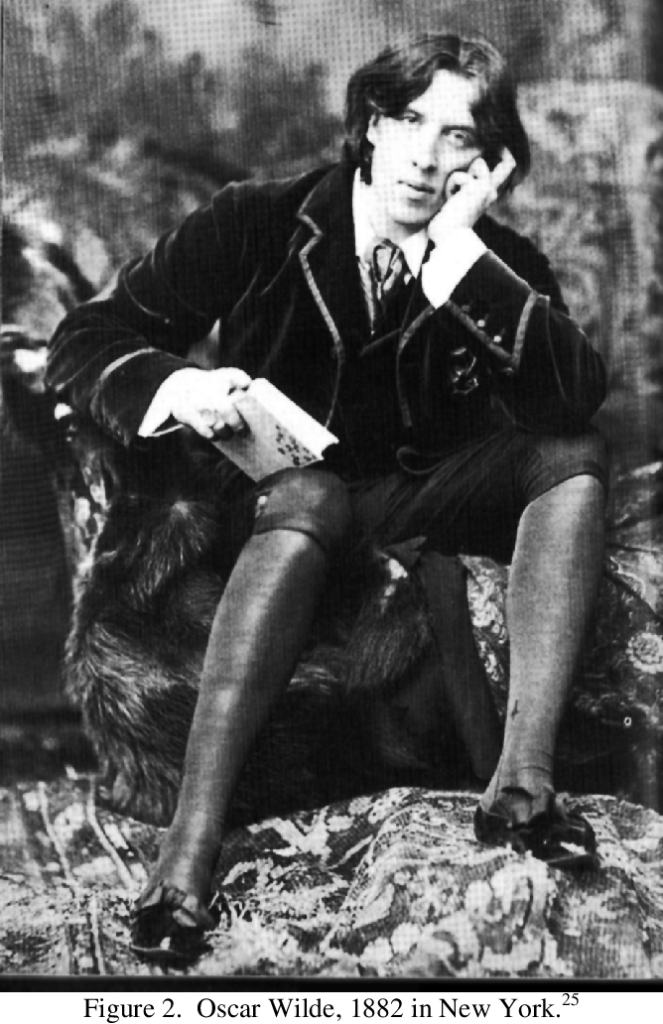
There is and always will be a soft spot in my heart for Oscar Wilde, certainly one of the most provocative literary figures of the nineteenth century. After going to a production of the brilliantThe Importance of Being Earnest (blog coming soon) with my mum some years ago, I became infatuated and have since read all his short stories, plays, essays and this, his only novel. He was even the subject of my 5000-word Extended Project Qualification (EPQ) undertaken alongside my A-Levels, in which I tasked myself with the question, ‘to what extent was the Victorian press responsible for Oscar Wilde’s celebrity?’ Research for this took me to the National Archives, where I felt privileged to read his handwritten letters from his time in prison. Humbly then, I consider myself to be the epitome of the Wildean ‘fangirl’ if such a thing exists. 

As part of my EPQ I examined the blatant homoeroticism running through The Picture of Dorian Gray, as it was used as evidence against Wilde in his sensationalised trial for ‘gross indecency with other men’ in 1895, a proceeding which certainly elevated his celebrity. Therefore, I am going to use this blog to discuss other key themes in the text such as Gothicism and aestheticism.

This novel is an ill-fated tale of moral decline and philosophic instruction for our unfortunate protagonist, the young aristocrat Dorian Gray. Basil Hallward, Dorian’s close friend and a professional artist, paints a portrait of Dorian because he is completely infatuated by his youth and extraordinary beauty. At first Dorian is delighted with the painting; it only dawns on him that his beauty – so perfectly preserved on the canvas – will fade with age after Basil’s amoral friend, Lord Henry Wotton, informs him of the fact. So enamoured with his own radiant portrait, Dorian exchanges his soul for eternal youth and beauty in an exquisitely Faustian twist. As a result, he is drawn into a corrupt and sinful double life, indulging unspeakable desires in secret while maintaining a gentlemanly façade to polite society. Only the painting bears evidence of his decadence while he himself retains his youthful innocence and beauty.

The lurking presence of the painting that becomes harder and harder for Dorian to ignore is one of my favourite gothic elements in the novel. The physical embodiment of his deal with the devil, the painting becomes more and more hideous each time Dorian does something terrible; as well as ageing repulsively, there is a chilling cruelty in the eyes and mouth of the painted Dorian that grows increasingly and unnervingly noticeable as the novel progresses. Locked away in a dark dusty room high up in the house, the strange horror of the painting is alike to a nightmare you can’t quite shake off. 

And yet, Dorian is not too concerned with the degradation of the painting at first. He is too busy engaging in debauched delights; think opium dens and licentious behaviour in the darkest corners of London.

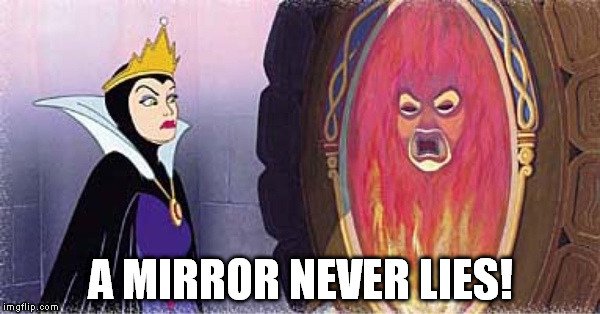
It is only when his manner and behaviour become too cruel for him to ignore – because indeed the soul can decay in more ways than one – that the painting and what he has done begins to weigh down upon him. In this way, the painting is a motif for an inverted magic mirror. It allows him to live for hedonistic pleasure for a time, but always reflects the ugly truth of his crimes back to him no matter how much he wishes it not to.

I find this very interesting in the context of Wilde’s ‘art for art’s sake’ aesthetic philosophy. Scathingly received by critics at the time for its homoeroticism and allusions to sins that were surely offensive to stiff Victorian moralities, Wilde fiercely defended The Picture of Dorian Gray. In a now infamous aphoristic preface to the non-censored 1891 edition, Wilde vigorously defends art for art’s sake. It is ironic that, although he was referring to the art of his writing, the idea of art for art’s sake is completely vilified in this story. That is, it turns out that the ‘work of art’ that is Dorian should have stayed on the canvas. His pursuit of eternal youth and beauty is his ruination, and it hurts many characters along the way. Wilde’s moral lesson here is that being good trumps looking good; a virtuous soul brings more happiness than beauty, which should only ever be ephemeral.

Dark though this tale is, I must laud its moments of comic relief, provided by Lord Henry ‘Harry’ Wotton. You cannot help but like this gentlemanly rogue despite his amorality due to the Wildean wit bestowed upon him. Many of Wilde’s most famous epigrams come from The Picture of Dorian Gray. An epigram is a phrase that expresses an idea in an interesting, clever, and surprisingly satirical way. Wilde always says the exact opposite of what you are expecting him to say. For example, Harry is of the opinion that ‘it is only shallow people who do not care about appearances’ which is decidedly not how that phrase is usually said. Wilde’s epigrams also turn out to be well-observed and pretty much true, such as in another golden example from Harry; ‘“It is perfectly monstrous”, he said, at last, “the way people go about nowadays saying things against one behind one’s back that are absolutely and entirely true”’. Harry’s enduring friendship with Dorian means that fortunately, readers are exposed to many a memorable epigram over the thirteen chapters.

So then, The Picture of Dorian Gray is a must-read Victorian novel, not only for its thought-provoking themes and intelligent narrative, but for its distinctly Wildean touch. An interesting question to ask yourself when reading it is, who is really to blame for the outcome of the novel? Is it Basil for painting the picture? Is it Harry for targeting Dorian with his bad influence and amoral philosophies? Or is it Dorian himself for enacting his fateful deal? It’s a moral conundrum but I’ll leave that for you to decide…

Happy reading,

Imo x