Blog Nº 45
“If we go on trying to make out that everything’s wrong outside the profession and everything is right within, it means the death of scientific progress.”
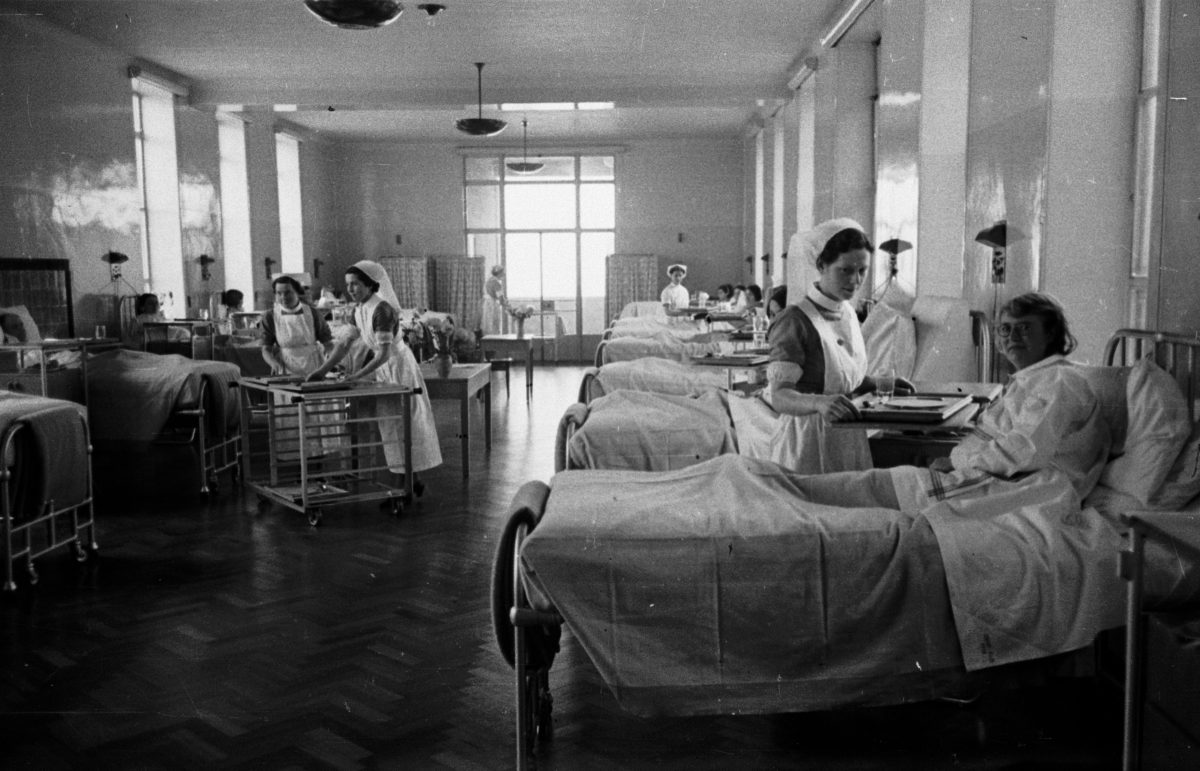
I have now read The Citadel twice; I can say without a doubt that it ranks on my top ten favourite books of all time. Cronin is a skilled storyteller who in this novel draws on his own experience as a doctor to paint an unsparing picture of medical ethics in pre-NHS Britain.
The Citadel takes place over a number of years, opening in 1924 when idealistic young doctor Andrew Manson has just qualified from university in Scotland and takes up an assistant job to a Dr Page in the South Wales mining town of Drineffy. Realising on arrival that Dr Page is medically incapacitated, he has to take on the entire practice for a meagre salary. Andrew is appalled at the unsanitary conditions faced by the townspeople and, eager to improve the lives and health of his patients, works to change things, helped by surgeon Phillip Denny. His next post in South Wales is as an assistant doctor for a medical aid scheme in the mining town of Aberalaw. On the strength of this new position he marries junior schoolteacher Christine Barlow whom he met in Drineffy. They are very happy together. Andrew remains committed to improving the lives of the miners and dedicates many hours to his research on the link between lung disease and coal mining. He is granted the MRCP and an MD when his research is published. Though this leads to a post with the Mines Fatigue Board in London Andrew resigns after six months, frustrated at the lack of action taken on issues discovered in his research and being cooped up in an office.
The next part of the novel sees the gradual estrangement of Andrew and Christine after Andrew sets up a private practice in London. At first Andrew does not receive many patients and those that he does receive are poor so cannot pay much for treatment. However, ultimately Andrew is seduced by the thought of easy money from wealthy, hypochondriac patients and seemingly abandons all morals in pursuit of status and wealth. The more wealthy Andrew becomes, the more Christine longs for their previous life. To her, money does not equal happiness; she would be happy with a simple country practice with the moral and committed Andrew she once knew and loved. Andrew is frustrated that Christine cannot be pleased by all that they can now afford – cars, fancy meals out, new clothes and acquaintances in high places. It takes a truly horrifying incident which lays bare the unethical system he has become party to to shock Andrew back to his true self, though he has much still to face before the novel’s end.

The fact that Cronin was a doctor himself adds serious credibility to The Citadel. Its treatment of medical ethics was groundbreaking at the time and is credited for laying the foundations for the NHS which was created just a decade later. Cronin once stated in an interview, “I have written in The Citadel all I feel about the medical profession, its injustices, its hide-bound unscientific stubbornness, its humbug … The horrors and inequities detailed in the story I have personally witnessed. This is not an attack against individuals, but against a system.”

The more personal storyline of Andrew and Christine’s relationship only heightens the reader’s anguish. We not only witness a heartbreaking disintegration of a once strong marriage between two characters we have grown to like, but also understand the severity of Andrew’s descent into immorality by contrasting it with Christine’s staunch goodness and incorruptibility. As is true in so many books, films, TV shows and indeed real instances, money and hollow success often lead only to misery.
Cronin is a master writer – even if you are not remotely interested in British medical history you will become invested in The Citadel after just a few pages. Additionally, as I have said in previous blogs the English of the 20s and 30s is a joy to read and makes me wish people still spoke like that today. Read this book – you won’t regret it!
Happy reading,
Imo x
 ImoReads