Blog Nº 48
“No one knows the worst thing they’re capable of until they do it.”
The Confessions of Frannie Langton is an astonishing debut from Sara Collins. It’s a fast-paced, authentic gothic novel that you won’t be able to put down.
The novel is written as a monologue from Frannie to her lawyer – she is on trial at the Old Bailey in 1826 for allegedly killing Mr and Mrs Benham, to whom she was a housemaid, though she has no recollection of the murders. The damning testimonies against her range from slave to seductress to whore, but this is not the whole truth. To discover what really happened at the Benham household, Frannie takes us back to the beginning of her story when she was a young girl learning to read on a Jamaican sugar plantation. Through her fevered confessions and examination of her life, Frannie repeatedly asks herself the question – could she have killed the only person she really loved?
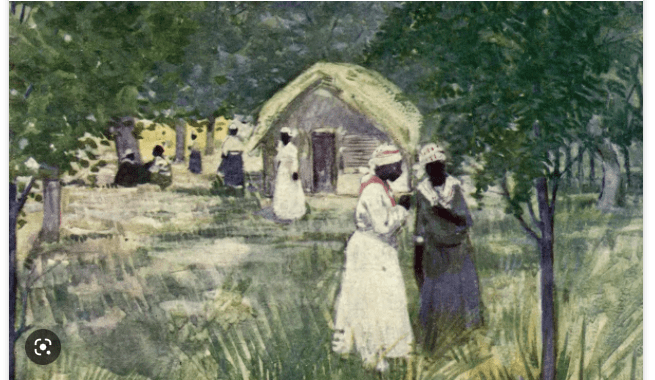
One of the key elements of The Confessions of Frannie Langton is slavery, which was still legal across the British Empire in 1826. We learn that Frannie, who is mixed race, grew up as a maid in the main house of a sugar plantation ironically named Paradise in Jamaica. She is taught to read and then forced to work for the Mengele-esque plantation owner as a lab assistant on his horrific experiments designed to prove that Africans are not human. She is intelligent but brought up in a terrible life with no real outlet to express herself, so she often comes across as awkward due her stifled cleverness. Even though technically freed by the law when she is brought over to England by her master, she finds herself a new sort of slave in the Benham household. It is here that she meets her Mistress, Benham’s wife, a morally ambiguous opium-eater who Frannie is soon enamoured with, though Mistress’s affections for Frannie are soon diverted to a rival. Then, in unknown circumstances, the Benhams are murdered.
Sara Collins has given us all the elements of the original gothic novel in The Confessions of Frannie Langton, while also echoing other brilliant novels like Sarah Waters’ Fingersmith and Margaret Atwood’s Alias Grace. It’s gripping, thought-provoking and dark and I look forward to seeing what Sara Collins does next.
Happy reading,
Imo x
 ImoReads