
Blog Nº 4
“For my part, if a man must needs be a knave I would have him a debonair knave… It makes your sin no worse as I conceive, to do it à la mode and stylishly”
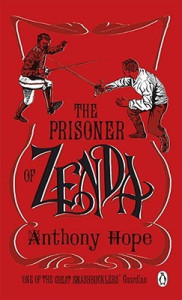
The Prisoner of Zenda is without a doubt one of my favourite adventure novels. There is just something charming about this Victorian escapade; it’s got the setting, it’s got the action, it’s got the romance, it’s got the glory.
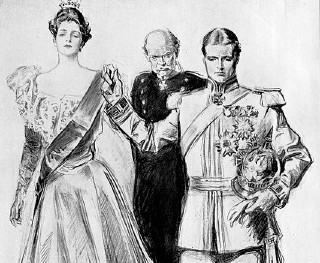
The story centres on the English gentleman and loveable rogue Rudolf Rassendyll and his trip to the fictional central European country of Ruritania. He happens to arrive on the eve of the king’s coronation, and he just so happens to be the king’s distant cousin, namesake, and spitting image replica. When the king’s dastardly younger half-brother, the Duke Michael of Strelsau, drugs and imprisons the king in the Tower of Zenda in a bid to take the throne, the king’s trusty attendants come up with a brilliant yet risky plan. Colonel Sapt and Fritz von Tarlenheim enlist Rassendyll to play the part of the king until they can rescue the real deal. What follows are swords-drawn encounters with Michael’s henchmen, plots and counterplots from both sides, and a jolly good adventure.

Of course, the story would not be complete without a little romance; Rudolf enjoys playing the king although he is committed to the plan to free him, but what he did not expect was to fall in love with the king’s fiancé, the princess Flavia. With the help of the Duke’s mistress Antoinette de Mauban, our trio of heroes manage to outwit the Duke and his henchmen to free the king, but Rudolf and Flavia, both bound by duty, must sadly part at the end.
What is great about this plot is that apart from the small group of people who knew about the identity of the ‘false king’ (which eventually includes Flavia herself), the rest of the world remains none the wiser. It is amazing how such a gamble paid off and gives the reader a sense of satisfaction by being in on this great secret. When I imagine Hope’s country of Ruritania, I see a Germanic-inspired nation with fairy-tale castles and a black forest, which only add to the adventure. If you like a good urgent gallop through such scenery, then thanks to The Prisoner of Zenda you can eat your heart out.
Rudolf Rassendyll is undoubtedly my favourite character, and I am glad Hope made him the first-person narrator. Although he already lives a life of leisure being from an aristocratic background, even he admits being tempted to usurp the Ruritanian throne forever. Indeed, when offered a kingdom who wouldn’t say yes? It is this honesty plus his frank humour and in the end stronger sense of morality and bravery that make Rudolf a king by nature, if not truly by right. You can’t help but root for him, so whenever there is a showdown between him and one of the Duke’s henchmen – Rupert of Hentzau in particular – you can’t put the book down until you know the outcome. (This explains why I read the book in two days). He risks his life, gives up his crown and his true love for his distant cousin, and this is the truest picture of Victorian heroism.
Are you thinking that ‘Ruritania’ sounds familiar? Hope’s novel had such an impact that it kickstarted the genre of ‘Ruritanian romance’ in literature, theatre and film. That is, stories set in a fictional central or eastern European country that are, like The Prisoner of Zenda, swashbuckling tales of adventure and intrigue, with the themes of romance and honour being the most prominent and focusing exclusively on the ruling classes. In general usage, Ruritania is a placeholder country name used to make points in academic or political discussion. The impact of Hope’s novel is undeniably far-reaching.
I enjoyed my trip to Ruritania so much that I will shortly be returning via the sequel, Rupert of Hentzau (1898). If you want to be taken on an exciting adventure that you just can’t find in today’s world, take a leap back in time to the nineteenth century yourself and be dazzled by Rudolf, Ruritania and romance.
Happy reading,
Imo x
 ImoReads