Categories
English literature

ImoReads… ‘Julia’ (2023) by Sandra Newman

Blog Nº 62

“All was false. It was known to be false, but everyone lied about the lies, until no one knew where the lies began and ended.”

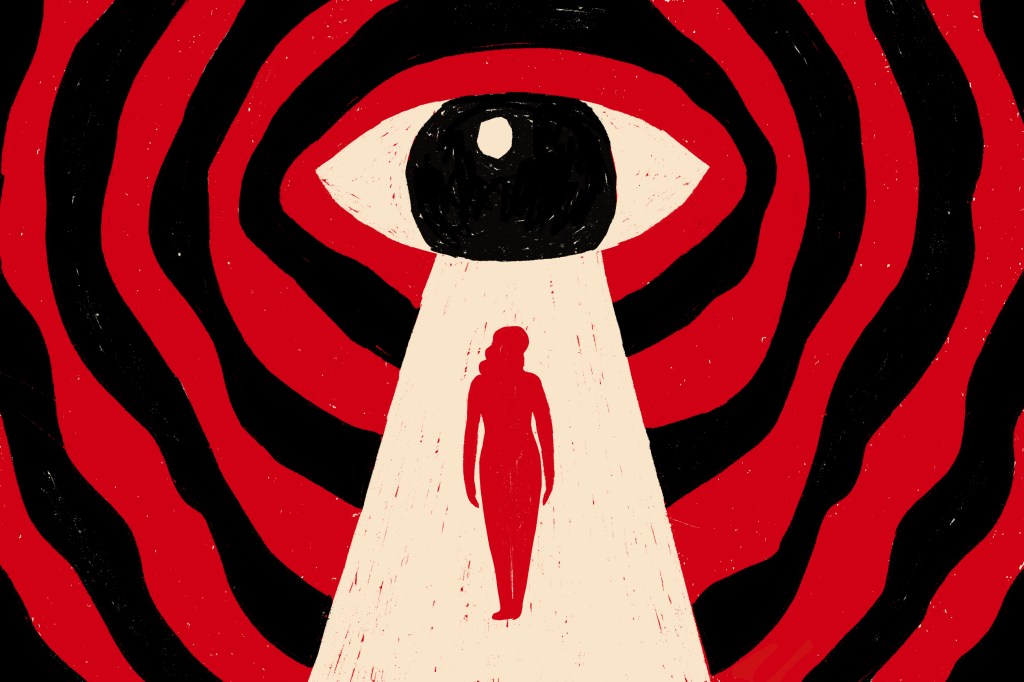
It is a brave thing to take on a re-telling of one of the most well-known British novels of all time, George Orwell’s Nineteen Eighty-Four, particularly in so bold a manner as Newman does so. In this story, the object of Winston Smith’s gaze looks back, reclaiming agency to tell her own tale which will both shock and captivate readers. 

Newman has faithfully recreated Orwell’s vision of the future by carefully considering the language and culture of the original novel as well as guiding us through familiar landscapes such as the bleak, dingy factory floor of the Ministry of Truth. Many of the plot points we encounter are familiar to us, though inverted to be from Julia’s perspective. But Newman is able to move beyond the two-dimensional Julia that is portrayed by Orwell. Even by having her clock out of her factory shift due to ‘sickness: menstrual’, the reader is treated to a look at how women fared under the totalitarian regime and how their experience was entirely different to that of men. Seeing Julia at her dormitory hostel, how she interacts with other women there and how surveillance plus a lack of privacy and autonomy weigh differently on them is a compelling new element to this Orwellian existence. 

We learn that sexuality is a key part of Julia’s character and how despite being shaped by abuse, voyeurism and other factors, she still seeks and enjoys pleasure where she can. The focus on how sex and relationships work in an oppressive, surveilled world add nuance to what occurs between her and Winston but also between her and several other characters in the novel. Pregnancy and motherhood (both regime approved and not approved) are also put under the microscope, further providing insight of the uniquely female struggles faced in the Britain (or ‘Airstrip One’) of Nineteen Eighty-Four. Newman also paints a vivid picture of Julia’s childhood which makes her grit and determination to survive, her ‘cheerfully cynical’ nature and how she has so far made it through life under oppression highly convincing.  

The reader continues to be surprised by the twists and turns in the novel, including insight into previously unexplored characters such as O’Brien of the Thought Police, though eventually we arrive at the tragic ending readers of Nineteen Eighty-Four will know all too well. While the torture that occurs in the Ministry of Love and Room 101 aren’t portrayed quite as horrifically and convincingly as in the original, Julia still manages to lay bare the life-altering cruelty that takes place there. 

In Orwell’s novel, no crack in the totalitarian regime is allowed to show at the end. It concludes with no hope at all, with resistance resigned to be a futile expression of false hope. Newman wants to give the reader a dramatic conclusion to Julia’s personal narrative as well, meaning that in this story we get a glimpse into what happens after Orwell’s ending. Some may argue that there is less power in this, but I disagree. While I can’t reveal what happens, Newman absolutely honours the message that Orwell was initially trying to get across, leaving readers feeling equally as uneasy. The only difference is that while it was difficult to remain hopeful for Winston, readers here will be a little more convinced that Julia will endure and survive. 

Happy reading, 

Imo x 

Categories
English literature

ImoReads… ‘The Little Red Chairs’ (2015) by Edna O’Brien

Blog Nº 60

“We don’t know others. They are an enigma. We can’t know them, especially those we are most intimate with, because habit blurs us and hope blinds us with truth.”

The Guardian describes The Little Red Chairs as ‘a chilling masterpiece’, and after reading it I’m inclined to agree. In terms of style and content it is unique, making for a compelling and thought-provoking read. 

The Little Red Chairs is set in the small fictional Irish village of Cloonoila where the community is tight-knit. It is here we meet Balkan war criminal Dr Vlad, who hides out in the village posing as a holistic healer and sex therapist. The story is told from the perspectives of the women he meets. One woman in particular, Fidelma, is drawn to Dr Vlad. Having suffered two miscarriages with her husband, she hopes Dr Vlad can cure her. Stuck in a lonely and somewhat suffocating marriage, Fidelma embarks on an affair with Dr Vlad and falls pregnant, which unfortunately coincides with Dr Vlad’s arrest and the revelation of his true identity to herself and the rest of the shocked community. The events that follow force us to confront morality, humanity and darkness in this novel that is at once uncomfortable intimate as well as daring and far-reaching. 

Dr Vlad is loosely based on the real life ‘Butcher of Bosnia’ Radovan Karadžić, who is currently serving a life sentence after being convicted of genocide, crimes against humanity and war crimes by the International Criminal Tribunal for the former Yugoslavia after the Bosnian War. O’Brien has cleverly weaved him into the novel as Dr Vlad, the same way that she seamlessly swaps between tenses and character headspaces. All of this culminates in a distinctive narrative style. It can take some getting used to but it’s worth it for the impact the book will have on you. 

The Little Red Chairs is an original novel which will leave you pondering world events, day-to-day struggles and pressing moral questions for some time after. Astonishing when you consider that O’Brien was 85 at the time of publication. A must-read! 

Happy reading, 

Imo x 

Categories
English literature

ImoReads… ‘A Damsel in Distress’ (1919) by P.G. Wodehouse

Lord Marshmoreton: “I wish I could get you to see my point of view.”


George Bevan: “I do see your point of view. But dimly. You see, my own takes up such a lot of the foreground.”

I was given a lovely edition of this book for Christmas and it proved to be a delightful first foray into the world of P.G. Wodehouse. The speed at which I finished reading A Damsel in Distress is testament to how good the book is, but, as with all great books, I also found myself disappointed I wouldn’t get to experience reading it for the first time again. 

The novel begins with a chance encounter between Lady Maud Marsh and American composer George Bevan in London. Maud is looking for another American, Geoffrey Raymond, who she met the previous year. Grappling with her parents’ disapproval of this match, Maud’s visit is on the sly and she enlists the help of a bemused George when she spots her brother Percy, who mistakes George for Geoffrey. 

What follows is an amusing set of events at Maud’s family home, Belpher Castle, wherein a complicated network of friendships, romantic entanglements and household whisperings make for a delightfully funny read. 

One of my favourite comic tropes in both theatre and fiction is the use of mistaken identities. A centuries-old device often used by Shakespeare, it never fails to bring a smile and a laugh to the reader. A Damsel in Distress is littered with examples of mistaken identity, some accidental and some rooted in purposeful deception. Wodehouse amplifies this technique by juxtaposing the drama between Belpher Castle’s residents with the presumptions of the ever-watchful household staff, always keeping the reader as the only one with the full picture of knowledge. 

Wodehouse is known as one of the most accomplished and widely read humourists of the twentieth century but this was my first experience of reading one of his novels. Even in non-climactic moments, his writing style and narration had me grinning with amusement throughout. The humour is so quintessentially English that I wonder whether translations into foreign languages can really do his words justice. 

I can now call myself a Wodehouse fan and since reading A Damsel in Distress I have acquired two more of his books. While it might be a bit ambitious to try and read his whole catalogue (which contains over ninety books, forty plays and two hundred short stories!) I look forward to delving into many more of his comic escapades. 

Happy reading, 

Imo x 

Categories
English literature

ImoReads… ‘Impossible Creatures’ (2023) by Katherine Rundell

“I need you to tell people this; I need you, when you get back, to tell them: the brutality is terrible. And yes: the chaos is very great. But tell them: greater than the world’s chaos are its miracles.”

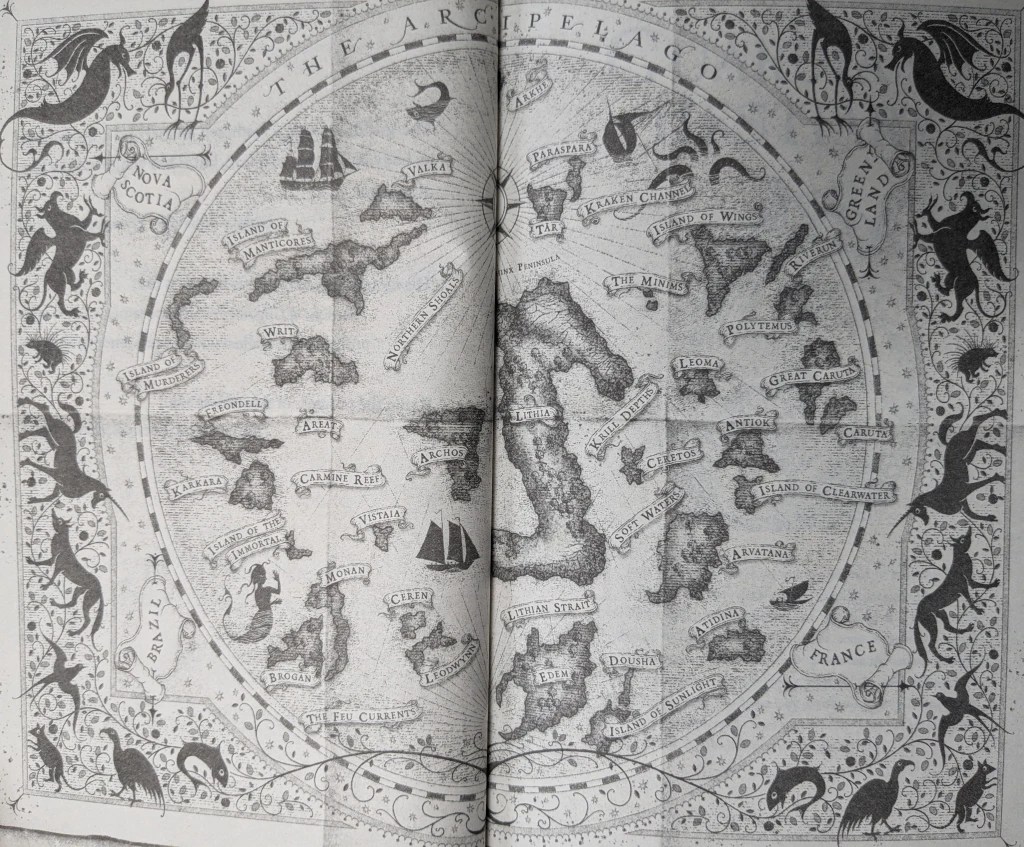
“There was Tolkien, there is Pullman and now there is Katherine Rundell” says Michael Morpurgo in his review of Impossible Creatures. Other glowing reviews place her alongside JK Rowling, C.S Lewis and Lewis Caroll for this remarkable work full of imagination, magical delight and wonder. I suspect that the fantasy realm of The Archipelago revealed to us in Impossible Creatures will join Narnia, Hogwarts, Neverland and Middle-Earth and many more in the fantasy hall of fame in no time at all.

Impossible Creatures follow Christopher Forrester, who has been sent up to Scotiand to stay with his grandfather. One day he rescues, somewhat in disbelief, a drowning baby griffin from a hidden lake and suddenly his life changes irrevocably. The adventure that follows takes him to The Archipelago, a hidden cluster of islands where mythical creatures and humans still live side-by-side. There he meets and befriends mysterious girl on the run Mal with whom he will transform the destiny of not just The Archipelago but the world in its entirety.

Given the name of the novel I feel like I must discuss the creatures encountered by Christopher and Mal as the story weaves its course. Some will be familiar to us all – dragons, unicorns, centaurs, krakens, griffins, mermaids, sphinxes – but there are even more that Rundell introduces us to, inspired by myths and legends from histories and cultures spanning the entire globe. Never before had I heard of the al-miraj, a large horned hare, first mentioned in medieval Arabic literature. Rundell describes them as possessing dazzling beauty and as seekers of the wise and the good. Longmas, originally of Chinese mythology, are winged scaled horses that boast breathtaking speeds and strength.

Both Christopher and myself as the reader were almost the most astonished to read about the most harmless creatures in the novel, the Borometz, also known as the vegetable lamp. Originating from seventeenth-century legend in Central Asia, Borometz’ are zoophytes (animal plants) thought to grow sheep as their plants. Connected to the plant by a tendril / umbilical cord, once the sheep has grazed the land around the plant both itself and the plant will die. Therefore, kindly folk in The Archipelago carry seeds with them at all times to plant around a Borometz when they encounter one. Readers will be pleased to know that Impossible Creatures begins with a incredibly handy and beautifully illustrated ‘Guardians Bestiary’ so you can get to grips with the bewildering range of creatures you are soon to meet.

While classified as a children’s/young adult novel, Impossible Creatures can be enjoyed by all ages, much like Lord of The Rings, Harry Potter, Alice’s Adventures in Wonderland, Peter and Wendy, The Chronicles of Narnia and others classified in the same way. It takes great skill as a writer to create something multilayered and engaging to read for such a wide audience. It was a joy to see someone’s imagination bursting forth to portray such a unique world filled with vibrant, quirky characters, sharply funny lines and a gripping overarching plot. You know that a book is good when you feel like you’ve entered its world yourself and that each time you have to put it down is a lingering struggle.

As we head into a cold and wet British autumn you might be in need of an escape from the banalities of everyday life, particularly if you are in your grown-up stage of life – Impossible Creatures will do that for you and more.

Happy reading,

Imo x 
Categories
French Literature

ImoReads… ‘Maria Chapdelaine’ (1914) by Louis Hémon

Blog 6

“La terre est bonne; mais il faut se battre pour l’avoir”

Upon publication, this novel – although written by a français de France – was hailed as a completely accurate representation of the idyllic rural Quebecois lifestyle centred on religion, family values, and land cultivation, that was supposedly at the heart of the French-Canadian ethos. I must admit, I was not inspired to eschew modernity and take flight for the woods after reading it. This novel is great, but not because of the apparent pastoral paradise it depicts. It is great because of the ominous and quite frankly disturbing presence of the forest, and the fact that actually, the human characters are locked in hopeless struggle with the cruel and vindictive wilderness for the land that leaves readers feeling tense and uneasy.

Maria Chapdelaine tells the story of the Chapdelaine family. We have Samuel, Laura and their children, who include eighteen-year-old Maria. They are habitants intent on faire de la terre to fulfil their French-Canadian rural destinies. In search of good land, they have pushed so far into the wilderness that the nearest town is eight miles away and they are completely surrounded by the looming forest. Three suitors vie for Maria’s hand in marriage, most notably François Paradis. François lives the coureur du bois lifestyle which exists in stark contrast to the Chapdelaines’ ideology. He lives and trades off the land and is always on the move; to him the woods are everything. Maria loves him for the freedom and adventure he would bring to her life. And yet, when he tragically perishes in the woods during a punishing winter, Maria is left devastated and disillusioned.

Despite the novel being titled Maria Chapdelaine, she is not given much air time. It is all about the battle with the wilderness. The forest is the enemy that blocks the Chapdelaines from their future prosperity. They are ‘des gens qui commencent une longue guerre’ and seem to always be at the land clearance stage of proceedings. This book is many things, but I found it impossible to escape the overwhelming sense of bleakness. Hémon scorns human attempts to dominate the land; ‘la petitesse de l’église de bois, la petitesse des quelques maisons de bois’ emphasises that they are not but insignificant specks on this vast hinterland. What really unnerved me was that at every turn, the characters are faced with ‘la lisière sombre du bois’, always gloomy, always impenetrable, always watching. It must be mentioned at least thirty times throughout. 

As I read on, I came to realise that it was not a battle between humans and the wilderness at all; the wilderness is personified as having a ‘sévérité divine’ against which the humans ‘n’avaient aucune révolte, même pas d’amertume’, in fear of worse retribution. When poor Maria’s true love François is cruelly taken away from her, we hear that ‘le froid assassin et ses acolytes se sont jetés sur lui comme sur une proie’. If this would not instil the fear of God into you as a reader about venturing into the Canadian woodland then I don’t know what would.

I realise that perhaps I am not selling this book; if you want something that will send shivers down your spine and leave a distinct impression on you, then I would strongly recommend it. And don’t forget, to be hailed as a novel representing a glorious rural idyll, there must be some evidence of this in the text.

Even I admit, Maria Chapdelaine has its moments, and all of these moments come in the short and sweet summer months. The wilderness becomes a beautiful, romantic backdrop for Maria and François’ budding romance and there is jovial sense of purity and simple living for this family in the woods. So perhaps it is the long Canadian winter rather than the wilderness itself that is the master of cruelty? I’ll leave that up to you to decide…

Happy reading,

Imo x

Categories
English literature

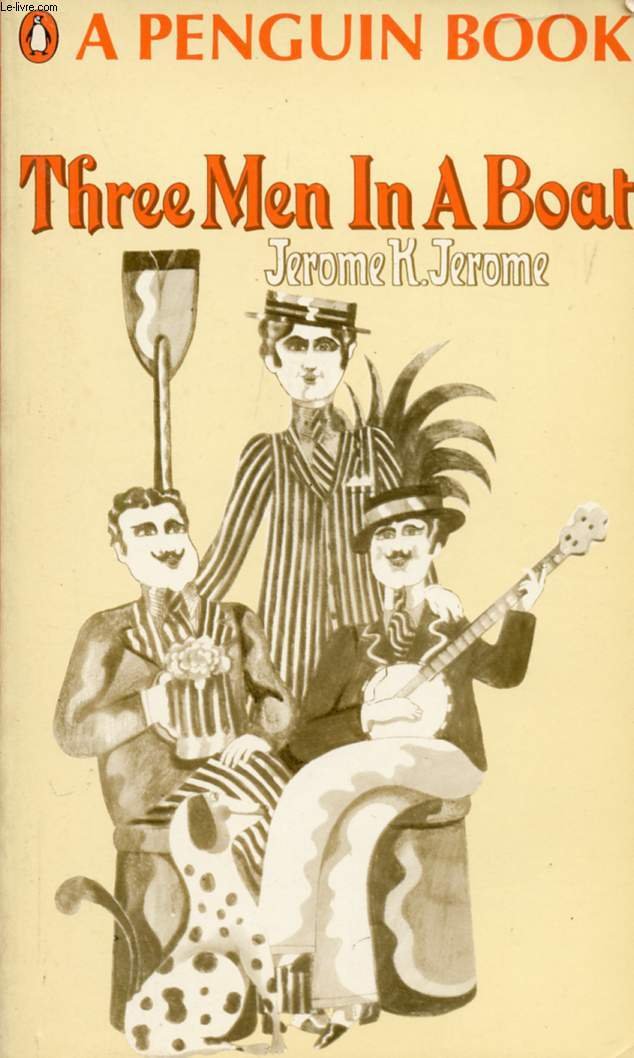
ImoReads… ‘Three Men in a Boat’ (1889) by Jerome K. Jerome

Blog 2

“What the eye does not see, the stomach does not get upset over”

I thought I would kick-start my blog by discussing one of English literature’s most enduringly funny novels. Written in 1889, Jerome K. Jerome concocted the perfect comic tale to match the trend for recreational boating in the late Victorian era. I for one am very glad that this work, originally meant to be a travel piece for Home Chimes magazine, morphed into the hilarious escapades of three men holidaying in a boat. In the words of Jerome himself, ‘nothing else seemed right’.

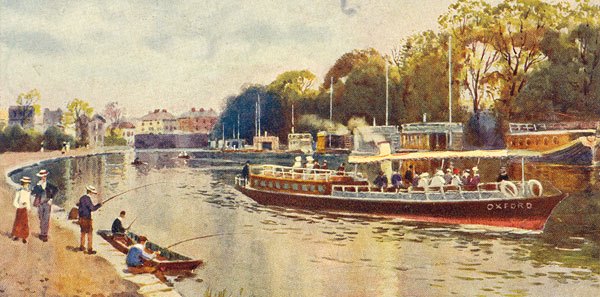
The general premise of the novel is three City clerks – J. (the narrator), George and Harris – taking a two-week boating trip along the Thames from Kingston to Oxford and back again (which is particularly enjoyable for me to read as a Kingston-dweller). We cannot, of course, forget their canine companion Montmorency, not least because the subtitle of the book commands us not to (to say nothing of the Dog!). What follows is a humorous voyage of mishaps, both on this trip and through anecdotes that spring to the narrator’s mind along the way. 

What I enjoy the most about Jerome’s novel is its refreshing triviality. Unlike a lot of Victorian novels, there are no devastating plot twists or stories of unrequited love; like the boat, the novel trundles along, and is at once about lots of things and about nothing at all, and that’s where its charm derives. The most dramatic things to happen are perhaps one of the party falling into the river, or getting lost in Hampton Court Maze, or even that (shock horror!) there are no inns to stay in at a certain point of the trip. Such novels are sometimes overlooked in the rankings of great literature, but I think they are uniquely brilliant when they can still make us laugh over 100 years after publication.

Indeed, Jerome’s use of quintessentially English humour is such that an English audience can still very much relate and laugh along. For example, in one sentence he manages to sum up the immortal English outlook on the weather. That is, ‘but who wants to be foretold the weather? It is bad enough when it comes, without our having the misery of knowing about it beforehand’. If this does not define Englishness I don’t know what does. 

However, for me, one particularly funny incident stands out. After a long hard day on the river, our three “hangry” gentlemen despair that there is no mustard to go with their beef. However it is deemed that ‘life was worth living after all’ when they discover a tin of pineapple. Sadly for them (although happily for us), there is no tin-opener to be found, so what ensues is ‘a fearful battle’ between the men and the tin. A hilarious sequence of imaginative attempts to open the tin to no avail complete with extreme frustration from the protagonists provides an overwhelmingly relatable comic thread inspired by ordinary everyday inconveniences. 

Contributed to by the chuckle-worthy bumbling about of our three men in a boat and their beautifully eloquent nineteenth-century language, Jerome paints quite the picture of nonchalant, carefree joy and timeless Victorian farce. The fact that Three Men in a Boat sold staggeringly well at the time and has never gone out of print since it first appeared in 1889 suggests that the British reading public wholeheartedly agrees with my assessment.

If you’re looking for a light-hearted summer read to enjoy while sunbathing in your back garden (or, indeed, Thames-side) then Three Men in a Boat is the one for you. To really get into the spirit I would advise snacking on beef and mustard and/or tinned pineapple while reading… 

Happy reading!

Imo x