Categories
French Literature

ImoReads… ‘Maria Chapdelaine’ (1914) by Louis Hémon

Blog 6

“La terre est bonne; mais il faut se battre pour l’avoir”

Upon publication, this novel – although written by a français de France – was hailed as a completely accurate representation of the idyllic rural Quebecois lifestyle centred on religion, family values, and land cultivation, that was supposedly at the heart of the French-Canadian ethos. I must admit, I was not inspired to eschew modernity and take flight for the woods after reading it. This novel is great, but not because of the apparent pastoral paradise it depicts. It is great because of the ominous and quite frankly disturbing presence of the forest, and the fact that actually, the human characters are locked in hopeless struggle with the cruel and vindictive wilderness for the land that leaves readers feeling tense and uneasy.

Maria Chapdelaine tells the story of the Chapdelaine family. We have Samuel, Laura and their children, who include eighteen-year-old Maria. They are habitants intent on faire de la terre to fulfil their French-Canadian rural destinies. In search of good land, they have pushed so far into the wilderness that the nearest town is eight miles away and they are completely surrounded by the looming forest. Three suitors vie for Maria’s hand in marriage, most notably François Paradis. François lives the coureur du bois lifestyle which exists in stark contrast to the Chapdelaines’ ideology. He lives and trades off the land and is always on the move; to him the woods are everything. Maria loves him for the freedom and adventure he would bring to her life. And yet, when he tragically perishes in the woods during a punishing winter, Maria is left devastated and disillusioned.

Despite the novel being titled Maria Chapdelaine, she is not given much air time. It is all about the battle with the wilderness. The forest is the enemy that blocks the Chapdelaines from their future prosperity. They are ‘des gens qui commencent une longue guerre’ and seem to always be at the land clearance stage of proceedings. This book is many things, but I found it impossible to escape the overwhelming sense of bleakness. Hémon scorns human attempts to dominate the land; ‘la petitesse de l’église de bois, la petitesse des quelques maisons de bois’ emphasises that they are not but insignificant specks on this vast hinterland. What really unnerved me was that at every turn, the characters are faced with ‘la lisière sombre du bois’, always gloomy, always impenetrable, always watching. It must be mentioned at least thirty times throughout. 
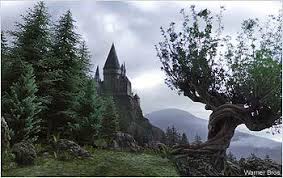
As I read on, I came to realise that it was not a battle between humans and the wilderness at all; the wilderness is personified as having a ‘sévérité divine’ against which the humans ‘n’avaient aucune révolte, même pas d’amertume’, in fear of worse retribution. When poor Maria’s true love François is cruelly taken away from her, we hear that ‘le froid assassin et ses acolytes se sont jetés sur lui comme sur une proie’. If this would not instil the fear of God into you as a reader about venturing into the Canadian woodland then I don’t know what would.

I realise that perhaps I am not selling this book; if you want something that will send shivers down your spine and leave a distinct impression on you, then I would strongly recommend it. And don’t forget, to be hailed as a novel representing a glorious rural idyll, there must be some evidence of this in the text.

Even I admit, Maria Chapdelaine has its moments, and all of these moments come in the short and sweet summer months. The wilderness becomes a beautiful, romantic backdrop for Maria and François’ budding romance and there is jovial sense of purity and simple living for this family in the woods. So perhaps it is the long Canadian winter rather than the wilderness itself that is the master of cruelty? I’ll leave that up to you to decide…

Happy reading,

Imo x

Categories
French Literature

ImoReads… ‘Nikolski’ (2005) by Nicolas Dickner

Blog 5

“En transformant des relations familiales en relations hasardeuses, Dickner porte atteinte à l’institution familiale, la réduisant au hasard des croisements sanguins, et réduisant ceux-ci à une matérialité non signifiante”

Isabelle Boisclair

Nikolski is one of the most interesting yet frustrating novels I have ever read. Hailing from Quebec, Dickner brings age-old questions about Quebecois identity and place in the world to the fore in this humorous and thought-provoking novel. There are many themes that stand out in the text, but I am going to examine incidences of chance and coincidence because for me they are the most impacting. It is times like these when I feel privileged to have studied French, because it means I can read and understand important French-language works.

In brief, Nikolski centres on three protagonists. We have Noah, Joyce, and an unnamed narrator who are all (unbeknown to each other) related thanks to the womanising ways of one Jonas Doucet, who we never meet. This makes it very “coincidental” that for one reason or another, they all end up converging on the same neighbourhood in Montreal.

Now, like many a reader of this book I’m sure, I experienced the classic satisfaction you get from dramatic irony. Knowing about the protagonists’ relation and proximity before they did meant that I was convinced I would just keep reading until they all met by chance and experienced a glorious family reunion, and then I could think smugly, ‘I told you so’. Dickner, sly now I see he is, teases this and makes it seem a sure thing by interweaving smaller incidences of chance and coincidence into the novel. These include but are not limited to:

  • Near-misses or brief encounters between the protagonists
  • Links through secondary characters
  • Kinship of mentality through the protagonists regularly speaking in metaphors and allusions to fish, the sea, boats and all things water
  • Repeated appearances of items or characters to different characters, e.g. le livre à trois têtes, Garifuna maps and a homeless man sporting a maple leaf hat

He also builds these up to an infuriating level; for example, we go from Noah whizzing past Joyce on a bike to the two of them chatting at the airport along with Noah’s son; I was left stunned and incredulous that nothing had come of this opportunity. My reaction was such because all the little episodes of chance and coincidence, that could easily go unnoticed, make us as readers think that there is a deeper meaning to randomness and fate. Surely there must be, if it is woven so much and so easily into everyday life.

So then the awaited day was upon me, the day of reading the last chapter. Finally, the end to this tense build-up and the agonising near misses. You can imagine my horror therefore when the novel just ended; the protagonists never discover their familial links, and they all continue to lead their own lives, running parallel and only momentarily bumping into each other, but never intertwining. Dickner has cleverly constructed a world in which we believe in chance and coincidence; indeed, despite the actual ending being the more realistic outcome given the circumstances, we as readers are more suspicious of the fact that there was no grand reunion than if there had been one.

I have been thinking about this novel and its ending since I finished reading it a couple of months back. Even though I know Dickner has minutely engineered every event in his book, meaning there is no real chance and coincidence at all, I still can’t help but believe in this world he has constructed. If you fancy feeling extremely frustrated, have a read of Nikolski, either in the original French, or in the English translation.

Happy (or in this case infuriating) reading,

Imo x