Categories
Australian Literature World literature

ImoReads… ‘The Secret River’ (2005) by Kate Grenville

Blog 8

“Ain’t nothing in this world just for the taking… A man got to pay a fair price for taking… Matter of give a little, take a little” – Thomas Blackwood
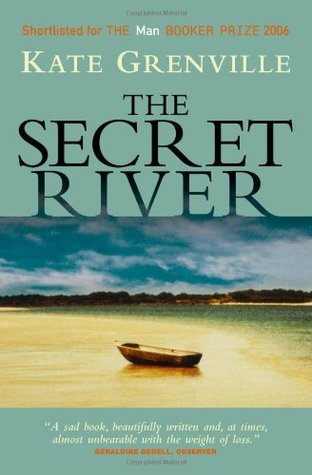
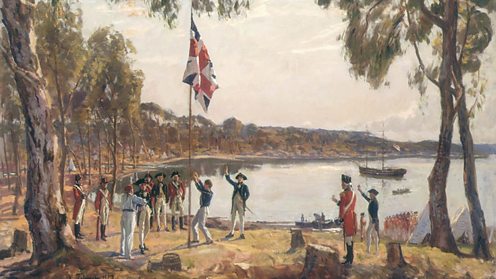
As a British colonial history enthusiast, I found The Secret River deeply thought-provoking in its portrayal of the settlement of Australia by British convicts sentenced to transportation in the nineteenth century. I actually read this novel about a year ago, but I recently went to see the critically acclaimed Sydney Theatre Company’s stage adaptation of it at the National Theatre. Unlike most of the critics, I was left somewhat disappointed by the stage version, so I was inspired to write this blog in the format of ‘novel vs play’ (hence the longer post).

Sadly, the flaws in the play begin in the first scene; astoundingly, it opens with lead character William Thornhill and his family arriving at their secluded 200 acre plot of land up the Hawkesbury River in New South Wales, which he has persuaded his wife Sal that once settled and cultivated, will make them their fortune. I had to do a double take; where indeed was the journey up to this point? Arriving at ‘Thornhill’s Point’ as it comes to be known, is a landmark event in the plot and yet the exclusion of all that comes before completely lessens the impact of this moment. We are missing the whole first section of Grenville’s novel, detailing William’s Dickensian poverty-stricken upbringing in Southwark, London and his constant struggle to rise above his lowly class and status. We miss his marriage to Sal and how an icy winter bars him from working as a boatman, and how this change in fortunes forces him to turn to stealing. He is caught and sentenced to transportation along with Sal, his son Willie, and unborn child.

And then, it is not as if William could simply walk onto a 200 acre plot of land on arrival. He arrives a convict, and over 12 months works tirelessly in the colony until he can buy his freedom. Here we see a crucial change in William’s attitude; he is befriending those above his station, he is mimicking their dress and manners, and most importantly he begins to feel a personal sense of authority and superiority over his peers. The family’s move to Thornhill’s Point is not easy; Sal’s heart is set on returning to London, and agrees only on the basis that they will stay five years maximum to make their fortune before going ‘home’. William agrees, but with his newfound ‘status’ it is clear he has other ideas.

The play erases some very crucial plot and character development points here and this causes a problem for what it chooses to leave in. For example, Sal’s daily tally for how many days they have been there, her constant pining for London and singing of folk songs like ‘The Bells of St Clements’ doesn’t really make sense without the backstory. The play gives William his superior attitude over his peers, but it has not altered his dress, manner or speech from destitute London beggar so it appears confusing and inconsistent, and again nonsensical without the context. 

In the stage version, we are thrown straight into the Thornhills settling their land and the encounters they begin to have with the Aboriginal population. The portrayal of the Aboriginals is something the play should be applauded on. As the novel is told from the perspective of the Thornhills, naturally we are not given much insight into the lives or claims on the land of the Aboriginals. Onstage, we see them living their lives and interacting, lessening the idea of them being the ‘other’ to be feared in the eyes of the audience. The cast playing the Dharug tribal family are Aboriginal performers, and the music and staging was conceived in collaboration with Aboriginal artists, so the play has done well in terms of representation and diversity. Furthermore, the actors playing the Thornhills have ghoulish white paint on their bodies and faces; I thought this was a very effective way of demonstrating how strange and how freakishly white settlers must have looked to Aboriginal peoples, showing that white skin is only ‘normal’ in the eyes of those who have white skin themselves.

The interactions between the Thornhills (plus other white settlers along the river) and the Dharugs are done well; they are sometimes tense, sometimes curious, sometimes funny and always slightly cautious. The prejudice-free childhood friendship between Thornhill’s youngest son Dick and an Aboriginal boy of around the same age is heartwarming to see. This brings me to the other fatal flaw the play has made in terms of adapting the plot. In the novel, following the settlers’ massacre of the Aboriginals (more on this below), Dick cannot forgive his father for his role in this crime. He leaves his family and goes to live upriver with Blackwood, a settler who had already made a life with an Aboriginal woman. He never speaks to his family again and to me this plot point is very effective in showing the stark horror of what the settlers had done, i.e. of what much of colonial settlement was. Of course, in the book the characters age, so Dick is old enough to understand what has happened and make this choice. The actors/characters do not age in the play, which is a shame because the full impact of the massacre in terms of betrayal is not realised. That is, the settlers and Aboriginals were neighbours for years before this assault, whereas in the play their relationship appears much more brief.

However, the massacre itself was staged extremely well. It was emotional, heart-wrenching and almost too difficult to watch. Each Aboriginal was cut down in slow motion, one by one, with the white characters blowing powder from their hands to represent gunshots. Paired with the music and lighting, this was a raw and guilt-tripping depiction of colonial violence. The music and lighting were superb throughout the production in fact, and really helped bring out the setting and emotion of key scenes.

To conclude then, if I were Kate Grenville I’m not sure I would be especially happy with this production. I think her novel is excellent (so I would definitely recommend reading it), and I appreciate what the play tries to do in terms of bringing her moral messages about nineteenth-century colonial activity in Australia to light. But, the careless and almost lazy adaptation of the plot in this production takes away from the progressive steps it takes to do this. It’s an excellent story that needs to be told, but I think in this instance it could have been told much better (sorry, script-writers).

Happy reading,

Imo x

Categories
English literature

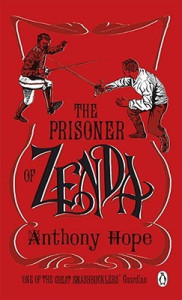
ImoReads… ‘The Prisoner of Zenda’ (1894) by Anthony Hope

Blog 4

“For my part, if a man must needs be a knave I would have him a debonair knave… It makes your sin no worse as I conceive, to do it à la mode and stylishly”

The Prisoner of Zenda  is without a doubt one of my favourite adventure novels. There is just something charming about this Victorian escapade; it’s got the setting, it’s got the action, it’s got the romance, it’s got the glory. 

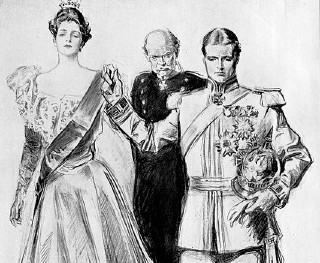
The story centres on the English gentleman and loveable rogue Rudolf Rassendyll and his trip to the fictional central European country of Ruritania. He happens to arrive on the eve of the king’s coronation, and he just so happens to be the king’s distant cousin, namesake, and spitting image replica. When the king’s dastardly younger half-brother, the Duke Michael of Strelsau, drugs and imprisons the king in the Tower of Zenda in a bid to take the throne, the king’s trusty attendants come up with a brilliant yet risky plan. Colonel Sapt and Fritz von Tarlenheim enlist Rassendyll to play the part of the king until they can rescue the real deal. What follows are swords-drawn encounters with Michael’s henchmen, plots and counterplots from both sides, and a jolly good adventure.

Of course, the story would not be complete without a little romance; Rudolf enjoys playing the king although he is committed to the plan to free him, but what he did not expect was to fall in love with the king’s fiancé, the princess Flavia. With the help of the Duke’s mistress Antoinette de Mauban, our trio of heroes manage to outwit the Duke and his henchmen to free the king, but Rudolf and Flavia, both bound by duty, must sadly part at the end.

What is great about this plot is that apart from the small group of people who knew about the identity of the ‘false king’ (which eventually includes Flavia herself), the rest of the world remains none the wiser. It is amazing how such a gamble paid off and gives the reader a sense of satisfaction by being in on this great secret. When I imagine Hope’s country of Ruritania, I see a Germanic-inspired nation with fairy-tale castles and a black forest, which only add to the adventure. If you like a good urgent gallop through such scenery, then thanks to The Prisoner of Zenda you can eat your heart out.

Rudolf Rassendyll is undoubtedly my favourite character, and I am glad Hope made him the first-person narrator. Although he already lives a life of leisure being from an aristocratic background, even he admits being tempted to usurp the Ruritanian throne forever. Indeed, when offered a kingdom who wouldn’t say yes? It is this honesty plus his frank humour and in the end stronger sense of morality and bravery that make Rudolf a king by nature, if not truly by right. You can’t help but root for him, so whenever there is a showdown between him and one of the Duke’s henchmen – Rupert of Hentzau in particular – you can’t put the book down until you know the outcome. (This explains why I read the book in two days). He risks his life, gives up his crown and his true love for his distant cousin, and this is the truest picture of Victorian heroism.

Are you thinking that ‘Ruritania’ sounds familiar? Hope’s novel had such an impact that it kickstarted the genre of ‘Ruritanian romance’ in literature, theatre and film. That is, stories set in a fictional central or eastern European country that are, like The Prisoner of Zenda, swashbuckling tales of adventure and intrigue, with the themes of romance and honour being the most prominent and focusing exclusively on the ruling classes. In general usage, Ruritania is a placeholder country name used to make points in academic or political discussion. The impact of Hope’s novel is undeniably far-reaching.

I enjoyed my trip to Ruritania so much that I will shortly be returning via the sequel, Rupert of Hentzau (1898). If you want to be taken on an exciting adventure that you just can’t find in today’s world, take a leap back in time to the nineteenth century yourself and be dazzled by Rudolf, Ruritania and romance.

Happy reading,

Imo x

Categories
English literature

ImoReads… ‘Three Men in a Boat’ (1889) by Jerome K. Jerome

Blog 2

“What the eye does not see, the stomach does not get upset over”

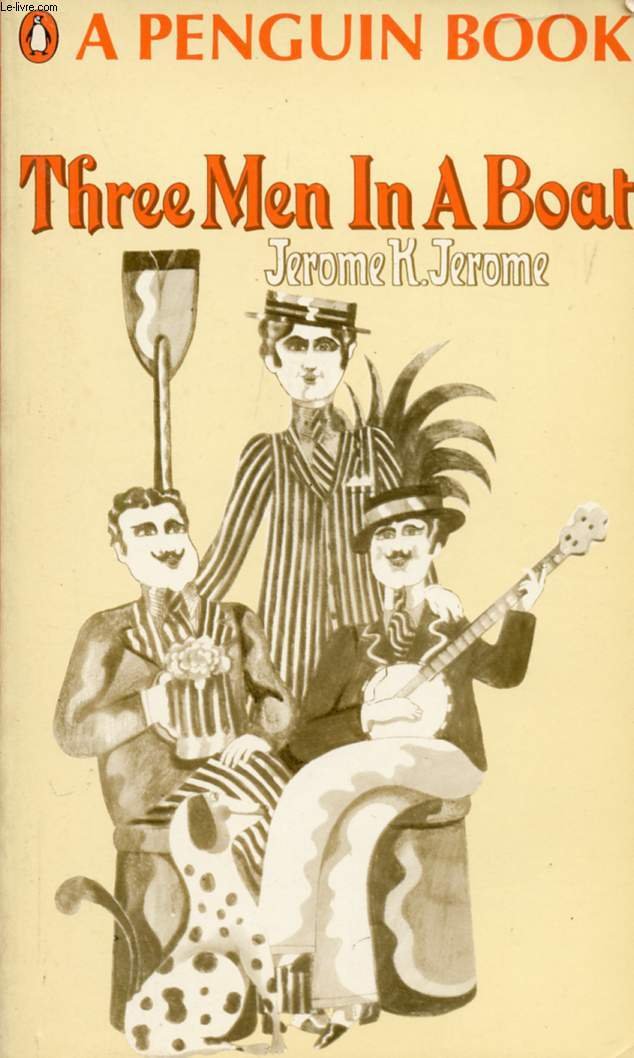
I thought I would kick-start my blog by discussing one of English literature’s most enduringly funny novels. Written in 1889, Jerome K. Jerome concocted the perfect comic tale to match the trend for recreational boating in the late Victorian era. I for one am very glad that this work, originally meant to be a travel piece for Home Chimes magazine, morphed into the hilarious escapades of three men holidaying in a boat. In the words of Jerome himself, ‘nothing else seemed right’.

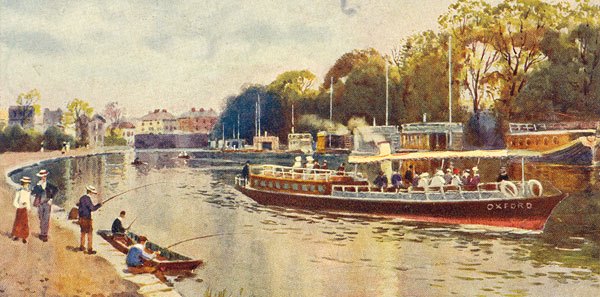
The general premise of the novel is three City clerks – J. (the narrator), George and Harris – taking a two-week boating trip along the Thames from Kingston to Oxford and back again (which is particularly enjoyable for me to read as a Kingston-dweller). We cannot, of course, forget their canine companion Montmorency, not least because the subtitle of the book commands us not to (to say nothing of the Dog!). What follows is a humorous voyage of mishaps, both on this trip and through anecdotes that spring to the narrator’s mind along the way. 

What I enjoy the most about Jerome’s novel is its refreshing triviality. Unlike a lot of Victorian novels, there are no devastating plot twists or stories of unrequited love; like the boat, the novel trundles along, and is at once about lots of things and about nothing at all, and that’s where its charm derives. The most dramatic things to happen are perhaps one of the party falling into the river, or getting lost in Hampton Court Maze, or even that (shock horror!) there are no inns to stay in at a certain point of the trip. Such novels are sometimes overlooked in the rankings of great literature, but I think they are uniquely brilliant when they can still make us laugh over 100 years after publication.

Indeed, Jerome’s use of quintessentially English humour is such that an English audience can still very much relate and laugh along. For example, in one sentence he manages to sum up the immortal English outlook on the weather. That is, ‘but who wants to be foretold the weather? It is bad enough when it comes, without our having the misery of knowing about it beforehand’. If this does not define Englishness I don’t know what does. 

However, for me, one particularly funny incident stands out. After a long hard day on the river, our three “hangry” gentlemen despair that there is no mustard to go with their beef. However it is deemed that ‘life was worth living after all’ when they discover a tin of pineapple. Sadly for them (although happily for us), there is no tin-opener to be found, so what ensues is ‘a fearful battle’ between the men and the tin. A hilarious sequence of imaginative attempts to open the tin to no avail complete with extreme frustration from the protagonists provides an overwhelmingly relatable comic thread inspired by ordinary everyday inconveniences. 

Contributed to by the chuckle-worthy bumbling about of our three men in a boat and their beautifully eloquent nineteenth-century language, Jerome paints quite the picture of nonchalant, carefree joy and timeless Victorian farce. The fact that Three Men in a Boat sold staggeringly well at the time and has never gone out of print since it first appeared in 1889 suggests that the British reading public wholeheartedly agrees with my assessment.

If you’re looking for a light-hearted summer read to enjoy while sunbathing in your back garden (or, indeed, Thames-side) then Three Men in a Boat is the one for you. To really get into the spirit I would advise snacking on beef and mustard and/or tinned pineapple while reading… 

Happy reading!

Imo x