“We don’t know others. They are an enigma. We can’t know them, especially those we are most intimate with, because habit blurs us and hope blinds us with truth.”
The Guardian describes The Little Red Chairs as ‘a chilling masterpiece’, and after reading it I’m inclined to agree. In terms of style and content it is unique, making for a compelling and thought-provoking read.
The Little Red Chairs is set in the small fictional Irish village of Cloonoila where the community is tight-knit. It is here we meet Balkan war criminal Dr Vlad, who hides out in the village posing as a holistic healer and sex therapist. The story is told from the perspectives of the women he meets. One woman in particular, Fidelma, is drawn to Dr Vlad. Having suffered two miscarriages with her husband, she hopes Dr Vlad can cure her. Stuck in a lonely and somewhat suffocating marriage, Fidelma embarks on an affair with Dr Vlad and falls pregnant, which unfortunately coincides with Dr Vlad’s arrest and the revelation of his true identity to herself and the rest of the shocked community. The events that follow force us to confront morality, humanity and darkness in this novel that is at once uncomfortable intimate as well as daring and far-reaching.
Dr Vlad is loosely based on the real life ‘Butcher of Bosnia’ Radovan Karadžić, who is currently serving a life sentence after being convicted of genocide, crimes against humanity and war crimes by the International Criminal Tribunal for the former Yugoslavia after the Bosnian War. O’Brien has cleverly weaved him into the novel as Dr Vlad, the same way that she seamlessly swaps between tenses and character headspaces. All of this culminates in a distinctive narrative style. It can take some getting used to but it’s worth it for the impact the book will have on you.
The Little Red Chairs is an original novel which will leave you pondering world events, day-to-day struggles and pressing moral questions for some time after. Astonishing when you consider that O’Brien was 85 at the time of publication. A must-read!
Lord Marshmoreton: “I wish I could get you to see my point of view.”
George Bevan: “I do see your point of view. But dimly. You see, my own takes up such a lot of the foreground.”
I was given a lovely edition of this book for Christmas and it proved to be a delightful first foray into the world of P.G. Wodehouse. The speed at which I finished reading A Damsel in Distress is testament to how good the book is, but, as with all great books, I also found myself disappointed I wouldn’t get to experience reading it for the first time again.
The novel begins with a chance encounter between Lady Maud Marsh and American composer George Bevan in London. Maud is looking for another American, Geoffrey Raymond, who she met the previous year. Grappling with her parents’ disapproval of this match, Maud’s visit is on the sly and she enlists the help of a bemused George when she spots her brother Percy, who mistakes George for Geoffrey.
What follows is an amusing set of events at Maud’s family home, Belpher Castle, wherein a complicated network of friendships, romantic entanglements and household whisperings make for a delightfully funny read.
One of my favourite comic tropes in both theatre and fiction is the use of mistaken identities. A centuries-old device often used by Shakespeare, it never fails to bring a smile and a laugh to the reader. A Damsel in Distress is littered with examples of mistaken identity, some accidental and some rooted in purposeful deception. Wodehouse amplifies this technique by juxtaposing the drama between Belpher Castle’s residents with the presumptions of the ever-watchful household staff, always keeping the reader as the only one with the full picture of knowledge.
Wodehouse is known as one of the most accomplished and widely read humourists of the twentieth century but this was my first experience of reading one of his novels. Even in non-climactic moments, his writing style and narration had me grinning with amusement throughout. The humour is so quintessentially English that I wonder whether translations into foreign languages can really do his words justice.
I can now call myself a Wodehouse fan and since reading A Damsel in Distress I have acquired two more of his books. While it might be a bit ambitious to try and read his whole catalogue (which contains over ninety books, forty plays and two hundred short stories!) I look forward to delving into many more of his comic escapades.
“A lifetime of quiet watchfulness had convinced her that the truth about people was seldom to be found in the things they freely admitted. There was always more below the surface than above.”
My mum bought me this book for Christmas after reading it herself – compelled to recommend it to several others as well as myself, I knew I was in for a good read. I found Small Pleasures to be quietly humorous as well as gut-wrenchingly sad, and thought it revealed interesting insights into everyday life in the 1950s.
The novel focuses on Jean Swinney. Approaching 40, her hopes of achieving fulfilment in life are swiftly fading. Her time is taken up with the mundane routine of everyday life – namely caring for her live-in suffocatingly dependent mother and working at the local paper on content mostly related to housekeeping. With no social, romantic or family life to speak of, Jean takes her relief from her repetitive suburban existence in small pleasures – the first cigarette of the day, a glass of sherry before Sunday lunch.
Everything changes when Jean gets a new assignment; an investigative piece on a local woman (Gretchen Tilbury) who claims to have given birth to her now ten-year-old daughter Margaret without any involvement from a man. Jean conscientiously tries to substantiate Gretchen’s story by delving into her past and having medical tests done on both mother and daughter, all the while becoming closer to Gretchen, Margaret and Gretchen’s husband Howard.
Something that struck me about this novel is that the life Jean is living is one that many people probably found themselves stuck in during the post-war period. To the twenty-first century reader, the food eaten by Jean and her mother is lamentable. Livers and hearts and things in tins that really shouldn’t be. When paired with their rather drab furnishings & clothing attire, lack of treats and unwillingness to spend any money on anything, you do get a real sense of that continuing aftereffect of the war.
It is why you become very easily invested in the unexpected romance which blossoms between Jean and Howard as it brings both of them a new lease of life. While his marriage to Gretchen is more of a companionship anyway, you feel very pleased that these two unprepossessing individuals have found love in each other when they both previously felt that all hope was lost in that regard. As Jean becomes more and more intwined with the Tilburys – becoming friends with Gretchen, falling in love with Howard, becoming very fond of Margaret – her investigation into the so-called putative birth becomes complex and arguably, somewhat morally compromised.
Small Pleasures is a real page-turner; the plot line of the virgin birth investigation aligns seamlessly with that of Jean and Howard, both of which reach a particularly anguishing conclusion. I would highly recommend this novel – you will find yourself getting sucked in immediately and thinking about it for days afterwards.
“Rain they take as a personal affront, shaking their heads and commiserating with each other in the cafés, looking with profound suspicion at the sky as though a plague of locusts is about to descend, and picking their way with distaste through the puddles on the pavement.”
I confess that I have not read many memoirs, let alone travel themed ones, but after reading A Year In Provence I can see why it has a reputation for revolutionising this kind of writing and accidentally creating a new genre. Once an exclusively high-brow preserve, Peter Maybe brought travel writing to the reading public and A Year in Provence remains one of the most successful travel books of all time.
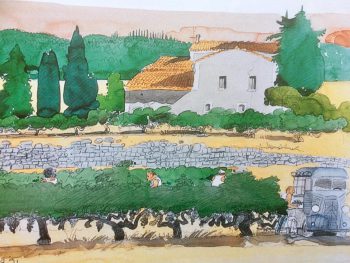
The book follows the author as he and his wife up sticks from London and move to the village of Menerbes in the south of France in the late eighties. Mayle said that he had intended to write a novel upon moving but got so distracted by the ways of the Provencaux that he couldn’t help but write about that instead. Set out in chapters following the months of the year, we experience Peter and his wife navigating all sorts, everything underpinned by amusing and unexpected cultural differences. The cuisine and meals out, work on the couple’s house, garden and vineyard, grappling with strange local customs and a strong local dialect, wanted and unwanted guests, truffle hunting, goat races and coming to terms with the infuriating complexity of French bureaucracy all feature in this year of learning curves and growing pains.
While I don’t envy some of the more challenging experiences in A Year in Provence I couldn’t help but wish I could teleport to Provence every time I opened the book. In many ways Mayle perfectly captures the idyllic quality of French rural life. The sense of community and the kindness of the locals, the beautiful surroundings and the exceptional gastronomy to name a few. Mayle writes with incredible wit, making me smile with delight or even laugh out loud on several occasions.
Written 35 years ago, it is interesting to compare the experience of expats then and now. Though they only moved across the channel, they may as well have moved to a new world. No internet or mobile phones to help with translating, navigation or pre-departure regional research. No FaceTime to see home anytime you want. Reading A Year In Provence as a borderline millenial/Gen Z-er, I know that if I moved somewhere with an unfamiliar culture and language it would never be such full immersion as experienced by the Mayles due to the advancements of technology in an increasingly connected world. In this sense, the book represents a precious snapshot in time.
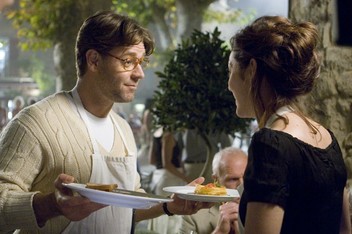
A Year In Provence did so well that it even became a bestseller in France, following some initial resistance. Mayle continued to write about his life in Provence, having to move away for a few years just to escape the hordes of tourists coming to Menerbes to seek him out. He even wrote a novel partly inspired by his own memoir in 2004 called A Good Year, which was subsequently made into a film starring Russell Crowe and Marion Cotillard. As we head into winter here in England, I highly recommend A Year in Provence as a suitable escape to the idylls of southern France.
“I need you to tell people this; I need you, when you get back, to tell them: the brutality is terrible. And yes: the chaos is very great. But tell them: greater than the world’s chaos are its miracles.”
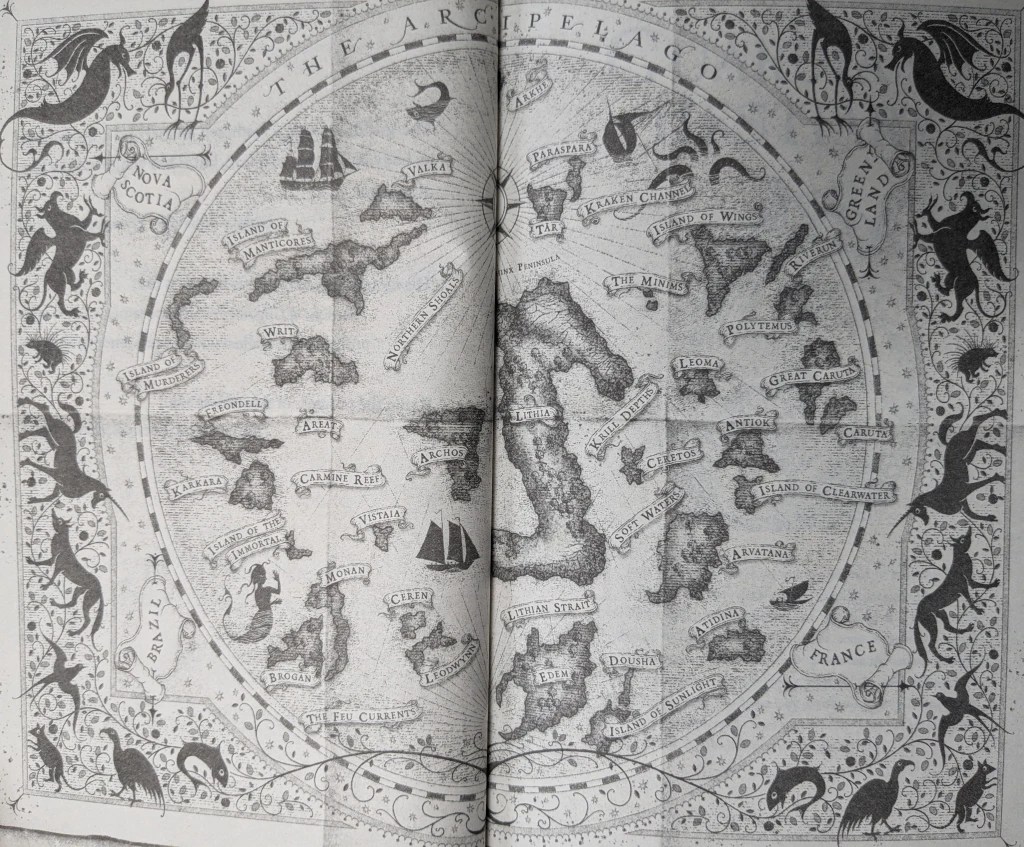
“There was Tolkien, there is Pullman and now there is Katherine Rundell” says Michael Morpurgo in his review of Impossible Creatures. Other glowing reviews place her alongside JK Rowling, C.S Lewis and Lewis Caroll for this remarkable work full of imagination, magical delight and wonder. I suspect that the fantasy realm of The Archipelago revealed to us in Impossible Creatures will join Narnia, Hogwarts, Neverland and Middle-Earth and many more in the fantasy hall of fame in no time at all.
Impossible Creatures follow Christopher Forrester, who has been sent up to Scotiand to stay with his grandfather. One day he rescues, somewhat in disbelief, a drowning baby griffin from a hidden lake and suddenly his life changes irrevocably. The adventure that follows takes him to The Archipelago, a hidden cluster of islands where mythical creatures and humans still live side-by-side. There he meets and befriends mysterious girl on the run Mal with whom he will transform the destiny of not just The Archipelago but the world in its entirety.
Given the name of the novel I feel like I must discuss the creatures encountered by Christopher and Mal as the story weaves its course. Some will be familiar to us all – dragons, unicorns, centaurs, krakens, griffins, mermaids, sphinxes – but there are even more that Rundell introduces us to, inspired by myths and legends from histories and cultures spanning the entire globe. Never before had I heard of the al-miraj, a large horned hare, first mentioned in medieval Arabic literature. Rundell describes them as possessing dazzling beauty and as seekers of the wise and the good. Longmas, originally of Chinese mythology, are winged scaled horses that boast breathtaking speeds and strength.
Both Christopher and myself as the reader were almost the most astonished to read about the most harmless creatures in the novel, the Borometz, also known as the vegetable lamp. Originating from seventeenth-century legend in Central Asia, Borometz’ are zoophytes (animal plants) thought to grow sheep as their plants. Connected to the plant by a tendril / umbilical cord, once the sheep has grazed the land around the plant both itself and the plant will die. Therefore, kindly folk in The Archipelago carry seeds with them at all times to plant around a Borometz when they encounter one. Readers will be pleased to know that Impossible Creatures begins with a incredibly handy and beautifully illustrated ‘Guardians Bestiary’ so you can get to grips with the bewildering range of creatures you are soon to meet.
While classified as a children’s/young adult novel, Impossible Creatures can be enjoyed by all ages, much like Lord of The Rings, Harry Potter, Alice’s Adventures in Wonderland, Peter and Wendy, The Chronicles of Narnia and others classified in the same way. It takes great skill as a writer to create something multilayered and engaging to read for such a wide audience. It was a joy to see someone’s imagination bursting forth to portray such a unique world filled with vibrant, quirky characters, sharply funny lines and a gripping overarching plot. You know that a book is good when you feel like you’ve entered its world yourself and that each time you have to put it down is a lingering struggle.
As we head into a cold and wet British autumn you might be in need of an escape from the banalities of everyday life, particularly if you are in your grown-up stage of life – Impossible Creatures will do that for you and more.
“Life was something you didn’t argue with, because when it came down to it, whether you barracked for God or nothing at all, life was all there was. And death.”
One of the great Australian novels, I was gifted Cloudstreet by my parents ahead of a big solo trip to Australia – my first visit to one of my now favourite countries. There was something extra special about reading it while I was in Australia. I am a fan of epic novels and have reviewed several on this blog to date, and this one certainly doesn’t disappoint.
Forced by separate personal tragedies, in 1943 two poor families – the Pickles and the Lambs – leave their rural homes and come to Perth, Western Australia, where they share a large house called Cloudstreet. Left to the Pickles by a relative, they rent out half the house to the Lambs, who open a grocery store on the ground floor. The Pickles family comprises parents Sam and Dolly, plus children Rose, Ted and Chub. Sam and Oriel Lamb are parents to Mason (nicknamed Quick), Samson (nicknamed Fish), Hattie, Elaine, Red and Lon.
Over the next twenty years, the two families live side by side and we live with them through their experiences, relationships and hardships. While major events in the world occur throughout the story such as the end of WWII, the Korean War and the assassination of JFK, these only distantly impact the Pickles and the Lambs. Cloudstreet filters worldly events through a domestic, rooted lens. We learn that the Pickles have got by on luck and will shirk work where possible whereas the Lambs are devoutly religious and value hard work to achieve God’s grace.
The theme of community persists throughout Cloudstreet – it celebrates it as the two families learn to live alongside each other. Connections to the past, to each other and to one’s environment also come through strongly. While some family members do at points venture away from Cloudstreet, the house is at the centre of the novel.
Winton’s writing style in Cloudstreet is beguiling and quite unlike any other epic novel I have read. Paired with the ups, downs and growing up that the families go through over the twenty year period, Cloudstreet makes for a captivating read and an eye-opening look into the lives of ordinary people in mid-century Australia.
“From old habit, unconsciously he thanked God that he no longer believed in Him.”
As soon as I began reading Of Human Bondage, I knew I had found something special. Often cited as Maugham’s masterpiece, this semi autobiographical novel might be the most important English bildungsroman since David Copperfield. It’s a novel rich in culture and intellect as well as taking us through tortured relationships and intense self-criticism. For me, Of Human Bondage has achieved a place on the list of books that I wish I could read again for the first time.
The novel follows protagonist Philip Carey, an orphan raised by his clergyman uncle and kindly aunt. Like Maugham, Philip is afflicted with a clubfoot. As a boy, Philip is chafing under the monotony of Victorian vicarage life and is desperate for experience, love and a miracle cure for his deformity. We follow him through boarding school where he loses faith in God when there is no improvement to his foot. He then escapes to study in Heidelberg before enjoying a brief period in Paris trying to make it as an artist. On his return to London, Philip encounters Mildred the waitress for the first time, and here begins the masochistic affair which almost ruins him.
Maugham always maintained that Of Human Bondage is “not an autobiography, but an autobiographical novel”, though he certainly poured a lot of himself into the character of Philip, making him an authentic, interesting character to follow. He is hungry for love, sexual encounters and is at times filled with an acute self-loathing, all of which young people today could relate to on some level. Astonishingly, Maugham first wrote the manuscript aged just 23, though it was not published until later on. Of Human Bondage is bursting with real emotion though some of the events are imagined or borrowed from elsewhere. Some time later Maugham said of writing the novel, “I found myself free from the pains and unhappy recollections that had tormented me”. The title of the book, borrowed from Spinoza’s Ethics, has meaning both for the author and for the protagonist then. Philip finds himself bound and then freed in many contexts throughout the novel and as the reader you find yourself rooting for him at each turn.
My favourite part of the novel is when Philip is living in Paris and attending art school. He is there during a vibrant period of French art, literature and culture and I enjoyed experiencing this vicariously through him. Though he doesn’t have much money, he and his group of friends engage in Parisian life as much as they can, have heated idealistic intellectual discussions and try their best with their artistic endeavours. Philip and his companions are just young people trying to make it in the world as best they can, with this astonishing backdrop of Paris at the turn of the century.
In fact, during the many strained episodes of the Philip and Mildred saga, I wished on Philip’s behalf that he had never left Paris. Given the sensitivities of the time at which the novel was written, the intimate details of the relationship are left off the pages of Of Human Bondage, but the tension, strife and mistreatment come through clearly enough through the pair’s other interactions. Mildred is an unextraordinary woman who manages to take advantage of Philip’s naiveté and desperation for love and acceptance. At many moments, the reader feels compelled to shake Philip to make him come to his senses. The amount of time, money and self-flagellating thoughts he wastes on the manipulative, ungrateful Mildred is painful to observe. Though it should be acknowledged, at several moments in the novel Philip describes Mildred in a way that is extremely misogynistic, making us question whether his lack of experience and understanding of women in general has led him to subconsciously hate them a little bit. Whether this is just Philip’s voice or Maugham’s voice remains to be seen. When Philip is free from Mildred for the last time, it is certainly a moment to rejoice.
I would absolutely recommend this novel to anyone interested in following one man’s story through it’s many interesting chapters – travel across Europe, experience growing pains and indulge in some art and culture.
“Independence is all very well, but we animals never allow our friends to make fools of themselves beyond a certain limit.”
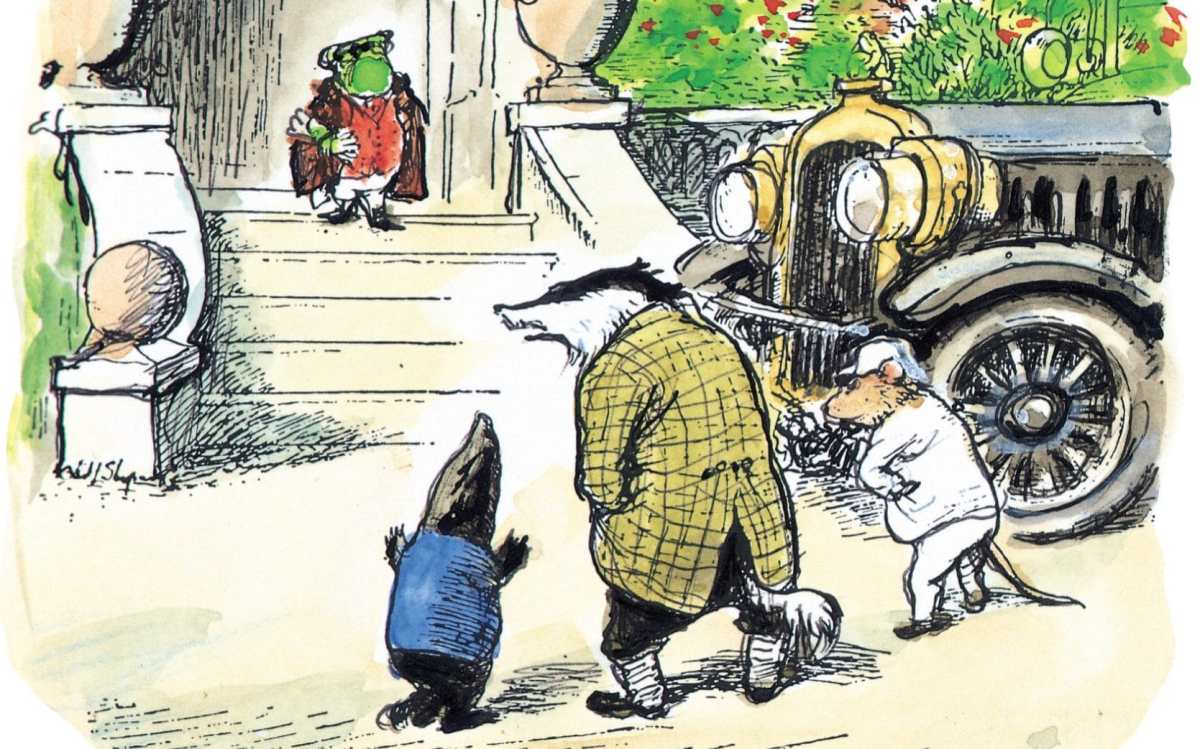
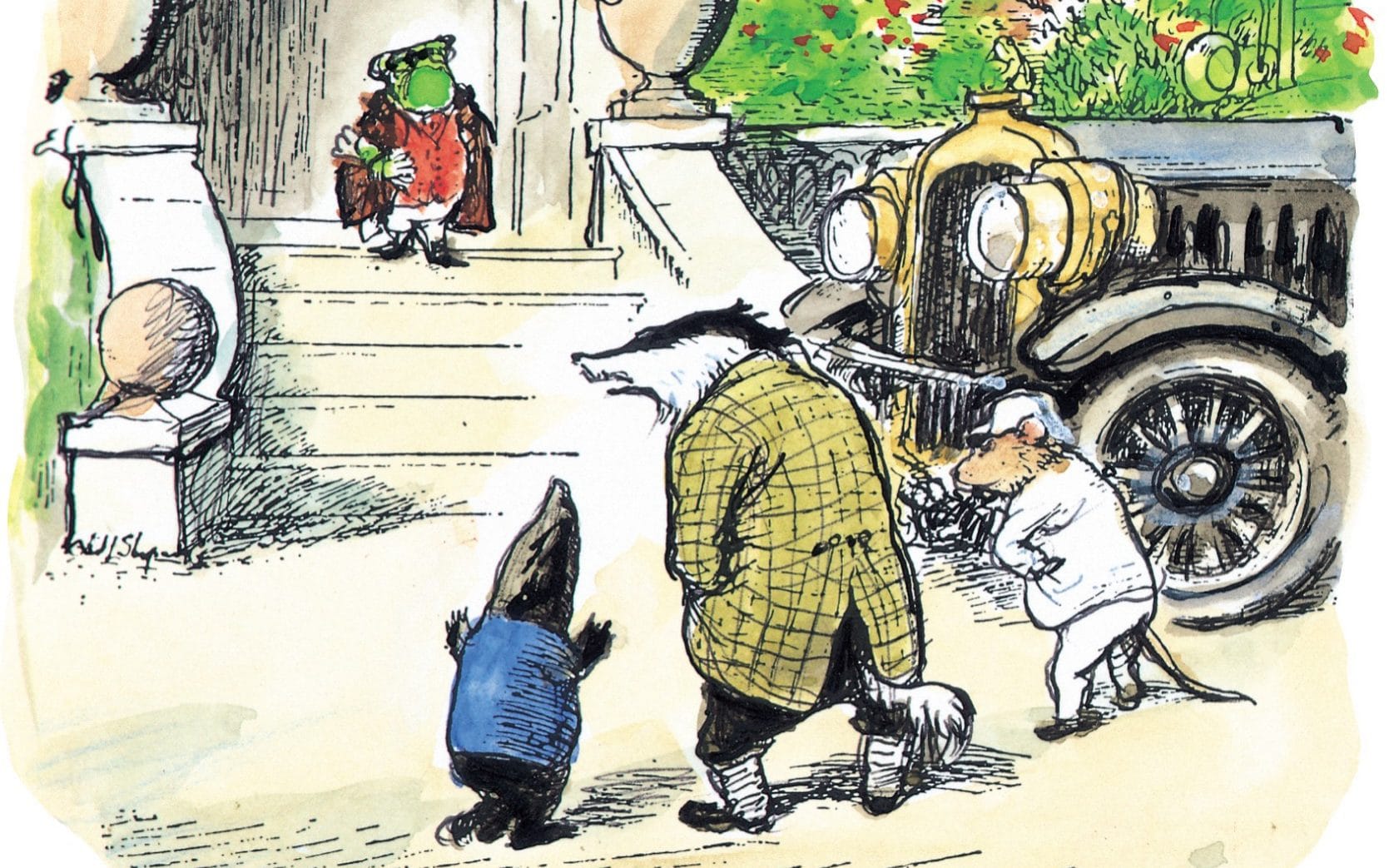
I was thrilled to receive a beautiful hardback copy of The Wind in the Willows, complete with the masterful original illustrations by E.H. Shepard, for Christmas. Though I have read and re-read many children’s classics over the years, this was my first time reading The Wind in the Willows and it was an absolute joy. It truly is timeless and can be enjoyed by all age groups.
The novel begins with Mole venturing out of his burrow to experience the world above. There he meets the brave Ratty, the kind Badger and the mischievous Toad. These four unlikely friends are in for adventures galore in the English countryside, much to the enjoyment of all readers.
What is brilliant about The Wind in the Willows is how Grahame has managed to create a story about animals, but has given them enough human characteristics to create a charming and amusing novel. For example, Ratty, Mole and Badger all live in their expected habitats – the riverbank, a burrow and a set. And then there is Toad, the aristocrat of the group, who lives in the mansion Toad Hall and has an obsession with motor cars. They are all finely clad in waistcoats and tweed jackets, they enjoy rowing down the river and always love a feast. Ratty in particular loves a picnic, containing delicacies like cold beef, cress sandwiches and ginger beer. They are constantly referring to each other as ‘old fellow’ and similar terms of endearment popular at the time, further adding to the impression that they are classic English gentlemen. And yet, we are still acutely aware that they are animals. Referring to living through winter and hibernation we learn that, “no animal, according to the rules of animal-etiquette, is ever expected to do anything strenuous, or heroic, or even moderately active during the off-season of winter.” Grahame has somehow created a world in which being an animal and an English gentleman makes perfect sense, and this makes for a witty, joyful read.
The world in which The Wind in the Willows takes place further emphasises that we are peeking into an English paradise. The summer is always warm and sunny, and the action mainly takes place along the beautiful blue river, where we have the luscious green riverbank and fields, we have the wild wood and of course Toad Hall which is reminiscent of a typical English country estate. The animals even have a few encounters with local villages, but they do not ever venture past a certain point, into the ‘Wide World.’ Grahame was partially inspired by Henley-on-Thames in Oxfordshire when writing The Wind in the Willows.
This novel came about based on the stories that Grahame used to tell his son Alastair at bedtime, and it is said that his son was the inspiration for the rascally character of Toad. I am so glad that many generations since have got to enjoy this tale which started off as a bedtime story between father and son. Grahame has created something magical and memorable, with humour and charm that will never fade.
“I could recognize him by touch alone, by smell; I would know him blind, by the way his breaths came and his feet struck the earth. I would know him in death, at the end of the world.”
I have wanted to read The Song of Achilles ever since being blown away by another of Miller’s novels, Circe. Much like how Circe is an imaginative homage to the goddess encountered by Odysseus in Homer’s The Odyssey, The Song of Achilles is an original take on The Iliad, one of the best known stories in the West. The heroes and villains of the Trojan War are brought to life like never before in this story of love, friendship, power and violence.
The Song of Achilles is narrated by Patroclus, an awkward young prince living in the age of Greek heroes. Exiled to the court of King Peleus on the small island of Pthia, he strikes up an unlikely friendship with Peleus’ son, the golden boy Achilles. As the two boys become young men, their bond develops into something deeper, despite the displeasure of Achilles’ mother, the sea goddess Thetis. Over the years, their companionship grows stronger and the two boys are still enjoying their carefree youth when Helen of Sparta gets kidnapped. This turn of events means that Achilles must go to fight a war in distant Troy to fulfil his destiny. Torn between love and fear for Achilles, Patroclus goes with him.
The relationship between Achilles and Patroclus is highly significant in all stories relating to the Trojan War. In The Iliad Homer describes their relationship as deep and meaningful but never says explicitly that it is a sexual relationship. However, they were represented as lovers in Greek literature during the archaic and classical periods and it has been debated and contested ever since. Strong bonds between men was a custom in Ancient Greece, and this relationship could be intellectual, political and sometimes sexual. Miller has chosen to make their relationship deep and meaningful on many levels including sexual, and as such has created a moving, heartbreaking story.
As Patroclus narrates the novel, we are aware of his awe and admiration for the beautiful Achilles from the moment he arrives in Pthia. After several stolen glances and chance encounters, the pair finally speak, and a tentative friendship begins. In fact, they are good friends for a long time before anything else develops between them, though it’s clear they both desire each other. Miller’s smooth prose conveys their relationship as sexy and intense as well as thoughtful and sensitive, making the reader extremely emotionally invested in their bond, particularly as the danger of war looms.
Miller spent ten years researching and writing this book but has succeeded in crafting a seemingly effortless narrative that takes all the key elements of The Iliad and other stories to create a highly affecting version of Achilles. Where once stood the callous, cold superhero is now a man with depth who can be kind as well as godlike. He is not just a hero but a lover, a friend, a son, a father, a husband and most importantly, a normal human being. This makes the reader all the more emotionally engaged in the relationship between Achilles and Patroclus, because it is clear they are the only people for each other.
The Song of Achilles is an epic novel, with several years passing before the ten year long Trojan War. I enjoy epic novels because you really become invested in the characters, their development and their world. A key moment in the book is when the pair realise that Achilles must go to Troy because it is decreed in a prophecy with a heartbreaking end. As a reader who has been following their story since boyhood it is natural to be as sad and fearful as Patroclus about this. Though for years they agree to fight the battles but purposefully avoid the terms of the prophecy, in the end it is their love for each other that eventually sees it fulfilled with all the tragedy as befits an Ancient Greek tale.
This book is a vividly atmospheric, enthralling and emotional read which sees the deepest human connections challenged against a backdrop of violence, politics and power. It is a joy to read this depiction of Achilles and Patroclus’ relationship – it is certainly a poignant story about love and friendship. I would highly recommend this book to anyone and everyone!
“The horror, whatever it was, had not yet entirely spoiled that marvellous beauty”
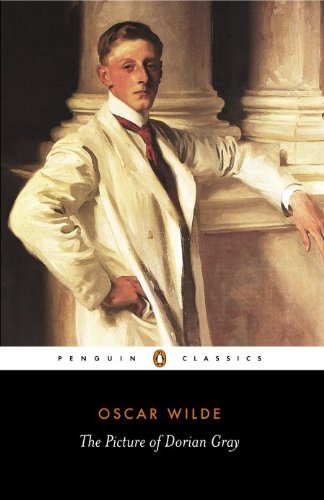
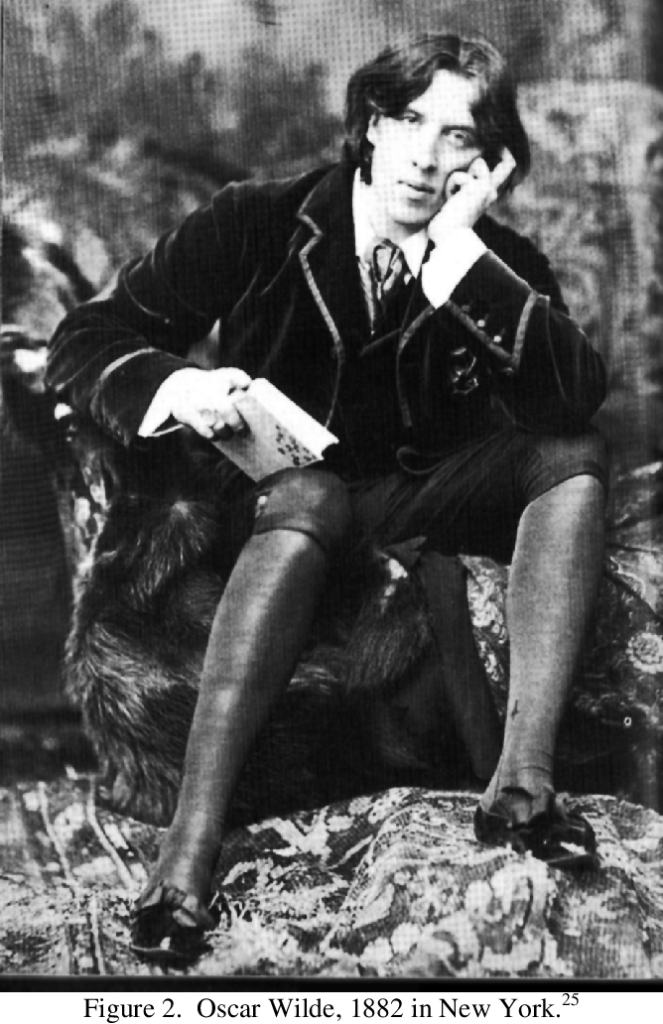
There is and always will be a soft spot in my heart for Oscar Wilde, certainly one of the most provocative literary figures of the nineteenth century. After going to a production of the brilliantThe Importance of Being Earnest (blog coming soon) with my mum some years ago, I became infatuated and have since read all his short stories, plays, essays and this, his only novel. He was even the subject of my 5000-word Extended Project Qualification (EPQ) undertaken alongside my A-Levels, in which I tasked myself with the question, ‘to what extent was the Victorian press responsible for Oscar Wilde’s celebrity?’ Research for this took me to the National Archives, where I felt privileged to read his handwritten letters from his time in prison. Humbly then, I consider myself to be the epitome of the Wildean ‘fangirl’ if such a thing exists.
As part of my EPQ I examined the blatant homoeroticism running through The Picture of Dorian Gray, as it was used as evidence against Wilde in his sensationalised trial for ‘gross indecency with other men’ in 1895, a proceeding which certainly elevated his celebrity. Therefore, I am going to use this blog to discuss other key themes in the text such as Gothicism and aestheticism.
This novel is an ill-fated tale of moral decline and philosophic instruction for our unfortunate protagonist, the young aristocrat Dorian Gray. Basil Hallward, Dorian’s close friend and a professional artist, paints a portrait of Dorian because he is completely infatuated by his youth and extraordinary beauty. At first Dorian is delighted with the painting; it only dawns on him that his beauty – so perfectly preserved on the canvas – will fade with age after Basil’s amoral friend, Lord Henry Wotton, informs him of the fact. So enamoured with his own radiant portrait, Dorian exchanges his soul for eternal youth and beauty in an exquisitely Faustian twist. As a result, he is drawn into a corrupt and sinful double life, indulging unspeakable desires in secret while maintaining a gentlemanly façade to polite society. Only the painting bears evidence of his decadence while he himself retains his youthful innocence and beauty.
The lurking presence of the painting that becomes harder and harder for Dorian to ignore is one of my favourite gothic elements in the novel. The physical embodiment of his deal with the devil, the painting becomes more and more hideous each time Dorian does something terrible; as well as ageing repulsively, there is a chilling cruelty in the eyes and mouth of the painted Dorian that grows increasingly and unnervingly noticeable as the novel progresses. Locked away in a dark dusty room high up in the house, the strange horror of the painting is alike to a nightmare you can’t quite shake off.
And yet, Dorian is not too concerned with the degradation of the painting at first. He is too busy engaging in debauched delights; think opium dens and licentious behaviour in the darkest corners of London.
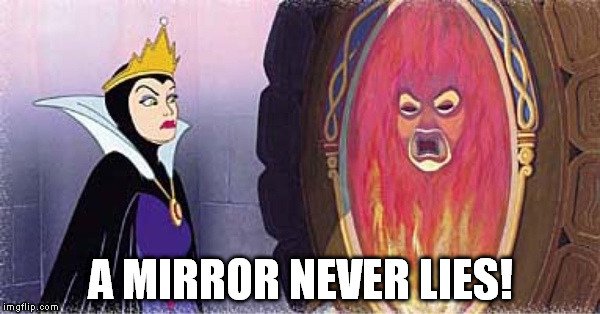
It is only when his manner and behaviour become too cruel for him to ignore – because indeed the soul can decay in more ways than one – that the painting and what he has done begins to weigh down upon him. In this way, the painting is a motif for an inverted magic mirror. It allows him to live for hedonistic pleasure for a time, but always reflects the ugly truth of his crimes back to him no matter how much he wishes it not to.
I find this very interesting in the context of Wilde’s ‘art for art’s sake’ aesthetic philosophy. Scathingly received by critics at the time for its homoeroticism and allusions to sins that were surely offensive to stiff Victorian moralities, Wilde fiercely defended The Picture of Dorian Gray. In a now infamous aphoristic preface to the non-censored 1891 edition, Wilde vigorously defends art for art’s sake. It is ironic that, although he was referring to the art of his writing, the idea of art for art’s sake is completely vilified in this story. That is, it turns out that the ‘work of art’ that is Dorian should have stayed on the canvas. His pursuit of eternal youth and beauty is his ruination, and it hurts many characters along the way. Wilde’s moral lesson here is that being good trumps looking good; a virtuous soul brings more happiness than beauty, which should only ever be ephemeral.
Dark though this tale is, I must laud its moments of comic relief, provided by Lord Henry ‘Harry’ Wotton. You cannot help but like this gentlemanly rogue despite his amorality due to the Wildean wit bestowed upon him. Many of Wilde’s most famous epigrams come from The Picture of Dorian Gray. An epigram is a phrase that expresses an idea in an interesting, clever, and surprisingly satirical way. Wilde always says the exact opposite of what you are expecting him to say. For example, Harry is of the opinion that ‘it is only shallow people who do not care about appearances’ which is decidedly not how that phrase is usually said. Wilde’s epigrams also turn out to be well-observed and pretty much true, such as in another golden example from Harry; ‘“It is perfectly monstrous”, he said, at last, “the way people go about nowadays saying things against one behind one’s back that are absolutely and entirely true”’. Harry’s enduring friendship with Dorian means that fortunately, readers are exposed to many a memorable epigram over the thirteen chapters.
So then, The Picture of Dorian Gray is a must-read Victorian novel, not only for its thought-provoking themes and intelligent narrative, but for its distinctly Wildean touch. An interesting question to ask yourself when reading it is, who is really to blame for the outcome of the novel? Is it Basil for painting the picture? Is it Harry for targeting Dorian with his bad influence and amoral philosophies? Or is it Dorian himself for enacting his fateful deal? It’s a moral conundrum but I’ll leave that for you to decide…

























 ImoReads