Categories
English literature

ImoReads… ‘The Fellowship of the Ring’ (1954) by J.R.R Tolkien

Blog 17

” Faithless is he that says farewell when the road darkens”
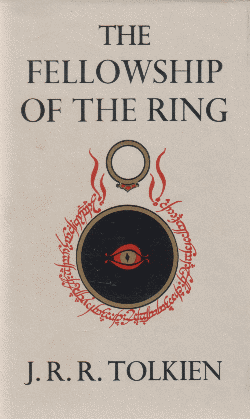
After finishing The Hobbit, I was more than happy to continue on my adventure through Middle-earth by delving straight into the first volume of the Lord of the Rings trilogy, The Fellowship of the Ring (TFOTR). I thoroughly enjoyed this novel as we start to see the consequences of Bilbo Baggins taking the One Ring from Gollum in The Hobbit playing out with ominous effect. More mature than The Hobbit, which Tolkien wrote for his children, TFOTR wrestles with themes of greed, power and violence as its heroes fight to keep the all-consuming darkness at bay. And yet the warming moments of humour, friendship and courage which often prevail against the gloom of evil keep the reader faithful in the power of good and fully ensconced in this exciting adventure.

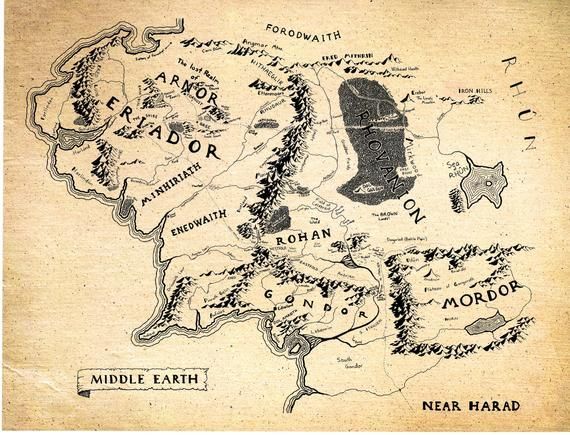
Set 60 years after The Hobbit, TFOTR deals with the fallout of Bilbo’s innocent taking of a gold ring from the creature Gollum. We discover that years ago, the dark lord Sauron created a set of Rings to give to the rulers of Men, Elves and Dwarves. However, Sauron deceived them by secretly making another, the One Ring to rule them all. Lost and forgotten about, this is the extremely powerful and dangerous Ring that came to be in Bilbo’s possession, unbeknown to him. To stop Sauron regaining the Ring and therefore bringing Middle-earth into an era of evil and darkness, a great quest must take place to destroy the Ring in the place of its creation, the fires of Mount Doom in Mordor. This is a mighty challenge which is why a select few, ‘the fellowship of the ring’, are chosen for the task.
The nine members are: Frodo Baggins, his gardener Sam Gangee, the wizard Gandalf, the elf Legolas, the dwarf Gimli, the men Aragorn and Boromir, and the two young hobbits Merry Brandybuck and Pippin Took. 

As had been proven by Bilbo, the corrupting influence of the Ring works much more slowly on hobbits as they are truly good creatures less easily swayed by greed and lust. This is why it is Frodo who bears the Ring while the others act as his guides and protectors. Met with much peril and evil along the way, the group also become firm and loyal friends. Although they encounter much danger and loss, their spirits are never fully dampened as they are often assisted by magical allies in their darkest hours. 

I know I waxed lyrical about Tolkien’s use of language in The Hobbit, but it deserves a quick nod here as well. He manages to create a real sense of disquiet and ill-omen in his narrative which is as thrilling as it is alarming for the reader. Let’s take for example the Black Riders, faceless, evil beings – formerly the nine Men gifted with Rings but who have faded away under their influence to become Ringwraiths dominated under Sauron’s will. Seated astride ebony black horses, they plague Frodo and company throughout the novel trying to obtain the One Ring. Tolkien portrays them as menacing phantoms always close at hand but not always seen. The feeling of being watched seeps eerily through the chapters; so much so that the reader feels as anxious for the characters to get to somewhere safe as if it were they themselves being constantly chased.

As TFOTR went on I found myself growing fond of every member of the fellowship, but I have to say my favourite character is Legolas the Wood Elf. Not only a moral and brave character who forms an unlikely friendship with Gimli, he also (like all elves) can slay an enemy with a delicate yet ruthless grace. In fact, all his movements are silent, swift and elegant which is always admirable to the average awkward human. One of the most wondrous sections of the book is when the company takes refuge in the dreamlike Elven realm of Lothlórien, ruled over by the Lady Galadriel and her husband Lord Cereborn. Tolkien’s imagination knew no bounds in creating this extraordinary place where each elf captivates the company and the reader with their endless poise and refinement.

Yet alas it is soon after this moment that the fellowship encounters great difficulty and splinters, which is where the novel ends. Luckily, I won’t be left on this cliff hanger for long as volume two, The Two Towers, is already in my possession. 

I’m glad to say that TFOTR is an extremely worthy successor to The Hobbit, and I look forward to continuing on with the saga of Middle-earth.

Happy reading,

Imo x
Categories
English literature

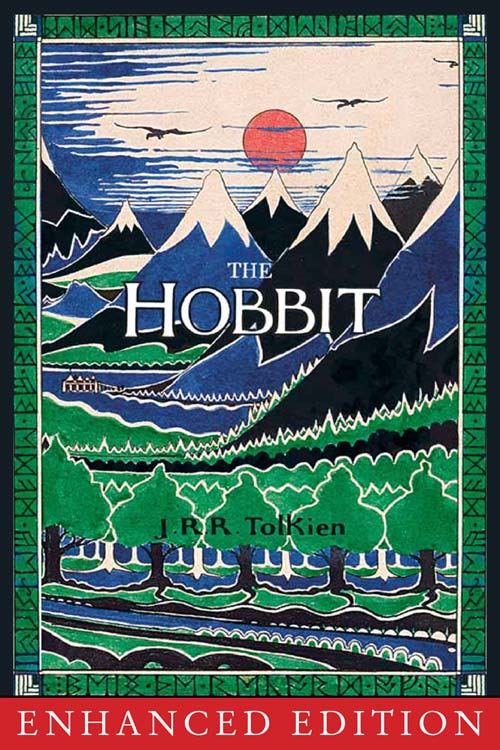
ImoReads… ‘The Hobbit’ (1937) by J.R.R Tolkien

Blog 16

“It does not do to leave a live dragon out of your calculations, if you live near him”

Dedicated to: OJP

The Hobbit is a great example of a novel that caught me off guard in how much I actually really enjoyed it. Alas, I admit that before I was bought a beautiful set of all the novels in the Middle-earth saga and was convinced to read them, I had never felt compelled to enter into Tolkien’s world of magic and myth. I’m embarrassed to say that I’d pretty much written off the Lord of the Rings series as being ‘for boys’, but how wrong I was. In fact, The Hobbit is one of the best adventure novels I have read; Tolkien’s mastery of plot, language, humour and imagination is superb, and somehow it retains an element of something quintessentially English despite its setting in a fabled, faraway land.

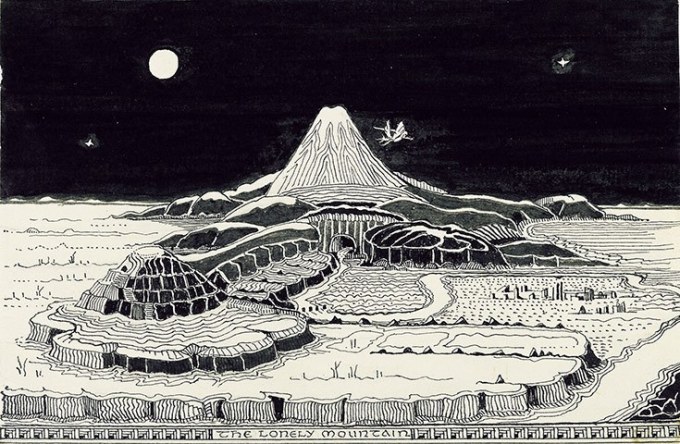
Although a relatively short novel, The Hobbit is rich in plot and detail. It tells the tale of an unassuming and unambitious hobbit named Bilbo Baggins, resident of Bag End in the Shire, who one day receives a visit from the wizard Gandalf the Grey and a company of dwarves led by Thorin Oakenshield. Quite suddenly, Bilbo is whisked away on an adventure to reach the faraway Lonely Mountain where resides the terrible dragon, Smaug the Magnificent, whose treasure they plan to raid in order to reclaim the dwarves’ homeland. Many trials and tribulations befall the company en route before the showdown with the dragon, and though at first Bilbo feels completely out of his depth, he soon surprises everyone (including himself) with his bravery, resourcefulness and strength in the face of peril.

I must dedicate a section purely to language here. Tolkien, aside from his world-famed career as an author, was recognised as one of the world’s leading philologists (philology: the branch of knowledge that deals with the structure, historical development, and relationships of a language or languages). His expertise comes through continually in The Hobbit, most obviously in Middle-earth character and place names, and his own creation of viable languages. Across all the Lord of the Rings books there are fifteen invented languages present, the most developed of which are the Elvish tongues. Amazingly, Tolkien started working on these while he was at school and continued refining their grammar and fictional history until his death in 1973.

However, on a more familiar level, I was captivated by Tolkien’s use of English. There is an urgency to his language that really allows the reader to feel the tension of various perilous situations along with the characters, whether they be trying to trick trolls or escape from the clutches of giant spiders in Mirkwood forest. The descriptive passages are phenomenal – particularly of the Elf stronghold Rivendell and of the Lonely Mountain itself – as a reader you become lost in these vibrantly imagined landscapes. And yet, not so lost that you miss the elements of quintessential ‘Englishness’ that permeate The Hobbit. I confess that I am always charmed by 1930s English diction so, even though the story is timeless, I can still appreciate the novel as completely of its era thanks to the diction (a particular highlight – Bilbo’s rather eloquent chat with Smaug the Magnificent amongst the treasure troves).

Amidst all the Middle-earth gallivanting, we should not omit the quiet country life of the Shire (a name which itself evokes a rural English county). Its humble, jolly folk who love a drink on occasion and its pleasant, familiar rural surroundings and lifestyle are not so far removed from the idealised English country life that has been the subject of many a non-fantasy novel across the centuries. I think Tolkien has imagined the Shire this way to help us bond with Bilbo, meaning we can be just amazed as him upon encountering all the elements of magic later on.

Tolkien initially wrote The Hobbit as a story for his children and despite its maturity (as all great children’s books possessed in the 19th& 20thcenturies), there are certainly some ‘children’s book’ elements that come through. Apart from the magical elements like dragons, elves, wizards, goblins and orcs facing off in a mythical land – which would likely have the earnest attention of most children – we must acknowledge the notion of ‘hobbits’ themselves. Kid-sized, friendly, human-esque creatures who love fireworks, food and adventures would certainly be relatable to children – this familiarity with hobbits would surely encourage children to imagine themselves in Bilbo’s shoes throughout the quest, making it even more exciting. I’m 23 and was fully enraptured!

I’m so glad I have finally delved into Middle-earth to discover the delights of The Hobbit – from now on I’ll be making a more conscientious effort not to judge books by their covers so to speak. Next, The Fellowship of the Ring

Happy reading,

Imo x