Categories
Australian Literature World literature

ImoReads… ‘My Brilliant Career’ (1901) by Miles Franklin

Blog Nº 23

“I am afflicted with the power of thought, which is a heavy curse. The less a person thinks and inquires regarding the why and the wherefore and the justice of things, when dragging along through life, the happier it is for him, and doubly, trebly so, for her.”

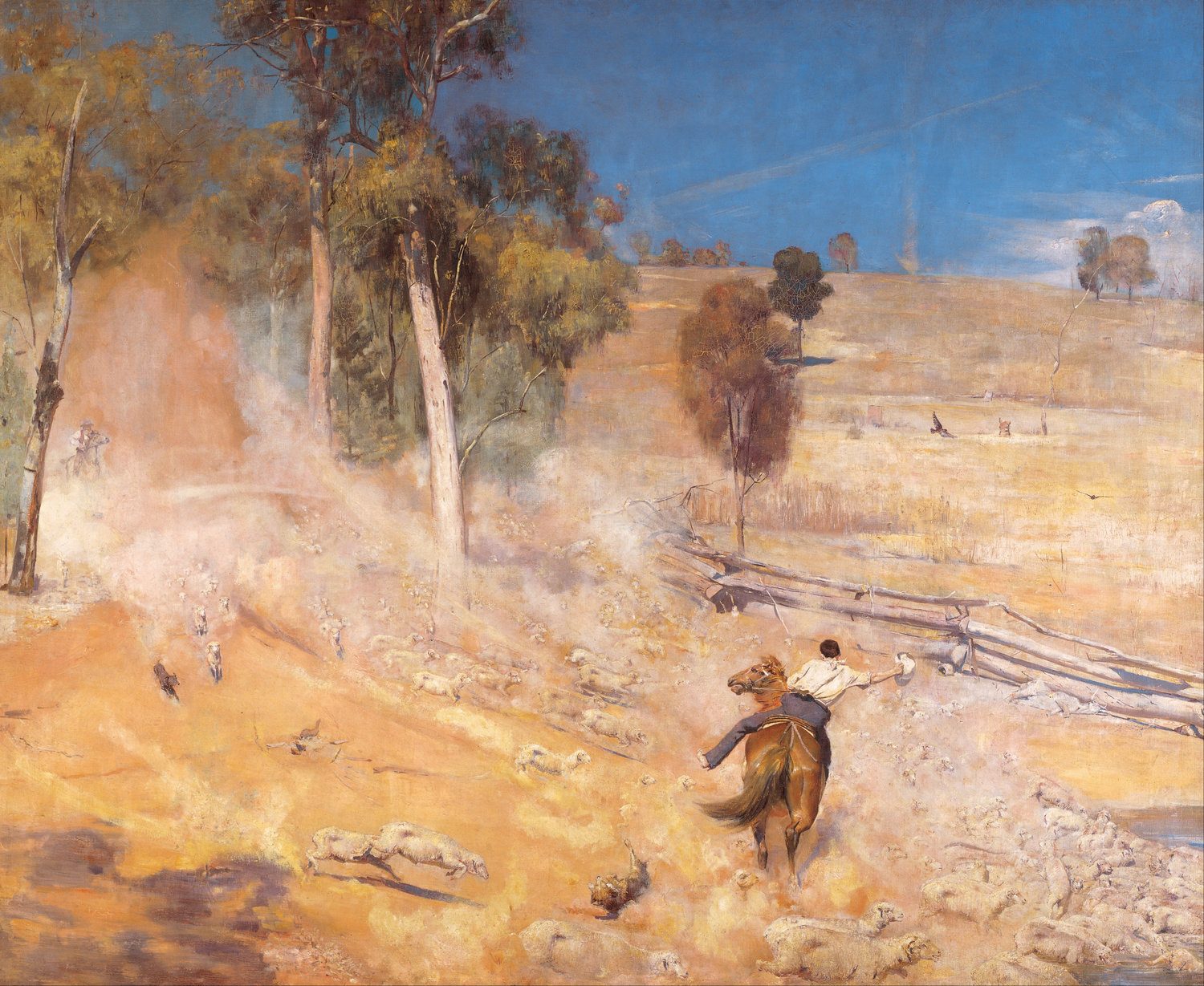
Anyone who knows me knows that I love a good old Australian novel, and I was not disappointed by My Brilliant Career. Written in 1901, the year of the Federation of Australia, this novel is unashamedly sharp, romantic and vivacious. I read it in a matter of days, being so taken in by the entirely convincing narrative voice and vivid display of Australian life.

My Brilliant Career is told in the first-person narrative by sixteen-year-old protagonist Sybylla Melvyn. For the first part of her childhood, Sybylla loves life with her family in rural Australia. She is clever and devours any book in sight, reading works extremely advanced for her age. When a series of poor business decisions from her father relegate the family from owning a sprawling cattle station to subsistence farming in the outback, teenage Sybylla becomes frustrated and bored with the hardship and monotony of life. She longs for a more refined lifestyle where she would be surrounded by likeminded others who enjoy intellectual thinking, reading and music. To aid the struggling family, Sybylla’s grandmother offers to take Sybylla in to live with her at her gracious property Caddagat. Sybylla fits right in at Caddagat; her sharp tongue, wit and frankness are a triumph among her extended family and for Caddagat’s wealthy neighbour, the handsome Harold Beecham, who becomes completely enamoured with her. Over the next two years, Sybylla will find herself choosing between everything a conventional life offers and her own plans for a ‘brilliant career’.

What is amazing about this book is the link between Sybylla and the author. Sybylla Melvyn is based on the author Miles Franklin (Stella Maria Sarah Miles Franklin). Sybylla’s childhood timeline is very similar to that of Franklin’s – for example, Franklin’s grandmother’s property Talbingo was simply renamed Caddagat in My Brilliant Career. Like Sybylla, Franklin was set on having a career in music. Reduced family circumstances making this impossible, Franklin turned to writing and as such wrote My Brilliant Career at age sixteen. The sheer literary skill, wide-ranging vocabulary and vibrant narrative are simply astonishing given that the author is a sixteen-year-old girl with an unconventional education, notwithstanding that the book was “conceived and tossed off in a matter of weeks” as a romance to amuse her friends. Furthermore, Franklin’s (and therefore Sybylla’s) burning desire to have her own career rather than do what was expected and marry is a view far more akin to feminists of the 1960s and 70s rather than of a teenage girl born and raised in the Australian outback at the turn of the century. For me, this novel indicates that someone’s sheer genius can shine through no matter what circumstances they have grown up in.

I think the fact that Franklin is the same age as the protagonist really helps legitimise Sybylla’s narrative voice. As you read, it is completely clear that the author is also a teenage girl – on the one hand Sybylla is unapologetically passionate and unpredictable, while on the other she carries insecurities about her looks and personality, portrayed like this in a way that only someone feeling the same things could. The narrative style is quite different to other books from the time that I’ve read; it is impetuous and brazen much like the mind of a teenage girl. Towards the end of My Brilliant Career, when the romance is heating up between Sybylla and Harry Beecham, I was completely hooked as Sybylla lays bare her emotions – torn between her desire for independence and her affection for Harry. I, like many other female readers I’m sure, felt that whatever decision she made, the outcome would be bittersweet. 

Overall, I was completely blown away by My Brilliant Career and think it is an essential read for any young person, especially young women. It is engaging, emotional, humorous and offers a candid representation of Australian life in the late 1800s/early 1900s. This was only the beginning of Franklin’s success and I take comfort in the fact that she did indeed get to have a ‘brilliant career’.

Happy reading,

Imo x

Categories
nineteenth century

ImoReads… ‘Love and Youth: Essential Stories’ (1852-1860) by Ivan Turgenev

Blog Nº 22

‘O youth! youth! You care about nothing, you believe you possess all the treasures of the world; even sorrow gives you pleasure, even grief amuses you, you are bold and daring, and everything melts in you like wax in the sunshine, like snow in springtime’

I got this collection of short stories as a Christmas present; my dad thought it was ‘about time’ that I get acquainted with one of Russia’s best nineteenth-century writers, Ivan Turgenev. I was excited to read it to see how differently/similarly the themes of love and youth were tackled in Russian writing compared to Western European writing at this time. The collection comprises Turgenev’s great novella First Love and five short stories, all managing to feature vibrant and arresting characters and plotlines in so few pages.

My favourite tale in the book is undoubtedly First Love. Three middle-aged friends are looking back on their first loves, and of the three it is Vladimir Petrovich who has the most youthfully turbulent tale to tell. Petrovich writes down his story in a notebook, and this is how we hear it. We are taken back to the summer of 1833 when Petrovich was 16, living in Moscow with his parents. Studying for his university entrance exams goes out of the window when the beautiful and sharp Zinaida moves in next door with her mother, the old Princess Zasekina. Zinaida is a few years older than Petrovich but he is instantly infatuated with her; we hear first-hand how he begins to experience the paradox of being in love – how it can be at once painful and glorious. Petrovich begins to spend all his time with Zinaida and the several other young men she has expertly cast under her spell. And yet, when we eventually find out who it is that Zinaida truly loves, it is clear that she is in just as much pain as the men she is toying with, and the revelation is as much of a shock to the reader as it is to poor Petrovich.

What I enjoyed about this story is how Petrovich’s emotions and actions transcend the time period of the book; any 21st-century teenager or young adult who has ever experienced a crush, heartbreak or a relationship reading First Love would be able to identify with elements of Petrovich’s struggle. Older readers I’m sure would share the wistful reflection clearly felt by the fortysomething Petrovich looking back on his younger self. It is an interesting insight into humanity that no matter where you’re from, no matter the social customs and outlook of your time, everyone collectively shares in and relates to the emotional rollercoaster that is love and relationships.

The five other short stories in the collection are Bezhin MeadowBiryukThe Rattling!;The District Doctor;The Lovers’ Meeting. Though several of these also tackle the theme of love, the majority are tales filled with the grandiose flights of youthful imagination. For example in Bezhin Meadow, a lost traveller shelters for the night in the meadow with a group of peasant boys guarding a herd of horses. They talk round the fire of bogeymen, ‘russalkas’ (wood sprites) and local rumour of strange happenings. Turgenev is an excellent storyteller, interweaving mysterious wails and jumpy moments into the narrative as the boys tell these tales. This made me as a reader feel the eerie presence of the meadow bearing down upon me just as these young boys with runaway imaginations would have felt. In fact, in each of these short stories Turgenev evokes his chosen landscapes vividly, with the consequence of making them appear distinctly Russian. In The Rattling! Turgenev expertly uses the wild landscape paired with an ominous rattling of a far-off carriage to convince the main characters that they are being pursued along the road by bandits. As their own cart fails to keep ahead the rattling gets closer and closer, making for an extremely gripping few pages.

Turgenev was a key figure in popularising Russian literature in the West, and after reading this engaging collection I can see why. I look forward to introducing myself to more Russian literary greats in future.

Happy reading,

Imo x

Categories
American Literature World literature

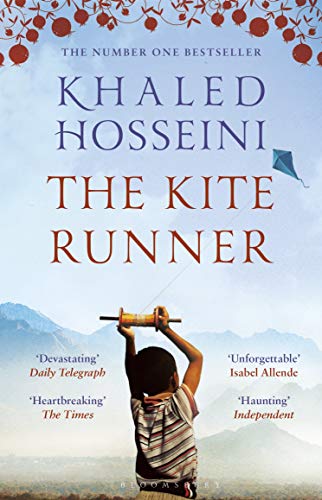
ImoReads… ‘The Kite Runner’ (2003) by Khaled Hosseini

Blog Nº 20

“There is a way to be good again “

Rahim Khan

I am so glad that this blog has given me an excuse to re-read The Kite Runner, which is in my opinion one of the best books written so far in the 21st century. Its exploration of the strength and boundaries of friendship and familial ties against a backdrop of war, loss and regret makes for an extremely captivating and moving read. 

The novel begins in vibrant and thriving 1970s Afghanistan, and is told from the perspective of Amir, then a young boy. He is the son of a vivacious, well-liked and well-off merchant and they live together in the wealthy Kabul district of Wazir Akbar Khan. He and his best friend Hassan, the son of his father’s servant, do everything together and want more than anything to win the local kite-fighting tournament. However, neither can predict the terrible fate that befalls Hassan that afternoon, completely shattering their lives. The subsequent invasion of Afghanistan by Russia means that Amir and his father are forced to flee to America, leaving Hassan and his father Ali behind. After 26 years of trying to live with what he had done to his best friend the day of the tournament, an unforeseeable turn of events forces Amir to return to Afghanistan under Taliban rule to find the one thing that he could not give himself in America: redemption. 

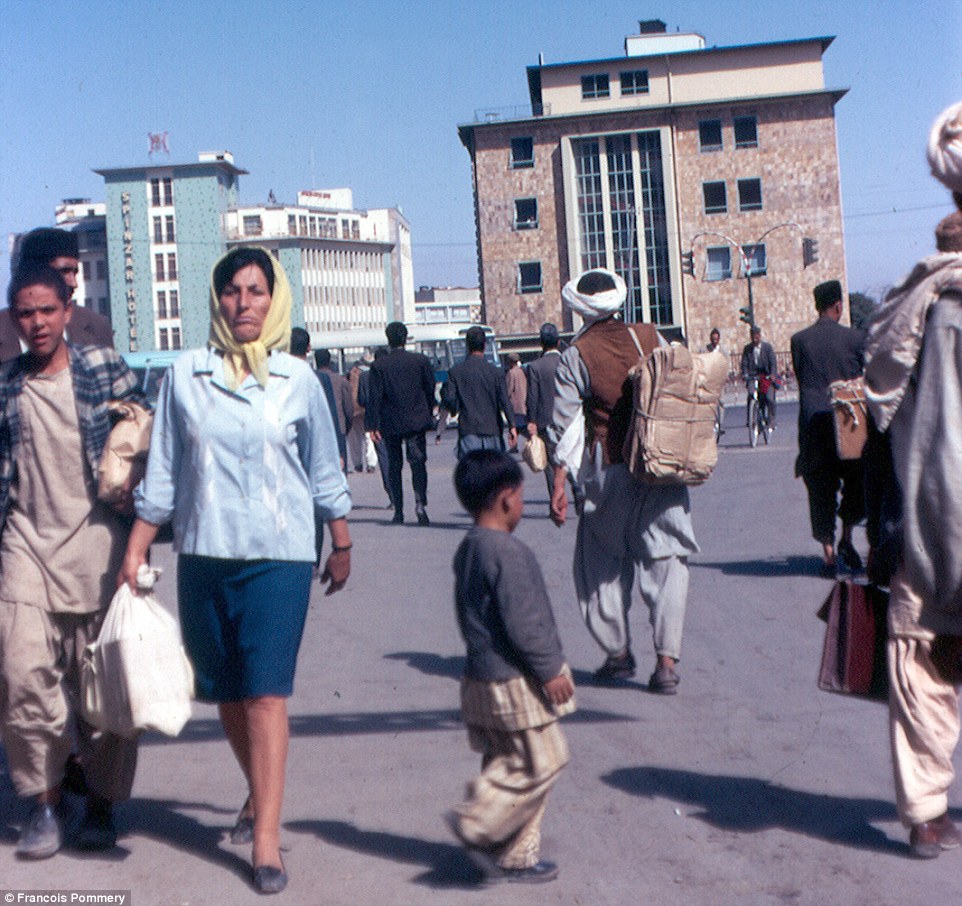
One great thing about The Kite Runner is that it teaches readers about the recent history of Afghanistan. My knowledge of the Soviet-Afghan War was hazy at best, but this book really lays bare the havoc it wreaked on the country, and how the desolation it caused paved the way for civil war and the rise of the Taliban. Sadly, because of all this turmoil that Afghanistan has suffered in recent decades, I had no idea how stable and prosperous the country had been beforehand. We learn through Amir’s upbringing that western influences were welcomed in Afghanistan and existed peacefully alongside the moderate Islamic way of life there. We learn about Afghan cultural traditions, architecture and cuisine, much of which has sadly been destroyed due to constant warfare and extremist regimes. I think it’s a shame that before reading The Kite Runner I only knew of Afghanistan as a ravaged victim of various world powers’ Cold War ambitions or as a nation living in fear of the Taliban. I hope that because this book has been so successful since its release in 2003, that many other people’s eyes have been opened to the worthy history of Afghanistan.

The central focus of The Kite Runner is the friendship between Amir and Hassan. Though Amir and Hassan have known each other since birth and have a deep yet also ordinary friendship, there is always a slight distance between them. This is because Amir is Pashtun, the majority ethnic group in Afghanistan, while Hassan and his father are Hazaras, a minority ethnic group native to the Hazarajat region of the country. Hazaras are considered one of the most oppressed groups in the world, and they have faced strong persecution in Afghanistan for centuries. Hosseini subtly emphasises the differences between the two boys all the time, building a presence of mutually unspoken but definitely mutually recognised tension between them. For example, Hassan is technically Amir’s servant and he and his father live in a shack outside Amir’s large residence. Amir goes to school and has prospects, while Hassan is illiterate and is destined to work in servile roles all his life.

Amir sometimes feels resentment towards Hassan because it seems that his own father values Hassan as much as, if not more than him, and this leads Amir to sometimes think spiteful thoughts or take advantage of Hassan’s loyalty and good natured-ness. And indeed, it is this divide that ensures Hassan will ‘run’ Amir’s kite for him – “for you, a thousand times over” – after Amir wins the kite-fighting tournament; the moment when Amir, out looking for Hassan who has not returned with the kite, chooses to stand by and watch his friend go through something horrifyingly traumatic because he is too gutless to stand up for him. The fallout from this event takes the reader on a long journey with Amir as he seeks the meaning of friendship and redemption for his actions.

Hosseini is a genius storyteller, filling The Kite Runner with raw emotion, a storyline that captivates across its 26-year timespan, and the most original plot twists that will leave you gawping with astonishment while also wondering how you didn’t see them coming. It’s no surprise that I read it in three days – it’s completely unputdownable. His use of backshadowing, symbolism, ‘coincidence’ and suspense are extremely shrewd and add so many dimensions to this exceptional story. Hosseini, who himself is Afghan-American, always features Afghan characters in his novels but in this case there are some outright similarities between himself and Amir. Hosseini also grew up in the Wazir Akbar Khan district of Kabul, had to seek asylum in America when the war began, and like Amir, grew up to be a writer. It is therefore interesting to wonder at what other parallels Hosseini sees between himself and his character – perhaps Amir’s journey of self-scrutiny was as cathartic for Hosseini as it was for his fictional creation.

I have purposefully not given away any spoilers so that anyone considering reading The Kite Runner can enjoy its twists and turns to the fullest and be as gripped as I was. It’s a truly wonderful book that will make you feel every emotion on the spectrum.

Happy reading,

Imo x
Categories
English literature

ImoReads… ‘The Two Towers’ (1954) by J.R.R Tolkien

Blog Nº 19

“The world is changing: I feel it in the water, I feel it in the earth, and I smell it in the air.”

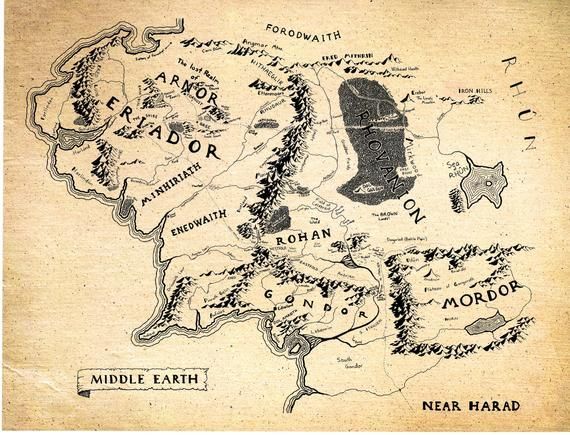
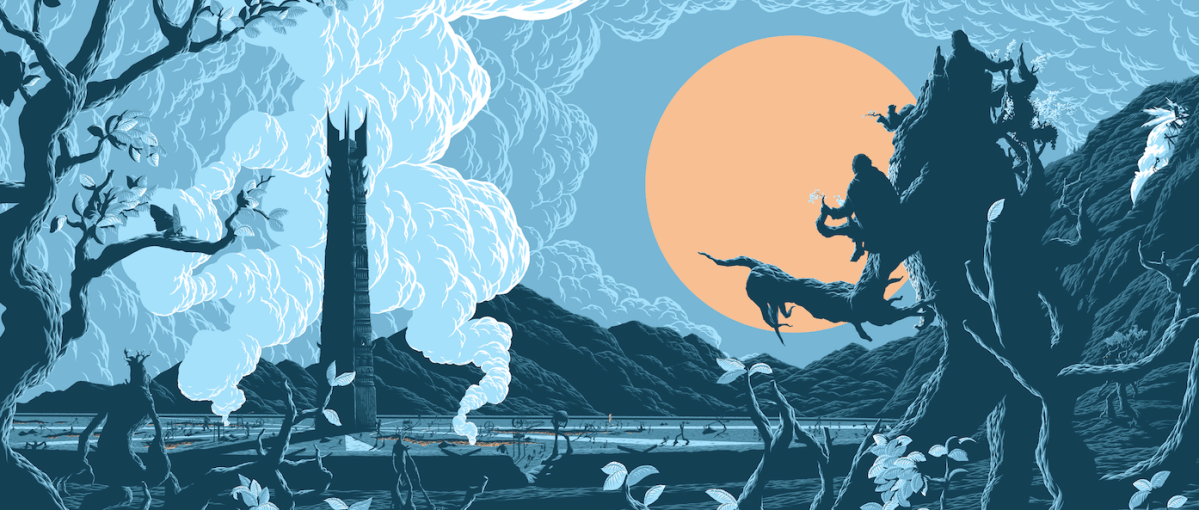
I have now completed my third foray into Middle-earth by continuing on with the next LOTR instalment, The Two Towers (TTT). This has to be my favourite so far; Tolkien’s storytelling reaches a new peak now that the Company has splintered. Sauron’s power is growing, and this is represented in the land becoming ever more menacing and treacherous. And yet, the burning hope of the fellowship cannot be dimmed, even when separated from one another. This tale captivates with even more mysterious and vast landscapes filled with strange people, all which bring us closer to the horror of Mordor where the One Ring must be destroyed.

TTT is split into two parts. The first deals with those in the company who Frodo and Sam left behind, namely Aragorn, Legolas and Gimli. Their first mission is to rescue Merry and Pippin who were taken by orcs at the Falls of Rauros. Along the way they encounter old friends and new allies, all intent on bringing the evil wizard Saruman to his knees. Lurking in Isengard, Saruman is in league with the dark lord Sauron, so the group knows that this victory will help Frodo and Sam from afar in the completion of their wretched quest.

In the second part, we return to Frodo and Sam who are continuing on to Mordor. A key player in this section is Gollum, who has been shadowing the pair of hobbits for miles and miles with the aim of reclaiming the Ring for himself. Through some clever manoeuvring from Frodo, Gollum remains unaware of the true nature of the mission and ends up being their guide to Mordor. He can never quite be trusted, making the long journey across such desolate lands even more uneasy. As the burden of the Ring weighs ever more heavily on Frodo, it is up to his trusty and loyal companion Sam to keep his master safe from the dangers looming on all fronts.

One particularly magical happening in TTT is the introduction of the Ents, who are without a doubt my favourite Middle-earth creatures. Guardians of the forests, Ents are an ancient race of tree-like beings, most likely inspired by longstanding folklore tales of talking trees. ‘Ent’ comes from the Old English word for giant, indicating that despite their ability to blend in with the forest, they are much larger than regular trees. Merry and Pippin are fortuitously rescued by Treebeard, the oldest of the Ents and indeed the oldest living thing in Middle-earth. Confirming what he already feared, Merry and Pippin inform Treebeard of Saruman’s orc army desecrating the forests to provide fuel for their war machine. This leads to a particularly wondrous event, an ‘Entmoot’. That is, a large meeting of the Ents – in this case to determine the best course of action against Saruman. 

I like the Ents because they are patient, kindly, wise and methodical and because despite all this, you should never underestimate their strength or power in their duty as tree protectors. Treebeard and the other Ents successfully march on Isengard, entrapping Saruman in Orthanc Tower and simultaneously reuniting Merry and Pippin with Gandalf and the others. I have developed a serious soft spot for these magical trees with booming voices; the only sadness is that they have lost their ‘Entwives’ and are yet to discover their whereabouts. I like to think that they did eventually reunite.

Another standout section of the TTT comes in part two with Frodo and Sam. They are struggling to find their way to Mordor until Gollum offers to be their guide. The closer they get, the more bleak and menacing their surroundings become, indicating the cruel grip Sauron’s kingdom has over its neighbouring lands. As I have said previously, Tolkien is truly a master of language. Never have I been made to feel such dismay, hopelessness and distress from descriptive passages alone. One poignant chapter is ‘the passage of the marshes’, in which Gollum leads the two hobbits across the Dead Marshes to avoid being seen by orcs on the main path to Mordor. The way Tolkien describes the marshes makes it seem as though goodness and light have long forgotten this vast and sinister place. One foot wrong and the hobbits would flounder and sink, joining the ghosts of the many soldiers who were slain there long ago. Tolkien emphasises the foul stench of the marshes and the haunting floating lights that surround them on their difficult path across. There is no sound or sight of a single living thing in these marshes or overhead, making our three characters seem utterly and completely alone in this desolate and unwelcoming land. Immediately I thought that Tolkien must have been inspired by his time fighting in the trenches in World War Two to create this bleak and frightening landscape.

I also discovered that Tolkien’s time in the industrial Black Country of the English Midlands was an inspiration for Mordor and its surrounding lands. This is clear to see when comparing the explicitly evil, industrial land of Mordor, which has a cost of environmental decay and destruction, with the light, homely and nature-abundant Shire, which is more akin to some of England’s picturesque rural counties. 

At the end of The Two Towers we are still unsure whether Frodo’s quest will ever be completed and what will become of all the members of the fellowship, and indeed of Middle-earth itself. TTT has been a thoroughly enjoyable, exciting and suspenseful read; I am anxious to get going on The Return of the King so I can see this long and treacherous journey come to an end, hopefully with the conclusion that goodness always prevails…

Happy reading,

Imo x

Categories
American Literature

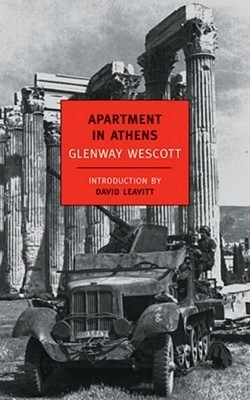
ImoReads… ‘Apartment in Athens’ (1945) by Glenway Wescott

Blog 18

“Naturally they were not a happy family, but they had good hearts, and did their best to console each other in bereavement and impoverishment.”

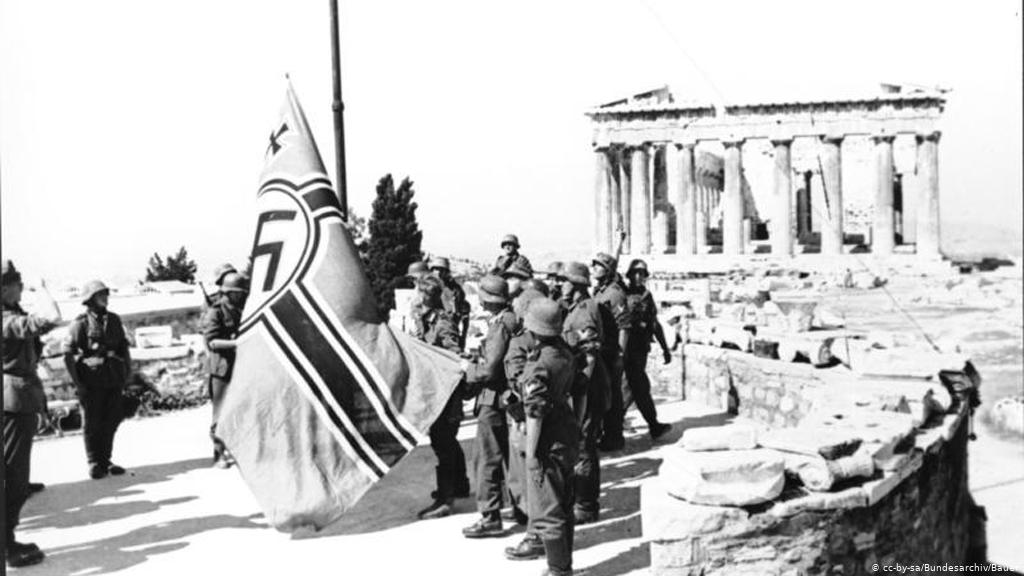
After reading Apartment in Athens for the first timeI am wholly convinced that it should be more widely-known and read as one of the great novels to come out of World War Two. I didn’t know much about Germany’s occupation of Greece during WWII and as such, Apartment in Athens was an educational and eye-opening read. In addition, I was surprised and enthralled by Wescott’s unique narrative style. It’s extremely frank, and this style compliments the plot beautifully to build up an atmosphere of tension, high emotion and exhaustion in an apartment in war-torn Athens.

Wescott’s novel focuses on Greek couple Mr and Mrs Helianos who are struggling to get by in Nazi-occupied Athens. Their favourite son Cimon has been killed in the Battle of Greece, leaving them with their two younger children – sickly Alex who wants to kill a German and simple Leda who is plain and strange, neither of whom the Helianos’ particularly love or understand. The family is forced to share their modest apartment with German officer Kalter who is not shy about his clear and unadulterated disgust for Greeks. The novel takes place exclusively between the walls of this small apartment in Athens, and within this space Wescott stages a disquieting and intense triangular drama between Mr Helianos, Mrs Helianos and Kalter, with the added collateral of the children. As the novel goes on the issues of accommodation and rejection, resistance, and compulsion reach a boiling point; Wescott effectively depicts a great and terrible war through the lens of one family’s everyday existence. The plot takes some unexpected turns, and despite Wescott’s starkness of language it is almost impossible to decipher between triumph and defeat in this unusual tale of spiritual struggle.

As I mentioned, the language in Apartment in Athens is striking for its ability to multitask as being so simple and frank yet so demonstrative of emotion. On a practical level, Wescott was writing the novel as the war played out meaning that paper was hardly in ample supply – it would have been difficult to publish a novel in a more unwieldy and passionate style. Besides, I think the language style he has used is extremely effective in stressing the intensity of emotion experienced by the Helianos’ throughout the novel; sometimes silences and fewer words say more than long and impassioned speeches. The simplicity of language even extends to the characters themselves – never do we find out the first name of Mrs Helianos, and we are only told once that Mr Helianos is called Nikolas right towards the end of the book. They are just referred to as Mr and Mrs Helianos or even just ‘Helianos’ and it’s up to the reader to distinguish who is being talked about.

Language and setting combined are what make Apartment in Athens a potent tale of repressed emotions reaching an unbearable boiling point. Setting the novel strictly in the apartment means that interestingly, the wider war itself does not really get much airtime. It is all about one German officer invading the space of one Greek family, which of course mirrors Germany’s invasion of Greece as a nation, but for the reader it creates an atmosphere of high drama, claustrophobia and emotion in one tiny cross-section of the war. Relationships between the conquerors and the conquered were a popular literary topic during the war, with one notable French novel being La Silence de la Mer (1942) by Jean Bruller (under the pseudonym Vercors). This novel is also a striking read in terms of language because the old man and his niece who must house a German officer show resistance to his presence by refusing to speak a single word to him for the duration of his stay.

A key turning point in Apartment in Athens is Kalter’s sudden change of attitude towards the family from disgust to civility and almost kindliness after suffering a personal tragedy. At first this bodes well for the Helianos’, but it eventually leads to their hopeless disintegration as a family between the crushing walls of their apartment. As a reader you can’t help but hope for a happy outcome for the Helianos’ but the novel ends abruptly and ambiguously as the family deals with its helpless situation. Of course, Wescott was writing in 1944 so he himself could not know the outcome of the war or Germany’s occupation of Greece, and he perhaps represents this through ending his novel on a cliffhanger.

I have read many books and watched many films set in WWII and I always find that stories which revolve around individuals are just as important as those that take in the war as a whole. This is because stories like Apartment in Athens are impactful to our understanding of individual human experience of the conflict rather than the political, economic and cultural impact on a global scale.

I thoroughly recommend Apartment in Athens; it’s an intense and gripping read which will see you ensconced in one of the many human struggles that contributed to WWII.

Happy reading,

Love Imo x

Categories
English literature

ImoReads… ‘The Fellowship of the Ring’ (1954) by J.R.R Tolkien

Blog 17

” Faithless is he that says farewell when the road darkens”

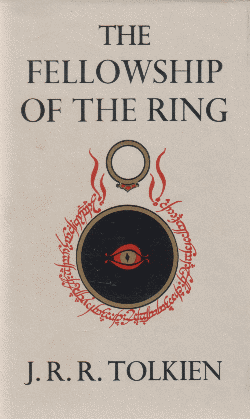
After finishing The Hobbit, I was more than happy to continue on my adventure through Middle-earth by delving straight into the first volume of the Lord of the Rings trilogy, The Fellowship of the Ring (TFOTR). I thoroughly enjoyed this novel as we start to see the consequences of Bilbo Baggins taking the One Ring from Gollum in The Hobbit playing out with ominous effect. More mature than The Hobbit, which Tolkien wrote for his children, TFOTR wrestles with themes of greed, power and violence as its heroes fight to keep the all-consuming darkness at bay. And yet the warming moments of humour, friendship and courage which often prevail against the gloom of evil keep the reader faithful in the power of good and fully ensconced in this exciting adventure.

Set 60 years after The Hobbit, TFOTR deals with the fallout of Bilbo’s innocent taking of a gold ring from the creature Gollum. We discover that years ago, the dark lord Sauron created a set of Rings to give to the rulers of Men, Elves and Dwarves. However, Sauron deceived them by secretly making another, the One Ring to rule them all. Lost and forgotten about, this is the extremely powerful and dangerous Ring that came to be in Bilbo’s possession, unbeknown to him. To stop Sauron regaining the Ring and therefore bringing Middle-earth into an era of evil and darkness, a great quest must take place to destroy the Ring in the place of its creation, the fires of Mount Doom in Mordor. This is a mighty challenge which is why a select few, ‘the fellowship of the ring’, are chosen for the task.

The nine members are: Frodo Baggins, his gardener Sam Gangee, the wizard Gandalf, the elf Legolas, the dwarf Gimli, the men Aragorn and Boromir, and the two young hobbits Merry Brandybuck and Pippin Took. 

As had been proven by Bilbo, the corrupting influence of the Ring works much more slowly on hobbits as they are truly good creatures less easily swayed by greed and lust. This is why it is Frodo who bears the Ring while the others act as his guides and protectors. Met with much peril and evil along the way, the group also become firm and loyal friends. Although they encounter much danger and loss, their spirits are never fully dampened as they are often assisted by magical allies in their darkest hours. 

I know I waxed lyrical about Tolkien’s use of language in The Hobbit, but it deserves a quick nod here as well. He manages to create a real sense of disquiet and ill-omen in his narrative which is as thrilling as it is alarming for the reader. Let’s take for example the Black Riders, faceless, evil beings – formerly the nine Men gifted with Rings but who have faded away under their influence to become Ringwraiths dominated under Sauron’s will. Seated astride ebony black horses, they plague Frodo and company throughout the novel trying to obtain the One Ring. Tolkien portrays them as menacing phantoms always close at hand but not always seen. The feeling of being watched seeps eerily through the chapters; so much so that the reader feels as anxious for the characters to get to somewhere safe as if it were they themselves being constantly chased.

As TFOTR went on I found myself growing fond of every member of the fellowship, but I have to say my favourite character is Legolas the Wood Elf. Not only a moral and brave character who forms an unlikely friendship with Gimli, he also (like all elves) can slay an enemy with a delicate yet ruthless grace. In fact, all his movements are silent, swift and elegant which is always admirable to the average awkward human. One of the most wondrous sections of the book is when the company takes refuge in the dreamlike Elven realm of Lothlórien, ruled over by the Lady Galadriel and her husband Lord Cereborn. Tolkien’s imagination knew no bounds in creating this extraordinary place where each elf captivates the company and the reader with their endless poise and refinement.

Yet alas it is soon after this moment that the fellowship encounters great difficulty and splinters, which is where the novel ends. Luckily, I won’t be left on this cliff hanger for long as volume two, The Two Towers, is already in my possession. 

I’m glad to say that TFOTR is an extremely worthy successor to The Hobbit, and I look forward to continuing on with the saga of Middle-earth.

Happy reading,

Imo x

Categories
English literature

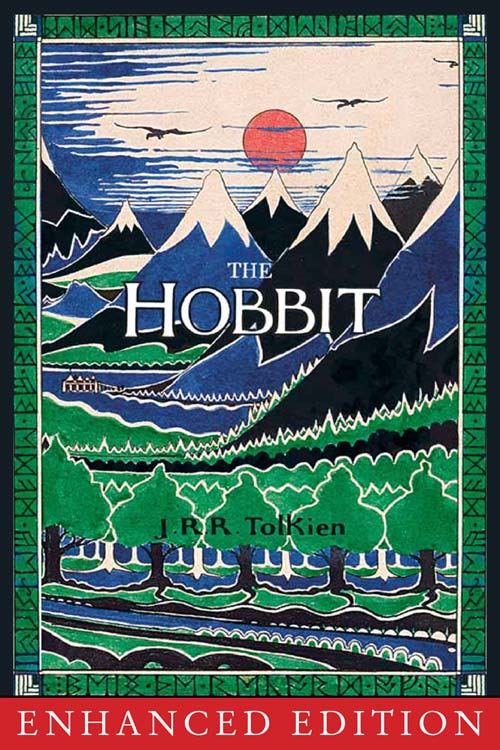
ImoReads… ‘The Hobbit’ (1937) by J.R.R Tolkien

Blog 16

“It does not do to leave a live dragon out of your calculations, if you live near him”

Dedicated to: OJP

The Hobbit is a great example of a novel that caught me off guard in how much I actually really enjoyed it. Alas, I admit that before I was bought a beautiful set of all the novels in the Middle-earth saga and was convinced to read them, I had never felt compelled to enter into Tolkien’s world of magic and myth. I’m embarrassed to say that I’d pretty much written off the Lord of the Rings series as being ‘for boys’, but how wrong I was. In fact, The Hobbit is one of the best adventure novels I have read; Tolkien’s mastery of plot, language, humour and imagination is superb, and somehow it retains an element of something quintessentially English despite its setting in a fabled, faraway land.

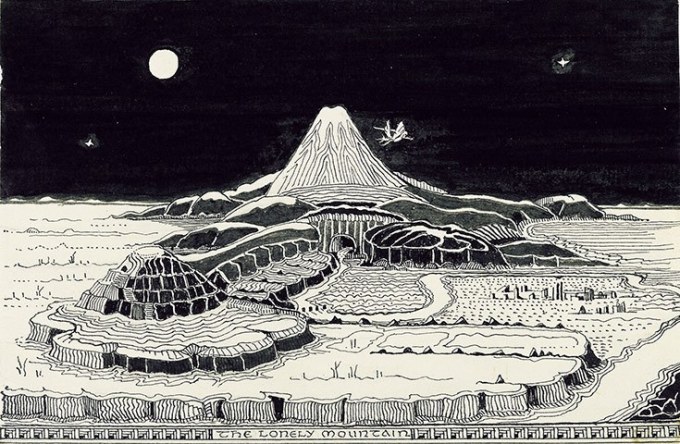
Although a relatively short novel, The Hobbit is rich in plot and detail. It tells the tale of an unassuming and unambitious hobbit named Bilbo Baggins, resident of Bag End in the Shire, who one day receives a visit from the wizard Gandalf the Grey and a company of dwarves led by Thorin Oakenshield. Quite suddenly, Bilbo is whisked away on an adventure to reach the faraway Lonely Mountain where resides the terrible dragon, Smaug the Magnificent, whose treasure they plan to raid in order to reclaim the dwarves’ homeland. Many trials and tribulations befall the company en route before the showdown with the dragon, and though at first Bilbo feels completely out of his depth, he soon surprises everyone (including himself) with his bravery, resourcefulness and strength in the face of peril.

I must dedicate a section purely to language here. Tolkien, aside from his world-famed career as an author, was recognised as one of the world’s leading philologists (philology: the branch of knowledge that deals with the structure, historical development, and relationships of a language or languages). His expertise comes through continually in The Hobbit, most obviously in Middle-earth character and place names, and his own creation of viable languages. Across all the Lord of the Rings books there are fifteen invented languages present, the most developed of which are the Elvish tongues. Amazingly, Tolkien started working on these while he was at school and continued refining their grammar and fictional history until his death in 1973.

However, on a more familiar level, I was captivated by Tolkien’s use of English. There is an urgency to his language that really allows the reader to feel the tension of various perilous situations along with the characters, whether they be trying to trick trolls or escape from the clutches of giant spiders in Mirkwood forest. The descriptive passages are phenomenal – particularly of the Elf stronghold Rivendell and of the Lonely Mountain itself – as a reader you become lost in these vibrantly imagined landscapes. And yet, not so lost that you miss the elements of quintessential ‘Englishness’ that permeate The Hobbit. I confess that I am always charmed by 1930s English diction so, even though the story is timeless, I can still appreciate the novel as completely of its era thanks to the diction (a particular highlight – Bilbo’s rather eloquent chat with Smaug the Magnificent amongst the treasure troves).

Amidst all the Middle-earth gallivanting, we should not omit the quiet country life of the Shire (a name which itself evokes a rural English county). Its humble, jolly folk who love a drink on occasion and its pleasant, familiar rural surroundings and lifestyle are not so far removed from the idealised English country life that has been the subject of many a non-fantasy novel across the centuries. I think Tolkien has imagined the Shire this way to help us bond with Bilbo, meaning we can be just amazed as him upon encountering all the elements of magic later on.

Tolkien initially wrote The Hobbit as a story for his children and despite its maturity (as all great children’s books possessed in the 19th& 20thcenturies), there are certainly some ‘children’s book’ elements that come through. Apart from the magical elements like dragons, elves, wizards, goblins and orcs facing off in a mythical land – which would likely have the earnest attention of most children – we must acknowledge the notion of ‘hobbits’ themselves. Kid-sized, friendly, human-esque creatures who love fireworks, food and adventures would certainly be relatable to children – this familiarity with hobbits would surely encourage children to imagine themselves in Bilbo’s shoes throughout the quest, making it even more exciting. I’m 23 and was fully enraptured!

I’m so glad I have finally delved into Middle-earth to discover the delights of The Hobbit – from now on I’ll be making a more conscientious effort not to judge books by their covers so to speak. Next, The Fellowship of the Ring

Happy reading,

Imo x
Categories
American Literature

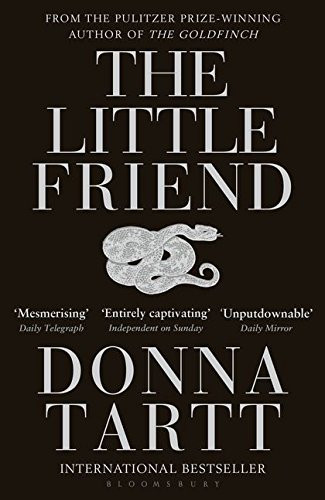
ImoReads… ‘The Little Friend’ (2002) by Donna Tartt

Blog 15

“She was young still, and the chains had not yet grown tight around her ankles…Whatever was to be done, she would do it.” 

Ever since reading Donna Tartt’s beguiling and thrilling first novel The Secret History (1992 – blog coming soon!) a couple of years back, I knew that she was a literary force to be reckoned with. So, when I came to read her sophomore novel The Little Friend, published ten years later, I expected great things; I can safely say that it didn’t disappoint. Tartt has only published three novels thus far, the third being the Pulitzer prize-winning The Goldfinch (2014) that I have yet to read. However, I think we can all agree that if it takes a decade to craft each work, then we are dealing with fiction that is incredibly well-researched, intensely vibrant and detailed, with impressively complex plots and characters (meaning this is another long blog – sorry!)

Plot

Although famously elusive about her private life, we do know that Donna Tartt grew up in Greenwood, Mississippi, a town known for its thriving cotton plantation culture in the nineteenth century. The Little Friend is set in the fictional Mississippi town of Alexandria in the late 1970s, but I imagine that many of the cultural references are reminiscent of her own upbringing in Greenwood.

The story centres on twelve-year-old Harriet Cleve Dufresnes over one school summer holidays. Harriet is quick-witted, engaging, persuasive, a total bookworm and certainly has an intelligence beyond her years. When she was just a baby, her nine-year-old brother Robin (who was the unquestionable darling of the family) was found hanged in the backyard in broad daylight on Mother’s Day. This haunting crime, told to us in the prologue, has never been solved and has left irrevocable tears in the fabric of the family.

Harriet, who has grown up in the aftermath of this tragedy, takes it upon herself to solve the mystery of her brother’s murder this one summer, and for this task she enlists the help of her friend eleven-year-old Hely; he is so hopelessly devoted to Harriet that she knows he will do whatever she says. However, what starts as a childish mission soon turns menacing and dark as they dig deeper into the mystery.

Race relations

Anyone who has read my blog on Gone With The Wind will know that novels set in the American Deep South are of great historical interest to me. The time period of the book is never explicitly stated – and it took me a while to work out that it is in fact set in the late 70s. This is because in terms of the race relations between black and white characters, it could easily have been set in Scarlett O’Hara’s time of nearly one hundred years earlier. 

That is, Harriet is from an ‘old money’ white family, and many references are made to their Civil War-era ancestral home, a now destroyed house named Tribulation. Like all the other respectable white families in town, the Dufresnes live in a big house and employ a black housemaid and gardener. 

In her childish innocence Harriet adores the family housemaid Ida Rhew more than her own mother, and yet will refer to the ‘black’ neighbourhood as ‘niggertown’ as she has heard other adults do, without realising the racism in what she is saying. 

Throughout the novel it becomes obvious that there has been no upward mobility for the black population of Alexandria. They are employed in menial jobs only, they live in the poorer end of town and they are still viewed with contempt and irrational suspicion by many of the white adult characters, even those who are the most ‘reasonable’. In fact, it was only cultural references to certain television shows, car models and current affairs that allowed me to place the novel in the late 1970s. This novel is an unnerving indication of how deep-set and rigid casual racism and attitudes of white superiority still are in the Deep South.

Narrative voices

The Little Friend is told from the perspectives of two characters – Harriet and her main murder suspect, a poor white man named Danny Ratliff who was a classmate and friend of Robin. Now a young man, Danny is a methamphetamine dealer and addict who just wants to escape his destructive family and start over. The Ratliffs are notorious in Alexandria; Danny and his brothers have all served time for various offences, and they live in a state of poverty and depravity in a trailer outside of town. 

It becomes obvious to the reader pretty quickly that Danny is unlikely to be Robin’s killer and is in many ways a victim of the American class system (which places poor whites at the very bottom of the hierarchy), but Harriet and Hely become convinced it was him due to the subconscious effect of the town’s prejudice towards the Ratliffs, and years-old rumours that Danny had bragged about committing the murder.

The excellence of this novel is that Tartt can observe with the skewed lucidity of a child – and that of a drug addict – to give a stark view of the world as unforgiving, scary, bleak and inconclusive, filtered through the bright colours and impossible clarity of childhood assumptions and drug highs. 

As The Little Friend progresses, Harriet and Hely’s attempts to flush out Danny become more and more daring as their misplaced fear of him intensifies, while Danny becomes more and more tormented by the mysterious little girl plaguing his existence. 

Genre

Although at its heart The Little Friend is a crime novel, it also fits well within the genre of adventure fiction as that is how Harriet and Hely perceive the whole escapade. There is peril, excitement and a series of events that are completely out of the ordinary in these children’s daily lives – all tropes of the adventure genre. We discover early on that Harriet has a keenness for adventure; multiple times throughout the novel she can be found reading about/referring to/imagining famed British explorer Robert Falcon Scott who led two expeditions to the Antarctic, included the ill-fated Terra Nova voyage.

Tartt’s merging of genres creates a fast-paced, tense, exciting and at times humorous story which may not have been the case if the protagonist had been an adult lacking the imagination, creativity and enthusiasm possessed by children like Harriet and Hely.

The intense detail in the settings, descriptive passages and the many sub-plots which I have not had space to mention here are a credit to Tartt and her ability to impeccably weave together seemingly unrelated details into a crucial plot point.

I won’t reveal what happens in the nail-biting finale, but what I will say is that this tale has a strong message about morality, conscience and guilt which will leave you thinking about it long after finishing reading.

For me The Secret History still has the edge, but The Little Friend is still an excellent follow up which is completely unputdownable. Next, The Goldfinch

Happy reading,

Imo x
Categories
English literature

ImoReads… ‘Fingersmith’ (2002) by Sarah Waters

Blog 14

“And I couldn’t have kissed her, without wanting to save her.”

Matt Thorne from the Independent on Sunday calls Sarah Waters ‘one of the best storytellers alive today’ and after reading Fingersmith I can see why. Never have I been hit with so many incredible twists and turns in the same novel, making the story not at all what it seems at the start. 

Waters’ story is set in 1860s Victorian England, opening with part 1 as told from the perspective of our ‘fingersmith’ (a talented thief or pickpocket) Susan Trinder. Sue is an orphan who has been raised in a ‘Fagin-like den of thieves’ in the Borough, London by her adoptive mother Mrs Sucksby. An associate of Mrs Sucksby, Richard ‘Gentleman’ Rivers (who is by no means a gentleman), hatches a plan to seduce a wealthy heiress named Maud Lilly, but he needs Sue to pose as her maid and gain her trust in order to persuade her to elope with Gentleman. He then plans to have the vulnerable Maud committed to a mental asylum and make off with her fortune. Persuaded by Mrs Sucksby and a share in Maud’s fortune, Sue agrees. 

Upon Sue’s arrival at Briar, the imposing country house where Maud and her reclusive uncle reside, the reader will quickly realise that Maud is not a normal young woman. Summoned at specific times throughout the day to read aloud to her uncle and help him with his mysterious book indexing project, Maud’s entire existence is precisely structured with no room for deviation. Her behaviours and manners are bizarre and disquieting as a result of her extremely sheltered and restrictive upbringing.

Our first unexpected turn comes when Sue and Maud’s unlikely friendship turns into feelings of mutual physical attraction, which are brought to a head when Sue volunteers to ‘show’ the innocent Maud what may be expected of her on her wedding night to Gentleman. From here on out we begin to feel Sue’s agonising guilt about her continued involvement with the plot as she persists in persuading Maud to marry Gentleman despite her own feelings. I could feel myself getting more and more nervous along with Sue as the day of committing Maud to the mental asylum drew closer. 

THIS was the moment when I had to take a breath and go over what I had just read – Maud and Gentleman sit coldly while the doctors drag a horrified Sue out of the carriage and into the asylum, closing the chapter with Sue’s chilling words, ‘That bitch knew everything. She had been in on it from the start.’

I mean ???

Waters is truly the queen of unexpected plot twists and suspense. From this point forward, the truth is slowly unravelled, first from Maud’s perspective in part 2 and back to Sue in part 3, allowing the reader to piece together how the lives of these two girls have been linked by an ominous fate since birth. But, we only discover things when Waters allows us to. Her mastery of language is such that it is impossible to guess what’s coming next, but as soon as you discover it, you wonder how you could’ve missed it. 

What comes next is the unearthing of Maud’s sordid existence at the hands of her uncle’s erotic book fetish, and her discovery that she is the next victim of Gentleman’s deception. We have Sue’s daring escape from the asylum after months of hell and her fraught journey back to London to discover the truth.

As a reader, I felt myself becoming very agitated about the multiple ‘truths’ flying around and was anxious that Sue and Maud reunite so the actual (and again, shocking!) reality of the situation could be exposed.

And of course, these two young women were in love – despite obvious barriers of the time such as the perceived impropriety of same-sex relationships, especially between women, and the class divide between them – so I could not help but wonder what would become of their relationship.

I won’t reveal the biggest shocker of all about the intertwined destinies of the girls or whether they endure as a pair – this is for you to find out; Fingersmithis truly a fast-paced, surprising and vibrant novel that is impossible not to be drawn into.

Happy reading,

Imo x

Categories
American Literature

ImoReads… ‘Gone with the Wind’ (1936) by Margaret Mitchell

Blog 13

“Dear Scarlett! You aren’t helpless. Anyone as selfish and determined as you are is never helpless. God help the Yankees if they should get you.” – Rhett Butler

Introduction

Without a doubt, Gone with the Wind (GWTW) has earned its place firmly within my top five novels of all time. I can see why it took Margaret Mitchell ten years to write it, because it truly is a masterpiece of literature and joins other heavyweights on the roster of Great American Novels. Hopefully after reading this blog, you will want to lose yourself in the US Civil War era and gorge on this story of love, loss, war, survival, coming of age and so much more.

Disclaimer: there was a lot to say so this is an essay-length blog (sorry!)

Structure & Background

GWTW is the crème de la crème of epic novels, structured into five parts spanning the twelve years between 1861 and 1873. In other words, the novel opens on the eve of the American Civil War (1861-1865) and ends during the post-war Reconstruction era (1863-1877). This is a time period that I have studied in some depth and I find it fascinating. In fact, GWTW has become a crucial reference point for any historian researching this era. 

The novel follows the life of protagonist Scarlett O’Hara, a typical southern belle, through these turbulent times. The daughter of a rich planter, Scarlett’s home and one of the two main settings of the novel is the family cotton plantation, Tara, located in Clayton County, Georgia. Mitchell evokes a vivid and romantic vision of the Southern plantation lifestyle with her vibrant descriptive passages of Tara. The other key setting, and where Scarlett mostly resides after the war has begun is Atlanta, Georgia, which at that time was the up-and-coming city of the Deep South. 

Fundamentally, at the novel’s opening, Scarlett is a rather superficial 16-year-old whose only real concerns are maintaining her eighteen-inch waist, stealing the beaux of her friends for fun, and trying to ensnare the one man she thinks she loves, Ashley Wilkes. Scarlett could not care less when, two weeks into the war, her first husband Charles is killed in battle. This marks a crucial turning point in the novel as it is when Melanie Wilkes, the sister of Charles and wife of Ashley, invites Scarlett to come and stay with her and her Aunt Pittypat in Atlanta.

Though she secretly hates Melanie, Scarlett loves society life in Atlanta. The war only really starts to impress on her mind as something of relevance when the Confederates begin to lose. The Yankee General Sherman’s destructive ‘March to the Sea’ through Georgia was the event that really put the nail in the coffin for the antebellum South; it is from this point onwards that we see Scarlett’s remarkable coming of age story begin as she fights to claw her way out of the poverty she has suddenly been plunged into.

History

Mitchell was born in Atlanta in 1900 and grew up on stories of the Civil War and Reconstruction from relatives that had lived through it all, making her extremely well-disposed to write such a novel. I was very impressed throughout by her level of historical detail and accuracy, all while maintaining a superb level of readability and shrewd commentary as the omniscient narrator.

Mitchell has been criticised for her portrayal of certain groups in GWTW, but in my opinion she doesn’t let anybody off the hook. For example, sexist comments made about the lesser mental capabilities of women often come from the female characters as well as the men, and is simply representative of what Scarlett’s generation would have been brought up to believe. Men don’t get an easy ride either – on the whole they are portrayed as impetuous and overly proud beings who secretly need the quiet sense of a woman to maintain them. 

However, it is the portrayal of various racial groups that has come under the most scrutiny since the novel’s publication. Evidently, the issue of slavery was inextricably tied up in the American Civil War. It’s not key to the plot of the novel, but it’s an important backdrop. The motif of the faithful and devoted slave permeates GWTW via house slave characters like Mammy, Pork and Uncle Peter. GWTW is typical of southern plantation fiction in that it is written according to the viewpoint and values of the slaveholder, and so mostly depicts slaves as docile and happy. You may criticise this, but in many ways, it is a realistic depiction of white slaveholder mentality of the time. Furthermore, within the caste system that existed in the South, topped by the white planter class, house slaves were seen as an integral part of the wealthy white family and were almost respected more than groups like the poor whites. Scarlett and other characters frequently use the term ‘darky’ to refer to both familiar and unfamiliar slaves in GWTW. This is undeniably racist, but it often used as a term of endearment, revealing the interestingly paradoxical nature of racial intricacies in the South.

Mitchell stays true to this Southern racial hierarchy in emphasising that poor whites, field slaves and perceived insolent freedmen were together at the very bottom. Any racist comments made about slaves concerning a thieving, childlike or brutish nature are really only applied to this group. As a modern reader it can be quite shocking to read some of the offhand comments made about African-Americans and many have condemned their portrayal as perpetuating racist myths. Whether Mitchell wrote this way because she held those opinions or whether she was simply trying to be true to the time I do not know. Whatever the reason, I think it’s important that she wrote how she did because it means that irrefutable elements of American racial history have not been erased.

Protagonists / Coming of age

Of course, the main element of the story that captivates the reader is the intertwining journeys of Scarlett O’Hara and the dashing rogue Captain Rhett Butler. When they first meet at a society barbecue Scarlett is 16 and Rhett is 28. However, it is not until Scarlett moves to Atlanta that Rhett becomes of any importance to her and even then, she still believes herself in love with Ashley. Both protagonists are refreshingly different in the sense that they are unapologetically selfish, judgemental, arrogant, bitingly sarcastic and indifferent to the Confederate cause. Evidently these are not qualities revered by the South, so it is only with each other that Scarlett and Rhett can truly be themselves. In spite of myself, I liked them both a lot. 

When the Civil War hardships begin, Scarlett is as ruthless as ever but this time for her own and her family’s survival, hinting at a change in her moral psyche no matter how much she begrudges herself for it. It is at this stage of the novel that we see Scarlett develop from a superficial teen to a strong, imperturbable woman. The immediate aftermath of the war is a harrowing part of GWTW to read as we see all the familiar characters plunged into uncertainty and desolation in a Georgia that has been decimated by the Union. Scarlett almost buckles under the weight of her newfound responsibilities more than once, but it is her aforementioned qualities that give her the gumption to eventually rise up again.

Even Rhett, who believed the Confederacy was a lost cause from the start, feels morally bound to enlist eight months before the end of the war meaning he is pretty absent from this part of the book.

Love

Saving the best until last – GWTW is known as ‘the classic love story’. It is one of the best and most emotional love stories I have read, but it is in no way classic. It is extremely frustrating as the reader to see the Scarlett and Rhett romance continue to not happen throughout the novel. It is clear that he is in love with her for years – among other things, he continues to put himself at risk coming to see her while working as a blockade runner and quietly making sure she is alright, despite the laddish bravado he keeps up. Scarlett often finds herself thinking about Rhett, but she doesn’t know why – it is at this point that you want to shake her and shout ‘because you love him of course!’

Eventually, Rhett asks her to marry him. Yes, I thought, this is the moment we’ve all been waiting for. Undoubtedly, their marriage is fun for a while. Scarlett finds him an interesting and devilish companion who is as wilful as herself, and he spoils her with whatever she likes. This is a screamingly obvious sign to the reader that he is attempting to make her realise her true feelings by indulging her every whim, but still her lingering teenage fantasy of Ashley clouds her vision. 

They even have a child together, Bonnie, and there are so many moments where one of them is on the brink of expressing their true feelings before their Southern pride forces them to keep their mouths shut. It is not until a series of tragedies strike at the end of the novel that Scarlett realises how blind she has been. It is a great moment indeed when, aged 28, she can finally relinquish her fantasy of Ashley, which had been the albatross around her neck since she was 16. 

I can say with confidence that I have never finished a book so feverishly as I did GWTW. Scarlett’s run home to tell Rhett how she feels seems to go on forever and I remember literally praying that he would still feel the same, despite all their recent struggles. When he eventually rejects her after a long and emotionally charged conversation, I felt as heart-broken and bereft as Scarlett. This is a tragedy on par with Shakespeare’s star-crossed lovers – if only she had only realised her feelings all those years ago, or if only Rhett’s intensely passionate true love could have held a bit longer before burning out completely, the climax of this 12-year tale would not have been so awfully sad. As the reader who could see it all along and was willing it to happen all throughout, the feeling of frustrated helplessness is almost too much to bear – and I’m not ashamed to say that I cried for a full hour after finishing it, and was thinking about it for much longer still.

Closing thoughts

Mitchell took the title Gone with the Wind from the poem Non Sum Qualis Eram Bonae sub Regno Cynarae by British poet Ernest Dowson.

I have forgot much, Cynara! gone with the wind,
Flung roses, roses riotously with the throng,
Dancing, to put thy pale, lost lilies out of mind …

Scarlett uses the phrase to wonder if Tara was still standing after Sherman’s March to the Sea, or if it had ‘gone with the wind that had swept through Georgia’. In this way, the title is a metaphor for the demise of the pre-Civil War way of life in the South. 

In the poem, Dobson uses the phrase to indicate an erotic loss. He is expressing the regrets of someone who has lost their feelings for their old passion, Cynara, who in this context therefore represents a lost love. Undoubtedly, this is an allusion to Rhett’s love for Scarlett finally exhausting itself; so really Mitchell tells us the ending before we even begin reading. In fact, I was taken aback to discover that she wrote the ending first and then spent all those years writing the novel to build up to this heart-wrenching moment.

There is a slight glimmer of hope at the end in Scarlett vowing to win back Rhett’s heart, as she had won it before and held it for many years and the art of captivating men in general is something she mastered a long time ago. Her steely determination got her everything else she wanted in GWTW, and she believes it can do the same with Rhett.

Based on their enduring relationship, I don’t doubt that Scarlett and Rhett would reunite and finally have their happily ever after. This is what I am choosing to believe happens after the end of the novel, but Mitchell choosing to end it so ambiguously will always play on my mind. 

This novel is one of those life-changing reads that will stay with me forever. It is thoroughly enjoyable despite the sadness of the ending and will consistently stir up every emotion within you. It is the sign of a great work of literature to be able to make a reader cry and think about the words long after finishing reading them, while also transporting you so easily back to an era long past with the vibrancy and accuracy of historical detail. 

Gone with the Wind – 10/10!

Happy reading,

Imo x