Categories
French Literature

ImoReads… ‘A Bookshop in Algiers’ (2017) by Kaouther Adimi (translated by Chris Andrews)

Blog Nº 49

A Bookshop in Algiers, the third novel from young Algerian author Adimi (and the first to be translated to English),is a true love letter to literature, written through the changing fortunes of a small bookshop in Rue Hamani, formerly Rue Charras, in Algiers. This short but moving story is a celebration of bookshops, literature, creativity and those who dare to dream.

The novel revolves around Les Vraies Richesses bookshop, first opened in 1936 by young dreamer Edmond Charlot. Through diary entries we follow the shop through history – it was the heart of Algerian cultural life where Camus launched his first book and the Free French printed propaganda during the Second World War. The bookshop exists through the political drama of Algeria’s turbulent twentieth century of war, revolution and independence with Charlot and many important authors still working tirelessly to publish manuscripts, launch magazines and more. By the time young student Ryad comes to clear out Les Vraies Richesses in the modern day it has been operating only as a government lending library for years, but now is to be shuttered forever. Not a keen reader himself and just keen to get the job done and get back to Paris as soon as possible, even Ryad starts to understand that a bookshop can be much more than a shop that sells books.

Adimi is clearly a remarkable researcher – using archives, books, interviews, documentaries and meeting with Charlot’s friends to bring the French-Algerian publisher and editor to life through fictional but entirely plausible diary entries. Charlot was a truly remarkable individual who should be admired for his commitment to literature and discovering new writers. I had not heard of him before but I’m glad to have read A Bookshop in Algiers to learn about such a significant French cultural figure.

Edmond Charlot

Happy reading,

Imo x

Categories
English literature

ImoReads… ‘The Confessions of Frannie Langton’ (2019) by Sara Collins

Blog Nº 48

“No one knows the worst thing they’re capable of until they do it.” 

The Confessions of Frannie Langton is an astonishing debut from Sara Collins. It’s a fast-paced, authentic gothic novel that you won’t be able to put down.

The novel is written as a monologue from Frannie to her lawyer – she is on trial at the Old Bailey in 1826 for allegedly killing Mr and Mrs Benham, to whom she was a housemaid, though she has no recollection of the murders. The damning testimonies against her range from slave to seductress to whore, but this is not the whole truth. To discover what really happened at the Benham household, Frannie takes us back to the beginning of her story when she was a young girl learning to read on a Jamaican sugar plantation. Through her fevered confessions and examination of her life, Frannie repeatedly asks herself the question – could she have killed the only person she really loved?

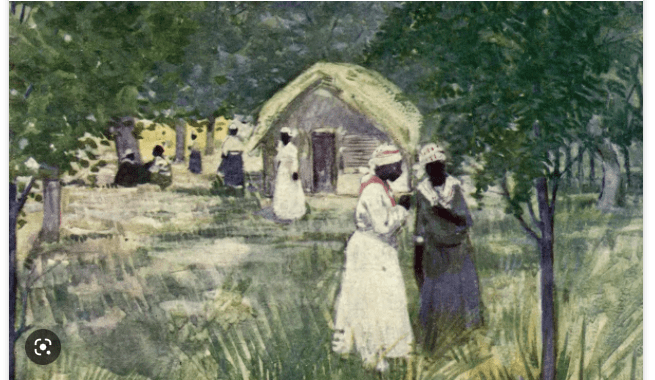
One of the key elements of The Confessions of Frannie Langton is slavery, which was still legal across the British Empire in 1826. We learn that Frannie, who is mixed race, grew up as a maid in the main house of a sugar plantation ironically named Paradise in Jamaica. She is taught to read and then forced to work for the Mengele-esque plantation owner as a lab assistant on his horrific experiments designed to prove that Africans are not human. She is intelligent but brought up in a terrible life with no real outlet to express herself, so she often comes across as awkward due her stifled cleverness. Even though technically freed by the law when she is brought over to England by her master, she finds herself a new sort of slave in the Benham household. It is here that she meets her Mistress, Benham’s wife, a morally ambiguous opium-eater who Frannie is soon enamoured with, though Mistress’s affections for Frannie are soon diverted to a rival. Then, in unknown circumstances, the Benhams are murdered.

Sara Collins has given us all the elements of the original gothic novel in The Confessions of Frannie Langton, while also echoing other brilliant novels like Sarah Waters’ Fingersmith and Margaret Atwood’s Alias Grace. It’s gripping, thought-provoking and dark and I look forward to seeing what Sara Collins does next.

Happy reading,

Imo x

Categories
English literature

ImoReads… ‘Royal Flash’ (1970) by George MacDonald Fraser

Blog Nº 46

“…I take some pride in the fact that while thrones were toppling and governments melting away overnight, I was heading for home with a set of crown jewels. There’s a moral there, I think, if I could only work out what it was.”

Having previously read and blogged about three Flashman novels that I had in an omnibus volume, I was delighted to revisit one of the most engaging characters in literature in another Flashman adventure, Royal Flash. This is the second novel chronologically in the series and as hoped, our hero Harry Flashman is no less roguish, scoundrelly or cunning than before.

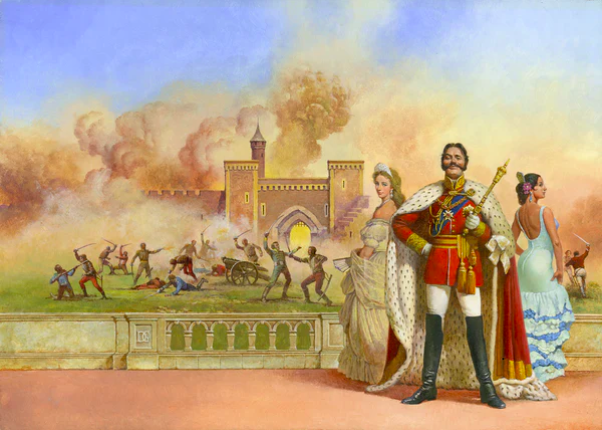
Royal Flash has two sections which take place between 1842 – 43 and 1847 – 88. In the first section, Harry is enjoying being off military duty in London, still surfing on his heroic reputation from his escapades in Afghanistan (which readers of Flashman will know are not quite as they seem to the general public). It is here he has a dalliance with the beautiful Lola Montez and meets the dastardly Otto Von Bismarck. 

It is not until section two however that Flashman comes to realise how much he regrets having met Bismarck in the first place. Unwittingly delivered to him in Germany by femme fatale Lola, Flashman needs all his cunning, seductive charm and impressive will to escape in order to extricate himself from a fiendish plot that will ultimately decide the fate of Europe. Flashman takes the reader on an exciting, amusing adventure through the dungeons and throne-rooms of Europe, engaging in swordplay, amours, disguise and deceit to escape his desperate situation and return to London.

With the risk of sounding like a broken record, the Flashman novels are magic because of the Harry Flashman character himself. A self-confessed coward and rascal keeping up the façade of a  brave, respectful British Officer, in his memoirs he is unapologetically honest about his escapades and how he is always looking out for himself above all else. He is witty and refreshingly blunt to the reader, but always manages to maintain a heroic image to his unsuspecting foes. You can’t help but like him, and paradoxically he often ends up being the hero people think he is because the situations he finds himself in require courage to escape, even though like his enemies he is never averse to using underhand tactics, treachery and cunning to do so.

Royal Flash is a rollicking adventure across the continent, and once again George MacDonald Fraser has seamlessly integrated our fictional hero into real historical events with real characters, making you wish Flashy really had locked horns with the likes of Bismarck.

Happy reading,

Imo x

Categories
English literature

ImoReads… ‘The Citadel’ (1937) by A.J. Cronin

Blog 45

“If we go on trying to make out that everything’s wrong outside the profession and everything is right within, it means the death of scientific progress.”

I have now read The Citadel twice; I can say without a doubt that it ranks on my top ten favourite books of all time. Cronin is a skilled storyteller who in this novel draws on his own experience as a doctor to paint an unsparing picture of medical ethics in pre-NHS Britain.

The Citadel takes place over a number of years, opening in 1924 when idealistic young doctor Andrew Manson has just qualified from university in Scotland and takes up an assistant job to a Dr Page in the South Wales mining town of Drineffy. Realising on arrival that Dr Page is medically incapacitated, he has to take on the entire practice for a meagre salary. Andrew is appalled at the unsanitary conditions faced by the townspeople and, eager to improve the lives and health of his patients, works to change things, helped by surgeon Phillip Denny. His next post in South Wales is as an assistant doctor for a medical aid scheme in the mining town of Aberalaw. On the strength of this new position he marries junior schoolteacher Christine Barlow whom he met in Drineffy. They are very happy together. Andrew remains committed to improving the lives of the miners and dedicates many hours to his research on the link between lung disease and coal mining. He is granted the MRCP and an MD when his research is published. Though this leads to a post with the Mines Fatigue Board in London Andrew resigns after six months, frustrated at the lack of action taken on issues discovered in his research and being cooped up in an office.

The next part of the novel sees the gradual estrangement of Andrew and Christine after Andrew sets up a private practice in London. At first Andrew does not receive many patients and those that he does receive are poor so cannot pay much for treatment. However, ultimately Andrew is seduced by the thought of easy money from wealthy, hypochondriac patients and seemingly abandons all morals in pursuit of status and wealth. The more wealthy Andrew becomes, the more Christine longs for their previous life. To her, money does not equal happiness; she would be happy with a simple country practice with the moral and committed Andrew she once knew and loved. Andrew is frustrated that Christine cannot be pleased by all that they can now afford – cars, fancy meals out, new clothes and acquaintances in high places. It takes a truly horrifying incident which lays bare the unethical system he has become party to to shock Andrew back to his true self, though he has much still to face before the novel’s end.

The fact that Cronin was a doctor himself adds serious credibility to The Citadel. Its treatment of medical ethics was groundbreaking at the time and is credited for laying the foundations for the NHS which was created just a decade later. Cronin once stated in an interview, “I have written in The Citadel all I feel about the medical profession, its injustices, its hide-bound unscientific stubbornness, its humbug … The horrors and inequities detailed in the story I have personally witnessed. This is not an attack against individuals, but against a system.” 

The more personal storyline of Andrew and Christine’s relationship only heightens the reader’s anguish. We not only witness a heartbreaking disintegration of a once strong marriage between two characters we have grown to like, but also understand the severity of Andrew’s descent into immorality by contrasting it with Christine’s staunch goodness and incorruptibility. As is true in so many books, films, TV shows and indeed real instances, money and hollow success often lead only to misery.

Cronin is a master writer – even if you are not remotely interested in British medical history you will become invested in The Citadel after just a few pages. Additionally, as I have said in previous blogs the English of the 20s and 30s is a joy to read and makes me wish people still spoke like that today. Read this book – you won’t regret it!

Happy reading,

Imo x

Categories
Australian Literature World literature

ImoReads… ‘The Thorn Birds’ (1977) By Colleen McCullough

Blog 43

“When we press the thorn to our chest we know, we understand, and still we do it.”

I was so glad to be able to read The Thorn Birds for a second time for the blog. It is one of those novels that stays with you a long time after you finish reading it. Australia’s best-selling novel to date, this epic story spanning five decades is a tale of family, hard work and relationships set against the intoxicating backdrop of the beautiful but unforgiving New South Wales.

The central character of The Thorn Birds is Meggie Cleary, though several characters get their own sections. We begin in 1915 on Meggie’s 4th birthday. The Clearys – parents Paddy and Fee and their children Bob, Jack, Hughie, Stu, Meggie and Frank (Fee’s son from a previous relationship) – are a poor but hard-working family living in New Zealand. In 1921, Paddy’s wealthy sister Mary Carson offers Paddy a job on her huge sheep farming station in New South Wales, Australia. Drogheda, after its namesake in Ireland, is where most of the novel takes place.

It is here that we meet the ambitious young priest, Father Ralph de Bricassart, who is described as a ‘beautiful man’. He is a frequent visitor to Mary Carson in the hope that a large financial bequest from her will see him rise up in the Catholic Church and freed from the remote parish of Gillanbone, not far from Drogheda. He immediately develops a fondness for Meggie, and their complex relationship over the years is central to the novel.

Across the fifty-year span of The Thorn Birds the Clearys encounter birth, death, marriage, heartbreak, separation and the untamed might of the Australian wilderness in this truly absorbing novel.

A standout feature of The Thorn Birds for me are the descriptions of the Australian landscape. Whether it’s tumbling hibiscus and Bougainvillea, ghost gum and bottle trees standing tall or the endlessly sprawling paddocks of Drogheda, it is hard not to be mesmerised by such a rich environment. It also becomes very apparent how much humans are at the mercy of nature. Across the novel we see how drought and heat can cripple a community, while intense torrents of rain can be relentless all wet season. During one tragic moment, one strike of lightning engulfs much of Drogheda in a blazing fire, causing loss and heartache for all the Clearys. The environmental aspect of the novel emphasises that though it is beautiful, the kind of life led by the Clearys is neither gentle nor easy.

The novel’s central storyline is the relationship between Meggie and Ralph. When they meet, Meggie is nine years old and Ralph is twenty-seven. There is an immediate chemistry between them; Meggie is instantly enchanted by Ralph, while Ralph becomes extremely infatuated with and protective of her. As Meggie grows into womanhood, their relationship grows more complex. It is quite clear that Ralph desires a sexual and romantic relationship with Meggie, but his vow of celibacy as a priest forbids him from pursuing this. Meggie has been in love with Ralph in one form or another since her childhood, and this also becomes a romantic and sexual desire in her late teens.

When I first read the novel several years ago, I think I was more taken with the common view that their love story was tragically romantic. Ralph is consistently described as a very handsome, kind man who even for the love of his life will not abandon his vow. For many years Meggie will not give any other man the time of day and has dreamed of only Ralph since her childhood.

However, upon second reading I found the relationship to be much more disturbing. What is abundantly clear to me is that Ralph de Bricassart, an adult for the entire story, manipulates Meggie Cleary from her childhood for an eventual sexual relationship once both are adults. During their first time having sex, Ralph admits to himself that he groomed or “molded” Meggie all along, albeit unconsciously. 

Truly she was made for him, for he had made her; for sixteen years he had shaped and molded her without knowing that he did, let alone why he did. And he forgot that he had ever given her away, that another man had shown her the end of what he had begun for himself, had always intended for himself, for she was his downfall, his rose; his creation.”

Father Ralph de Bricassart

The Thorn Birds was written in the 1970s and the focus is on a romanticised struggle between Ralph’s duty to the church and his feelings towards Meggie as a mere mortal man. The repeated emphasis on Ralph’s handsomeness and his rise up the church portrays him as being alluring and forbidden – it is playing into the trope of priests being fetishized due to their celibacy. Meggie’s lifelong love and pursuance of Ralph could also be seen as enduringly romantic and something to root for.

However, through the modern lens it is difficult to see it this way, particularly given the numerous stories that have been unearthed about sexual abuse within the Catholic church. The idea of fetishising a priest these days would therefore be wholly unusual. The large age gap also raises concerns for the modern reader. Meggie’s entire misguided idea of what love is, is based on Ralph. From girlish daydreams to repeated attempts to get him to break his vow. Ralph does not instil appropriate boundaries with her when she is an impressionable child; he is overbearingly affectionate, protective and it is something that would not be acceptable in today’s society.

Despite this, The Thorn Birds remains a captivating and emotionally charged novel, with every character gaining the reader’s sympathy, pity and disdain at various points throughout the story. I would absolutely recommend this novel – it is an unputdownable epic novel.

Happy reading,

Imo x
Categories
English literature

ImoReads… ‘I Capture the Castle’ (1949) by Dodie Smith

Blog 41

“I shouldn’t think even millionaires could eat anything nicer than new bread and real butter and honey for tea.”

I Capture the Castle is a novel that has been ‘capturing’ people’s hearts for over 50 years thanks to Dodie Smith’s witty and charming narrative. Smith, of The Hundred and One Dalmatians fame, is an important twentieth-century writer and many consider I Capture the Castle as her seminal work. It has earned its place amongst my favourite books of all time and I hope this blog will convince you to give it a go.

The novel is set in the 1930s and is written in diary format by seventeen-year-old Cassandra Mortmain. The Mortmains are a bohemian but impoverished family living in a crumbling castle in rural Suffolk. Cassandra documents her life alongside her beautiful, restless sister, twenty-one-year-old Rose, her schoolboy brother Thomas, the family’s dashing young lodger Stephen, her ethereal and glamorous stepmother Topaz and her eccentric novelist father, whose writer’s block has financially crippled the family. Despite the family’s precarious situation, Cassandra’s diary is cheerful and unguardedly funny. However, when the American heirs to the castle estate arrive unexpectedly, the Mortmains’ lives are changed dramatically and Cassandra finds herself falling in love for the first time.

The magic of this novel lies with its narrator and diarist Cassandra. Her characterful and amusing personality would make any reader smile while her guileless charm is refreshing and only adds to the humour of the story. The opening line of I Capture the Castle, “I write this sitting in the kitchen sink”, is probably one of the most memorable of twentieth-century literature. The Mortmains’ family friend the vicar perceptively says of Cassandra that she is “Jane Eyre with a touch of Becky Sharp” – she is at once fanciful, whimsical, sensible and intelligent, while her good-naturedness has continued to charm readers since the book’s publication. Through Cassandra, Smith has managed to create a very convincing diary novel. The improving fortunes of the family are also mirrored in the three notebooks Cassandra completes throughout the course of I Capture the Castle, going from the sixpenny book to the shilling book to the two-guinea book. There are sometimes jumps in time when she runs out of paper, or gentle reminders to herself to relay events in chronological order which add a keen sense of reality to her diary. In all, Cassandra is one of the most vibrant, engaging and memorable characters I have come across in literature.

Two key themes running through I Capture the Castle are poverty and love, and with the arrival of Simon and Neil Cotton the American heirs, these themes soon collide. Before their arrival the sisters long for romantic entanglements and worry about never meeting any marriageable men, “even hideous, poverty-stricken ones”, Cassandra writes. Despite their precarious financial situation, the Mortmains are very upbeat and maintain a make do and mend attitude. Even when hungry, cold or sighing over worn, too-small clothes, there is always fun to be had and a hopeful outlook. However, like most young women the sisters long for romantic encounters. The arrival of Simon and Neil who have inherited the Godsend Castle estate and Scoatney Hall, the nearby manor house, causes quite the stir within the family. In typical Pride and Prejudice fashion, Rose is determined to marry the elder brother (and heir) Simon – despite her aversion to his beard – for the good of the family. But of course, as the Mortmain sisters grow closer to the Cotton brothers, complications arise and all parties find themselves conflicted by aspects of young love. 

Overall, I Capture the Castle is an enchanting and joyful read, and through Cassandra’s colourful narration the reader will feel an affinity with the majority of the characters.This is a novel I know I will re-read several times and I would encourage others to do the same.

Happy reading,

Imo x
Categories
English literature

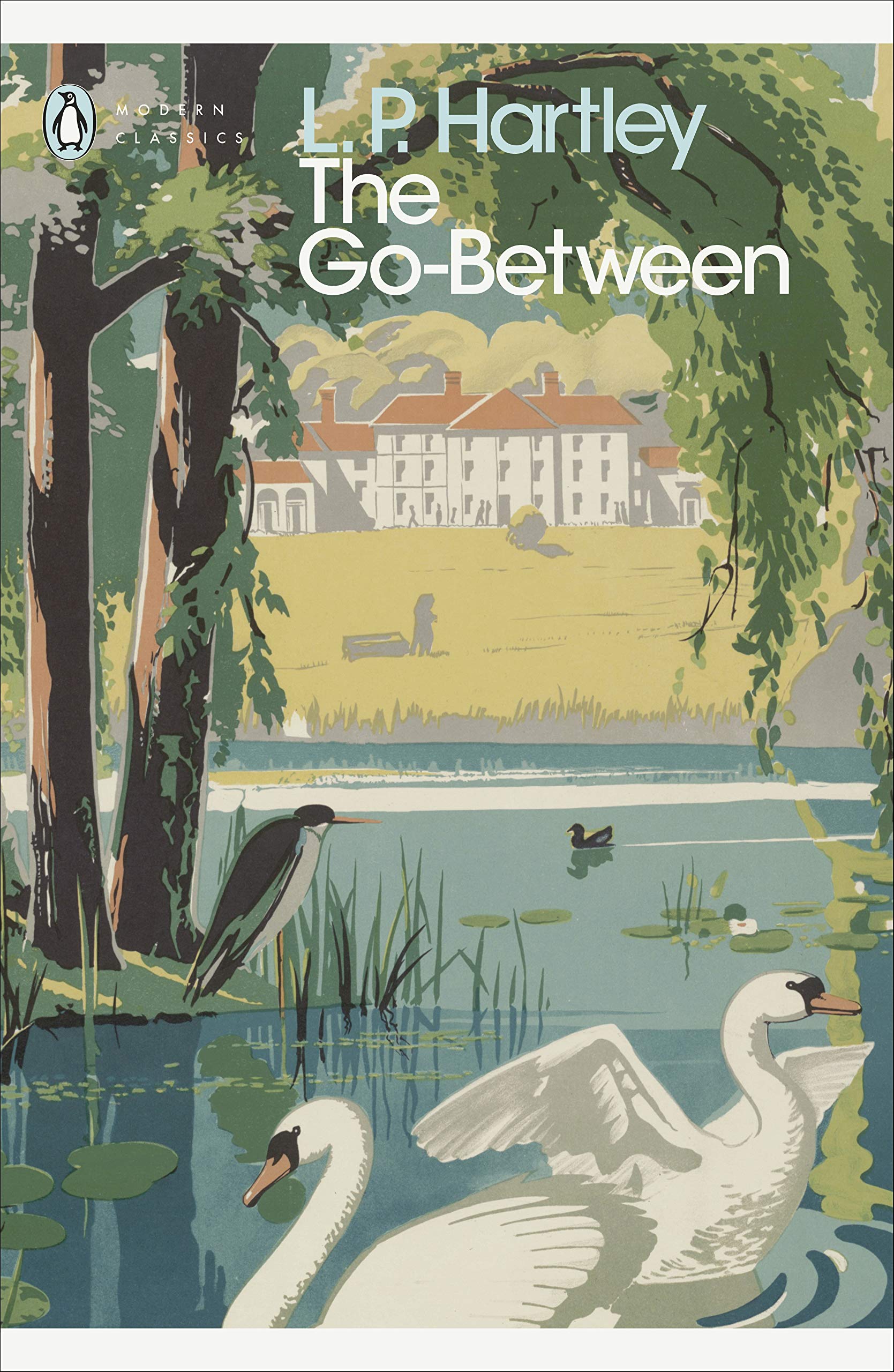
ImoReads… ‘The Go-Between’ (1953) by L.P. Hartley

Blog 40

“The past is a foreign country; they do things differently there.”

I find the late Victorian/early Edwardian period historically fascinating, so I am always keen to read books set during this era. The Go-Between is Hartley’s best known work and it certainly lives up to its reputation as a haunting story about lost innocence and a lucid critique of the society in which it takes place.

The novel is narrated by protagonist Leo Colston. The story is framed by adult Leo looking back on ‘the incident’ that happened during the long hot summer of 1900, after he finds a diary that he wrote at the time when he was almost 13. Older Leo had blocked out what happened but delving back into this diary forces him to piece it back together.

During the summer holidays, Leo is invited by his schoolfriend Marcus Maudsley to come and stay for several weeks at his home in Norfolk, Brandham Hall. Leo is from an unpolished middle-class background while the Maudsleys are of the wealthy upper-class. Whilst there, Leo becomes completely enamoured with Marcus’ older sister Marian. It is a crush that Leo cannot fully understand because he is still young enough that sexual attraction does not occur to him. Capitalising on Leo’s infatuation when Marcus falls ill and is kept in bed, Marian enlists Leo as a secret messenger to send letters between herself and tenant farmer Ted Burgess, with whom she is in a clandestine relationship. Marian is also due to become engaged to Viscount Hugh Trimingham, who Leo also likes. Unaware of the nature of their relationship at first, Leo is happy to carry the notes because he enjoys Marian’s attention and he likes Ted. When he begins to suspect that their relationship is not to do with ‘business’ as Marian and Ted told him, he naively believes that news of the engagement should automatically end their relationship. Feeling increasingly uncomfortable with the level of risk and deception by carrying the messages to and fro, Leo tries to get out but is manipulated and pressured psychologically by Marian and Ted to continue as their go-between. Eventually Leo’s unwillingness and naivety plus his exploitation by Marian and Ted comes to a head, with chillingly disastrous consequences for all involved.

The Go-Between examines the impact of the collision of childish innocence and the world of adult relationships. The reader knows immediately what is going on between Marian and Ted, and understands why they are both so indulgent of Leo, while Leo is blissfully unaware that he is being unconsciously flattered and coerced into the go-between role. Such a high level of dramatic irony makes for an intriguing read.

Though it is the summer holidays, the influence of school has a profound effect on Leo’s outlook and actions. Him and Marcus feel bound by their boarding school’s social rules not only in the schoolyard but in their everyday lives, and Leo has a reputation among his classmates as a successful magician after he cursed two boys that were bullying him and they subsequently fell off the school roof and were injured. Such strong belief in these rules confuses Leo’s relationship with the adult world which he encounters at Brandham Hall, adding to the ticking time bomb of what was to come.

It is also clear when reading The Go-Between that Leo feels emotions very strongly, suddenly, almost uncontrollably, which is a constant reminder of his young age and maturity level while he is being slowly dragged into a an risky situation of very grown-up proportions. In the end, older Leo says that what happened traumatised him so much that it led to a nervous breakdown and has irrevocably affected his adult life in terms of his ability to form relationships and deal with emotions. Hartley’s superb examination of the interplay between childhood and adulthood in The Go-Between has made it a hugely influential work. For example, Ian McEwan describes his acclaimed novel Atonement (2001) as a kind of homage to Hartley’s novel.

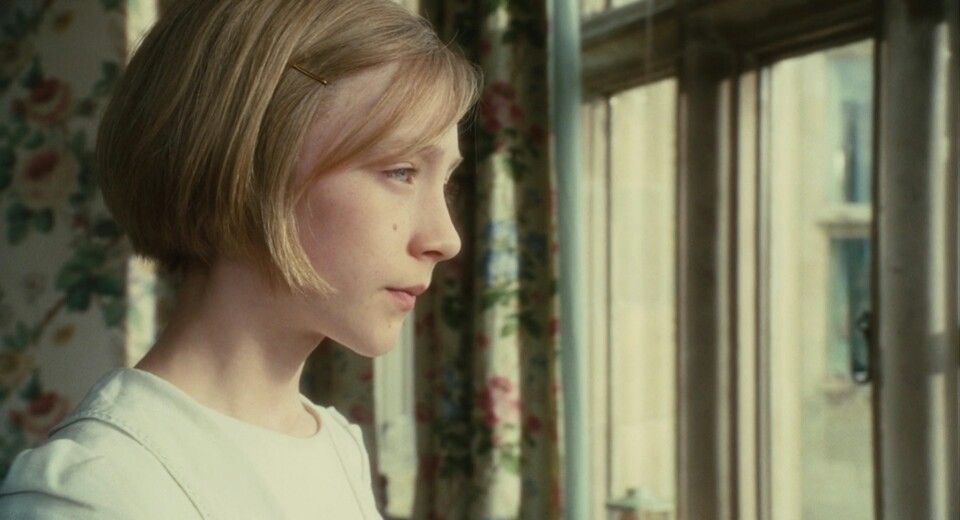
Saoirse Ronan in ‘Atonement’ (2007)

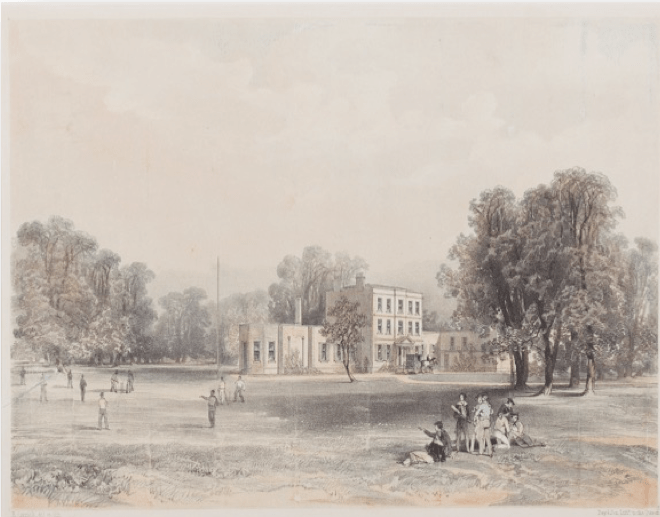
As mentioned, the turn of the twentieth century is an era I enjoy delving into and The Go-Between is in many ways faithful to the time it was set. Descriptions of cricket matches, picnics and river bathing conjures up a beautiful impression of a classic summer in the English countryside, accompanied by late Victorian dress, social customs and manner of speech. Though the novel is overall a critique of society at this time, there are some favourable moments to be had thanks to these elements.

All in all, The Go-Between is a clever and arresting story about class, innocence and relationships at the turn of the century that will leave you thinking about it long after you have finished reading it.

Happy reading,

Imo x

Categories
American Literature World literature

ImoReads… ‘The Goldfinch’ (2014) by Donna Tartt

Blog 39

“Caring too much for objects can destroy you. Only—if you care for a thing enough, it takes on a life of its own, doesn’t it? And isn’t the whole point of things—beautiful things—that they connect you to some larger beauty?”

I have now finished Donna Tartt’s trifecta of outstanding novels. For me, none can beat The Secret History, but The Goldfinch is still worthy of its reputation as an outstanding novel and a modern epic. It is an emotional and melancholy look into just how murky life can become after experiencing tragedy, trauma and neglect.

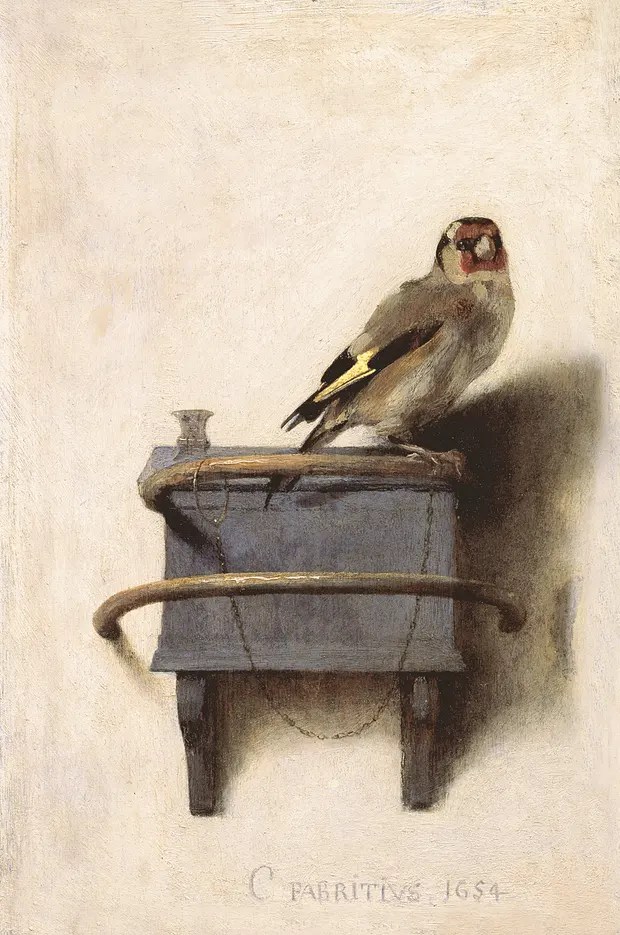
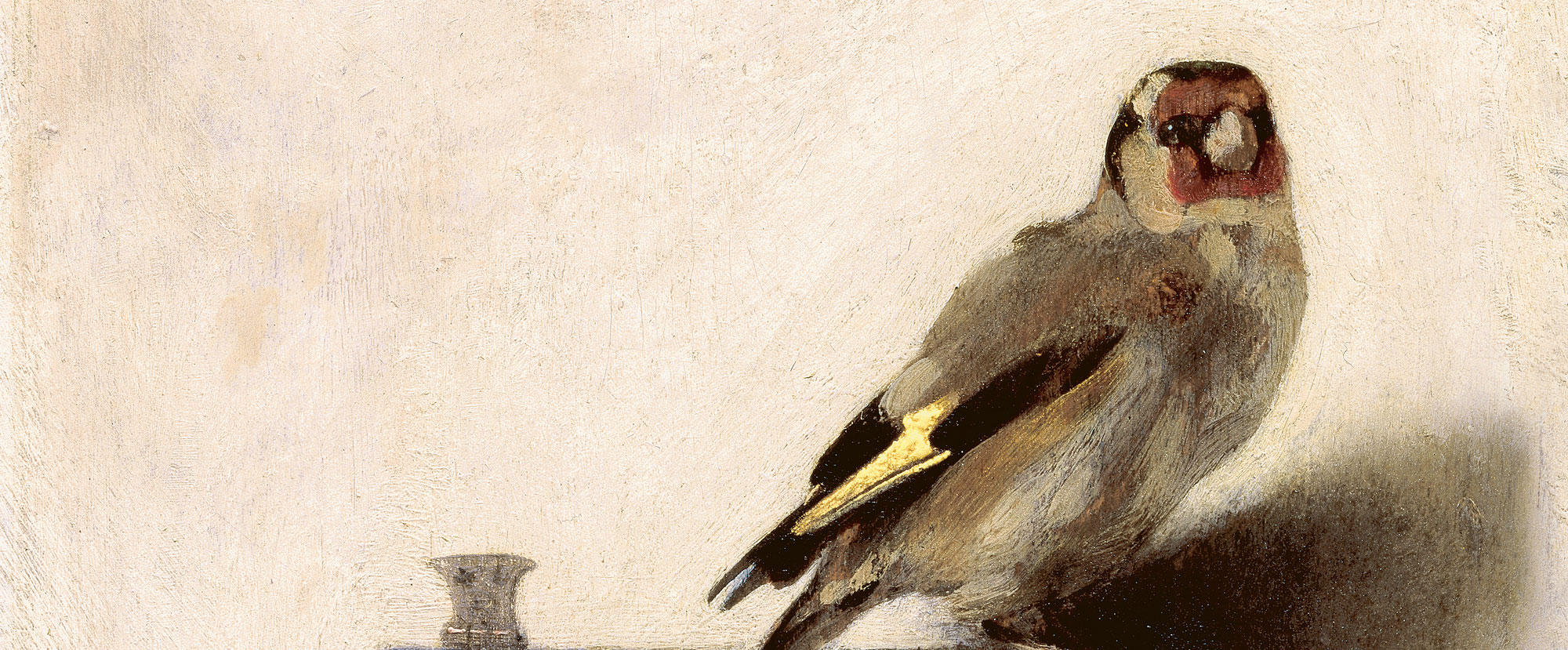
The Goldfinch opens in New York City on thirteen-year-old Theodore Decker, the son of a devoted mother and an absent father. One unfortunate day, Theo’s life is ripped apart when his mother is killed in a terrorist explosion while they are visiting Metropolitan Museum of Art together. Utterly alone and longing for his mother, he is taken in by the family of a wealthy friend, before being shipped off to Las Vegas to live with his father and his girlfriend. Traumatised by the loss of his mother, he holds dear something that reminds him of her, their favourite painting from the Met, The Goldfinch. Known only to Theo is that he has the original 1654 painting by Dutch artist Fabritius in his possession, which he took from the gallery in the wake of the explosion. Faced with neglect and indifference in Las Vegas, Theo finds solace in his friend Boris and in their descent into drugs and alcohol. Ultimately, in adulthood the painting draws him back to New York to revive old acquaintances and slowly drives him into the criminal underworld.

For me, one of the most poignant sections of The Goldfinch is Theo’s time as a young teenager in a Las Vegas suburb. Comprising of soulless new-build homes cut off from the city, most of which are empty or crumbling and some of which have even reclaimed by the Nevada desert, it feels like a metaphor for the failed American Dream. This becomes even more evident when we witness how neither Theo nor Boris have anyone in the world who cares about them, despite the fact that they both live with a parent. They often go hungry because nobody thinks to feed them and they resort to stealing. Theo’s situation at home improves only when his father’s gambling habits are going well. Both affected by trauma and with nothing to do and nobody to wonder about them, Theo and Boris are in and out of school, and spend their evenings getting drunk and high on whatever drug they can find. It is quite shocking to read about such young teenagers drinking until they’re sick or taking acid with no parental awareness or care for what they’re doing. Theo narrates this portion of his life in such a lucid and resigned way that it feels like he has accepted the fact that one tragic incident knocked him into a different life, one that is consumed by loneliness, substance abuse and monotony. 

Like Tartt’s other two novels, the research and attention to detail are remarkable. The Goldfinch allows a rare glimpse into the world of art and antiques, and the murky underworld that accompanies them. As an adult Theo has learnt the antiques trade, including how to restore pieces falling to ruin. He works in New York with Hobie, the business partner of a man who spent his last minutes with Theo in the aftermath of the explosion. Every choice and every relationship Theo has comes back to the incident and the taking of the Goldfinch painting. Twists and turns, his continued reliance on drugs and his guardianship of the painting eventually brings him back in touch with old friends from the city and Boris, and reluctantly pulls him into the greedy world of criminal art fraud and theft which leads to a page-turning bid for escape. The Goldfinch has many elements of a Shakespearean tragedy set against a modern and truly American backdrop.

Overall, The Goldfinch is an extraordinary novel that opens up a world that most of us know little about. Through watching Theo’s life and how young he experiences darker elements of adulthood, it is hard not to think that he is just a boy trying to muddle through after the devastating loss of his mother.

Happy reading,

Imo x

Categories
World literature

ImoReads… ‘Conversations with Friends’ (2017) by Sally Rooney

Blog 38

“Everyone’s always going through something, aren’t they? That’s life, basically. It’s just more and more things to go through.”

I first read Conversations with Friends in 2018 shortly after it was published, and I thought it was one of the most captivating and relevant novels of recent times. I have recently re-read it now that  the hotly anticipated TV adaptation is out, and it did not disappoint on second reading. From the young and incredibly talented Irish author Sally Rooney, Conversations with Friends is a truthful, sharp, witty and sometimes cruel novel about the realities of love and youth.

Set in Dublin, Conversations with Friends follows Frances and her best friend (and ex-girlfriend) Bobbi. Both university students, Frances and Bobbi often perform poetry together at spoken word events on the Dublin literary scene, and it is at one such event that they catch the attention of Melissa, a journalist and photographer in her thirties. Melissa invites the two friends into her home where they meet her husband Nick, an actor. The lives of these two sets of people become increasingly tangled as Frances and Nick begin an affair and Bobbi and Melissa grow closer, causing emotions to run high in this novel of intense clarity and vulnerability that examines the pitfalls of adult relationships.

Something that critics praised across the board when Conversations with Friends was published was Rooney’s unique prose style. As the narrator, Frances speaks to the reader with such a sharp lucidity and thrilling confidence, and there is little in the way of figurative or ornamental language. This style allows Rooney to write extremely well on the condition of youth and the mental and physical turmoils which can accompany it, and I am glad that I was able to read it for the first time when I was the same age as Frances and Bobbi. The lack of floral, descriptive language means that the four central characters are the focus, and Rooney gives each of them convincing layers of fragility and tentativeness as well as strength and wit, making for a real page-turner of a social drama.

Sex is a leading theme throughout the book as it ties the four main characters together. Frances and Bobbi used to be a couple and remain best friends, though they have moments of sexual chemistry within this story. Melissa is bisexual like Frances and Bobbi is gay; it is quite clear that Bobbi is attracted to Melissa and we find out that they kiss at least once. Frances and Nick begin an affair, while Nick also reignites his sexual relationship with Melissa partway through the novel after we are told it has been stagnant for some time. When describing Frances and Nick’s sex life, Rooney excels at portraying their relationship as sensual, sexy and intense while at the same time keeping it realistic and vulnerable, as the two often have trouble communicating. This could be due to the ten-year age gap between them, the strain of keeping their affair a secret or because they are both portrayed as quite awkward people. Either way, Conversations with Friends is an interesting examination of how sexual attraction and encounters can make or break a social group.

I would highly recommend Conversations with Friends, and I hope now that the TV series does not disappoint.

Happy reading,

Imo x

Categories
French Literature

ImoReads… ‘The Count of Monte Cristo’ (1844) by Alexandre Dumas

Blog 37

“It’s necessary to have wished for death in order to know how good it is to live.”

The Count of Monte Cristo has overtaken Gone With the Wind as the longest book I have ever read, coming in at 1,243 pages. This did not stop me racing through it because it is one of the most engaging, clever and thrilling novels I have ever read. It certainly deserves its reputation as one of the greatest books of all time. A story of adventure, hope, justice, revenge and forgiveness, The Count of Monte Cristo will whirl you away into a turbulent period of French history and will stir up all your emotions as you follow one man’s struggle for almost thirty years.

Our story begins in the French port city of Marseille in 1815, and the novel’s protagonist is the young, dashing and thoroughly good Edmond Dantès, who at just nineteen years old is a talented sailor. Despite coming from humble beginnings, Edmond could not be happier with life. He is engaged to the beautiful Mercédès and he is first mate of the Pharaon, owned by the kindly shipowner Morrel. On the day of his wedding, Edmond is falsely accused of treason and Bonapartism and is sent without trial to the island fortress prison off the coast of Marseille, the Château d’If.

Marseille

While imprisoned in the darkest dungeon of the prison Edmond befriends Abbé Faria, a fellow prisoner who had been trying to tunnel out of the prison when he arrived at Edmond’s cell. From Edmond’s story, the Abbé is able to deduce who falsely accused and turned in Edmond for their own gain – namely, jealous love rival Fernand Mondego, envious crewmate Danglars and the double-crossing magistrate De Villefort. During their dark years of imprisonment, the Abbé teaches Edmond history, languages, science, literature and more, but most importantly tells of a vast wealth of treasure on the small uninhabited island of Monte Cristo close to the Château d’If that he believes exists from intense historical research. Together they plot their escape, but when the Abbé becomes too ill and is on the verge of death, bequeaths all the treasure to Edmond. After 14 years of wrongful imprisonment, Edmond is able to escape the hellish prison and to his astonishment, discovers that the Abbé was right about the treasure when he arrives at Monte Cristo.

Monte Cristo Island

Fast forward ten years and Edmond arrives in Paris from the Orient, unrecognisable as the mysterious and infinitely wealthy Count of Monte Cristo, secretly set on exacting revenge upon Fernand, Danglars and De Villefort, who have all achieved high levels of success, wealth and status, in part due to their betrayal of Edmond. As the novel progresses it becomes clear how the Count has spent the last ten years patiently and masterfully doing his research and setting up his plan, which will send the reader into a fever pitch as the Count embeds himself in the lives of his enemies. The Count of Monte Cristo is an interesting look into the inner morality of man, as even those who have endured much suffering at the hands of others can still wage a battle within themselves about the choice between revenge and forgiveness as emotions run high and old wounds are reopened.

This novel spans from 1815 to 1839, and Dumas should be praised for keeping up such a fast-paced and involving narrative, despite the complexities of the story and the many strands of the tale that make up the story of Edmond. Interestingly, the bones of the novel are taken from the real-life story of shoemaker François Picaud, who was denounced by his friends as an English spy and imprisoned shortly after becoming engaged to a young woman named Marguerite. After serving part of his sentence under house arrest, his master left all his money to Picaud and informed him as to the whereabouts of a hidden treasure. Unlike Dantès, Picaud went around killing all of his enemies but it is clear how inspired Dumas was by this story, and how skilled he is as a storyteller to bring the story to life and adding in so many nuances, links and plotlines. A key shift is the Mediterranean angle that Dumas gave to The Count of Monte Cristo, by starting the novel in Marseille. The idea of the Mediterranean as the exotic and intoxicating meeting point between the cultures of Europe and the Orient fascinated French authors during this period, and this novel uses the character of the Count to fulfil many Orientalist tropes. The Count has a colourful, rich and vibrant sense of dress, interior design and always lays out an exotic feast for his guests. His household staff include the Nubian mute slave Ali and his devoted companion Haydée, a beautiful Turkish girl he rescued in Constantinople. Additionally, his knowledge of the Orient (as idealised by Europeans during this time) and his mastery of languages lead many of the other characters to believe he must be from the Orient, if not for his very pale skin, which unknown to them is a result of his long period of imprisonment. Many come to the conclusion that he must be from a point between Europe and the Orient like Malta, when in fact he is French through and through.

What I find the most satisfying and intelligent about The Count of Monte Cristo is the fact that despite the Count’s plot to bring down his enemies, he is still only the indirect avenger of his misfortune. In fact, it is their own past misdeeds that destroy the ‘victims’ Danglars, De Villefort and Fernand, all of which are simply uncovered and exploited by the Count. Furthermore, having been educated by the Abbé Faria and armed with limitless wealth, Dantès is able to come back as an instrument of divine justice in the guise of the Count, though that still does not stop him being plagued by insecurity and doubt as his plans take hold. Another interesting perspective is that the Count and the Abbé are early forerunners of the ‘detective’ figure in literature. There are certainly some Holmesian aspects to the novel. For example, the Abbé’s deduction of who betrayed Edmond and why, simply from Edmond’s retelling of the tale. Secondly, the logic behind the Count’s plans only becoming visible to the reader later on while the Count has been the master of events all along. Haydée is a key example. While at first perceived to be simply the Count’s exotic young companion acquired on his travels, she is also the daughter of Ali, Pasha of Janina, a man whom Fernand secretly betrayed to acquire a huge fortune and earn a misplaced military respect in France. Therefore, she is revealed as the proof that would help to bring him down.

The Count of Monte Cristo is an exciting and moving adventure, and after following the Count for so long it is satisfying to see good winning out over evil. However, it is hard not to be struck by the sense that despite the Count’s fulfilment of his plan and achieving the rare opportunity of obtaining education and limitless wealth as a result of his imprisonment, no amount of money can replace a lost life and destiny. Though able to find some peace, the Count will never be able to get back the happy life he once lived as Edmond Dantès, the young sailor with little to his name in terms of money or education, but who had his whole life ahead of him and was surrounded by love and joy. The true tragedy of the novel is that Dantès’ life ended the moment his so-called friends turned him in, and his struggle to forge a new life as the Count will still always be secondary to who he once was.

Chateau d’If

Happy reading,

Imo x