Categories
American Literature World literature

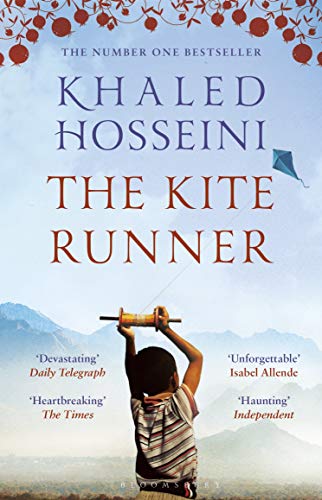
ImoReads… ‘The Kite Runner’ (2003) by Khaled Hosseini

Blog Nº 20

“There is a way to be good again “

Rahim Khan

I am so glad that this blog has given me an excuse to re-read The Kite Runner, which is in my opinion one of the best books written so far in the 21st century. Its exploration of the strength and boundaries of friendship and familial ties against a backdrop of war, loss and regret makes for an extremely captivating and moving read. 

The novel begins in vibrant and thriving 1970s Afghanistan, and is told from the perspective of Amir, then a young boy. He is the son of a vivacious, well-liked and well-off merchant and they live together in the wealthy Kabul district of Wazir Akbar Khan. He and his best friend Hassan, the son of his father’s servant, do everything together and want more than anything to win the local kite-fighting tournament. However, neither can predict the terrible fate that befalls Hassan that afternoon, completely shattering their lives. The subsequent invasion of Afghanistan by Russia means that Amir and his father are forced to flee to America, leaving Hassan and his father Ali behind. After 26 years of trying to live with what he had done to his best friend the day of the tournament, an unforeseeable turn of events forces Amir to return to Afghanistan under Taliban rule to find the one thing that he could not give himself in America: redemption. 

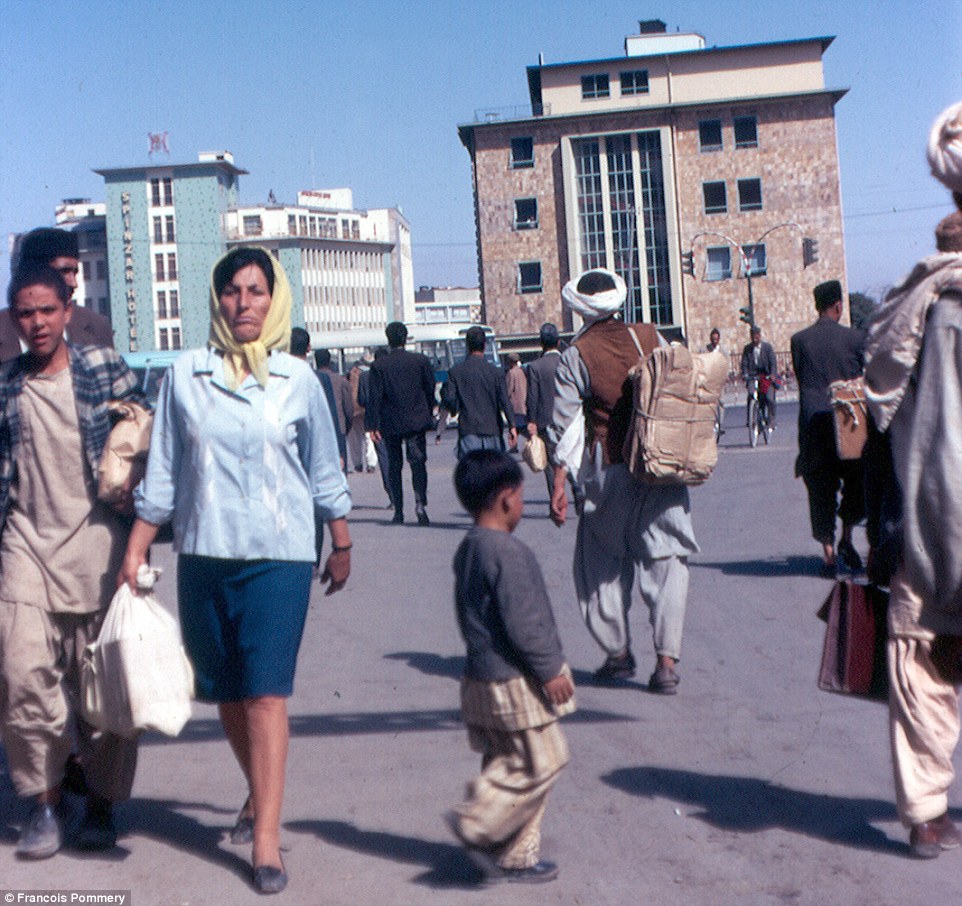
One great thing about The Kite Runner is that it teaches readers about the recent history of Afghanistan. My knowledge of the Soviet-Afghan War was hazy at best, but this book really lays bare the havoc it wreaked on the country, and how the desolation it caused paved the way for civil war and the rise of the Taliban. Sadly, because of all this turmoil that Afghanistan has suffered in recent decades, I had no idea how stable and prosperous the country had been beforehand. We learn through Amir’s upbringing that western influences were welcomed in Afghanistan and existed peacefully alongside the moderate Islamic way of life there. We learn about Afghan cultural traditions, architecture and cuisine, much of which has sadly been destroyed due to constant warfare and extremist regimes. I think it’s a shame that before reading The Kite Runner I only knew of Afghanistan as a ravaged victim of various world powers’ Cold War ambitions or as a nation living in fear of the Taliban. I hope that because this book has been so successful since its release in 2003, that many other people’s eyes have been opened to the worthy history of Afghanistan.

The central focus of The Kite Runner is the friendship between Amir and Hassan. Though Amir and Hassan have known each other since birth and have a deep yet also ordinary friendship, there is always a slight distance between them. This is because Amir is Pashtun, the majority ethnic group in Afghanistan, while Hassan and his father are Hazaras, a minority ethnic group native to the Hazarajat region of the country. Hazaras are considered one of the most oppressed groups in the world, and they have faced strong persecution in Afghanistan for centuries. Hosseini subtly emphasises the differences between the two boys all the time, building a presence of mutually unspoken but definitely mutually recognised tension between them. For example, Hassan is technically Amir’s servant and he and his father live in a shack outside Amir’s large residence. Amir goes to school and has prospects, while Hassan is illiterate and is destined to work in servile roles all his life.

Amir sometimes feels resentment towards Hassan because it seems that his own father values Hassan as much as, if not more than him, and this leads Amir to sometimes think spiteful thoughts or take advantage of Hassan’s loyalty and good natured-ness. And indeed, it is this divide that ensures Hassan will ‘run’ Amir’s kite for him – “for you, a thousand times over” – after Amir wins the kite-fighting tournament; the moment when Amir, out looking for Hassan who has not returned with the kite, chooses to stand by and watch his friend go through something horrifyingly traumatic because he is too gutless to stand up for him. The fallout from this event takes the reader on a long journey with Amir as he seeks the meaning of friendship and redemption for his actions.

Hosseini is a genius storyteller, filling The Kite Runner with raw emotion, a storyline that captivates across its 26-year timespan, and the most original plot twists that will leave you gawping with astonishment while also wondering how you didn’t see them coming. It’s no surprise that I read it in three days – it’s completely unputdownable. His use of backshadowing, symbolism, ‘coincidence’ and suspense are extremely shrewd and add so many dimensions to this exceptional story. Hosseini, who himself is Afghan-American, always features Afghan characters in his novels but in this case there are some outright similarities between himself and Amir. Hosseini also grew up in the Wazir Akbar Khan district of Kabul, had to seek asylum in America when the war began, and like Amir, grew up to be a writer. It is therefore interesting to wonder at what other parallels Hosseini sees between himself and his character – perhaps Amir’s journey of self-scrutiny was as cathartic for Hosseini as it was for his fictional creation.

I have purposefully not given away any spoilers so that anyone considering reading The Kite Runner can enjoy its twists and turns to the fullest and be as gripped as I was. It’s a truly wonderful book that will make you feel every emotion on the spectrum.

Happy reading,

Imo x

Categories
English literature

ImoReads… ‘The Fellowship of the Ring’ (1954) by J.R.R Tolkien

Blog 17

” Faithless is he that says farewell when the road darkens”

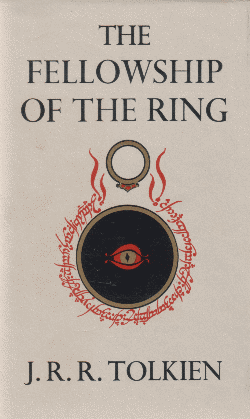
After finishing The Hobbit, I was more than happy to continue on my adventure through Middle-earth by delving straight into the first volume of the Lord of the Rings trilogy, The Fellowship of the Ring (TFOTR). I thoroughly enjoyed this novel as we start to see the consequences of Bilbo Baggins taking the One Ring from Gollum in The Hobbit playing out with ominous effect. More mature than The Hobbit, which Tolkien wrote for his children, TFOTR wrestles with themes of greed, power and violence as its heroes fight to keep the all-consuming darkness at bay. And yet the warming moments of humour, friendship and courage which often prevail against the gloom of evil keep the reader faithful in the power of good and fully ensconced in this exciting adventure.

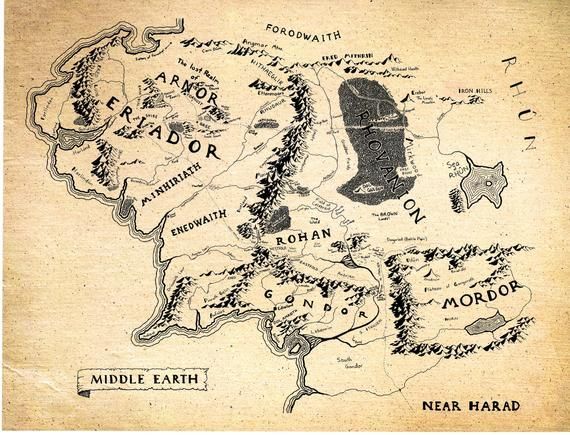
Set 60 years after The Hobbit, TFOTR deals with the fallout of Bilbo’s innocent taking of a gold ring from the creature Gollum. We discover that years ago, the dark lord Sauron created a set of Rings to give to the rulers of Men, Elves and Dwarves. However, Sauron deceived them by secretly making another, the One Ring to rule them all. Lost and forgotten about, this is the extremely powerful and dangerous Ring that came to be in Bilbo’s possession, unbeknown to him. To stop Sauron regaining the Ring and therefore bringing Middle-earth into an era of evil and darkness, a great quest must take place to destroy the Ring in the place of its creation, the fires of Mount Doom in Mordor. This is a mighty challenge which is why a select few, ‘the fellowship of the ring’, are chosen for the task.

The nine members are: Frodo Baggins, his gardener Sam Gangee, the wizard Gandalf, the elf Legolas, the dwarf Gimli, the men Aragorn and Boromir, and the two young hobbits Merry Brandybuck and Pippin Took. 

As had been proven by Bilbo, the corrupting influence of the Ring works much more slowly on hobbits as they are truly good creatures less easily swayed by greed and lust. This is why it is Frodo who bears the Ring while the others act as his guides and protectors. Met with much peril and evil along the way, the group also become firm and loyal friends. Although they encounter much danger and loss, their spirits are never fully dampened as they are often assisted by magical allies in their darkest hours. 

I know I waxed lyrical about Tolkien’s use of language in The Hobbit, but it deserves a quick nod here as well. He manages to create a real sense of disquiet and ill-omen in his narrative which is as thrilling as it is alarming for the reader. Let’s take for example the Black Riders, faceless, evil beings – formerly the nine Men gifted with Rings but who have faded away under their influence to become Ringwraiths dominated under Sauron’s will. Seated astride ebony black horses, they plague Frodo and company throughout the novel trying to obtain the One Ring. Tolkien portrays them as menacing phantoms always close at hand but not always seen. The feeling of being watched seeps eerily through the chapters; so much so that the reader feels as anxious for the characters to get to somewhere safe as if it were they themselves being constantly chased.

As TFOTR went on I found myself growing fond of every member of the fellowship, but I have to say my favourite character is Legolas the Wood Elf. Not only a moral and brave character who forms an unlikely friendship with Gimli, he also (like all elves) can slay an enemy with a delicate yet ruthless grace. In fact, all his movements are silent, swift and elegant which is always admirable to the average awkward human. One of the most wondrous sections of the book is when the company takes refuge in the dreamlike Elven realm of Lothlórien, ruled over by the Lady Galadriel and her husband Lord Cereborn. Tolkien’s imagination knew no bounds in creating this extraordinary place where each elf captivates the company and the reader with their endless poise and refinement.

Yet alas it is soon after this moment that the fellowship encounters great difficulty and splinters, which is where the novel ends. Luckily, I won’t be left on this cliff hanger for long as volume two, The Two Towers, is already in my possession. 

I’m glad to say that TFOTR is an extremely worthy successor to The Hobbit, and I look forward to continuing on with the saga of Middle-earth.

Happy reading,

Imo x

Categories
English literature

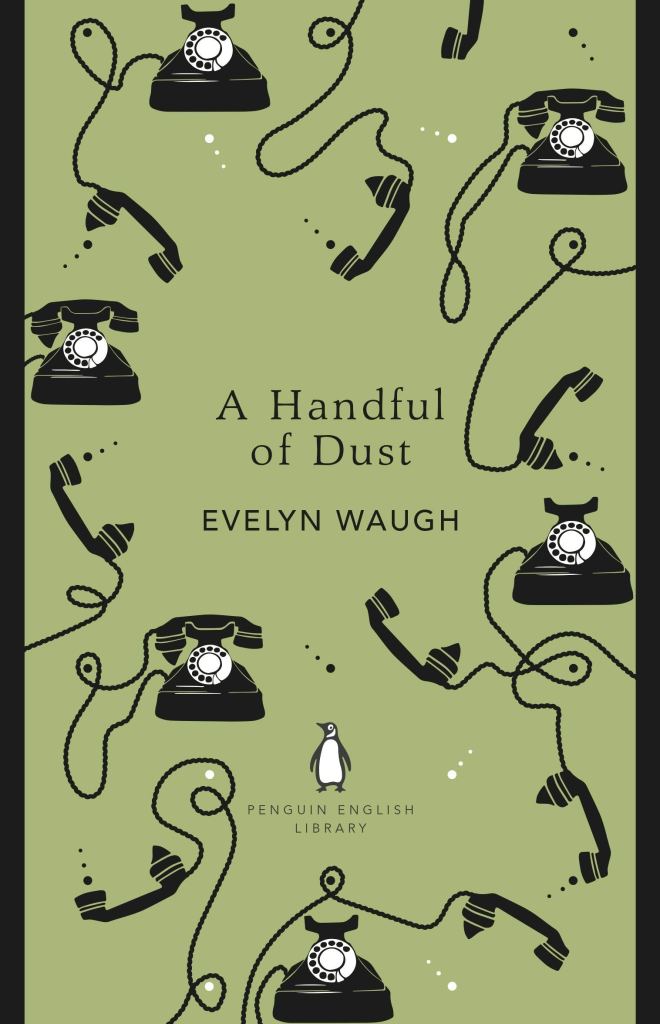
ImoReads… ‘A Handful of Dust’ (1934) by Evelyn Waugh

Blog 11

“A wonderfully congenial group who live by a unique set of social standards. According to their rules, any sin is acceptable provided it is carried off in good taste.” 

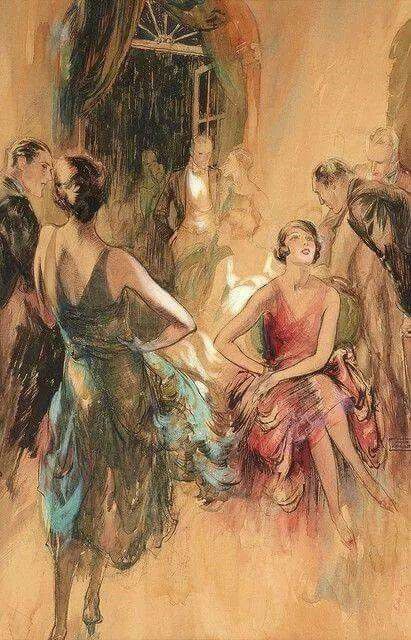
A Handful of Dust is the first book I have read by Evelyn Waugh, and it definitely won’t be the last. This novel is a bitingly funny snapshot of the perceived shallow and reckless nature of society circles in 1930s England. Waugh was a perceptive writer who often used experiences of those he met to humorous effect, so after reading this novel I can only wonder at the sort of people that he must have come across day to day. Lingering elements of Edwardian customs and norms are clear throughout, and it is always a joy to experience the eloquence of 1930s middle-class language.

The story focuses on Tony Last and his wife Lady Brenda, who reside in Tony’s pride and joy, the gothic monstrosity that is Hetton Abbey, out in the countryside. They have a young son named John Andrew. So wrapped up in living the life of a country Squire, Tony is oblivious to his wife’s boredom, so much so that he happily lets her “mug him off” by carrying on with an exceedingly shallow, dull young socialite named John Beaver in London – an aimless affair that everyone seems to know about except Tony. From here on out we witness the slow disintegration of their marriage, which reveals the superficial nature of all their friends, their wants, their attitudes and society in general.

This may sound somewhat depressing, but Waugh has interweaved subtle and not-so-subtle elements of wry, cynical humour throughout the text and this creates a satisfying level of dramatic irony for the reader. That is, we can see how shallow everything and everyone is, but the characters themselves are completely oblivious to their own superficiality. 

One example of Waugh’s humour is the names of certain characters. For example, one of Brenda’s friends is modestly named ‘Lady Cockpurse’. This makes the following exchange between Tony and his son John Andrew distinctly more amusing:

“Daddy, what does Lady Cockpurse eat?”

“Oh, nuts and things”

“Nuts and what things?”

“Oh, different kinds of nuts.”

I think Waugh has bestowed Tony and Brenda with the surname Last as they both end up rather unfortunate (finishing last if you will) by the end of the novel. Although Tony was perhaps not the most attentive husband, I found him to be a pretty harmless character. Brenda on the other hand I found to be extremely shallow, cruel and careless. However, when their son dies in a riding accident and both of them are fundamentally indifferent, their true apathetic, insincere natures are exposed.

Perhaps as karma for this, Waugh is not kind to either of them in the end. Although it is Brenda who brings down their marriage through infidelity, she is still ballsy enough to ask for an extortionate allowance per year from Tony as a condition of divorce. It is therefore extremely satisfying when he refuses her this privilege. Unsurprisingly, John Beaver loses interest in marrying or even having anything to do with Brenda when the prospect of wealth dries out, so he swans off to America leaving Brenda somewhat destitute and reliant on the “benevolent nature” of her circle of friends.

Tony on the other hand sets out on an ill-fated exploration mission to Brazil with the incompetent Dr Messinger. Abandoned by their guides in the middle of the rainforest, Tony falls ill and Dr Messinger comes to an untimely end at the hands of a waterfall. Waugh gives us some hope for Tony when he is found and nursed back to health by British Guianan gone rogue Mr Todd, but the atmosphere quickly becomes menacing when Tony is not allowed to leave and is condemned to read the complete collection of Dickens to the illiterate Mr Todd indefinitely. Presumed dead, Hetton is handed over to Tony’s cousins (known as the ‘impoverished Lasts’), and Brenda marries Tony’s friend Jock Grant-Menzies.

I am dissatisfied with this ending as I think Brenda should have received a worse fate than Tony, however I think it demonstrates Waugh’s move from bitter humour to disillusioned realism after the death of John Andrew. As Waugh muses himself in his letters, the theme of A Handful of Dust is a Gothic man in the hands of savages – first Brenda and the others in society, and then the real ones out in Brazil. Therefore, this is the only way the novel could have ended to see this theme through. 

This novel is absolutely worth the read for the level of sheer disbelief you will feel when experiencing the indifference and superficiality of Waugh’s characters, as well as for its sardonic humour. One thing that’s certain is that you will come away feeling thankful that you are not Brenda or Tony Last.

Happy reading,

Imo x