Categories
English literature

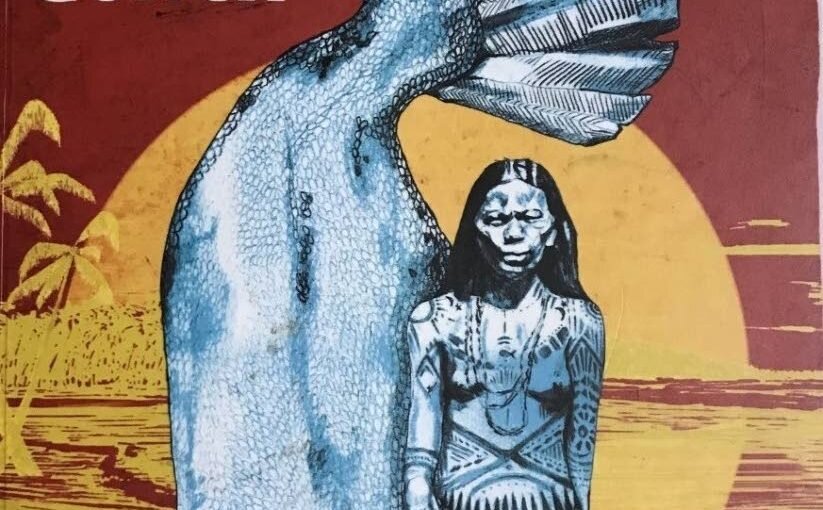
ImoReads… ‘Black Robe’ (1985) by Brian Moore

Blog 35

“We’re not colonising the Savages. They’re colonising us.”

Several critics have called Black Robe an extraordinary novel, and I would have to agree. Moore has created a work that is highly suspenseful and full of physical and spiritual adventure, as well as raising questions of morality, faith and identity.

Black Robe is set in seventeenth-century New France, or Canada, shortly after settlement by the French. The central theme of the book is the collision of European and Native American cultures, and we witness this through the story of idealistic Jesuit priest Laforgue. In Quebec, in exchange for muskets from the French, a group of Algonquin agree to take Laforgue and his young assistant Daniel upriver to help them reach a Huron settlement to relieve a priest at the Jesuit mission there. This mission is long and treacherous, and along the way both parties suffer identity crises as they struggle to understand each other’s culture and faith. 

(NB: First Nations people historically called Jesuit priests ‘black robes’ due to their religious attire.)

Undoubtedly, Black Robe is a harsh, uncensored and bleak portrayal of life in this era, meaning there are many shocking moments throughout the story. The wilderness that the group travels through is totally unforgiving and Laforgue struggles to navigate it the way the Algonquin do. Furthermore, the native Americans are portrayed as having no filter when it comes to language, humour, sexual relations and more. When members of the group are captured by some hostile Iroquois, we witness some horrifying scenes of torture, cannibalism and sexual harassment. Jesuitism comes across to the reader as a thoroughly miserable experience, full of self-deprecation, fear of God and the inner struggle between human desire and the abstinence required by the religion. We hear in detail about Laforgue’s battle with this, and there are several moments where he succumbs, often by methods as uncomfortable as secretly observing his assistant Daniel and an Algonquin girl having sex, for which he punishes himself afterwards.

The most interesting aspect of this novel is the impact of this early colonialism both on the Native American and French sides. Black Robe demonstrates this mainly through the clash of religions. Whereas the Algonquin believe in the power of nature and the presence of spirits in the world around them, Jesuits belong to Catholicism and believe in the teachings of the christian God and the Bible. Moore said of his book, ‘the only conscious thing I had in mind when writing it was the belief of one religion that the other religion was totally wrong. The only thing they have in common is the view that the other side must be the Devil.’ 

On the journey, the Algonquin begin to suspect Laforgue is a demon due to his beliefs while Laforgue tries (unsuccessfully) to convert the Algonquin to Christianity because he believes their “heathen” religion will see them end up in Hell. However as the journey wears on, both sides struggle with an identity crisis. Once faithful assistant Daniel renounces his Jesuit faith completely when he falls in love with Annuka, an Algonquin girl. She also struggles to understand why with him she wants to be monogamous because her tribe has always been more free when it comes to sexual relations. Other Algonquin start to realise with dismay that since the French arrived, materialism and desire for ‘things’ has seeped into their culture when it wasn’t there before. Laforgue, who set out on this mission full of idealism and a passion to convert as many as possible, is really struggling with disillusionment by the time he eventually reaches the Huron settlement which is rife with fever and death. Black Robe culminates in one of the most powerful, thought-provoking final chapters I have ever read, which lays bare the confusion and desperation of both the Hurons and Laforgue caused by an unprecedented clash of culture, faith and moral direction.

Though not for the faint-hearted, I would highly recommend Black Robe because it looks at a pivotal moment in history and does not hold back in its portrayal of the complexities of a collision of worlds.

Happy reading,

Imo x

Categories
English literature

ImoReads… ‘The Wind in the Willows’ (1908) by Kenneth Grahame

Blog 34

“Independence is all very well, but we animals never allow our friends to make fools of themselves beyond a certain limit.”

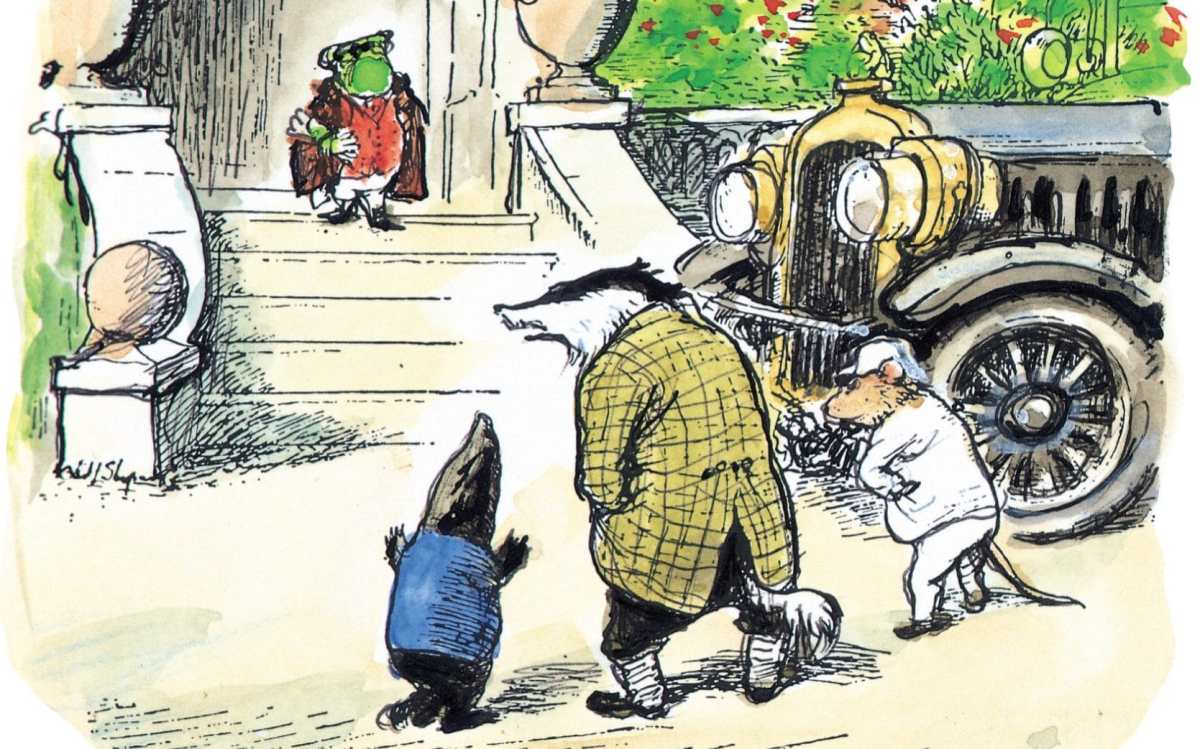
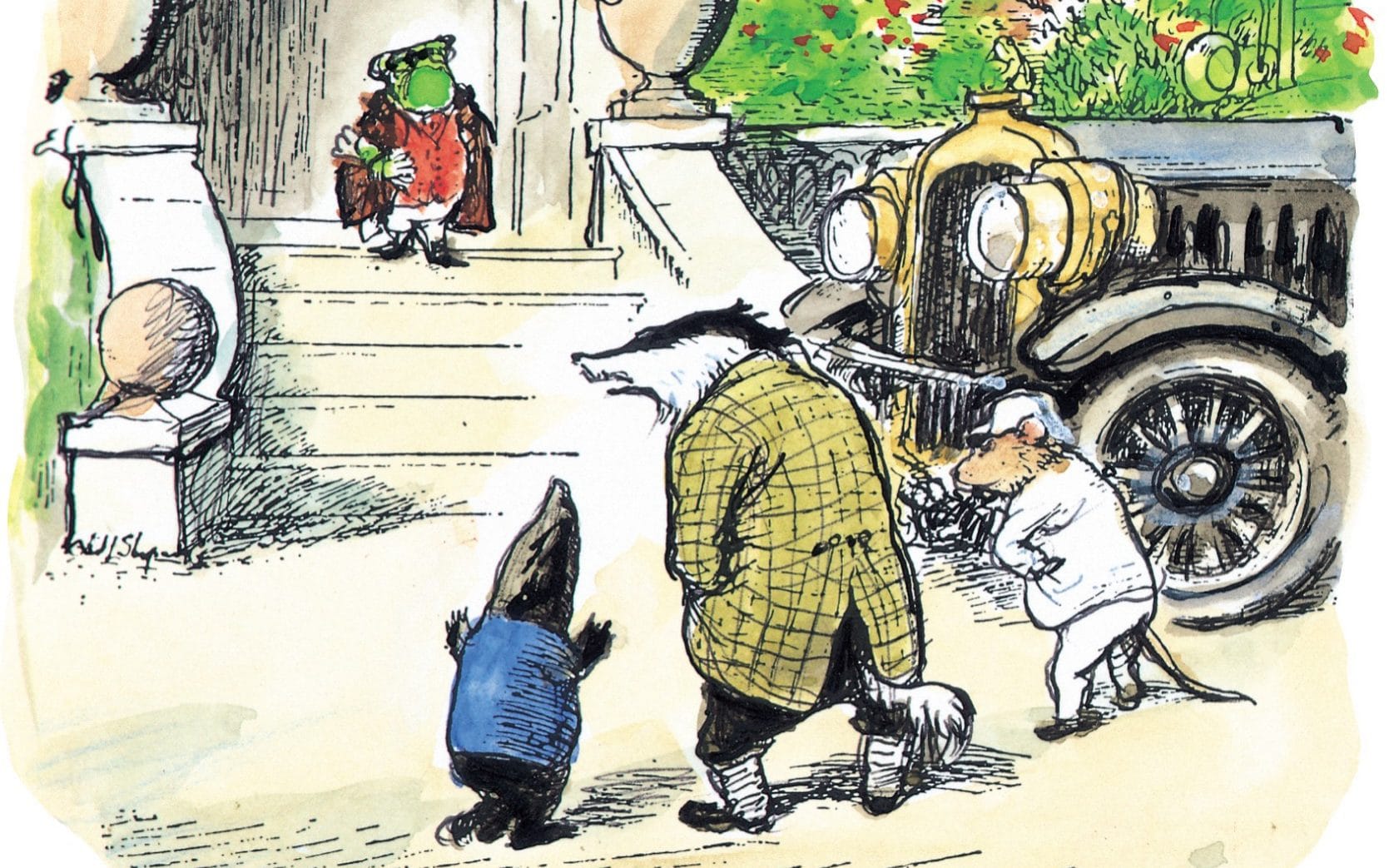
I was thrilled to receive a beautiful hardback copy of The Wind in the Willows, complete with the masterful original illustrations by E.H. Shepard, for Christmas. Though I have read and re-read many children’s classics over the years, this was my first time reading The Wind in the Willows and it was an absolute joy. It truly is timeless and can be enjoyed by all age groups.

The novel begins with Mole venturing out of his burrow to experience the world above. There he meets the brave Ratty, the kind Badger and the mischievous Toad. These four unlikely friends are in for adventures galore in the English countryside, much to the enjoyment of all readers.

What is brilliant about The Wind in the Willows is how Grahame has managed to create a story about animals, but has given them enough human characteristics to create a charming and amusing novel. For example, Ratty, Mole and Badger all live in their expected habitats – the riverbank, a burrow and a set. And then there is Toad, the aristocrat of the group, who lives in the mansion Toad Hall and has an obsession with motor cars. They are all finely clad in waistcoats and tweed jackets, they enjoy rowing down the river and always love a feast. Ratty in particular loves a picnic, containing delicacies like cold beef, cress sandwiches and ginger beer. They are constantly referring to each other as ‘old fellow’ and similar terms of endearment popular at the time, further adding to the impression that they are classic English gentlemen. And yet, we are still acutely aware that they are animals. Referring to living through winter and hibernation we learn that, “no animal, according to the rules of animal-etiquette, is ever expected to do anything strenuous, or heroic, or even moderately active during the off-season of winter.” Grahame has somehow created a world in which being an animal and an English gentleman makes perfect sense, and this makes for a witty, joyful read. 

The world in which The Wind in the Willows takes place further emphasises that we are peeking into an English paradise. The summer is always warm and sunny, and the action mainly takes place along the beautiful blue river, where we have the luscious green riverbank and fields, we have the wild wood and of course Toad Hall which is reminiscent of a typical English country estate. The animals even have a few encounters with local villages, but they do not ever venture past a certain point, into the ‘Wide World.’ Grahame was partially inspired by Henley-on-Thames in Oxfordshire when writing The Wind in the Willows. 

This novel came about based on the stories that Grahame used to tell his son Alastair at bedtime, and it is said that his son was the inspiration for the rascally character of Toad. I am so glad that many generations since have got to enjoy this tale which started off as a bedtime story between father and son. Grahame has created something magical and memorable, with humour and charm that will never fade.

Happy reading,

Imo x

Categories
English literature nineteenth century

ImoReads… ‘She’ (1887) by H. Rider Haggard

Blog 33

“Mistrust all men, and slay him whom thou mistrustest overmuch; and as for women, flee from them, for they are evil, and in the end will destroy thee.”

She is without a doubt an extraordinary novel, one which will leave you deep in thought for days after finishing it. Haggard uses the English language in a thoroughly captivating way to tell this tale of myth, imperialism, horror and fascination, which has remained so popular with readers that it has never gone out of print since its first release over 130 years ago.

The novel is narrated by protagonist Horace Holly, and tells the tale of how he, a Cambridge professor, and his ward Leo Vincey came to be in the presence of Ayesha, the mysterious white queen of a Central African tribe. Her full title, She-who-must-be-obeyed, is a testament to how she can at once mesmerise with her eternal beauty and magical powers, but also be cruel and manipulative whenever the mood takes her. Holly and Leo’s journey to her hidden realm – which they are unsure is even real because it’s based on a 2,000-year-old quest – sees them battle shipwreck, fever, starvation and cannibals all to reach the goal of finding She. Both men are at once horrified and entranced by Ayesha, symbolising her as one of the most compelling and ambivalent figures in Western mythology – a female who is both monstrous and desirable, and without a doubt, more deadly than the male.

She is a vivid example of imperialist literature. As such, it embraces many hallmarks typical of this genre including ideas of racial and cultural hierarchy that were popular in the late Victorian period and adventuring to a ‘lost world’ (Haggard developed many conventions of this genre), in this case deep in the wild interior of Africa. Before writing this novel Haggard lived in South Africa for seven years, working in a very senior position of the British colonial administration, and he was heavily inspired by his time there when writing She. The sense of adventure in this novel is intoxicating, and since its publication She has been popular with readers across the age and gender spectrum. Like Holly and Leo, we are intrigued by this secret tribe living in an arresting, undiscovered pocket of land in Central Africa, and even more intrigued as to how they are so entirely ruled over by an eternal, beautiful, magical queen who commands power, fear and obedience with as little as a title, She-who-must-be-obeyed

Significantly, She provides us with an interesting exploration of themes including female authority and womanhood. Some scholars have noted that the publication of She coincided with Queen Victoria’s Golden Jubliee and suggested that She is an ominous literary tribute to the Queen on her 50 years on the throne. Both women are also chaste and devoted to one man – Victoria to Albert and Ayesha to Kallikrates, an ancient lover for whom she has waited patiently for 2,000 years to return to her. While Victoria is seen as a benign figure, Ayesha embodies late Victorian fears of a feminist movement desiring absolute female independence and absolute control over men. Anxiety over all-consuming female authority is present throughout the novel, particularly when both Holly and Leo – who represent ‘superior’ male intellect and physicality respectively – quickly fall under her will. Even their rational minds and Holly’s self-confessed misogyny are no defence against Ayesha, and they both worship her “as never woman was worshipped”. Even in the tribe that She rules over, women are respected and not subservient to men and there is no such thing as monogamy. Women select their partners, and they can have as many as they like. In one sense this is positive, because we see women taking control of their lives in a time where they were largely oppressed and thought of as the inferior sex. However, Ayesha also falls into the category of seductive femme fatale, which is a part of a centuries-old tradition of Western male sexual fantasy that includes other characters such as Homer’s Circe, Flaubert’s Salammbô, and Shakespeare’s Cleopatra

In conclusion She is a novel which will take hold of you, as it has taken hold of many generations since its publication in 1887; it is not only the characters that become fascinated by the unknowable She-who-must-be-obeyed. Experience romance, adventure, danger, horror and get a intriguing insight into the Victorian imperial mindset with this astonishing work of fiction.

Happy reading,

Imo x
Categories
American Literature World literature

ImoReads… ‘The Custom of the Country’ (1913) by Edith Wharton

Blog 32

“She had everything she wanted, but she still felt, at times, that there were other things she might want if she knew about them.”

I have already read two of Edith Wharton’s most famed novels, The Age of Innocence (1920) and The House of Mirth (1905), so I had high hopes for The Custom of the Country. Like many of Wharton’s works the subject is marriage, meaning that the subtext is divorce. The Custom of the Country thrusts us into pre-World War One New York, focusing on an aristocratic society struggling to maintain its old word social conventions in the face of modernity and new ideas.

The novel takes place over several years of the early twentieth century and centres on the beautiful but amoral young woman Undine Spragg. Undine and her parents have just moved from the Mid-West town of Apex to New York City, and her goal is to marry a rich man admired in society to kickstart her social career. Though divorce is possible at this time, it is heavily frowned upon by the upper echelons of society and yet, by the end of The Custom of the Country Undine has succeeded in dissolving three marriages in her pursuit of social “triumph” and is starting to become dissatisfied with her fourth. Undine is single-minded in her goal and is indifferent to who she may hurt along the way. Her various exploits take us from New York to France and back, providing an eye-opening look into society, respectability and the female struggle in this era.

Many have drawn comparisons between Undine Spragg and Becky Sharp, the central character of Thackeray’s Vanity Fair (1848). Like Undine, Becky comes from outside society but is determined to marry her way in; she is ruthless, cold and uses men to get to the top, and like Undine, she reluctantly bears a son who she would go on to neglect. However, unlike in Vanity Fair, there are no moralising elements in The Custom of the Country. No normative friends, no narratorial passages condemning the corruption of the anti-heroine – the literary tradition is closer to that of Trollope in The Way We Live Now (1875), which he wrote as a reproach of the financial scandals of the 1870s and how they revealed the levels of dishonesty and corruption present in respectable society.

Undine’s first ‘high society’ marriage is to Ralph Marvell, who comes from an Old New York Society aristocratic family. For Undine, marriage is not about getting a husband; it is instead an entry into the world of money, society and position, which to her are everything. Frankly, who her husband is does not matter too much to Undine, as long as he can fund her lifestyle and is respectable enough to allow her a life of amusement in the right social circle. Undine uses her dazzling beauty to manipulate men into doing what she wants, and the artistic, intelligent Ralph finds out too late that Undine has no interest in intellectual or creative pursuits and that she is mercenary and extravagant. However, Wharton critiques Ralph as much as she does Undine – he sees her as a blank page on which he will create his ideal wife who will fit right in to his fantasy life. As with her second husband, the French aristocrat Raymond de Chelles, once Ralph pierces the veil of her beautiful façade that he himself has imagined based on her striking good looks, he realises in a moment as comic as it is tragic, that there is not much substance to Undine at all. 

Though Undine is not a likeable character, we can draw some comparisons between her and Wharton. When The Custom of the Country was published in 1913 Wharton was newly divorced after a long and unhappy marriage and she had permanently settled in France, where she would remain until her death. Undine is completely enamoured with Paris and it is there she sets her sights on the aristocrat de Chelles, and when we hear of her string of divorces and the fact that she somehow continues to be accepted in society, there is undoubtedly a hint of admiration in the narrative voice. 

It is also interesting to note the cultural differences between the United States and France when Undine marries de Chelles. In some ways they are portrayed as very positive; speaking of America, a character named Charles Bowen comments that society marriages are unhappy because men take little to no interest in what their wives have to say, and do not let them in to the world of business. Instead, they furnish their wives with material things which they in turn pretend constitute a happy marriage to their fellow female friends. In France, women are deemed to have much more intellectual independence, and men respect and are interested in women with opinions, knowledge and academic and cultural interests, suggesting that marriage is more of a partnership. It is this fundamental difference that is ultimately the last straw in the internal disintegration of Undine’s marriage to de Chelles – once he realises there is no intellectuality beneath her ‘beautiful façade’, he becomes indifferent to her. However, this intellectual independence does not allow French women to escape the everyday tedium that comes with marriage – Undine’s expectations of a dazzling life in Paris with Raymond come crashing down when she is forced to remain at the de Chelles’ country estate for ten months of the year, fulfilling her wifely duties and always having to submit to the will and age-old traditions of the family. It is this portion of the book which displays French social customs as even more stifling than those of New York, and it is perhaps the only part in which we feel Undine has some justification for wanting out of the marriage.

Interestingly, Undine’s first and last marriages are to fellow Apex alumni Elmer Moffatt. The first time was a youthful elopement hastily terminated by Undine’s parents before their move to New York, and the second time was when Moffatt had made it big in business in New York and Undine had divorced de Chelles. Moffatt is of the same background as Undine and is abundantly wealthy, so provides her with everything she had ever wanted throughout the entirety of the novel, yet even then her inexhaustible selfishness sees her wanting more still at the close of the novel.

The Custom of the Country is a sharp and fascinating commentary on early twentieth century society, and expertly demonstrates how veils of respectability hide a world of self-centred ambition and a mutual disconnection between men and women. Marriage is portrayed as universally unsatisfying, while the triumph of divorce as an escape is only ephemeral, as it leads only to the next disappointing marriage. Though it may seem too cynical, I would definitely recommend this book because it forces you to realise the cutthroat nature of people trying to make it in the world through a string of scandals.

Happy reading,

Imo x
Categories
English literature

ImoReads… ‘Flashman, Flash for Freedom! & Flashman in the Great Game’ (1969 – 1975) by George MacDonald Fraser

Blog 31

“I’ve been a Danish prince, a Texas slave-dealer, an Arab sheik, a Cheyenne Dog Soldier, and a Yankee navy lieutenant in my time, among other things, and none of ’em was as hard to sustain as my lifetime’s impersonation of a British officer and gentleman.”

Flashman and the Great Game

It is difficult to know how to start this blog – in a nutshell, this collection of stories is just brilliant, and has earned itself a place in my top 5 books of all time. This particular omnibus includes three of the series of novels entitled ‘The Flashman Papers’, and I’m already chomping at the bit to read the rest. The stories are the memoirs of the fictional character General Sir Harry Paget Flashman, VC, KCB, KCIE, who is slotted into a series of real historical events between 1839 to 1894.

This edition contains the very first novel, Flashman (1969), which sees the young Harry Flashman, newly expelled from Rugby School, join the 11th Dragoons. With this regiment he is reluctantly sent off to fight in the first Anglo-Afghan War, where we first discover his extraordinary ability for self-preservation through any means necessary.

In Flash for Freedom! (1971), we reconvene with Flashman in his late 20s, where we find him pressganged into crewing on slave ship the Balliol College, hiding out in New Orleans, being on the run with an escaped slave and bumping into up and coming politician Abraham Lincoln.

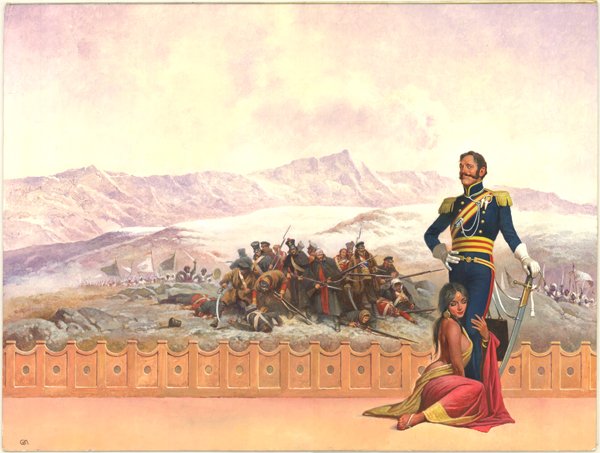
Finally, in Flashman in the Great Game (1975), we are transported across to British India, in which Flashman finds himself spying for the British government, becoming enamoured with a ruthless Maharani and getting caught up in the brutal Sepoy Rebellion of 1857.

What makes these books so brilliant is the character of Flashman himself. Up until this point it would seem obvious to assume that ‘Flashy’ is a gallant military hero. In fact, he is a self-confessed rogue, scoundrel, liar, cheat, coward and womaniser, who in every instance is just trying to save his own skin, but happens to have the charm, wit and good luck to fool those around him that he is in fact the hero he appears to be. He will happily screw over those around him in pursuit of self-preservation and is entirely truthful in what he relays to the reader. And yet he is totally and utterly likeable. His honesty is refreshing and comical to read, but also when he tells of his exploits it really does seem like he escaped each situation in the only possible way. Flashman puts it all down to his heartlessness, but in many situations it does also show him as choosing duty to his country over personal feelings towards others. Of course, he would always do whatever it takes to survive, but quite often this supposed coward does have to act with extreme courage and intelligence simply in the interest of self-preservation. By the end, Flashman has almost become the hero he says that he isn’t, in spite of himself and his actions. Furthermore, though his behaviour is audacious, completely self-centred and deplorable, he is often the voice of sanity and reason in a world full of corruption, stupidity and false piety. His wit, sarcasm and pragmatism cuts through the craziness around him which is very entertaining to read. You are guaranteed to enjoy reading how Flashman romps his way through decades of Victorian history, and how through spectacular acts of spinelessness he manages to win military glory and nationwide respect.

The character of Flashman is brought even more to life by Fraser’s unbelievably accurate replication of swaggering Victorian English, particularly when discussing his numerous exploits with various women throughout the books, which cements his reputation as a cad and a rake. In fact, Fraser’s accuracy in all elements of these books is something to be applauded. He manages to seamlessly insert Flashman and other fictional characters into real historical events without causing a ripple in the factual accuracy of the given moment. The way each battle or political event and the opinions surrounding them is relayed is so precise that you would not believe these books were written a century after they were set. On first publication, Fraser prefaced his novel with the discovery of the Flashman Papers at a house auction in Ashby, Leicestershire in 1965, and named himself only as the humble editor of the twelve instalments of the Flashman memoirs, which he called ‘packets’. He also surrounded the text with explanatory notes and scholarly additions such as maps and appendices, always using an editorial voice reminiscent of an assiduous bibliographer or archivist. Paired with the perceived accuracy and detail of the novel, almost half the initial book critics believed the Flashman novels to be real memoirs of a forgotten soldier in their reviews.

Fraser’s genius is making the historical accuracy of the Flashman stories come to life through the abounding use of comedy throughout. We have the aforementioned sarcastic, witty and outrageous voice of Flashman himself, but there is also sexual farce and intrigue, satirical dialogue and gallows humour. Fraser also expertly utilises syntax to provide humour throughout the novel, choosing just the right words to describe situations or people in an amusing manner. And yet, because he does not shy away from the awfulness, death and bloodshed encountered by Flashman and others throughout the series, the perceived reality of the memoirs remains intact. The books are undeniably entertaining and suspenseful, but the harsh historical realities of each period are illustrated truthfully. For example, Flash for Freedom! contains one of the most shocking and harrowing portrayals of the slave trade that I have ever read, while Flashman in the Great Game lays bare the horror of the Indian mutineers’ massacre of the wives and children of British military men during the Sepoy rebellion. Fraser has a knowledge of Victorian social and military history that is simply staggering for someone who is an amateur historian, and he manages to interweave this with a fictional narrative to create an astounding series of adventure, intrigue and mischief.

These books are an absolute joy to read – you will grow fond of the roguish Harry Flashman while getting a stellar education about important events of nineteenth-century history relating to the British Empire and antebellum America. In fact, you will almost be disappointed that Flashy is only fictional, as his life story really is one of the most astonishing out there.

Happy reading,

Imo x

Categories
Caribbean Literature World literature

ImoReads… ‘The Mermaid of Black Conch’ (2020) by Monique Roffey

Blog Nº 29

“The sea, that expanse of nothingness, could reflect a man back on himself. It had that effect. It was so endless and it moved around underneath the boat. It wasn’t the same thing at all as being on any expanse of earth. The sea shifted. The sea could swallow the boat whole. The sea was the giant woman of the planet, fluid and contrary. All the men shuddered as they gazed at her surface.”

I have always enjoyed stories that contain elements of myth and legend, but this is the first time I have delved into the world of Caribbean folklore. The Mermaid of Black Conch is arresting and powerful while unravelling all pre-conceived notions of what a mermaid is. It gives an insight into the long and fascinating history of the Caribbean through the unique story of Aycayia, the girl cursed to be a mermaid for all eternity.

The story begins in 1976 in the small town of St Constance, located on the island of Black Conch in the Lesser Antilles. An unsuspecting young fisherman, David Baptiste, is out in his pirogue boat singing and playing the guitar whilst waiting for a catch. What he doesn’t expect to attract is the mermaid Aycayia, a beautiful young woman cursed long ago by jealous wives who has been swimming in the Caribbean Sea ever since. So entranced by his music, when Aycayia hears David’s boat engine again she follows it, only to find herself a target for American tourists visiting the island for its annual fishing competition. Dragged out of the sea by the Americans and strung up on the dock like a trophy, Aycayia believes her fate is sealed. However, when night falls it is David who rescues her and takes her home. Slowly, Aycayia begins to transform back into a woman, much to the joy of David who has become completely enamoured with her. Unfortunately, transformations are not always permanent, especially when centuries-old jealousy is at play. Even the love between Aycayia and David may not be enough to break the curse.

Author Monique Roffey has succeeded in producing a spellbindingly rhythmic narrative often through simple literary devices such as repetition. For example, “she was floating port side of his boat, cool cool, like a regular woman on a raft, except there was no raft”, “I am an ol’ man now, and sick sick so I cyan move much”, or “after the fish-rain I realise curse strong strong.” She uses this technique frequently throughout the novel, indicating that it has been inspired by folkloric tales passed down for centuries through nothing but spoken word, made memorable by repetition. The fact that all dialogue is spelled phonetically – “Dou dou. Come. Mami wata! Come. Come, nuh” – only adds to the significance that spoken word has in stories like this. Roffey continues to show how important different voices are in The Mermaid of Black Conch by having several narrators sharing the storytelling duties. We hear from David through his retrospective diary entries in 2016, an unknown narrator present in 1976 who tells us the words and actions of all characters, and Aycayia herself who speaks in verse, which further emphasises the memorable quality of the narrative and her difference from the other characters. Furthermore, Aycayia always speaks in the present tense, yet it is clear she is looking back on events, suggesting that being stuck in an everlasting curse has made all notion of time and tense completely meaningless. This fusion of unique voices and narrative styles makes for a highly enchanting read.

It’s also important to focus on Aycayia herself. She in no way conforms to the trope of a siren sitting atop a rock, combing her hair and luring men to their deaths with her beauty. In fact, Aycayia is distinctly ‘unbeautiful’ when compared to Disney-esque mermaids. She has matted dreadlocks which are full of sea creatures who have made a home there, her teeth are sharp and pointed, she has dorsal fins on her back, she smells of salt and fish, she has webbed hands, and her tail is enourmous and scaly. Personally, I think she is a more authentic mermaid because she is at one with the sea, and is striking in a magical, sharp kind of way. Significantly, she has no idea how to lure in a man because she was cursed to this fishlike form when she was just on the brink of womanhood. It transpires that she used to dance for the men of her village centuries ago, not realising in her innocence why the men enjoyed it so much. Consumed by jealousy, the wives of these men chose to make her a mermaid when cursing her because they knew her tail would bind her ‘sex’, making her unable to seduce a man let alone sleep with one. It is not until she is on land, tailless and human, that she is able to finally ‘become a woman’ and understand what it is to physically love a man, a joy that she finds with David. Even though the long-dead wives can still wield their power over Aycayia, it is satisfying to know that whatever her fate, she has bested them through her relationship with David and this can never be taken away from her, despite the eternal cruelty of these scorned women.

I have read several books featuring mermaids, but I have to say that The Mermaid of Black Conch is now my standout favourite. It encompasses myth and legend, love and the cruelty of human nature as well as the beauty of the Caribbean and its complex history. I highly recommend this captivating and unique novel.

Happy reading,

Imo x

Categories
English literature

ImoReads… ‘Hamnet’ (2020) by Maggie O’Farrell

Blog 27

“What is given may be taken away, at any time. Cruelty and devastation wait for you around corners, inside coffers, behind doors: they can leap out at you at any time, like a thief or brigand. The trick is never to let down your guard. Never think you are safe. Never take for granted that your children’s hearts beat, that they sup milk, that they draw breath, that they walk and speak and smile and argue and play. Never for a moment forget they may be gone, snatched from you, in the blink of an eye, borne away from you like thistledown.” 

There is notoriously little known about the life of William Shakespeare, which seems strange given his immense fame and the lasting impact of his plays. Of his personal life we know that he married and had three children, Susanna and twins Hamnet and Judith. They lived in a house on Henley Street in Stratford-Upon-Avon with Shakespeare’s parents. Hamnet died at age 11 in 1596 according to a church burial register, and this is all we know. Maggie O’Farrell has used this absence of knowledge to create an extraordinary work of fiction, which in her own words, “is the result of my idle speculation.”

Hamnet is split into two stories, both of which are gripping and urgent in nature. One story begins on a summer’s day in 1596. Judith suddenly falls sick with what turns out to be the black death, or ‘the pestilence’, and Hamnet frantically looks for help but nobody is home. Nobody yet realises that one of these children will die within days. O’Farrell alternates to the second story every other chapter, which focuses on the mysterious upbringing of Agnes (Anne) Hathaway, and her blossoming romance with a young William Shakespeare, who breaks with tradition to be with this woman he loves (he is 18 and she is 26 when they marry). Both stories are intense and are filled with every kind of love and passion. They intertwine to create a tale that lays bare the unique bond to be found between twins and how the loss of a child can push a family and a marriage to the brink. Though Hamnet Shakespeare is a little-known figure, his name has been given to one of the most esteemed plays ever written (Hamnet and Hamlet were interchangeable names in this period). O’Farrell reimagines the life of Shakespeare’s only son in a way that makes you reconsider everything you thought you knew about England’s most celebrated playwright.

Though Hamnet is the title character, the storyline that captivated me the most was that of Agnes and William. Though courting in the 1500s, their secret romance and defiance of their parents feels very relatable to a modern audience. Agnes’ mysticism and connection with her pet Kestrel less so, but you can understand why young William Shakespeare finds her so beguiling. And, a marriage and three children later, they seem to have proven their critics wrong. I didn’t realise though that when William moves to London to pursue a career in the theatre, that he and Agnes end up in a long-term long-distance relationship. With a sometimes slow and unreliable postal service, it must have been very difficult in times of hardship. Indeed, when Judith is ill William takes several days to get home despite travelling as quickly as he can. We know from history that they remain married until William’s death, so I am glad at least that the tragedies and distance they faced did not break them apart.

The plague, despite being a common feature of sixteenth-century life (the London theatres would shut each year during ‘plague season’), is not mentioned in a single Shakespeare play. It is this notable absence that led O’Farrell to wonder whether it might have wreaked havoc in his personal life, so much so that he could not bear to write about it in his professional work. It is from this musing and extraordinary sense of intuition that O’Farrell’s novel was born. I have never seen or read Hamlet, but I think that now I would like to, to see whether I can understand why this seemingly unrelated play bears Hamnet’s name, and how it is perhaps an expression of grief for a lost son.

Happy reading,

Imo x

Categories
English literature

ImoReads… ‘The Way We Live Now’ (1875) by Anthony Trollope

Blog 26

“A newspaper that wishes to make its fortune should never waste its columns and weary its readers by praising anything.”

Though not appreciated upon publication, from the mid-twentieth century The Way We Live Now has been considered one of the greatest works of fiction to come out of the Victorian period. It is Trollope’s great work of satire and its multiple plotlines are built on the circulation of rumours which makes for a gloriously scandalous read.

In truth, it is hard to give a short overview of The Way We Live Now because Trollope has expertly interweaved so many interconnecting storylines and characters into his 700+ page novel but I will try my best. It’s 1870s London and ‘the great financier’ Augustus Melmotte has just arrived from France with his wife and daughter, causing quite a stir. Though many London gentlemen immediately jump at the chance to pour their money into his various ventures, it soon becomes suspected that Mr Melmotte is nothing but a fraud. This suspicion simmers away throughout the novel before reaching boiling point at the end. He is the link between all the characters – Melmotte’s daughter Marie is in love with the selfish, financially irresponsible cad Sir Felix Carbury who, egged on by his mother Lady Carbury (whose career as a writer is less than profitable and who cannot support her son’s reckless gambling much longer), is trying to marry Marie for her presumed wealth. Carbury and several of his set, Adolphus ‘Dolly’ Longstaffe and Lord Nidderdale to name a couple, all join the board of directors on Melmotte’s venture, the South Pacific Mexican Railway, and are eager to buy shares in this endeavour despite its nebulous nature. The honest and decent young man Paul Montague becomes an unwilling member of the board when his money is invested into it by his business partners in Fisker, Montague & Montague. He and Felix’s sister Hetta Carbury fall in love, much to the dismay of her older cousin and respectable Squire, Roger Carbury, who is also in love with Hetta and the good friend of Paul Montague. Unfortunately for Paul, his ex-lover Mrs Hurtle has followed him back from San Francisco determined to get him back. These are just a few of the plotlines that run throughout The Way We Live Now – there are many more characters who all have interesting stories of their own.

Something that I found really interesting about this novel is how Trollope links ‘the pen and the fraud’ repeatedly in numerous guises. For example, Melmotte several times notes down acknowledgement of railway shares that don’t really exist on scraps of paper in exchange for money from hopeful young gentlemen. He also has no scruples whatsoever about forging whoever’s signature is necessary on official documents, allowing him to buy one of the Longstaffe properties without actually handing any money over, something the Longstaffes only cotton onto after the fact. Another instance is Felix Carbury who continues to gamble despite being utterly broke. In fact, he and all his set write each other IOUs upon a loss at cards, which in themselves become totally meaningless as nobody really has the money to back them up. Furthermore, Lady Carbury is so desperate to make a living from her writing that most of her historical work of fact Criminal Queens is completely false and unresearched but makes for more interesting reading. You’ll notice that all instances of written deception are linked to money in some way, another of the novel’s key themes. I think that Trollope is trying to demonstrate the ugly impact that the pursuit of wealth can have on people as it lays bare their biggest selfish impulses. It is also important to mention the prevalence of letters in The Way We Live Now, perhaps influenced by Trollope’s career in the Post Office. Like the above instances of fraud, letters are intrinsic to several storylines in terms of fuelling and circulating rumours and causing misunderstanding and upset among characters.

I have to admit that truly good characters are few and far between in Trollope’s novel, though this doesn’t make it any less brilliant. Any reader will of course root for the pure and clean romance between Hetta Carbury and Paul Montague, two of only a handful of upstanding characters, even though their relationship spells bad news for poor old Roger Carbury, another kind and honest soul. At the other end of the scale we have the utterly detestable Sir Felix Carbury, who has to be one of – if not the most – vain, selfish and careless characters I have come across in a work of literature. His persona makes for an interesting journey of twists, turns and scandals, and without giving too much away karma definitely comes back to bite him which is deliciously satisfying for the reader. My favourite character has to be Dolly Longstaffe – he really is very funny both in his manner and habits. Not many others would consider themselves as selfless and worthy of praise for ‘the nuisance’ of leaving London for one day to attend their own sister’s wedding back at the family’s country home. Nor would they consider it a great inconvenience to rise before midday on one day out of all the days to attend a morning meeting. Dolly is so unashamedly confident in his likes and dislikes, and highly witty in his discourse that any chapters featuring him were always my favourites. In all, Trollope’s wide range of character types make for an interesting and amusing commentary on London’s elite society.

If you like getting stuck in to a long and involving read then The Way We Live Now is definitely for you. It is at once witty, gripping, emotional and observant. Immerse yourself in the scandalous and selfish nature of a society that is rocked by the discovery of a fraudster in its midst, which portends consequences from everybody…

Happy reading,

Imo x

Categories
English literature

ImoReads… ‘The Time Traveller’s Guide to Regency Britain’ (2020) by Ian Mortimer

Blog Nº 25

“The most extraordinary articles of domestic life are looked on with some interest, if they are brought to light after being long buried; and we feel a natural curiosity to know what was done and said by our forefathers, even though it may be nothing wiser or better than what we are daily doing or saying ourselves. Some of this generation may be little aware how many conveniences, now considered to be necessaries and matters of course, were unknown to their grandfathers and grandmothers.”

James Edward Austen-Leigh, ‘A Memoir of Jane Austen’ (1869)

It is already a well-established fact that I adore the British Regency period (1789-1830). To me it is the most interesting, colourful and important time in our country’s history. I dedicated much of the history side of my French & History degree to studying the period and also pursue this interest in my own time. If I could, I would use one of my three wishes to travel back in time to experience it for myself. Fortunately, The Time Traveller’s Guide to Regency Britain really is like stepping back in time. Mortimer calls it ‘A Handbook for Visitors to the Years 1789-1830’ on the opening page and it certainly lives up to this description. I am a social and cultural historian at heart, so it was brilliant to read a book solely dedicated to portraying this era as a lived experience rather than something to be studied. We find out what people wore, ate and drank, how they travelled, what they were thinking, believed in and were afraid of, what their world looked, sounded and felt like and much more. This book is an eye-opening, exciting and involving trip back in time.

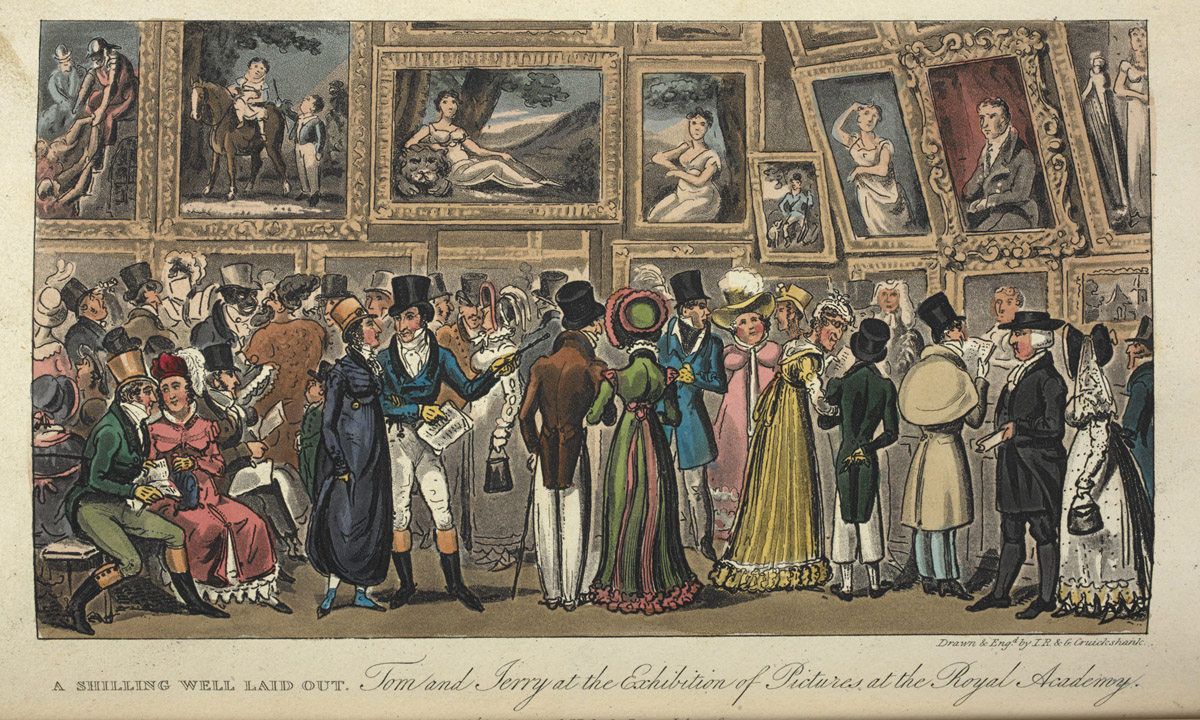
Mortimer certainly covers all bases in The Time Traveller’s Guide to Regency Britain. The book is divided into the following sections: The Landscape; London; The People; Character; Practicalities; What to Wear; Travelling; Where to Stay; What to Eat, Drink & Smoke; Cleanliness, Health & Medicine, Law and Order; Entertainment. It also contains two glossy sections featuring paintings, illustrations, caricatures and prints from the time which really add to the feeling of visiting the Regency period. It would be impossible to discuss all the chapters in this blog, so I have selected a few personal highlights. Fundamentally though, this is an era where big things are happening all at once in the form of unprecedented social, political and economic change. It was the last time that Britons truly lived in a period of unchecked extravagance, fun, mischief and thrills before the stiff curtain of Victorian morality descended. The Regency is the age of Jane Austen and the Romantic poets, the art of John Constable, the trendsetting stylishness of Beau Brummel and the premiere of Beethoven’s Fifth Symphony. At the same time, Britain is celebrating military triumphs at Waterloo and dealing with the menacing threat of revolutions and tragedies like the Peterloo massacre. Never has there been a time of such wild contradiction in British history.

The Plumb-Pudding in Danger (1805) – James Gillray

Something charming about this book is Mortimer’s analysis of everyday concerns that are so banal you would never have thought to consider them when looking back at the past. Take, for example, the weather. As Mortimer points out very astutely, when delving into history it is easy to forget about the small but fascinating details when you are wrapped up in the big picture. It is heart-warming to know that Regency folk talked about the weather just as much as we do in the modern day, making it truly a subject that unites people in their Britishness. Something else you might not have considered is the time, given that time is standardised in the modern world. Though Regency people had perfectly functioning pendulum clocks, the actual hours in the day were heavily localised. Therefore, what might be 10:0am in London could be 10:20 in Leeds, meaning that scheduled meet ups were not always straightforward and travellers between towns would be in the habit of adjusting their watches accordingly on arrival with the town’s public clock. These are just a couple of points discussed in the ‘Practicalities’ chapter, and I think these sorts of topics are just as worthy of study as the big stories in history because they really shine a light on how people truly lived and what they experienced day-to-day.

In my degree I really enjoyed studying all things Regency: the Empire, the fashion, the royals, the rise of consumer culture, society norms, the Romantics and literature, the art, the humour, the architecture, social change, the politics and more. Therefore, it was great to see Mortimer bring these subjects to life in The Time Traveller’s Guide to Regency Britain. However, as you might have presumed, what I really enjoyed was finding out things I didn’t already know about the Regency period. For example, I found it interesting to learn just how blurry the boundaries between sexual morality and immorality were in this era, what attitudes were towards homosexuality and transvestitism, or how superstitious or cruel and compassionate people were, both in terms of other people and animals. People were still horrified by cruelties during this period but what was considered cruel differed greatly and again, there were contradictions. On the one hand, harsh punishment of felons and public hangings were still major entertainment for the public while on the other hand opposition to death penalty was growing and prison reforms were happening. It is interesting that at the same time, people (especially men) were much more expressive of their sensitivity. Though you can often find gentlemen duelling for their honour, there is no such thing as the strong silent type. Men are much more emotional – judges could cry in court when delivering a verdict and when MP Samuel Whitbread commits suicide in 1815, many members of the House of Commons who rise to pay their respects cannot hold back their tears. It is the original instance of there being ‘not a dry eye in the House.’

Aside from learning about the beginnings of the Industrial Revolution in the Regency and reading Mary Shelley’s Frankenstein (1831), I confess that I was not aware of how exciting this era was in terms of scientific developments. Frankenstein is of course based on the theory circulating at the time that electricity could bring people to life after Luigi Galvani’s famous experiment in which he stimulates the legs of dead frogs. Again, as electricity is the norm today, it is easy to forget how much it amazed Regency people. It was the first time that objects could be moved without touching them or that things could be lit up without a match, making it a mysterious and fantastical revelation. Electricity along with other developments such as the discovery of new planets, the phrases ‘chemistry’, ‘biology’ and ‘geology’ taking on greater meaning, the invention of the first steam locomotive and hot air balloons, and the exhibition of Joseph Nicéphore Niépce’s ‘heliographs’ (early photographs) in London, gave people a startling glimpse into the future. Suddenly, everything seemed possible and people imagined a future of endless innovation, which of course is now our past. I’m almost jealous that I have grown up taking these things for granted – I’m not sure that there’ll be an age of discovery quite like this ever again. 

These are just a few examples from a book brimming with fascinating insights into how people thought and lived during the Regency period. I applaud Ian Mortimer on such a well-researched, original look into Britain’s most fascinating era. His captivating writing style and far-reaching chapter base really does make for an incredible trip back to the past. With The Time Traveller’s Guide to Regency Britain in hand I would feel more than confident navigating my way around this period and making the most of it. Regency people played an integral role in shaping who we are today in so many more ways than we realise, and this book is a triumph in showing us how. I really recommend this book to anyone looking to understand who we are and where our modern selves came from.

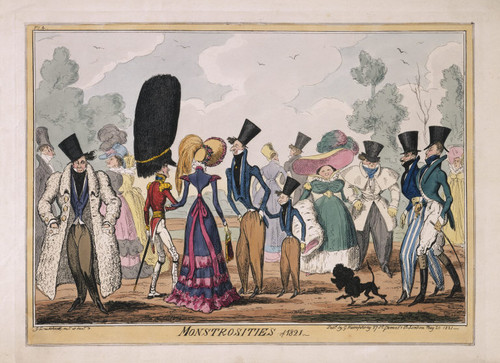
Monstrosities of 1821 (1821) – George Cruikshank

Happy reading,

Imo x
Categories
English literature

ImoReads… ‘Shuggie Bain’ (2020) by Douglas Stuart

Blog Nº 24

“Sadness made for a better houseguest; at least it was quiet, reliable, consistent.” 

I was given this 2020 Booker Prize winner for Christmas and it is quite unlike anything I have read before. Shuggie Bain is at once tragic, funny, harrowing and compassionate, forming a beautifully sad tale with lasting effect. It is a deeply moving account of poverty, addiction and childhood trauma in 1980s Glasgow.

1980s Glasgow

The novel is set in 80s and 90s Glasgow and centres on the young boy Hugh – or Shuggie – Bain. At the outset Shuggie and his older siblings Leek and Catherine live with their mother Agnes, father Big Shug and Agnes’ parents in a flat on the Sighthill Estate. Though it is obvious from the outset that the family do not have means, there is not yet a sense of despair in their situation. After the philandering Big Shug promises Agnes a fresh start in their own house everything begins to go wrong. Shug leaves Agnes and the kids in a mining town on the outskirts of Glasgow that has been decimated by Thatcherism, shattering Agnes’ dreams of a comfortable life bought and paid for. As she increasingly turns to alcohol for solace, each of her children try their hardest to save her. Yet, one by one as they get older, they leave Agnes behind to try and save themselves from a life of poverty and hardship. Shuggie holds out the longest, spurred on by unadulterated love for his mother and a youthfully innocent sense of hope. However, Shuggie has his own problems. Though he tries his hardest to fit in with the other boys his age, it becomes increasingly clear that he is ‘no right’, leaving him exposed to abuse and bullying. Agnes wants to be there for her son, but her addiction is slowly destroying her relationships with everyone around her, even Shuggie. 

Blackhill Estate, 1980s Glasgow

What is striking about this novel is how the ruthlessness of poverty is laid bare so forcefully. Stuart really captures the bleakness of life in Glasgow during this time. His descriptive passages of the mining town Pithead (likely based on Cardowan) particularly stand out. Small, squat, grey houses packed closely together with no privacy; the surroundings don’t get more scenic than slag heaps and overgrown wilderness. The men are lost without work in the mines. Stuart describes the women as having rings of dirt round their necks and the children as running amok with matted hair and unkempt clothing. The language is coarse, the future prospects are non-existent and the vice is drink. I was always filled with despair to read how Agnes and other adults in the town scrambled to buy drink with most of their weekly benefit money while their children looked on hungrily. It is hard not to feel sympathy for Agnes nonetheless – her alcoholism manifests itself in endless cans of Special Brew lager and bottles of vodka. Time and time again she is mistreated and abandoned by men, rejection which she often takes out on her children. Even as young as eight, Shuggie is dismayed whenever his mother picks up a drink, leaving him to courageously deal with the trauma of her drunken disappearances, suicide attempts and blind rages. 

Slum in 1980s Glasgow

Shuggie Bain is Stuart’s debut novel and it is largely autobiographical. It is clear to the reader that Shuggie does not fit in with the other boys – though we know why, Shuggie just thinks he is ‘wrong’. Stuart has spoken about how difficult it was growing up in a housing scheme where there was a real stigma around being gay. The idea of being ‘out and proud’ did not fit into this hard, working-man’s world. Particularly in a world without internet, he could not easily find any solidarity with the wider gay community or comfort in his identity. Stuart’s struggles are heartbreakingly played out in Shuggie. Though Shuggie tries everything – changing his walk, pretending to like football, hiding the fact that he likes ‘girly’ toys – he is still a target for bullying. He is often beaten up, verbally abused or made to do unspeakable things by other boys at school or in the neighbourhood. It brings me joy to know that Stuart has found happiness and acceptance with his husband Michael Cary in New York City, where he has resided since 2000.

Stuart grew up without books or any formal education in literature making the calibre of his debut novel even more astounding. I am thankful that I have been exposed to such a heart-wrenching story of love, struggle and pride about an era and city that I know shamefully little about despite living in Scotland’s neighbouring country. I will close this blog with a powerful quote from Stuart, which sums up the essence of Shuggie’s Glasgow:

“I have a complicated relationship with my hometown—but there’s no place I love more. I hope “Shuggie Bain” is a love story to Glasgow, not a fawning love story but one that sees the city clearly. It’s very Scottish to be direct about difficult things, so there’s no point in pretending it wasn’t a hard place to live. The city is a place of contrasts; in all its devastation and deprivation, the people still remain strong and fiercely proud, and I know of no one who is warmer, kinder, and more blackly funny then Glaswegians.”

Happy reading,

Imo x