Categories
English literature

ImoReads… ‘Julia’ (2023) by Sandra Newman

Blog Nº 62

“All was false. It was known to be false, but everyone lied about the lies, until no one knew where the lies began and ended.”

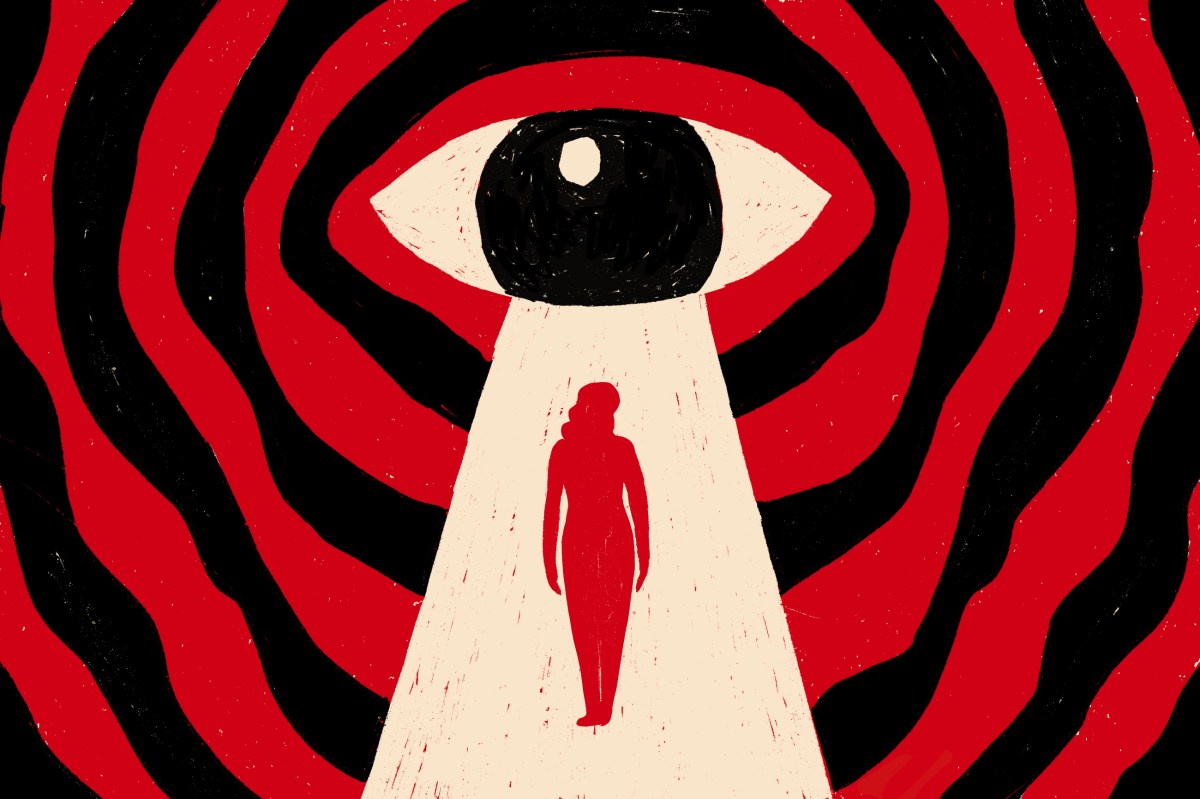
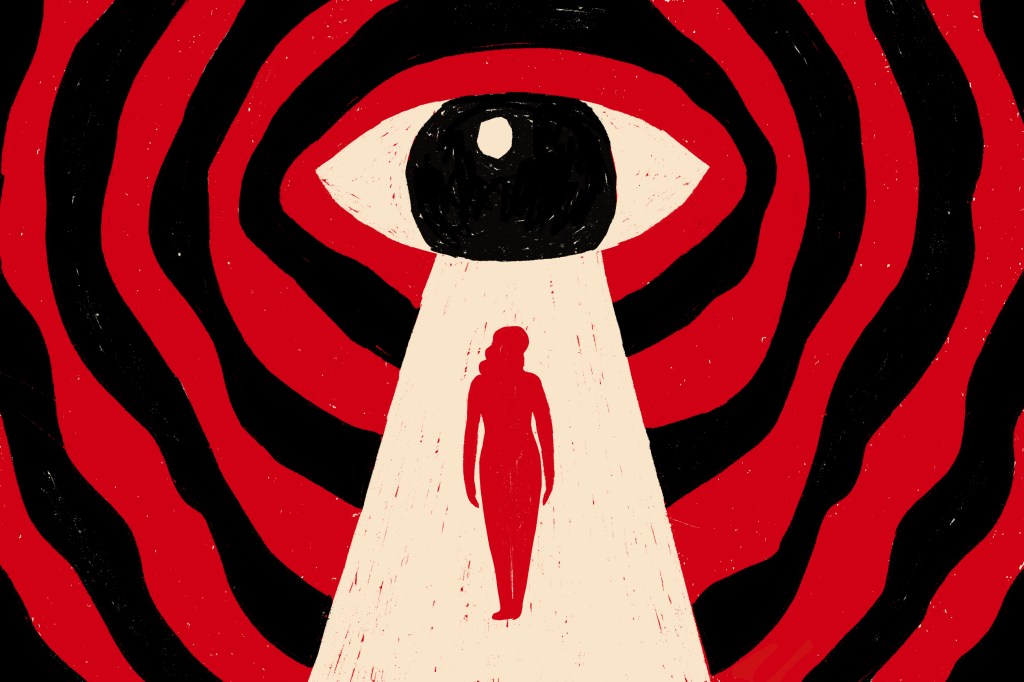
It is a brave thing to take on a re-telling of one of the most well-known British novels of all time, George Orwell’s Nineteen Eighty-Four, particularly in so bold a manner as Newman does so. In this story, the object of Winston Smith’s gaze looks back, reclaiming agency to tell her own tale which will both shock and captivate readers. 

Newman has faithfully recreated Orwell’s vision of the future by carefully considering the language and culture of the original novel as well as guiding us through familiar landscapes such as the bleak, dingy factory floor of the Ministry of Truth. Many of the plot points we encounter are familiar to us, though inverted to be from Julia’s perspective. But Newman is able to move beyond the two-dimensional Julia that is portrayed by Orwell. Even by having her clock out of her factory shift due to ‘sickness: menstrual’, the reader is treated to a look at how women fared under the totalitarian regime and how their experience was entirely different to that of men. Seeing Julia at her dormitory hostel, how she interacts with other women there and how surveillance plus a lack of privacy and autonomy weigh differently on them is a compelling new element to this Orwellian existence. 

We learn that sexuality is a key part of Julia’s character and how despite being shaped by abuse, voyeurism and other factors, she still seeks and enjoys pleasure where she can. The focus on how sex and relationships work in an oppressive, surveilled world add nuance to what occurs between her and Winston but also between her and several other characters in the novel. Pregnancy and motherhood (both regime approved and not approved) are also put under the microscope, further providing insight of the uniquely female struggles faced in the Britain (or ‘Airstrip One’) of Nineteen Eighty-Four. Newman also paints a vivid picture of Julia’s childhood which makes her grit and determination to survive, her ‘cheerfully cynical’ nature and how she has so far made it through life under oppression highly convincing.  

The reader continues to be surprised by the twists and turns in the novel, including insight into previously unexplored characters such as O’Brien of the Thought Police, though eventually we arrive at the tragic ending readers of Nineteen Eighty-Four will know all too well. While the torture that occurs in the Ministry of Love and Room 101 aren’t portrayed quite as horrifically and convincingly as in the original, Julia still manages to lay bare the life-altering cruelty that takes place there. 

In Orwell’s novel, no crack in the totalitarian regime is allowed to show at the end. It concludes with no hope at all, with resistance resigned to be a futile expression of false hope. Newman wants to give the reader a dramatic conclusion to Julia’s personal narrative as well, meaning that in this story we get a glimpse into what happens after Orwell’s ending. Some may argue that there is less power in this, but I disagree. While I can’t reveal what happens, Newman absolutely honours the message that Orwell was initially trying to get across, leaving readers feeling equally as uneasy. The only difference is that while it was difficult to remain hopeful for Winston, readers here will be a little more convinced that Julia will endure and survive. 

Happy reading, 

Imo x 

Categories
English literature

ImoReads… ‘The Little Red Chairs’ (2015) by Edna O’Brien

Blog Nº 60

“We don’t know others. They are an enigma. We can’t know them, especially those we are most intimate with, because habit blurs us and hope blinds us with truth.”

The Guardian describes The Little Red Chairs as ‘a chilling masterpiece’, and after reading it I’m inclined to agree. In terms of style and content it is unique, making for a compelling and thought-provoking read. 

The Little Red Chairs is set in the small fictional Irish village of Cloonoila where the community is tight-knit. It is here we meet Balkan war criminal Dr Vlad, who hides out in the village posing as a holistic healer and sex therapist. The story is told from the perspectives of the women he meets. One woman in particular, Fidelma, is drawn to Dr Vlad. Having suffered two miscarriages with her husband, she hopes Dr Vlad can cure her. Stuck in a lonely and somewhat suffocating marriage, Fidelma embarks on an affair with Dr Vlad and falls pregnant, which unfortunately coincides with Dr Vlad’s arrest and the revelation of his true identity to herself and the rest of the shocked community. The events that follow force us to confront morality, humanity and darkness in this novel that is at once uncomfortable intimate as well as daring and far-reaching. 

Dr Vlad is loosely based on the real life ‘Butcher of Bosnia’ Radovan Karadžić, who is currently serving a life sentence after being convicted of genocide, crimes against humanity and war crimes by the International Criminal Tribunal for the former Yugoslavia after the Bosnian War. O’Brien has cleverly weaved him into the novel as Dr Vlad, the same way that she seamlessly swaps between tenses and character headspaces. All of this culminates in a distinctive narrative style. It can take some getting used to but it’s worth it for the impact the book will have on you. 

The Little Red Chairs is an original novel which will leave you pondering world events, day-to-day struggles and pressing moral questions for some time after. Astonishing when you consider that O’Brien was 85 at the time of publication. A must-read! 

Happy reading, 

Imo x 

Categories
English literature

ImoReads… ‘A Damsel in Distress’ (1919) by P.G. Wodehouse

Lord Marshmoreton: “I wish I could get you to see my point of view.”


George Bevan: “I do see your point of view. But dimly. You see, my own takes up such a lot of the foreground.”

I was given a lovely edition of this book for Christmas and it proved to be a delightful first foray into the world of P.G. Wodehouse. The speed at which I finished reading A Damsel in Distress is testament to how good the book is, but, as with all great books, I also found myself disappointed I wouldn’t get to experience reading it for the first time again. 

The novel begins with a chance encounter between Lady Maud Marsh and American composer George Bevan in London. Maud is looking for another American, Geoffrey Raymond, who she met the previous year. Grappling with her parents’ disapproval of this match, Maud’s visit is on the sly and she enlists the help of a bemused George when she spots her brother Percy, who mistakes George for Geoffrey. 

What follows is an amusing set of events at Maud’s family home, Belpher Castle, wherein a complicated network of friendships, romantic entanglements and household whisperings make for a delightfully funny read. 

One of my favourite comic tropes in both theatre and fiction is the use of mistaken identities. A centuries-old device often used by Shakespeare, it never fails to bring a smile and a laugh to the reader. A Damsel in Distress is littered with examples of mistaken identity, some accidental and some rooted in purposeful deception. Wodehouse amplifies this technique by juxtaposing the drama between Belpher Castle’s residents with the presumptions of the ever-watchful household staff, always keeping the reader as the only one with the full picture of knowledge. 

Wodehouse is known as one of the most accomplished and widely read humourists of the twentieth century but this was my first experience of reading one of his novels. Even in non-climactic moments, his writing style and narration had me grinning with amusement throughout. The humour is so quintessentially English that I wonder whether translations into foreign languages can really do his words justice. 

I can now call myself a Wodehouse fan and since reading A Damsel in Distress I have acquired two more of his books. While it might be a bit ambitious to try and read his whole catalogue (which contains over ninety books, forty plays and two hundred short stories!) I look forward to delving into many more of his comic escapades. 

Happy reading, 

Imo x 
Categories
English literature

ImoReads… ‘Impossible Creatures’ (2023) by Katherine Rundell

“I need you to tell people this; I need you, when you get back, to tell them: the brutality is terrible. And yes: the chaos is very great. But tell them: greater than the world’s chaos are its miracles.”

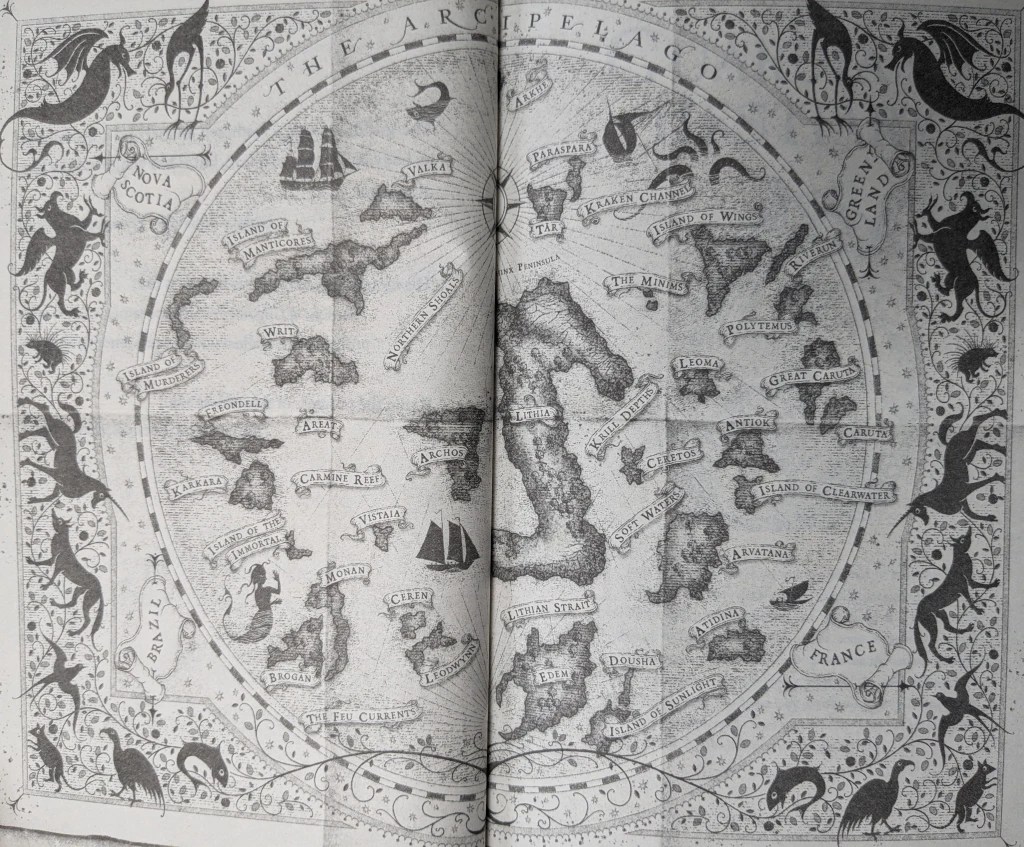
“There was Tolkien, there is Pullman and now there is Katherine Rundell” says Michael Morpurgo in his review of Impossible Creatures. Other glowing reviews place her alongside JK Rowling, C.S Lewis and Lewis Caroll for this remarkable work full of imagination, magical delight and wonder. I suspect that the fantasy realm of The Archipelago revealed to us in Impossible Creatures will join Narnia, Hogwarts, Neverland and Middle-Earth and many more in the fantasy hall of fame in no time at all.

Impossible Creatures follow Christopher Forrester, who has been sent up to Scotiand to stay with his grandfather. One day he rescues, somewhat in disbelief, a drowning baby griffin from a hidden lake and suddenly his life changes irrevocably. The adventure that follows takes him to The Archipelago, a hidden cluster of islands where mythical creatures and humans still live side-by-side. There he meets and befriends mysterious girl on the run Mal with whom he will transform the destiny of not just The Archipelago but the world in its entirety.

Given the name of the novel I feel like I must discuss the creatures encountered by Christopher and Mal as the story weaves its course. Some will be familiar to us all – dragons, unicorns, centaurs, krakens, griffins, mermaids, sphinxes – but there are even more that Rundell introduces us to, inspired by myths and legends from histories and cultures spanning the entire globe. Never before had I heard of the al-miraj, a large horned hare, first mentioned in medieval Arabic literature. Rundell describes them as possessing dazzling beauty and as seekers of the wise and the good. Longmas, originally of Chinese mythology, are winged scaled horses that boast breathtaking speeds and strength.

Both Christopher and myself as the reader were almost the most astonished to read about the most harmless creatures in the novel, the Borometz, also known as the vegetable lamp. Originating from seventeenth-century legend in Central Asia, Borometz’ are zoophytes (animal plants) thought to grow sheep as their plants. Connected to the plant by a tendril / umbilical cord, once the sheep has grazed the land around the plant both itself and the plant will die. Therefore, kindly folk in The Archipelago carry seeds with them at all times to plant around a Borometz when they encounter one. Readers will be pleased to know that Impossible Creatures begins with a incredibly handy and beautifully illustrated ‘Guardians Bestiary’ so you can get to grips with the bewildering range of creatures you are soon to meet.

While classified as a children’s/young adult novel, Impossible Creatures can be enjoyed by all ages, much like Lord of The Rings, Harry Potter, Alice’s Adventures in Wonderland, Peter and Wendy, The Chronicles of Narnia and others classified in the same way. It takes great skill as a writer to create something multilayered and engaging to read for such a wide audience. It was a joy to see someone’s imagination bursting forth to portray such a unique world filled with vibrant, quirky characters, sharply funny lines and a gripping overarching plot. You know that a book is good when you feel like you’ve entered its world yourself and that each time you have to put it down is a lingering struggle.

As we head into a cold and wet British autumn you might be in need of an escape from the banalities of everyday life, particularly if you are in your grown-up stage of life – Impossible Creatures will do that for you and more.

Happy reading,

Imo x 
Categories
American Literature World literature

ImoReads… ‘Play It As It Lays’ (1970) by Joan Didion

“There was silence. Something real was happening: this was, as it were, her life. If she could keep that in mind she would be able to play it through, do the right thing, whatever that meant.”

Play It As It Lays is my first foray into the writing of famed twentieth-century writer Joan Didion. I agree with its label of an instant classic and can see why it is credited for helping to define modern American fiction.

The relatively short novel follows 31-year-old former model and actress Maria Wyeth. It is made up of Maria’s stream of consciousness after a stint in a psychiatric hospital as well as flashbacks which hint at her impending mental breakdown. We hear about several disturbing occurrences that play a part in Maria’s collapse and indicate why she chooses to withdraw from the world and become entirely numb to her surroundings, even when they are morally ambiguous.

Play It As It Lays is undoubtedly a blistering dissection of American life in the late 1960s. Set in California, the novel captures not only the illusory glamour of life in Hollywood but also the culture at the time – namely, an entire generation feeling the ennui of contemporary society in a swiftly modernising world. The sparse, intense prose further emphasises this, showing not only Maria in crisis but a whole society.

Divorce, illegal abortion, drug and alcohol abuse, infidelity, mistreatment by men and loneliness plague Maria and her friends’ lives. Maria begins compulsively driving into the Mojave Desert for hours at a time as well as suffering from delusions as a result. It is a compelling but disturbing look at the gradual shattering of a young woman who should be in her prime.

I would highly recommend Play It As It Lays – while not particularly joyful, it is a riveting look at the broken façade of the young Hollywood American Dream.

Happy reading,

Imo x
Categories
English literature

ImoReads… ‘Of Human Bondage’ (1915) by W. Somerset Maugham

“From old habit, unconsciously he thanked God that he no longer believed in Him.” 

As soon as I began reading Of Human Bondage, I knew I had found something special. Often cited as Maugham’s masterpiece, this semi autobiographical novel might be the most important English bildungsroman since David Copperfield. It’s a novel rich in culture and intellect as well as taking us through tortured relationships and intense self-criticism. For me, Of Human Bondage has achieved a place on the list of books that I wish I could read again for the first time.

The novel follows protagonist Philip Carey, an orphan raised by his clergyman uncle and kindly aunt. Like Maugham, Philip is afflicted with a clubfoot. As a boy, Philip is chafing under the monotony of Victorian vicarage life and is desperate for experience, love and a miracle cure for his deformity. We follow him through boarding school where he loses faith in God when there is no improvement to his foot. He then escapes to study in Heidelberg before enjoying a brief period in Paris trying to make it as an artist. On his return to London, Philip encounters Mildred the waitress for the first time, and here begins the masochistic affair which almost ruins him.

Maugham always maintained that Of Human Bondage is “not an autobiography, but an autobiographical novel”, though he certainly poured a lot of himself into the character of Philip, making him an authentic, interesting character to follow. He is hungry for love, sexual encounters and is at times filled with an acute self-loathing, all of which young people today could relate to on some level. Astonishingly, Maugham first wrote the manuscript aged just 23, though it was not published until later on. Of Human Bondage is bursting with real emotion though some of the events are imagined or borrowed from elsewhere. Some time later Maugham said of writing the novel, “I found myself free from the pains and unhappy recollections that had tormented me”. The title of the book, borrowed from Spinoza’s Ethics, has meaning both for the author and for the protagonist then. Philip finds himself bound and then freed in many contexts throughout the novel and as the reader you find yourself rooting for him at each turn. 

My favourite part of the novel is when Philip is living in Paris and attending art school. He is there during a vibrant period of French art, literature and culture and I enjoyed experiencing this vicariously through him. Though he doesn’t have much money, he and his group of friends engage in Parisian life as much as they can, have heated idealistic intellectual discussions and try their best with their artistic endeavours. Philip and his companions are just young people trying to make it in the world as best they can, with this astonishing backdrop of Paris at the turn of the century.

In fact, during the many strained episodes of the Philip and Mildred saga, I wished on Philip’s behalf that he had never left Paris. Given the sensitivities of the time at which the novel was written, the intimate details of the relationship are left off the pages of Of Human Bondage, but the tension, strife and mistreatment come through clearly enough through the pair’s other interactions. Mildred is an unextraordinary woman who manages to take advantage of Philip’s naiveté and desperation for love and acceptance. At many moments, the reader feels compelled to shake Philip to make him come to his senses. The amount of time, money and self-flagellating thoughts he wastes on the manipulative, ungrateful Mildred is painful to observe. Though it should be acknowledged, at several moments in the novel Philip describes Mildred in a way that is extremely misogynistic, making us question whether his lack of experience and understanding of women in general has led him to subconsciously hate them a little bit. Whether this is just Philip’s voice or Maugham’s voice remains to be seen. When Philip is free from Mildred for the last time, it is certainly a moment to rejoice.

I would absolutely recommend this novel to anyone interested in following one man’s story through it’s many interesting chapters – travel across Europe, experience growing pains and indulge in some art and culture.

Happy reading,

Imo x
Categories
English literature

ImoReads… ‘Flashman at the Charge’ (1973) by George MacDonald Fraser

Blog 52

“It ain’t always easy, if your knees knock as hard as mine, but you must remember the golden rule: when the game’s going against you, stay calm – and cheat.”

Harry Flashman

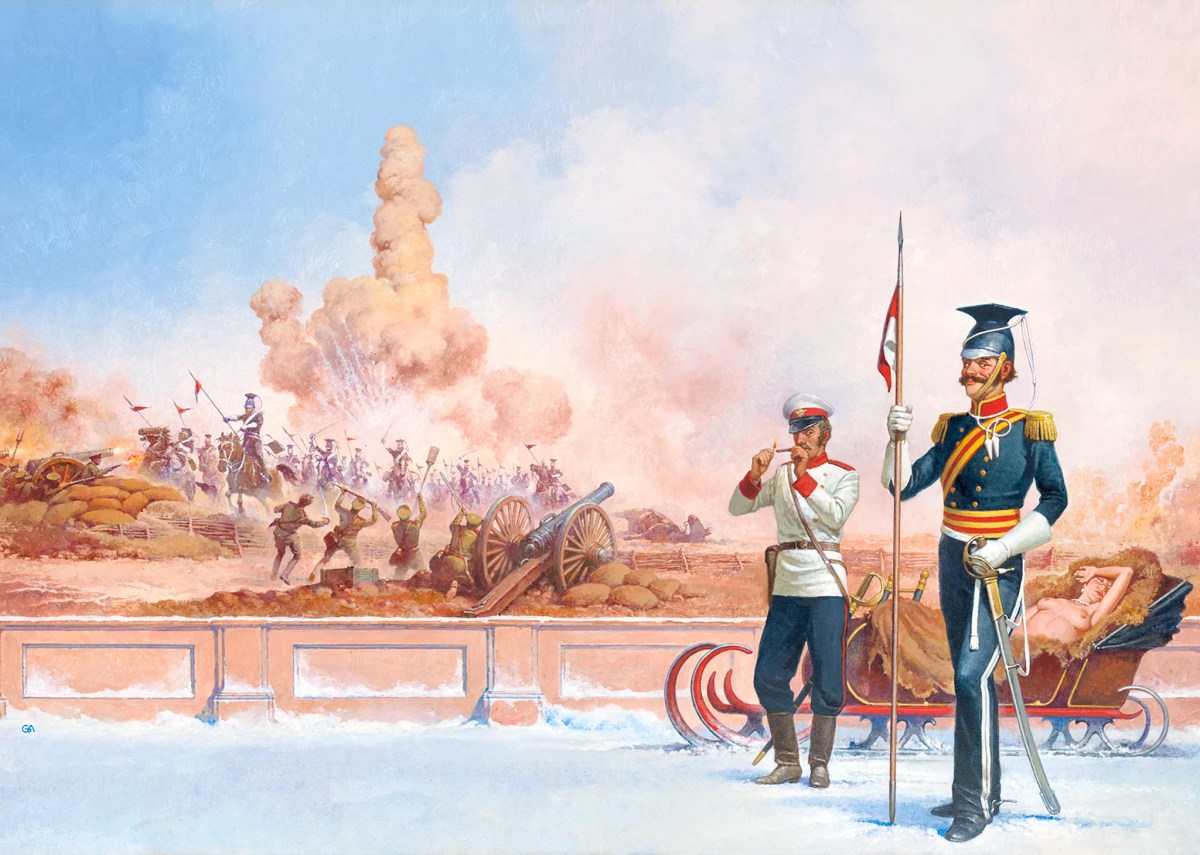
I am always delighted to reunite with our morally ambiguous Victorian hero Harry Flashman, this time in Flashman at the Charge. This instalment of the Flashman Papers sees our friend unwillingly wrapped up in some of the British Army’s most famous offensive and defensive actions of the Crimean War, and of all time.

The novel opens with Harry once again enjoying a debaucherous existence in London. He unwittingly meets one of Queen Victoria’s young cousins, William of Celle, in a billiards hall, only to later on be assigned as his mentor and protector by Prince Albert, on account of his valiant reputation as a soldier (which we the reader know to be questionable). As a direct consequence of this, Harry finds himself being shipped off to the Crimean War to show young William what soldiering is all about. Despite William’s untimely death on the battlefield, Flashy is not spared from further military action. He is directly involved in The Thin Red Line, the Charge of the Heavy Brigade and the Charge of the Light Brigade. Powered only by fear and flatulence he reaches the Russian guns ahead of the other surviving chargers where he promptly surrenders and is taken to Russia. 

Imprisoned comfortably in Count Pencherjevsky’s castle, he reunites with old schoolfriend Scud East who has also been taken prisoner. A failed escape attempt sees Flashy imprisoned with warrior Yakub Beg, who are both rescued by fellow Uzbek and Tajik resistance fighters. Many adventures ensue which eventually see Russian supplies being taken out by Congreve rockets and Flashman arriving safely in British India, armed with yet another heroic tale.

Like the other Flashman instalments, Flashman at the Charge is full of wit, amusing but sound societal commentary and Flashman’s unabashed desire to save his own skin by any means necessary. Flashy once again manages to manoeuvre through some of history’s key events – with a good dose of female company, drunkenness and cunning thrown in – to further cement his repuation as a brave and gallant British military hero.

As ever, I look forward to delving into the next chapter in the Flashman saga to see what one of my favourite literary characters gets up to next.

Happy reading,

Imo x

Categories
American Literature World literature

ImoReads… ‘Cassandra at the Wedding’ (1962) by Dorothy Baker

Blog 52

“So go, girl. We should have been one person all along, not two.” 

I thoroughly enjoyed Cassandra at the Wedding, getting through it in a couple of days as I was so enthralled by the impossible, brilliant protagonist Cassandra Edwards. Baker has produced what the blurb describes as an ‘entrancing tragicomic novella’ and I can only agree with this conclusion.

Our heroine Cassandra is a graduate student at Berkeley, who is on her way home to her family ranch in the foothills of the Sierras to attend her identical twin Judith’s wedding to a young doctor from Connecticut. However, Cassandra – at once brilliant, frenzied, nerve-wracked and miserable – is determined to do whatever it takes to ruin the wedding and ‘save’ her sister. It is impossible to predict the course of action which Cassandra at the Wedding takes; besides the plan to sabotage, Cassandra must also grapple with her complex feelings towards her family. Namely Judith who Cassandra believes should be her alter-ego, plus her whiskey-soaked father, her dead mother and her kindly grandmother. This book is a story of self-discovery, family relationships and facing your feelings.

There is something about characters named Cassandra; though the Cassandra in this novel is more emotionally unstable, she is as vibrant and interesting to read as the Cassandra of Dodie Smith’s I Capture the Castle. Both are frank, open and highly captivating. Throughout the course of Cassandra at the Wedding, we witness Cassandra variously as heartbroken, pitiful, conniving, unsure, self-aware, absurd, intelligent – yet always impossibly sympathetic and at times highly amusing. Despite the book being published just over 60 years ago, Cassandra is enduringly modern, insightful and relatable to twentysomethings today. Baker clearly has an adept understanding of the complexities of the heart and soul, and I was very sad to say goodbye to Cassandra as I reluctantly finished the novel.

An enduring theme of Cassandra at the Wedding is sisterhood, which is particularly strong in this instance because Cassandra and Judith are identical twins. For Cassandra, it is difficult to accept the fact that Judith decided to go to a different college and there met a man she wants to marry, who will thus become extremely important in her life. It is quite clear that Cassandra is in some ways enveloped in a childlike fantasy of the sisters always remaining inseparable and Judith remaining under her influence; this indicates why she feels compelled to sabotage the wedding and ‘save’ her sister from a situation that Cassandra cannot believe she would want to be in. Yet at the same time, Cassandra is desperate to establish herself as an independent person from her sister, creating an interesting paradox. It is significant that for a small section of the novel, Baker switches the narrator from Cassandra to Judith so we hear her perspective first-hand, understanding them both as individuals but also witnessing the unknowable bond shared between twins.

I would highly recommend Cassandra at the Wedding for anyone seeking a read full of freshness, emotion, plot twists and vigor. For me, it will become one of those books that I wish I could read again for the first time!

Happy reading,

Imo x
Categories
American Literature World literature

ImoReads… ‘Demon Copperhead’ (2022), by Barbara Kingsolver

Blog 50

“A kid is a terrible thing to be, in charge of nothing.”

Demon Copperhead

I had high hopes for Demon Copperhead based on how much I enjoyed Kingsolver’s The Poisonwood Bible, and it did not disappoint. The novel is a re-telling of Dickens’ quasi-autobiographical Bildungsroman David Copperfield; it’s a brave thing for Kingsolver to transpose such a popular, quintessentially English novel to her home turf of Appalachia in the States but she does it extremely well in this powerful, considered novel.

The novel’s hero Damon Fields, known as Demon and nicknamed Copperhead for his ginger hair, is born to a drug-using teenage single mother in a trailer in Lee County, Virginia. Even in such a deprived neighbourhood, Demon and his mother are particularly destitute. The kind-hearted Peggot family act as Demon’s secondary caregivers as his mother is in and out of rehab or shacking up with merciless boyfriends, but there is only so much outsiders can do for a child in such circumstances. Those familiar with the plot of David Copperfield may guess what happens next, but we follow Demon to young adulthood through the apathy and incompetence of the foster care system, the good and bad influences of friends he makes along the way, the struggle against the opioid crisis sweeping America and his ultimate battle to transcend the failure of those around him.

As a reader, you can’t help but feel shocked at what Demon and swathes of children like him must deal with from such a young age. He is born into a dead-end situation which reeks of the failed American Dream – for Demon, simply surviving against the odds is success when you’re born into a life without choices. The themes of idealism and social justice chime with Dickens’ own impassioned social criticism, and while what we deem as immoral has shifted greatly since the mid-nineteenth century, the earnest critique of institutional poverty and its detrimental impact on children is as relevant as ever. For me, Demon Copperhead also bears striking similarities to Donna Tartt’s The Goldfinch, where a young boy also falls victim to the failings of modern America – drugs, poverty, apathy – after the loss of a parent, and must struggle on to adulthood alone.

Kingsolver has created a masterful retelling of a classic novel which is both faithful to the source material and tells its own story, making the reader question whether anything has really changed for the better in the past 150 years for those less fortunate.

Happy reading,

Imo x
Categories
English literature

ImoReads… ‘The Confessions of Frannie Langton’ (2019) by Sara Collins

Blog Nº 48

“No one knows the worst thing they’re capable of until they do it.” 

The Confessions of Frannie Langton is an astonishing debut from Sara Collins. It’s a fast-paced, authentic gothic novel that you won’t be able to put down.

The novel is written as a monologue from Frannie to her lawyer – she is on trial at the Old Bailey in 1826 for allegedly killing Mr and Mrs Benham, to whom she was a housemaid, though she has no recollection of the murders. The damning testimonies against her range from slave to seductress to whore, but this is not the whole truth. To discover what really happened at the Benham household, Frannie takes us back to the beginning of her story when she was a young girl learning to read on a Jamaican sugar plantation. Through her fevered confessions and examination of her life, Frannie repeatedly asks herself the question – could she have killed the only person she really loved?

One of the key elements of The Confessions of Frannie Langton is slavery, which was still legal across the British Empire in 1826. We learn that Frannie, who is mixed race, grew up as a maid in the main house of a sugar plantation ironically named Paradise in Jamaica. She is taught to read and then forced to work for the Mengele-esque plantation owner as a lab assistant on his horrific experiments designed to prove that Africans are not human. She is intelligent but brought up in a terrible life with no real outlet to express herself, so she often comes across as awkward due her stifled cleverness. Even though technically freed by the law when she is brought over to England by her master, she finds herself a new sort of slave in the Benham household. It is here that she meets her Mistress, Benham’s wife, a morally ambiguous opium-eater who Frannie is soon enamoured with, though Mistress’s affections for Frannie are soon diverted to a rival. Then, in unknown circumstances, the Benhams are murdered.

Sara Collins has given us all the elements of the original gothic novel in The Confessions of Frannie Langton, while also echoing other brilliant novels like Sarah Waters’ Fingersmith and Margaret Atwood’s Alias Grace. It’s gripping, thought-provoking and dark and I look forward to seeing what Sara Collins does next.

Happy reading,

Imo x