Categories
American Literature World literature

ImoReads… ‘The Custom of the Country’ (1913) by Edith Wharton

Blog 32

“She had everything she wanted, but she still felt, at times, that there were other things she might want if she knew about them.”

I have already read two of Edith Wharton’s most famed novels, The Age of Innocence (1920) and The House of Mirth (1905), so I had high hopes for The Custom of the Country. Like many of Wharton’s works the subject is marriage, meaning that the subtext is divorce. The Custom of the Country thrusts us into pre-World War One New York, focusing on an aristocratic society struggling to maintain its old word social conventions in the face of modernity and new ideas.

The novel takes place over several years of the early twentieth century and centres on the beautiful but amoral young woman Undine Spragg. Undine and her parents have just moved from the Mid-West town of Apex to New York City, and her goal is to marry a rich man admired in society to kickstart her social career. Though divorce is possible at this time, it is heavily frowned upon by the upper echelons of society and yet, by the end of The Custom of the Country Undine has succeeded in dissolving three marriages in her pursuit of social “triumph” and is starting to become dissatisfied with her fourth. Undine is single-minded in her goal and is indifferent to who she may hurt along the way. Her various exploits take us from New York to France and back, providing an eye-opening look into society, respectability and the female struggle in this era.

Many have drawn comparisons between Undine Spragg and Becky Sharp, the central character of Thackeray’s Vanity Fair (1848). Like Undine, Becky comes from outside society but is determined to marry her way in; she is ruthless, cold and uses men to get to the top, and like Undine, she reluctantly bears a son who she would go on to neglect. However, unlike in Vanity Fair, there are no moralising elements in The Custom of the Country. No normative friends, no narratorial passages condemning the corruption of the anti-heroine – the literary tradition is closer to that of Trollope in The Way We Live Now (1875), which he wrote as a reproach of the financial scandals of the 1870s and how they revealed the levels of dishonesty and corruption present in respectable society.

Undine’s first ‘high society’ marriage is to Ralph Marvell, who comes from an Old New York Society aristocratic family. For Undine, marriage is not about getting a husband; it is instead an entry into the world of money, society and position, which to her are everything. Frankly, who her husband is does not matter too much to Undine, as long as he can fund her lifestyle and is respectable enough to allow her a life of amusement in the right social circle. Undine uses her dazzling beauty to manipulate men into doing what she wants, and the artistic, intelligent Ralph finds out too late that Undine has no interest in intellectual or creative pursuits and that she is mercenary and extravagant. However, Wharton critiques Ralph as much as she does Undine – he sees her as a blank page on which he will create his ideal wife who will fit right in to his fantasy life. As with her second husband, the French aristocrat Raymond de Chelles, once Ralph pierces the veil of her beautiful façade that he himself has imagined based on her striking good looks, he realises in a moment as comic as it is tragic, that there is not much substance to Undine at all. 

Though Undine is not a likeable character, we can draw some comparisons between her and Wharton. When The Custom of the Country was published in 1913 Wharton was newly divorced after a long and unhappy marriage and she had permanently settled in France, where she would remain until her death. Undine is completely enamoured with Paris and it is there she sets her sights on the aristocrat de Chelles, and when we hear of her string of divorces and the fact that she somehow continues to be accepted in society, there is undoubtedly a hint of admiration in the narrative voice. 

It is also interesting to note the cultural differences between the United States and France when Undine marries de Chelles. In some ways they are portrayed as very positive; speaking of America, a character named Charles Bowen comments that society marriages are unhappy because men take little to no interest in what their wives have to say, and do not let them in to the world of business. Instead, they furnish their wives with material things which they in turn pretend constitute a happy marriage to their fellow female friends. In France, women are deemed to have much more intellectual independence, and men respect and are interested in women with opinions, knowledge and academic and cultural interests, suggesting that marriage is more of a partnership. It is this fundamental difference that is ultimately the last straw in the internal disintegration of Undine’s marriage to de Chelles – once he realises there is no intellectuality beneath her ‘beautiful façade’, he becomes indifferent to her. However, this intellectual independence does not allow French women to escape the everyday tedium that comes with marriage – Undine’s expectations of a dazzling life in Paris with Raymond come crashing down when she is forced to remain at the de Chelles’ country estate for ten months of the year, fulfilling her wifely duties and always having to submit to the will and age-old traditions of the family. It is this portion of the book which displays French social customs as even more stifling than those of New York, and it is perhaps the only part in which we feel Undine has some justification for wanting out of the marriage.

Interestingly, Undine’s first and last marriages are to fellow Apex alumni Elmer Moffatt. The first time was a youthful elopement hastily terminated by Undine’s parents before their move to New York, and the second time was when Moffatt had made it big in business in New York and Undine had divorced de Chelles. Moffatt is of the same background as Undine and is abundantly wealthy, so provides her with everything she had ever wanted throughout the entirety of the novel, yet even then her inexhaustible selfishness sees her wanting more still at the close of the novel.

The Custom of the Country is a sharp and fascinating commentary on early twentieth century society, and expertly demonstrates how veils of respectability hide a world of self-centred ambition and a mutual disconnection between men and women. Marriage is portrayed as universally unsatisfying, while the triumph of divorce as an escape is only ephemeral, as it leads only to the next disappointing marriage. Though it may seem too cynical, I would definitely recommend this book because it forces you to realise the cutthroat nature of people trying to make it in the world through a string of scandals.

Happy reading,

Imo x

Categories
English literature

ImoReads… ‘Flashman, Flash for Freedom! & Flashman in the Great Game’ (1969 – 1975) by George MacDonald Fraser

Blog 31

“I’ve been a Danish prince, a Texas slave-dealer, an Arab sheik, a Cheyenne Dog Soldier, and a Yankee navy lieutenant in my time, among other things, and none of ’em was as hard to sustain as my lifetime’s impersonation of a British officer and gentleman.”

Flashman and the Great Game

It is difficult to know how to start this blog – in a nutshell, this collection of stories is just brilliant, and has earned itself a place in my top 5 books of all time. This particular omnibus includes three of the series of novels entitled ‘The Flashman Papers’, and I’m already chomping at the bit to read the rest. The stories are the memoirs of the fictional character General Sir Harry Paget Flashman, VC, KCB, KCIE, who is slotted into a series of real historical events between 1839 to 1894.

This edition contains the very first novel, Flashman (1969), which sees the young Harry Flashman, newly expelled from Rugby School, join the 11th Dragoons. With this regiment he is reluctantly sent off to fight in the first Anglo-Afghan War, where we first discover his extraordinary ability for self-preservation through any means necessary.

In Flash for Freedom! (1971), we reconvene with Flashman in his late 20s, where we find him pressganged into crewing on slave ship the Balliol College, hiding out in New Orleans, being on the run with an escaped slave and bumping into up and coming politician Abraham Lincoln.

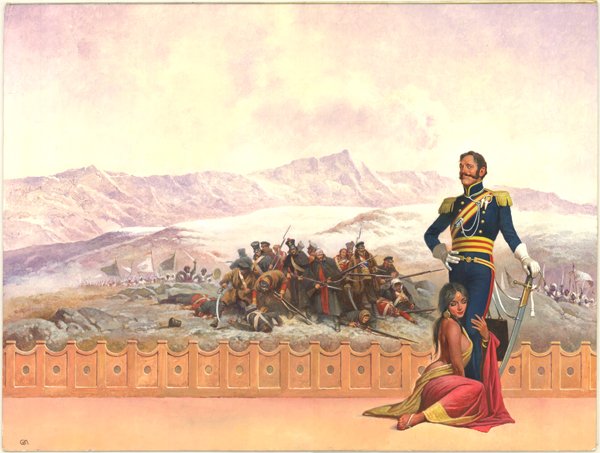
Finally, in Flashman in the Great Game (1975), we are transported across to British India, in which Flashman finds himself spying for the British government, becoming enamoured with a ruthless Maharani and getting caught up in the brutal Sepoy Rebellion of 1857.

What makes these books so brilliant is the character of Flashman himself. Up until this point it would seem obvious to assume that ‘Flashy’ is a gallant military hero. In fact, he is a self-confessed rogue, scoundrel, liar, cheat, coward and womaniser, who in every instance is just trying to save his own skin, but happens to have the charm, wit and good luck to fool those around him that he is in fact the hero he appears to be. He will happily screw over those around him in pursuit of self-preservation and is entirely truthful in what he relays to the reader. And yet he is totally and utterly likeable. His honesty is refreshing and comical to read, but also when he tells of his exploits it really does seem like he escaped each situation in the only possible way. Flashman puts it all down to his heartlessness, but in many situations it does also show him as choosing duty to his country over personal feelings towards others. Of course, he would always do whatever it takes to survive, but quite often this supposed coward does have to act with extreme courage and intelligence simply in the interest of self-preservation. By the end, Flashman has almost become the hero he says that he isn’t, in spite of himself and his actions. Furthermore, though his behaviour is audacious, completely self-centred and deplorable, he is often the voice of sanity and reason in a world full of corruption, stupidity and false piety. His wit, sarcasm and pragmatism cuts through the craziness around him which is very entertaining to read. You are guaranteed to enjoy reading how Flashman romps his way through decades of Victorian history, and how through spectacular acts of spinelessness he manages to win military glory and nationwide respect.

The character of Flashman is brought even more to life by Fraser’s unbelievably accurate replication of swaggering Victorian English, particularly when discussing his numerous exploits with various women throughout the books, which cements his reputation as a cad and a rake. In fact, Fraser’s accuracy in all elements of these books is something to be applauded. He manages to seamlessly insert Flashman and other fictional characters into real historical events without causing a ripple in the factual accuracy of the given moment. The way each battle or political event and the opinions surrounding them is relayed is so precise that you would not believe these books were written a century after they were set. On first publication, Fraser prefaced his novel with the discovery of the Flashman Papers at a house auction in Ashby, Leicestershire in 1965, and named himself only as the humble editor of the twelve instalments of the Flashman memoirs, which he called ‘packets’. He also surrounded the text with explanatory notes and scholarly additions such as maps and appendices, always using an editorial voice reminiscent of an assiduous bibliographer or archivist. Paired with the perceived accuracy and detail of the novel, almost half the initial book critics believed the Flashman novels to be real memoirs of a forgotten soldier in their reviews.

Fraser’s genius is making the historical accuracy of the Flashman stories come to life through the abounding use of comedy throughout. We have the aforementioned sarcastic, witty and outrageous voice of Flashman himself, but there is also sexual farce and intrigue, satirical dialogue and gallows humour. Fraser also expertly utilises syntax to provide humour throughout the novel, choosing just the right words to describe situations or people in an amusing manner. And yet, because he does not shy away from the awfulness, death and bloodshed encountered by Flashman and others throughout the series, the perceived reality of the memoirs remains intact. The books are undeniably entertaining and suspenseful, but the harsh historical realities of each period are illustrated truthfully. For example, Flash for Freedom! contains one of the most shocking and harrowing portrayals of the slave trade that I have ever read, while Flashman in the Great Game lays bare the horror of the Indian mutineers’ massacre of the wives and children of British military men during the Sepoy rebellion. Fraser has a knowledge of Victorian social and military history that is simply staggering for someone who is an amateur historian, and he manages to interweave this with a fictional narrative to create an astounding series of adventure, intrigue and mischief.

These books are an absolute joy to read – you will grow fond of the roguish Harry Flashman while getting a stellar education about important events of nineteenth-century history relating to the British Empire and antebellum America. In fact, you will almost be disappointed that Flashy is only fictional, as his life story really is one of the most astonishing out there.

Happy reading,

Imo x
Categories
American Literature Antiquity World literature

ImoReads… ‘The Song of Achilles’ (2011) by Madeline Miller

Blog Nº 30

“I could recognize him by touch alone, by smell; I would know him blind, by the way his breaths came and his feet struck the earth. I would know him in death, at the end of the world.”

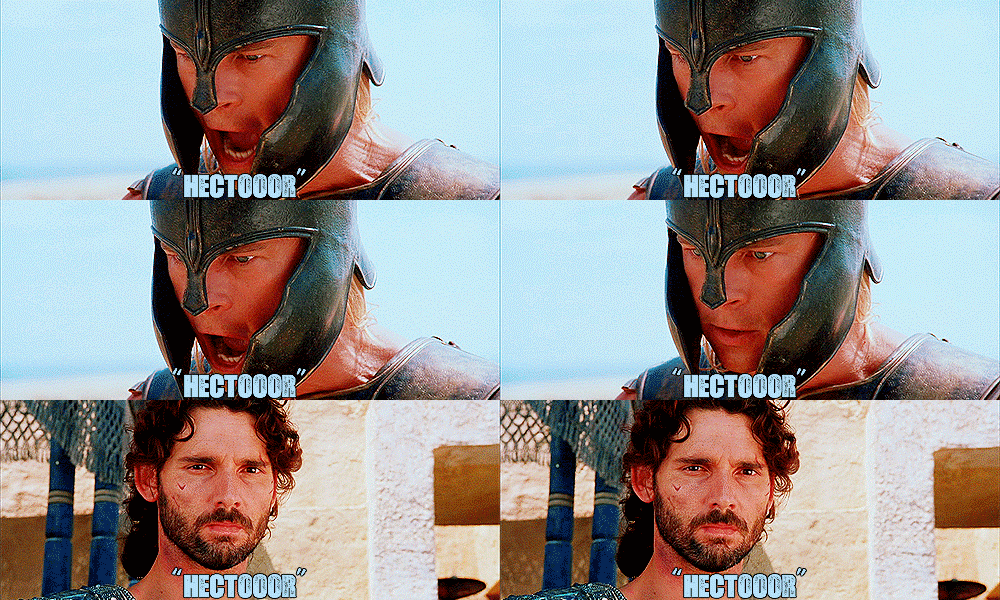
I have wanted to read The Song of Achilles ever since being blown away by another of Miller’s novels, Circe. Much like how Circe is an imaginative homage to the goddess encountered by Odysseus in Homer’s The OdysseyThe Song of Achilles is an original take on The Iliad, one of the best known stories in the West. The heroes and villains of the Trojan War are brought to life like never before in this story of love, friendship, power and violence.

The Song of Achilles is narrated by Patroclus, an awkward young prince living in the age of Greek heroes. Exiled to the court of King Peleus on the small island of Pthia, he strikes up an unlikely friendship with Peleus’ son, the golden boy Achilles. As the two boys become young men, their bond develops into something deeper, despite the displeasure of Achilles’ mother, the sea goddess Thetis. Over the years, their companionship grows stronger and the two boys are still enjoying their carefree youth when Helen of Sparta gets kidnapped. This turn of events means that Achilles must go to fight a war in distant Troy to fulfil his destiny. Torn between love and fear for Achilles, Patroclus goes with him. 

The relationship between Achilles and Patroclus is highly significant in all stories relating to the Trojan War. In The Iliad Homer describes their relationship as deep and meaningful but never says explicitly that it is a sexual relationship. However, they were represented as lovers in Greek literature during the archaic and classical periods and it has been debated and contested ever since. Strong bonds between men was a custom in Ancient Greece, and this relationship could be intellectual, political and sometimes sexual. Miller has chosen to make their relationship deep and meaningful on many levels including sexual, and as such has created a moving, heartbreaking story.

As Patroclus narrates the novel, we are aware of his awe and admiration for the beautiful Achilles from the moment he arrives in Pthia. After several stolen glances and chance encounters, the pair finally speak, and a tentative friendship begins. In fact, they are good friends for a long time before anything else develops between them, though it’s clear they both desire each other. Miller’s smooth prose conveys their relationship as sexy and intense as well as thoughtful and sensitive, making the reader extremely emotionally invested in their bond, particularly as the danger of war looms.

Miller spent ten years researching and writing this book but has succeeded in crafting a seemingly effortless narrative that takes all the key elements of The Iliad and other stories to create a highly affecting version of Achilles. Where once stood the callous, cold superhero is now a man with depth who can be kind as well as godlike. He is not just a hero but a lover, a friend, a son, a father, a husband and most importantly, a normal human being. This makes the reader all the more emotionally engaged in the relationship between Achilles and Patroclus, because it is clear they are the only people for each other. 

The Song of Achilles is an epic novel, with several years passing before the ten year long Trojan War. I enjoy epic novels because you really become invested in the characters, their development and their world. A key moment in the book is when the pair realise that Achilles must go to Troy because it is decreed in a prophecy with a heartbreaking end. As a reader who has been following their story since boyhood it is natural to be as sad and fearful as Patroclus about this. Though for years they agree to fight the battles but purposefully avoid the terms of the prophecy, in the end it is their love for each other that eventually sees it fulfilled with all the tragedy as befits an Ancient Greek tale.

This book is a vividly atmospheric, enthralling and emotional read which sees the deepest human connections challenged against a backdrop of violence, politics and power. It is a joy to read this depiction of Achilles and Patroclus’ relationship – it is certainly a poignant story about love and friendship. I would highly recommend this book to anyone and everyone!

Happy reading,

Imo x

Categories
Caribbean Literature World literature

ImoReads… ‘The Mermaid of Black Conch’ (2020) by Monique Roffey

Blog Nº 29

“The sea, that expanse of nothingness, could reflect a man back on himself. It had that effect. It was so endless and it moved around underneath the boat. It wasn’t the same thing at all as being on any expanse of earth. The sea shifted. The sea could swallow the boat whole. The sea was the giant woman of the planet, fluid and contrary. All the men shuddered as they gazed at her surface.”

I have always enjoyed stories that contain elements of myth and legend, but this is the first time I have delved into the world of Caribbean folklore. The Mermaid of Black Conch is arresting and powerful while unravelling all pre-conceived notions of what a mermaid is. It gives an insight into the long and fascinating history of the Caribbean through the unique story of Aycayia, the girl cursed to be a mermaid for all eternity.

The story begins in 1976 in the small town of St Constance, located on the island of Black Conch in the Lesser Antilles. An unsuspecting young fisherman, David Baptiste, is out in his pirogue boat singing and playing the guitar whilst waiting for a catch. What he doesn’t expect to attract is the mermaid Aycayia, a beautiful young woman cursed long ago by jealous wives who has been swimming in the Caribbean Sea ever since. So entranced by his music, when Aycayia hears David’s boat engine again she follows it, only to find herself a target for American tourists visiting the island for its annual fishing competition. Dragged out of the sea by the Americans and strung up on the dock like a trophy, Aycayia believes her fate is sealed. However, when night falls it is David who rescues her and takes her home. Slowly, Aycayia begins to transform back into a woman, much to the joy of David who has become completely enamoured with her. Unfortunately, transformations are not always permanent, especially when centuries-old jealousy is at play. Even the love between Aycayia and David may not be enough to break the curse.

Author Monique Roffey has succeeded in producing a spellbindingly rhythmic narrative often through simple literary devices such as repetition. For example, “she was floating port side of his boat, cool cool, like a regular woman on a raft, except there was no raft”, “I am an ol’ man now, and sick sick so I cyan move much”, or “after the fish-rain I realise curse strong strong.” She uses this technique frequently throughout the novel, indicating that it has been inspired by folkloric tales passed down for centuries through nothing but spoken word, made memorable by repetition. The fact that all dialogue is spelled phonetically – “Dou dou. Come. Mami wata! Come. Come, nuh” – only adds to the significance that spoken word has in stories like this. Roffey continues to show how important different voices are in The Mermaid of Black Conch by having several narrators sharing the storytelling duties. We hear from David through his retrospective diary entries in 2016, an unknown narrator present in 1976 who tells us the words and actions of all characters, and Aycayia herself who speaks in verse, which further emphasises the memorable quality of the narrative and her difference from the other characters. Furthermore, Aycayia always speaks in the present tense, yet it is clear she is looking back on events, suggesting that being stuck in an everlasting curse has made all notion of time and tense completely meaningless. This fusion of unique voices and narrative styles makes for a highly enchanting read.

It’s also important to focus on Aycayia herself. She in no way conforms to the trope of a siren sitting atop a rock, combing her hair and luring men to their deaths with her beauty. In fact, Aycayia is distinctly ‘unbeautiful’ when compared to Disney-esque mermaids. She has matted dreadlocks which are full of sea creatures who have made a home there, her teeth are sharp and pointed, she has dorsal fins on her back, she smells of salt and fish, she has webbed hands, and her tail is enourmous and scaly. Personally, I think she is a more authentic mermaid because she is at one with the sea, and is striking in a magical, sharp kind of way. Significantly, she has no idea how to lure in a man because she was cursed to this fishlike form when she was just on the brink of womanhood. It transpires that she used to dance for the men of her village centuries ago, not realising in her innocence why the men enjoyed it so much. Consumed by jealousy, the wives of these men chose to make her a mermaid when cursing her because they knew her tail would bind her ‘sex’, making her unable to seduce a man let alone sleep with one. It is not until she is on land, tailless and human, that she is able to finally ‘become a woman’ and understand what it is to physically love a man, a joy that she finds with David. Even though the long-dead wives can still wield their power over Aycayia, it is satisfying to know that whatever her fate, she has bested them through her relationship with David and this can never be taken away from her, despite the eternal cruelty of these scorned women.

I have read several books featuring mermaids, but I have to say that The Mermaid of Black Conch is now my standout favourite. It encompasses myth and legend, love and the cruelty of human nature as well as the beauty of the Caribbean and its complex history. I highly recommend this captivating and unique novel.

Happy reading,

Imo x
Categories
Caribbean Literature World literature

ImoReads… ‘The Orchid House’ (1953) by Phyllis Shand Allfrey

Blog Nº 28

“Miss Joan paused on the threshold, for a beautiful thing was holding her prisoner there. Just outside the orchid house was a frosted pink hibiscus bush, one of the rare ones which Old Master cultivated. A little fou-fou humming-bird had chosen the largest and most perfect of flowers to drain its sweetness. The flower was three times larger than the bird which was only like a flashing black-and-emerald moth. The bird was fluttering and humming at such a speed that it seemed to lie still along the bright warm air, its tiny claws curled up; its long sharp bill was deep in the bedecked trumpet of the hibiscus. Seconds and seconds it remained suspended there, appearing rigid, then like a drunken spirit it reeled away and wiped the sword of its beak on some lichen. Shocked by this exquisite sight, Miss Joan sighed deeply and sat down again.”

The Orchid House is Allfrey’s only novel, and it certainly makes a statement. Heavily autobiographical, the novel is set in Dominica in the Caribbean and explores themes including love, money, politics and family relations, all seen through the lens of colonial decay. 

Three sisters are returning to their childhood home in the Caribbean after being away for several years. Though the family are directly descended from colonial settler heavyweights, the family has sunk into a state of near poverty with the coming of the end of empire. Each sister wants to change the family’s fortunes but in different ways. I believe that Joan is the sister that is based upon Allfrey herself – she is concerned with empowering the locals through politics, influenced by her strong socialist ideals. Interestingly, Allfrey has chosen to have the sisters’ childhood nurse Lally narrate the book. Throughout the book we see Lally’s devotion to the family come up against her awareness of the destruction left in the wake of colonialism on the island.

The choice of narrator is interesting to me. Given the time of the book’s publication, the character of Lally is in some ways reminiscent of the ‘loyal faithful slave’ character depicted in many novels written by white authors in the nineteenth and early twentieth centuries. Lally is completely devoted to the family she has been serving her whole life, and even looks down on other black characters for being unsuitable associates of said family. She always speaks about each family member with care and compassion. Though Allfrey was engaged in socialist politics and activism, it seems unlikely that she was not influenced by these stereotypes as she herself did grow up in the very same colonial environment with house servants who it would be assumed were completely loyal. On the other hand, Lally is becoming more and more aware of the downward turn in fortunes for the island. Furthermore, there are times when she wonders why at her age she is still as active in her service to the family as she was several decades ago. The narrator being black also means the reader interacts more with other black characters than if one of the sisters had been narrating. Therefore, I would say this is a slightly more well-balanced portrayal than some other books I’ve read.

A standout feature of The Orchid House is its descriptions of Dominica’s vibrant nature juxtaposed with its colonial decline. An example of a powerful quote from Lally is, “beauty and disease, beauty and sickness, beauty and horror: that was the island.” There are many similar moments in the novel that evoke the same emotions. The occurrence of a formidable storm also indicates the power that nature wields in the Caribbean, suggesting that it is strong enough to battle against the decay being brought on by its colonial past.

This book lives up to its reputation as a Caribbean classic – it deals with a lot of important themes whilst also regaling a very personal story. I would recommend it to anyone with an interest in recent Caribbean history.

Happy reading,

Imo x

Categories
English literature

ImoReads… ‘The Way We Live Now’ (1875) by Anthony Trollope

Blog 26

“A newspaper that wishes to make its fortune should never waste its columns and weary its readers by praising anything.”

Though not appreciated upon publication, from the mid-twentieth century The Way We Live Now has been considered one of the greatest works of fiction to come out of the Victorian period. It is Trollope’s great work of satire and its multiple plotlines are built on the circulation of rumours which makes for a gloriously scandalous read.

In truth, it is hard to give a short overview of The Way We Live Now because Trollope has expertly interweaved so many interconnecting storylines and characters into his 700+ page novel but I will try my best. It’s 1870s London and ‘the great financier’ Augustus Melmotte has just arrived from France with his wife and daughter, causing quite a stir. Though many London gentlemen immediately jump at the chance to pour their money into his various ventures, it soon becomes suspected that Mr Melmotte is nothing but a fraud. This suspicion simmers away throughout the novel before reaching boiling point at the end. He is the link between all the characters – Melmotte’s daughter Marie is in love with the selfish, financially irresponsible cad Sir Felix Carbury who, egged on by his mother Lady Carbury (whose career as a writer is less than profitable and who cannot support her son’s reckless gambling much longer), is trying to marry Marie for her presumed wealth. Carbury and several of his set, Adolphus ‘Dolly’ Longstaffe and Lord Nidderdale to name a couple, all join the board of directors on Melmotte’s venture, the South Pacific Mexican Railway, and are eager to buy shares in this endeavour despite its nebulous nature. The honest and decent young man Paul Montague becomes an unwilling member of the board when his money is invested into it by his business partners in Fisker, Montague & Montague. He and Felix’s sister Hetta Carbury fall in love, much to the dismay of her older cousin and respectable Squire, Roger Carbury, who is also in love with Hetta and the good friend of Paul Montague. Unfortunately for Paul, his ex-lover Mrs Hurtle has followed him back from San Francisco determined to get him back. These are just a few of the plotlines that run throughout The Way We Live Now – there are many more characters who all have interesting stories of their own.

Something that I found really interesting about this novel is how Trollope links ‘the pen and the fraud’ repeatedly in numerous guises. For example, Melmotte several times notes down acknowledgement of railway shares that don’t really exist on scraps of paper in exchange for money from hopeful young gentlemen. He also has no scruples whatsoever about forging whoever’s signature is necessary on official documents, allowing him to buy one of the Longstaffe properties without actually handing any money over, something the Longstaffes only cotton onto after the fact. Another instance is Felix Carbury who continues to gamble despite being utterly broke. In fact, he and all his set write each other IOUs upon a loss at cards, which in themselves become totally meaningless as nobody really has the money to back them up. Furthermore, Lady Carbury is so desperate to make a living from her writing that most of her historical work of fact Criminal Queens is completely false and unresearched but makes for more interesting reading. You’ll notice that all instances of written deception are linked to money in some way, another of the novel’s key themes. I think that Trollope is trying to demonstrate the ugly impact that the pursuit of wealth can have on people as it lays bare their biggest selfish impulses. It is also important to mention the prevalence of letters in The Way We Live Now, perhaps influenced by Trollope’s career in the Post Office. Like the above instances of fraud, letters are intrinsic to several storylines in terms of fuelling and circulating rumours and causing misunderstanding and upset among characters.

I have to admit that truly good characters are few and far between in Trollope’s novel, though this doesn’t make it any less brilliant. Any reader will of course root for the pure and clean romance between Hetta Carbury and Paul Montague, two of only a handful of upstanding characters, even though their relationship spells bad news for poor old Roger Carbury, another kind and honest soul. At the other end of the scale we have the utterly detestable Sir Felix Carbury, who has to be one of – if not the most – vain, selfish and careless characters I have come across in a work of literature. His persona makes for an interesting journey of twists, turns and scandals, and without giving too much away karma definitely comes back to bite him which is deliciously satisfying for the reader. My favourite character has to be Dolly Longstaffe – he really is very funny both in his manner and habits. Not many others would consider themselves as selfless and worthy of praise for ‘the nuisance’ of leaving London for one day to attend their own sister’s wedding back at the family’s country home. Nor would they consider it a great inconvenience to rise before midday on one day out of all the days to attend a morning meeting. Dolly is so unashamedly confident in his likes and dislikes, and highly witty in his discourse that any chapters featuring him were always my favourites. In all, Trollope’s wide range of character types make for an interesting and amusing commentary on London’s elite society.

If you like getting stuck in to a long and involving read then The Way We Live Now is definitely for you. It is at once witty, gripping, emotional and observant. Immerse yourself in the scandalous and selfish nature of a society that is rocked by the discovery of a fraudster in its midst, which portends consequences from everybody…

Happy reading,

Imo x
Categories
English literature

ImoReads… ‘The Time Traveller’s Guide to Regency Britain’ (2020) by Ian Mortimer

Blog Nº 25

“The most extraordinary articles of domestic life are looked on with some interest, if they are brought to light after being long buried; and we feel a natural curiosity to know what was done and said by our forefathers, even though it may be nothing wiser or better than what we are daily doing or saying ourselves. Some of this generation may be little aware how many conveniences, now considered to be necessaries and matters of course, were unknown to their grandfathers and grandmothers.”

James Edward Austen-Leigh, ‘A Memoir of Jane Austen’ (1869)

It is already a well-established fact that I adore the British Regency period (1789-1830). To me it is the most interesting, colourful and important time in our country’s history. I dedicated much of the history side of my French & History degree to studying the period and also pursue this interest in my own time. If I could, I would use one of my three wishes to travel back in time to experience it for myself. Fortunately, The Time Traveller’s Guide to Regency Britain really is like stepping back in time. Mortimer calls it ‘A Handbook for Visitors to the Years 1789-1830’ on the opening page and it certainly lives up to this description. I am a social and cultural historian at heart, so it was brilliant to read a book solely dedicated to portraying this era as a lived experience rather than something to be studied. We find out what people wore, ate and drank, how they travelled, what they were thinking, believed in and were afraid of, what their world looked, sounded and felt like and much more. This book is an eye-opening, exciting and involving trip back in time.

Mortimer certainly covers all bases in The Time Traveller’s Guide to Regency Britain. The book is divided into the following sections: The Landscape; London; The People; Character; Practicalities; What to Wear; Travelling; Where to Stay; What to Eat, Drink & Smoke; Cleanliness, Health & Medicine, Law and Order; Entertainment. It also contains two glossy sections featuring paintings, illustrations, caricatures and prints from the time which really add to the feeling of visiting the Regency period. It would be impossible to discuss all the chapters in this blog, so I have selected a few personal highlights. Fundamentally though, this is an era where big things are happening all at once in the form of unprecedented social, political and economic change. It was the last time that Britons truly lived in a period of unchecked extravagance, fun, mischief and thrills before the stiff curtain of Victorian morality descended. The Regency is the age of Jane Austen and the Romantic poets, the art of John Constable, the trendsetting stylishness of Beau Brummel and the premiere of Beethoven’s Fifth Symphony. At the same time, Britain is celebrating military triumphs at Waterloo and dealing with the menacing threat of revolutions and tragedies like the Peterloo massacre. Never has there been a time of such wild contradiction in British history.

The Plumb-Pudding in Danger (1805) – James Gillray

Something charming about this book is Mortimer’s analysis of everyday concerns that are so banal you would never have thought to consider them when looking back at the past. Take, for example, the weather. As Mortimer points out very astutely, when delving into history it is easy to forget about the small but fascinating details when you are wrapped up in the big picture. It is heart-warming to know that Regency folk talked about the weather just as much as we do in the modern day, making it truly a subject that unites people in their Britishness. Something else you might not have considered is the time, given that time is standardised in the modern world. Though Regency people had perfectly functioning pendulum clocks, the actual hours in the day were heavily localised. Therefore, what might be 10:0am in London could be 10:20 in Leeds, meaning that scheduled meet ups were not always straightforward and travellers between towns would be in the habit of adjusting their watches accordingly on arrival with the town’s public clock. These are just a couple of points discussed in the ‘Practicalities’ chapter, and I think these sorts of topics are just as worthy of study as the big stories in history because they really shine a light on how people truly lived and what they experienced day-to-day.

In my degree I really enjoyed studying all things Regency: the Empire, the fashion, the royals, the rise of consumer culture, society norms, the Romantics and literature, the art, the humour, the architecture, social change, the politics and more. Therefore, it was great to see Mortimer bring these subjects to life in The Time Traveller’s Guide to Regency Britain. However, as you might have presumed, what I really enjoyed was finding out things I didn’t already know about the Regency period. For example, I found it interesting to learn just how blurry the boundaries between sexual morality and immorality were in this era, what attitudes were towards homosexuality and transvestitism, or how superstitious or cruel and compassionate people were, both in terms of other people and animals. People were still horrified by cruelties during this period but what was considered cruel differed greatly and again, there were contradictions. On the one hand, harsh punishment of felons and public hangings were still major entertainment for the public while on the other hand opposition to death penalty was growing and prison reforms were happening. It is interesting that at the same time, people (especially men) were much more expressive of their sensitivity. Though you can often find gentlemen duelling for their honour, there is no such thing as the strong silent type. Men are much more emotional – judges could cry in court when delivering a verdict and when MP Samuel Whitbread commits suicide in 1815, many members of the House of Commons who rise to pay their respects cannot hold back their tears. It is the original instance of there being ‘not a dry eye in the House.’

Aside from learning about the beginnings of the Industrial Revolution in the Regency and reading Mary Shelley’s Frankenstein (1831), I confess that I was not aware of how exciting this era was in terms of scientific developments. Frankenstein is of course based on the theory circulating at the time that electricity could bring people to life after Luigi Galvani’s famous experiment in which he stimulates the legs of dead frogs. Again, as electricity is the norm today, it is easy to forget how much it amazed Regency people. It was the first time that objects could be moved without touching them or that things could be lit up without a match, making it a mysterious and fantastical revelation. Electricity along with other developments such as the discovery of new planets, the phrases ‘chemistry’, ‘biology’ and ‘geology’ taking on greater meaning, the invention of the first steam locomotive and hot air balloons, and the exhibition of Joseph Nicéphore Niépce’s ‘heliographs’ (early photographs) in London, gave people a startling glimpse into the future. Suddenly, everything seemed possible and people imagined a future of endless innovation, which of course is now our past. I’m almost jealous that I have grown up taking these things for granted – I’m not sure that there’ll be an age of discovery quite like this ever again. 

These are just a few examples from a book brimming with fascinating insights into how people thought and lived during the Regency period. I applaud Ian Mortimer on such a well-researched, original look into Britain’s most fascinating era. His captivating writing style and far-reaching chapter base really does make for an incredible trip back to the past. With The Time Traveller’s Guide to Regency Britain in hand I would feel more than confident navigating my way around this period and making the most of it. Regency people played an integral role in shaping who we are today in so many more ways than we realise, and this book is a triumph in showing us how. I really recommend this book to anyone looking to understand who we are and where our modern selves came from.

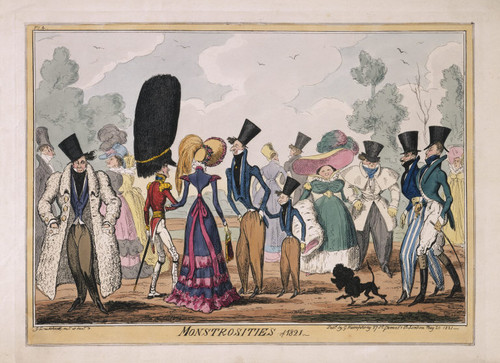
Monstrosities of 1821 (1821) – George Cruikshank

Happy reading,

Imo x
Categories
English literature

ImoReads… ‘Shuggie Bain’ (2020) by Douglas Stuart

Blog Nº 24

“Sadness made for a better houseguest; at least it was quiet, reliable, consistent.” 

I was given this 2020 Booker Prize winner for Christmas and it is quite unlike anything I have read before. Shuggie Bain is at once tragic, funny, harrowing and compassionate, forming a beautifully sad tale with lasting effect. It is a deeply moving account of poverty, addiction and childhood trauma in 1980s Glasgow.

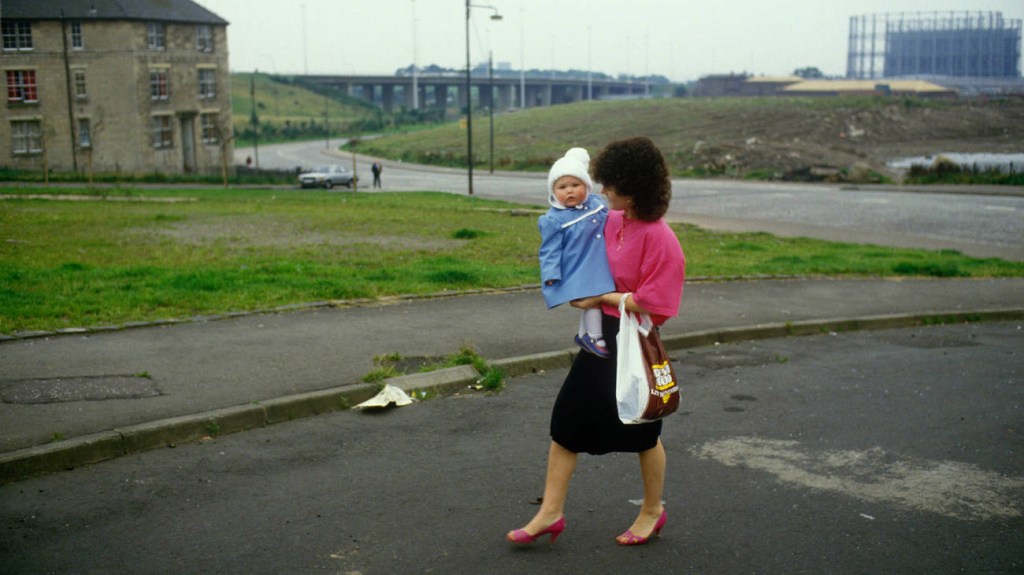
1980s Glasgow

The novel is set in 80s and 90s Glasgow and centres on the young boy Hugh – or Shuggie – Bain. At the outset Shuggie and his older siblings Leek and Catherine live with their mother Agnes, father Big Shug and Agnes’ parents in a flat on the Sighthill Estate. Though it is obvious from the outset that the family do not have means, there is not yet a sense of despair in their situation. After the philandering Big Shug promises Agnes a fresh start in their own house everything begins to go wrong. Shug leaves Agnes and the kids in a mining town on the outskirts of Glasgow that has been decimated by Thatcherism, shattering Agnes’ dreams of a comfortable life bought and paid for. As she increasingly turns to alcohol for solace, each of her children try their hardest to save her. Yet, one by one as they get older, they leave Agnes behind to try and save themselves from a life of poverty and hardship. Shuggie holds out the longest, spurred on by unadulterated love for his mother and a youthfully innocent sense of hope. However, Shuggie has his own problems. Though he tries his hardest to fit in with the other boys his age, it becomes increasingly clear that he is ‘no right’, leaving him exposed to abuse and bullying. Agnes wants to be there for her son, but her addiction is slowly destroying her relationships with everyone around her, even Shuggie. 

Blackhill Estate, 1980s Glasgow

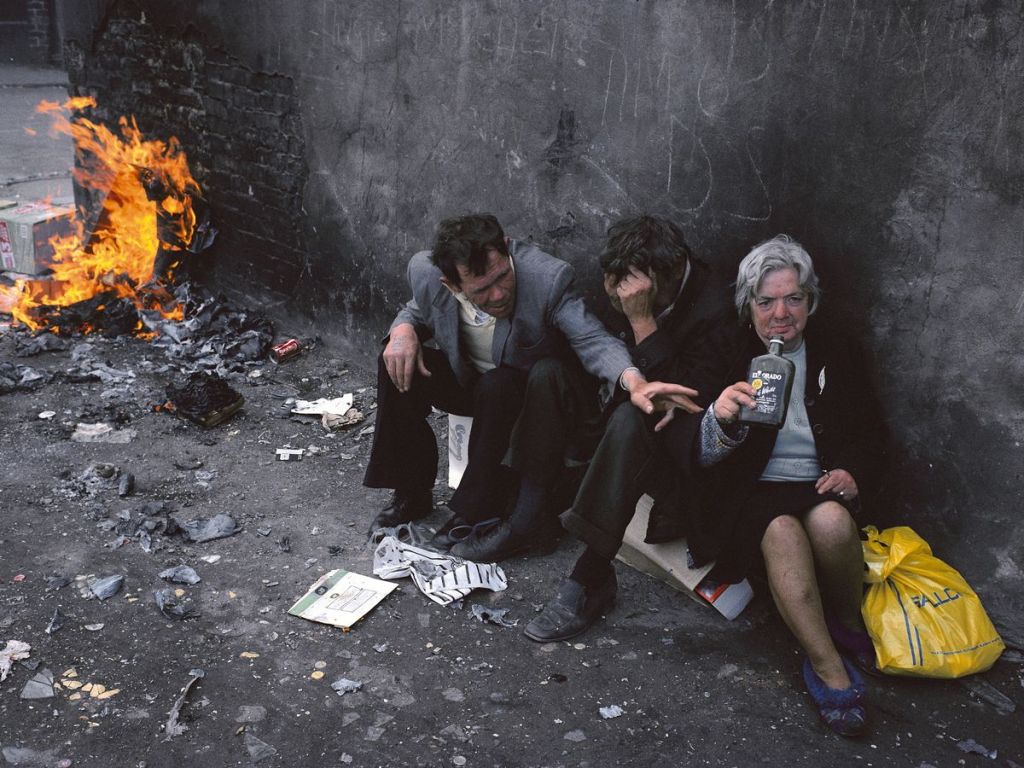
What is striking about this novel is how the ruthlessness of poverty is laid bare so forcefully. Stuart really captures the bleakness of life in Glasgow during this time. His descriptive passages of the mining town Pithead (likely based on Cardowan) particularly stand out. Small, squat, grey houses packed closely together with no privacy; the surroundings don’t get more scenic than slag heaps and overgrown wilderness. The men are lost without work in the mines. Stuart describes the women as having rings of dirt round their necks and the children as running amok with matted hair and unkempt clothing. The language is coarse, the future prospects are non-existent and the vice is drink. I was always filled with despair to read how Agnes and other adults in the town scrambled to buy drink with most of their weekly benefit money while their children looked on hungrily. It is hard not to feel sympathy for Agnes nonetheless – her alcoholism manifests itself in endless cans of Special Brew lager and bottles of vodka. Time and time again she is mistreated and abandoned by men, rejection which she often takes out on her children. Even as young as eight, Shuggie is dismayed whenever his mother picks up a drink, leaving him to courageously deal with the trauma of her drunken disappearances, suicide attempts and blind rages. 

Slum in 1980s Glasgow

Shuggie Bain is Stuart’s debut novel and it is largely autobiographical. It is clear to the reader that Shuggie does not fit in with the other boys – though we know why, Shuggie just thinks he is ‘wrong’. Stuart has spoken about how difficult it was growing up in a housing scheme where there was a real stigma around being gay. The idea of being ‘out and proud’ did not fit into this hard, working-man’s world. Particularly in a world without internet, he could not easily find any solidarity with the wider gay community or comfort in his identity. Stuart’s struggles are heartbreakingly played out in Shuggie. Though Shuggie tries everything – changing his walk, pretending to like football, hiding the fact that he likes ‘girly’ toys – he is still a target for bullying. He is often beaten up, verbally abused or made to do unspeakable things by other boys at school or in the neighbourhood. It brings me joy to know that Stuart has found happiness and acceptance with his husband Michael Cary in New York City, where he has resided since 2000.

Stuart grew up without books or any formal education in literature making the calibre of his debut novel even more astounding. I am thankful that I have been exposed to such a heart-wrenching story of love, struggle and pride about an era and city that I know shamefully little about despite living in Scotland’s neighbouring country. I will close this blog with a powerful quote from Stuart, which sums up the essence of Shuggie’s Glasgow:

“I have a complicated relationship with my hometown—but there’s no place I love more. I hope “Shuggie Bain” is a love story to Glasgow, not a fawning love story but one that sees the city clearly. It’s very Scottish to be direct about difficult things, so there’s no point in pretending it wasn’t a hard place to live. The city is a place of contrasts; in all its devastation and deprivation, the people still remain strong and fiercely proud, and I know of no one who is warmer, kinder, and more blackly funny then Glaswegians.”

Happy reading,

Imo x

Categories
Australian Literature World literature

ImoReads… ‘My Brilliant Career’ (1901) by Miles Franklin

Blog Nº 23

“I am afflicted with the power of thought, which is a heavy curse. The less a person thinks and inquires regarding the why and the wherefore and the justice of things, when dragging along through life, the happier it is for him, and doubly, trebly so, for her.”

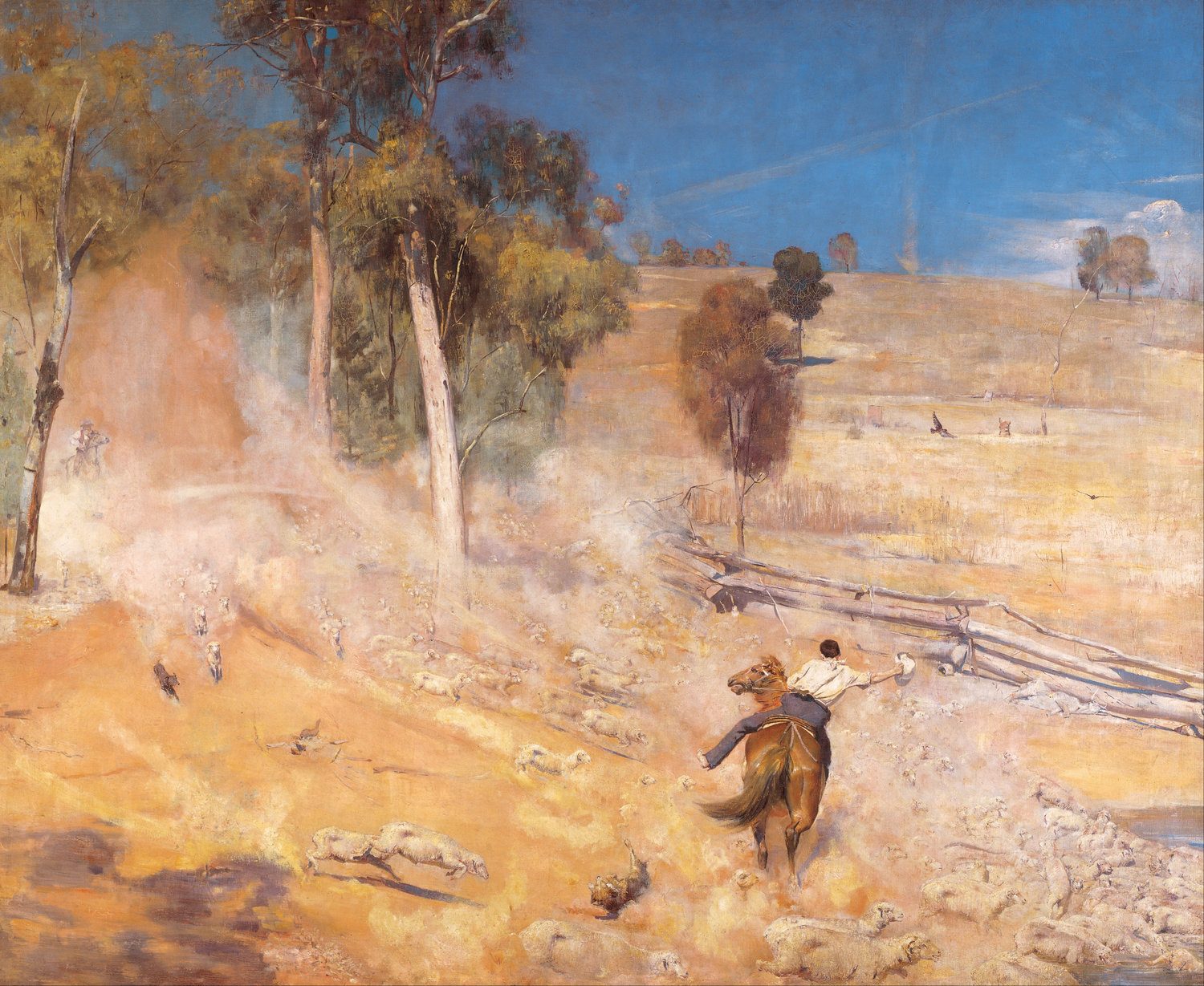
Anyone who knows me knows that I love a good old Australian novel, and I was not disappointed by My Brilliant Career. Written in 1901, the year of the Federation of Australia, this novel is unashamedly sharp, romantic and vivacious. I read it in a matter of days, being so taken in by the entirely convincing narrative voice and vivid display of Australian life.

My Brilliant Career is told in the first-person narrative by sixteen-year-old protagonist Sybylla Melvyn. For the first part of her childhood, Sybylla loves life with her family in rural Australia. She is clever and devours any book in sight, reading works extremely advanced for her age. When a series of poor business decisions from her father relegate the family from owning a sprawling cattle station to subsistence farming in the outback, teenage Sybylla becomes frustrated and bored with the hardship and monotony of life. She longs for a more refined lifestyle where she would be surrounded by likeminded others who enjoy intellectual thinking, reading and music. To aid the struggling family, Sybylla’s grandmother offers to take Sybylla in to live with her at her gracious property Caddagat. Sybylla fits right in at Caddagat; her sharp tongue, wit and frankness are a triumph among her extended family and for Caddagat’s wealthy neighbour, the handsome Harold Beecham, who becomes completely enamoured with her. Over the next two years, Sybylla will find herself choosing between everything a conventional life offers and her own plans for a ‘brilliant career’.

What is amazing about this book is the link between Sybylla and the author. Sybylla Melvyn is based on the author Miles Franklin (Stella Maria Sarah Miles Franklin). Sybylla’s childhood timeline is very similar to that of Franklin’s – for example, Franklin’s grandmother’s property Talbingo was simply renamed Caddagat in My Brilliant Career. Like Sybylla, Franklin was set on having a career in music. Reduced family circumstances making this impossible, Franklin turned to writing and as such wrote My Brilliant Career at age sixteen. The sheer literary skill, wide-ranging vocabulary and vibrant narrative are simply astonishing given that the author is a sixteen-year-old girl with an unconventional education, notwithstanding that the book was “conceived and tossed off in a matter of weeks” as a romance to amuse her friends. Furthermore, Franklin’s (and therefore Sybylla’s) burning desire to have her own career rather than do what was expected and marry is a view far more akin to feminists of the 1960s and 70s rather than of a teenage girl born and raised in the Australian outback at the turn of the century. For me, this novel indicates that someone’s sheer genius can shine through no matter what circumstances they have grown up in.

I think the fact that Franklin is the same age as the protagonist really helps legitimise Sybylla’s narrative voice. As you read, it is completely clear that the author is also a teenage girl – on the one hand Sybylla is unapologetically passionate and unpredictable, while on the other she carries insecurities about her looks and personality, portrayed like this in a way that only someone feeling the same things could. The narrative style is quite different to other books from the time that I’ve read; it is impetuous and brazen much like the mind of a teenage girl. Towards the end of My Brilliant Career, when the romance is heating up between Sybylla and Harry Beecham, I was completely hooked as Sybylla lays bare her emotions – torn between her desire for independence and her affection for Harry. I, like many other female readers I’m sure, felt that whatever decision she made, the outcome would be bittersweet. 

Overall, I was completely blown away by My Brilliant Career and think it is an essential read for any young person, especially young women. It is engaging, emotional, humorous and offers a candid representation of Australian life in the late 1800s/early 1900s. This was only the beginning of Franklin’s success and I take comfort in the fact that she did indeed get to have a ‘brilliant career’.

Happy reading,

Imo x

Categories
nineteenth century

ImoReads… ‘Love and Youth: Essential Stories’ (1852-1860) by Ivan Turgenev

Blog Nº 22

‘O youth! youth! You care about nothing, you believe you possess all the treasures of the world; even sorrow gives you pleasure, even grief amuses you, you are bold and daring, and everything melts in you like wax in the sunshine, like snow in springtime’
I got this collection of short stories as a Christmas present; my dad thought it was ‘about time’ that I get acquainted with one of Russia’s best nineteenth-century writers, Ivan Turgenev. I was excited to read it to see how differently/similarly the themes of love and youth were tackled in Russian writing compared to Western European writing at this time. The collection comprises Turgenev’s great novella First Love and five short stories, all managing to feature vibrant and arresting characters and plotlines in so few pages.

My favourite tale in the book is undoubtedly First Love. Three middle-aged friends are looking back on their first loves, and of the three it is Vladimir Petrovich who has the most youthfully turbulent tale to tell. Petrovich writes down his story in a notebook, and this is how we hear it. We are taken back to the summer of 1833 when Petrovich was 16, living in Moscow with his parents. Studying for his university entrance exams goes out of the window when the beautiful and sharp Zinaida moves in next door with her mother, the old Princess Zasekina. Zinaida is a few years older than Petrovich but he is instantly infatuated with her; we hear first-hand how he begins to experience the paradox of being in love – how it can be at once painful and glorious. Petrovich begins to spend all his time with Zinaida and the several other young men she has expertly cast under her spell. And yet, when we eventually find out who it is that Zinaida truly loves, it is clear that she is in just as much pain as the men she is toying with, and the revelation is as much of a shock to the reader as it is to poor Petrovich.

What I enjoyed about this story is how Petrovich’s emotions and actions transcend the time period of the book; any 21st-century teenager or young adult who has ever experienced a crush, heartbreak or a relationship reading First Love would be able to identify with elements of Petrovich’s struggle. Older readers I’m sure would share the wistful reflection clearly felt by the fortysomething Petrovich looking back on his younger self. It is an interesting insight into humanity that no matter where you’re from, no matter the social customs and outlook of your time, everyone collectively shares in and relates to the emotional rollercoaster that is love and relationships.

The five other short stories in the collection are Bezhin MeadowBiryukThe Rattling!;The District Doctor;The Lovers’ Meeting. Though several of these also tackle the theme of love, the majority are tales filled with the grandiose flights of youthful imagination. For example in Bezhin Meadow, a lost traveller shelters for the night in the meadow with a group of peasant boys guarding a herd of horses. They talk round the fire of bogeymen, ‘russalkas’ (wood sprites) and local rumour of strange happenings. Turgenev is an excellent storyteller, interweaving mysterious wails and jumpy moments into the narrative as the boys tell these tales. This made me as a reader feel the eerie presence of the meadow bearing down upon me just as these young boys with runaway imaginations would have felt. In fact, in each of these short stories Turgenev evokes his chosen landscapes vividly, with the consequence of making them appear distinctly Russian. In The Rattling! Turgenev expertly uses the wild landscape paired with an ominous rattling of a far-off carriage to convince the main characters that they are being pursued along the road by bandits. As their own cart fails to keep ahead the rattling gets closer and closer, making for an extremely gripping few pages.

Turgenev was a key figure in popularising Russian literature in the West, and after reading this engaging collection I can see why. I look forward to introducing myself to more Russian literary greats in future.

Happy reading,

Imo x