Categories
Antiquity

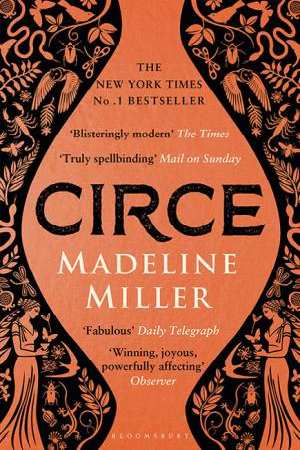
ImoReads… ‘Circe’ (2018) by Madeline Miller

Blog 7

“Humbling women seems to me a chief pastime of poets. As if there can be no story unless we crawl and creep”
DISCLAIMER: please read my blog on The Odyssey before reading this one 🙂

Alongside Emily Wilson, Madeline Miller is another female author who must be praised for her sensationally modern twist on Homer’s The Odyssey. Her novel centres on the life of nymph and sorceress Circe, who is dealt with in but a few lines in Homer’s work.

From the start, it is clear that despite being a goddess, Circe’s life is not luxurious and languorous. Nymphs are the lowest of the gods and their function is fundamentally to be married off to strengthen the power of their family; ‘in our language, it [nymph] means not just goddess but bride’. She is deemed unattractive, uninspiring and just downright strange by her father Helios and her mother Perse, so they are cruel to her and pretty much completely dismiss her. A dalliance with a mortal fisherman, Glaucos, sets Circe’s story in motion. Her efforts to turn him into a god despite not having the divine powers of her father reveal that she is a witch; she successfully uses pharmaka (sorcery) for the first time to change him. With his newfound powers, Glaucos scorns her without a second glance in favour of beautiful sea nymph Scylla. In a fit of jealousy and hurt, Circe uses pharmaka once more to turn Scylla into a hideous sea monster (that Odysseus will later encounter), and it is for this that she is banished to the island of Aiaia for all eternity. And yet, the story does not end here; this is where it begins. Miller has brought Circe to life as the woman who will not be silenced or caged as Zeus and her father desire.
Sadly, as Homer passes over Odysseus’ encounter with Circe so briefly, there is little even Emily Wilson could do to give her character more depth. In The Odyssey, she is simply an unpredictable, lonely witch who turns all men that come to her island into swine and of course, Odysseus is the one who can seduce her and keep his crew from this fate. Miller has given their relationship the airtime it deserves, as Odysseus stays on Aiaia for months (despite being ‘desperate’ to return home to his wife and son). I enjoyed the fact that in Miller’s modern re-telling, unsurprisingly Odysseus is not the be all and end all of charm and seduction. Circe has several lovers over the course of the novel, and each time it is her choice, and often by her own initiation. Furthermore, we learn that her tradition so to speak of turning men to pigs is a defence mechanism after she was once brutally raped by the captain of a passing crew. In the patriarchal (and dare I say misogynistic) society of Ancient Greece, it is likely that the concept of rape did not exist in the eyes of most men; Circe’s experience starkly demonstrates its everyday occurrence. 

Aside from her relationship with Odysseus, Miller shows us how Circe plays a role in many famed Greek myths, so if you want a round trip of the greats, this book is for you. For example, as a child she was the only one in her father’s court to show kindness to Prometheus during his first round of punishment. When her sister Pasiphae spawns the minotaur, it is down to Circe to create a spell to temper it while Daedalus builds the labyrinth to imprison it in. Indeed, her role in Scylla-gate (which has many versions) led to the creation of one of the most legendary monsters in Greek myth. An invisible player she may sometimes be, but she is undoubtedly a very important one. Bringing her to life as Miller has done as ‘the good witch’ is revolutionary in the sense that it starts eroding the idea that all the greats of Greek myth are male. 
On a technical level, I was extremely impressed by the language of the novel. Evocations of antiquity through Miller’s tone, vocabulary and writing style are faultless; I felt like I was reading a text written in the same year as The Odyssey despite its unwaveringly modern take on Circe’s story. The level of detail and knowledge weaved seamlessly into the story (as if it was created on Daedalus’ loom no less) is a credit to Miller and her research. 

Circe is a story that will dazzle your imagination with the big guns of Greek mythology and the world of the Ancient Greek Empire. This is reason enough to give it a read, but it is Circe herself that will leave the most enduring impression upon you. Her trials and tribulations are somehow both ancient and modern, relatable and godlike, optimistic and harrowing; they undeniably show that yes, she does matter, no, she will not be kept down and that yes, she is more than what she was designated to be by men such as Homer and Ovid.
Happy reading,

Imo x

Categories
French Literature

ImoReads… ‘Maria Chapdelaine’ (1914) by Louis Hémon

Blog 6

“La terre est bonne; mais il faut se battre pour l’avoir”

Upon publication, this novel – although written by a français de France – was hailed as a completely accurate representation of the idyllic rural Quebecois lifestyle centred on religion, family values, and land cultivation, that was supposedly at the heart of the French-Canadian ethos. I must admit, I was not inspired to eschew modernity and take flight for the woods after reading it. This novel is great, but not because of the apparent pastoral paradise it depicts. It is great because of the ominous and quite frankly disturbing presence of the forest, and the fact that actually, the human characters are locked in hopeless struggle with the cruel and vindictive wilderness for the land that leaves readers feeling tense and uneasy.

Maria Chapdelaine tells the story of the Chapdelaine family. We have Samuel, Laura and their children, who include eighteen-year-old Maria. They are habitants intent on faire de la terre to fulfil their French-Canadian rural destinies. In search of good land, they have pushed so far into the wilderness that the nearest town is eight miles away and they are completely surrounded by the looming forest. Three suitors vie for Maria’s hand in marriage, most notably François Paradis. François lives the coureur du bois lifestyle which exists in stark contrast to the Chapdelaines’ ideology. He lives and trades off the land and is always on the move; to him the woods are everything. Maria loves him for the freedom and adventure he would bring to her life. And yet, when he tragically perishes in the woods during a punishing winter, Maria is left devastated and disillusioned.

Despite the novel being titled Maria Chapdelaine, she is not given much air time. It is all about the battle with the wilderness. The forest is the enemy that blocks the Chapdelaines from their future prosperity. They are ‘des gens qui commencent une longue guerre’ and seem to always be at the land clearance stage of proceedings. This book is many things, but I found it impossible to escape the overwhelming sense of bleakness. Hémon scorns human attempts to dominate the land; ‘la petitesse de l’église de bois, la petitesse des quelques maisons de bois’ emphasises that they are not but insignificant specks on this vast hinterland. What really unnerved me was that at every turn, the characters are faced with ‘la lisière sombre du bois’, always gloomy, always impenetrable, always watching. It must be mentioned at least thirty times throughout. 

As I read on, I came to realise that it was not a battle between humans and the wilderness at all; the wilderness is personified as having a ‘sévérité divine’ against which the humans ‘n’avaient aucune révolte, même pas d’amertume’, in fear of worse retribution. When poor Maria’s true love François is cruelly taken away from her, we hear that ‘le froid assassin et ses acolytes se sont jetés sur lui comme sur une proie’. If this would not instil the fear of God into you as a reader about venturing into the Canadian woodland then I don’t know what would.

I realise that perhaps I am not selling this book; if you want something that will send shivers down your spine and leave a distinct impression on you, then I would strongly recommend it. And don’t forget, to be hailed as a novel representing a glorious rural idyll, there must be some evidence of this in the text.

Even I admit, Maria Chapdelaine has its moments, and all of these moments come in the short and sweet summer months. The wilderness becomes a beautiful, romantic backdrop for Maria and François’ budding romance and there is jovial sense of purity and simple living for this family in the woods. So perhaps it is the long Canadian winter rather than the wilderness itself that is the master of cruelty? I’ll leave that up to you to decide…

Happy reading,

Imo x

Categories
French Literature

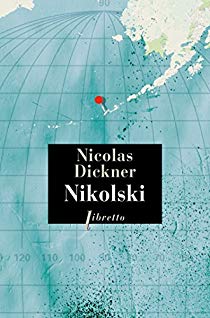
ImoReads… ‘Nikolski’ (2005) by Nicolas Dickner

Blog 5

“En transformant des relations familiales en relations hasardeuses, Dickner porte atteinte à l’institution familiale, la réduisant au hasard des croisements sanguins, et réduisant ceux-ci à une matérialité non signifiante”

Isabelle Boisclair

Nikolski is one of the most interesting yet frustrating novels I have ever read. Hailing from Quebec, Dickner brings age-old questions about Quebecois identity and place in the world to the fore in this humorous and thought-provoking novel. There are many themes that stand out in the text, but I am going to examine incidences of chance and coincidence because for me they are the most impacting. It is times like these when I feel privileged to have studied French, because it means I can read and understand important French-language works.

In brief, Nikolski centres on three protagonists. We have Noah, Joyce, and an unnamed narrator who are all (unbeknown to each other) related thanks to the womanising ways of one Jonas Doucet, who we never meet. This makes it very “coincidental” that for one reason or another, they all end up converging on the same neighbourhood in Montreal.

Now, like many a reader of this book I’m sure, I experienced the classic satisfaction you get from dramatic irony. Knowing about the protagonists’ relation and proximity before they did meant that I was convinced I would just keep reading until they all met by chance and experienced a glorious family reunion, and then I could think smugly, ‘I told you so’. Dickner, sly now I see he is, teases this and makes it seem a sure thing by interweaving smaller incidences of chance and coincidence into the novel. These include but are not limited to:

  • Near-misses or brief encounters between the protagonists
  • Links through secondary characters
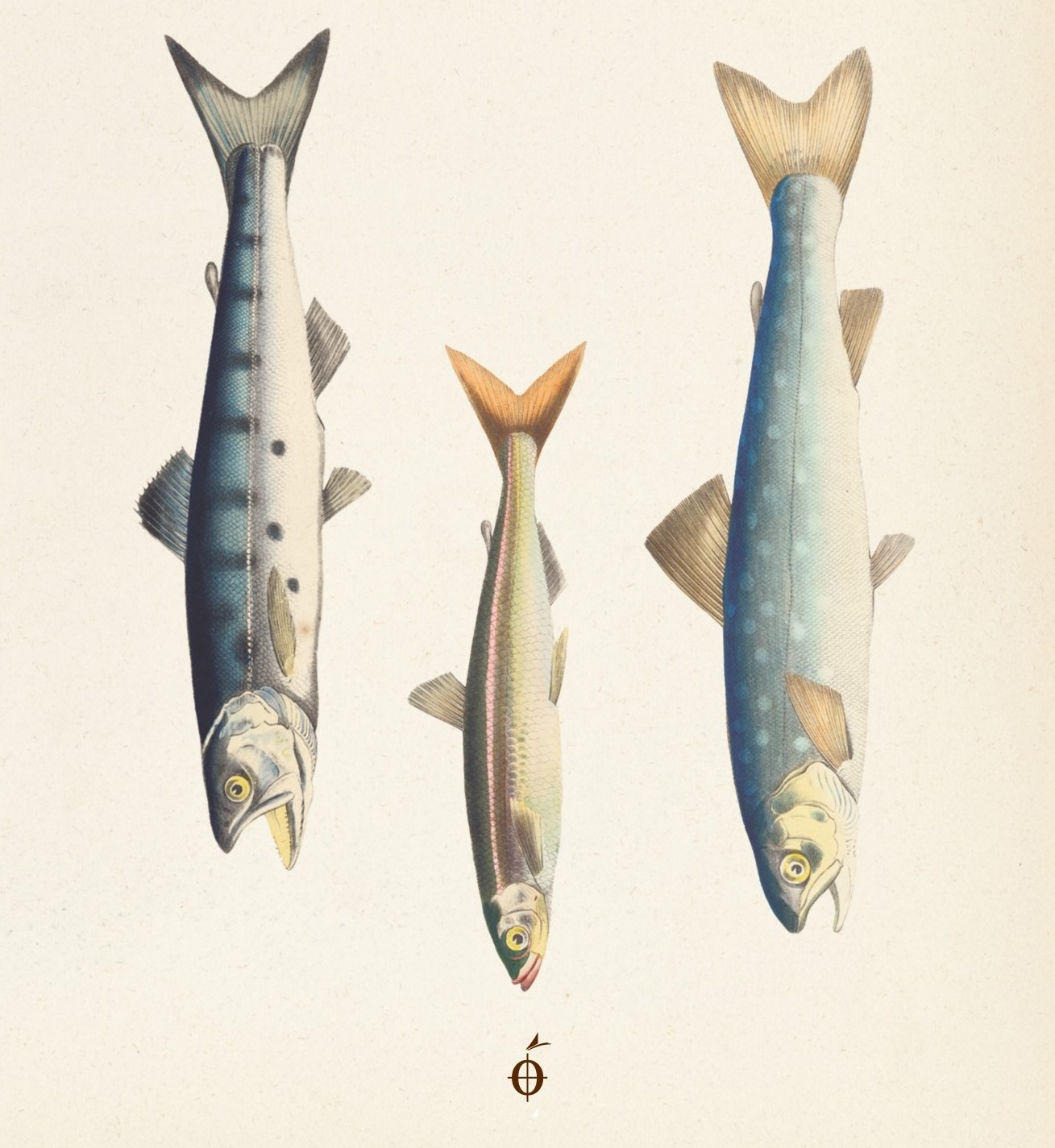
  • Kinship of mentality through the protagonists regularly speaking in metaphors and allusions to fish, the sea, boats and all things water
  • Repeated appearances of items or characters to different characters, e.g. le livre à trois têtes, Garifuna maps and a homeless man sporting a maple leaf hat

He also builds these up to an infuriating level; for example, we go from Noah whizzing past Joyce on a bike to the two of them chatting at the airport along with Noah’s son; I was left stunned and incredulous that nothing had come of this opportunity. My reaction was such because all the little episodes of chance and coincidence, that could easily go unnoticed, make us as readers think that there is a deeper meaning to randomness and fate. Surely there must be, if it is woven so much and so easily into everyday life.

So then the awaited day was upon me, the day of reading the last chapter. Finally, the end to this tense build-up and the agonising near misses. You can imagine my horror therefore when the novel just ended; the protagonists never discover their familial links, and they all continue to lead their own lives, running parallel and only momentarily bumping into each other, but never intertwining. Dickner has cleverly constructed a world in which we believe in chance and coincidence; indeed, despite the actual ending being the more realistic outcome given the circumstances, we as readers are more suspicious of the fact that there was no grand reunion than if there had been one.

I have been thinking about this novel and its ending since I finished reading it a couple of months back. Even though I know Dickner has minutely engineered every event in his book, meaning there is no real chance and coincidence at all, I still can’t help but believe in this world he has constructed. If you fancy feeling extremely frustrated, have a read of Nikolski, either in the original French, or in the English translation.

Happy (or in this case infuriating) reading,

Imo x

Categories
English literature

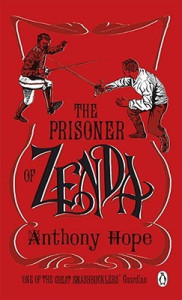
ImoReads… ‘The Prisoner of Zenda’ (1894) by Anthony Hope

Blog 4

“For my part, if a man must needs be a knave I would have him a debonair knave… It makes your sin no worse as I conceive, to do it à la mode and stylishly”

The Prisoner of Zenda  is without a doubt one of my favourite adventure novels. There is just something charming about this Victorian escapade; it’s got the setting, it’s got the action, it’s got the romance, it’s got the glory. 

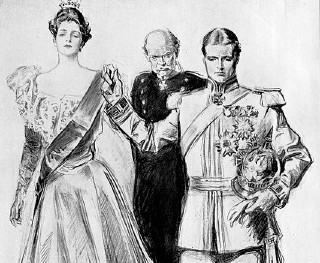
The story centres on the English gentleman and loveable rogue Rudolf Rassendyll and his trip to the fictional central European country of Ruritania. He happens to arrive on the eve of the king’s coronation, and he just so happens to be the king’s distant cousin, namesake, and spitting image replica. When the king’s dastardly younger half-brother, the Duke Michael of Strelsau, drugs and imprisons the king in the Tower of Zenda in a bid to take the throne, the king’s trusty attendants come up with a brilliant yet risky plan. Colonel Sapt and Fritz von Tarlenheim enlist Rassendyll to play the part of the king until they can rescue the real deal. What follows are swords-drawn encounters with Michael’s henchmen, plots and counterplots from both sides, and a jolly good adventure.

Of course, the story would not be complete without a little romance; Rudolf enjoys playing the king although he is committed to the plan to free him, but what he did not expect was to fall in love with the king’s fiancé, the princess Flavia. With the help of the Duke’s mistress Antoinette de Mauban, our trio of heroes manage to outwit the Duke and his henchmen to free the king, but Rudolf and Flavia, both bound by duty, must sadly part at the end.

What is great about this plot is that apart from the small group of people who knew about the identity of the ‘false king’ (which eventually includes Flavia herself), the rest of the world remains none the wiser. It is amazing how such a gamble paid off and gives the reader a sense of satisfaction by being in on this great secret. When I imagine Hope’s country of Ruritania, I see a Germanic-inspired nation with fairy-tale castles and a black forest, which only add to the adventure. If you like a good urgent gallop through such scenery, then thanks to The Prisoner of Zenda you can eat your heart out.

Rudolf Rassendyll is undoubtedly my favourite character, and I am glad Hope made him the first-person narrator. Although he already lives a life of leisure being from an aristocratic background, even he admits being tempted to usurp the Ruritanian throne forever. Indeed, when offered a kingdom who wouldn’t say yes? It is this honesty plus his frank humour and in the end stronger sense of morality and bravery that make Rudolf a king by nature, if not truly by right. You can’t help but root for him, so whenever there is a showdown between him and one of the Duke’s henchmen – Rupert of Hentzau in particular – you can’t put the book down until you know the outcome. (This explains why I read the book in two days). He risks his life, gives up his crown and his true love for his distant cousin, and this is the truest picture of Victorian heroism.

Are you thinking that ‘Ruritania’ sounds familiar? Hope’s novel had such an impact that it kickstarted the genre of ‘Ruritanian romance’ in literature, theatre and film. That is, stories set in a fictional central or eastern European country that are, like The Prisoner of Zenda, swashbuckling tales of adventure and intrigue, with the themes of romance and honour being the most prominent and focusing exclusively on the ruling classes. In general usage, Ruritania is a placeholder country name used to make points in academic or political discussion. The impact of Hope’s novel is undeniably far-reaching.

I enjoyed my trip to Ruritania so much that I will shortly be returning via the sequel, Rupert of Hentzau (1898). If you want to be taken on an exciting adventure that you just can’t find in today’s world, take a leap back in time to the nineteenth century yourself and be dazzled by Rudolf, Ruritania and romance.

Happy reading,

Imo x
Categories
Antiquity

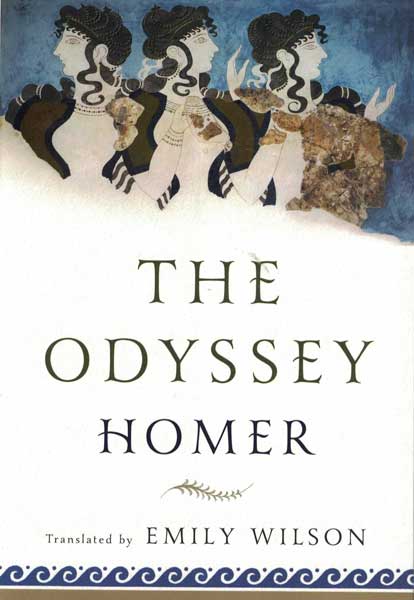
ImoReads… ‘The Odyssey’ (c.700BC) by Homer, translated by Emily Wilson

Blog 3

“The gods sat down for council, with the great

Thunderlord Zeus. Athena was concerned

about Odysseus’ many troubles,

trapped by the nymph Calypso in her house.”

The Guardian  culture writer Charlotte Higgins calls Emily Wilson’s translation of Homer’s The Odyssey ‘a cultural landmark’ and believes it will ‘change the way the poem is read in English’. I have to agree with her wholeheartedly on this point.

This epic poem, one of the longest in recorded history, has been translated many times including over 60 attempts into English. And yet, Wilson’s version is the first to be done by a woman. I feel privileged that this is the first version I got to read; I thoroughly enjoyed it and found it enchanting on so many levels. 

The Odyssey tells the story of Odysseus’ decade-long struggle to return home to Ithaca after the Trojan War. En route he faces the wrath of many gods and faces off against mythical creatures such as sirens and cyclops. All the while his wife Penelope and son Telemachus are in a constant state of anxiety trying to ward off the mass of suitors vying for Odysseus’ title, home, riches and wife. The poem ends with Odysseus’ return and glorious fight to take back Ithaca from the suitors.

Wilson somehow manages to style the language as crisp and comprehensible whilst also still evoking a captivating sense of antiquity. I think one of the key earmarks of this is the use of epithets. Some of my favourite character examples are ‘sharp-eyed Athena’ and ‘crafty Odysseus’. These would not be common terms to describe someone today, and yet they are still perfectly understandable. Furthermore, the island of Pylos is always described as ‘sandy Pylos’, and the goddess Athena is always pouring ‘sweet sleep’ onto the eyes of the mortal characters. There is no opulence in Wilson’s epic voice; these are just simple adjectives, and yet they accentuate that memorable, rhythmic quality of the ancient bardic tradition of oral poetry that Homer used as inspiration for The Odyssey.

I love also that Wilson has chosen to write in the English epic metre of iambic pentameter. Immediately I was drawn in by the enchanting, methodical rhythm of the poem; it somehow makes you feel as if you are watching the events unfold first-hand but also like you are hearing a song about a tale that happened a long time ago.

Although I am glad this is the first version I have read, I feel I do it a slight disservice by having not read any of the previous male-translated versions, because it is harder for me to appreciate how Wilson overcomes certain masculine conventions. For example, as I read it, one of Odysseus’ key characteristics that I picked up on was his duplicity. He is a hero nonetheless, but he has a talent for cunning and self-preservation. He is the only member of his crew to return to Ithaca alive and according to Higgins, Wilson’s translation that ‘he failed to keep them safe’ is the truest translation of the ancient Greek. She compares this to two male versions which translate this line as ‘he could not save them from disaster’ and ‘but so their fates he could not overcome’. Wilson does not let Odysseus off the hook quite so easily and reveals him for what he is.

So, one of my upcoming assignments will be to read a different version of The Odyssey to compare it to this one. However, I know I will be hard-pressed to find one better than Wilson’s. I would absolutely recommend this work if you want an enchanting introduction to the myths and legends of Ancient Greece; it is as riveting as it is prestigious. Next on my list of ancient classics? Homer’s The Iliad and Ovid’s Metamorphoses (Emily Wilson if you’re reading, please gift us with translations of these too…)

Happy reading,

Imo x
Categories
English literature

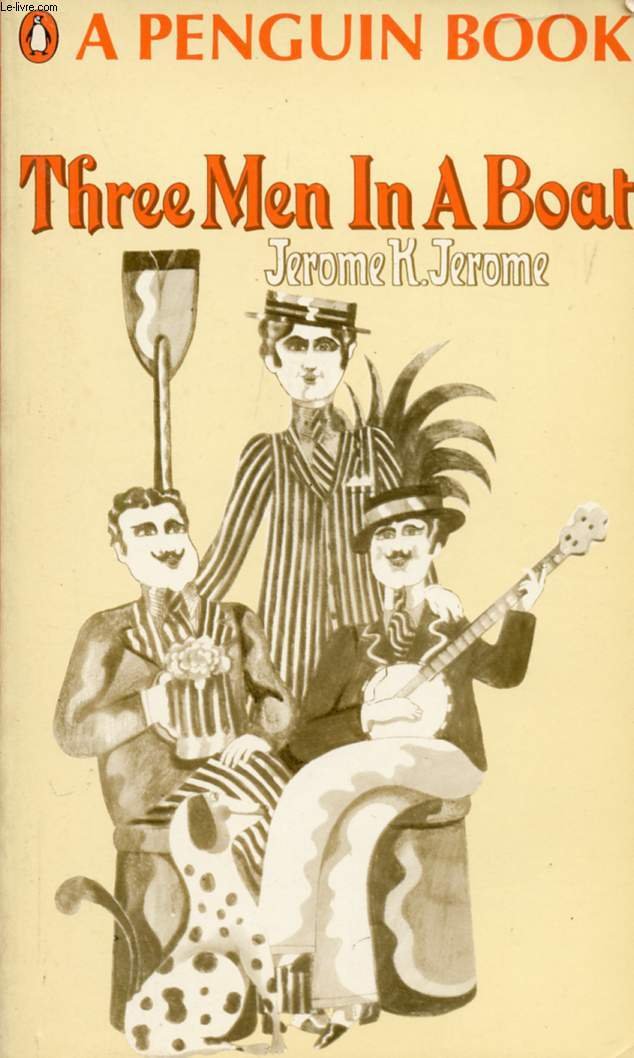
ImoReads… ‘Three Men in a Boat’ (1889) by Jerome K. Jerome

Blog 2

“What the eye does not see, the stomach does not get upset over”

I thought I would kick-start my blog by discussing one of English literature’s most enduringly funny novels. Written in 1889, Jerome K. Jerome concocted the perfect comic tale to match the trend for recreational boating in the late Victorian era. I for one am very glad that this work, originally meant to be a travel piece for Home Chimes magazine, morphed into the hilarious escapades of three men holidaying in a boat. In the words of Jerome himself, ‘nothing else seemed right’.

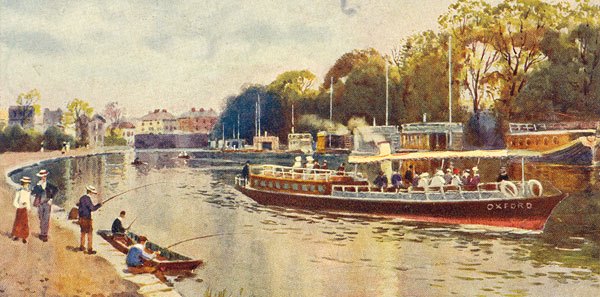
The general premise of the novel is three City clerks – J. (the narrator), George and Harris – taking a two-week boating trip along the Thames from Kingston to Oxford and back again (which is particularly enjoyable for me to read as a Kingston-dweller). We cannot, of course, forget their canine companion Montmorency, not least because the subtitle of the book commands us not to (to say nothing of the Dog!). What follows is a humorous voyage of mishaps, both on this trip and through anecdotes that spring to the narrator’s mind along the way. 

What I enjoy the most about Jerome’s novel is its refreshing triviality. Unlike a lot of Victorian novels, there are no devastating plot twists or stories of unrequited love; like the boat, the novel trundles along, and is at once about lots of things and about nothing at all, and that’s where its charm derives. The most dramatic things to happen are perhaps one of the party falling into the river, or getting lost in Hampton Court Maze, or even that (shock horror!) there are no inns to stay in at a certain point of the trip. Such novels are sometimes overlooked in the rankings of great literature, but I think they are uniquely brilliant when they can still make us laugh over 100 years after publication.

Indeed, Jerome’s use of quintessentially English humour is such that an English audience can still very much relate and laugh along. For example, in one sentence he manages to sum up the immortal English outlook on the weather. That is, ‘but who wants to be foretold the weather? It is bad enough when it comes, without our having the misery of knowing about it beforehand’. If this does not define Englishness I don’t know what does. 

However, for me, one particularly funny incident stands out. After a long hard day on the river, our three “hangry” gentlemen despair that there is no mustard to go with their beef. However it is deemed that ‘life was worth living after all’ when they discover a tin of pineapple. Sadly for them (although happily for us), there is no tin-opener to be found, so what ensues is ‘a fearful battle’ between the men and the tin. A hilarious sequence of imaginative attempts to open the tin to no avail complete with extreme frustration from the protagonists provides an overwhelmingly relatable comic thread inspired by ordinary everyday inconveniences. 

Contributed to by the chuckle-worthy bumbling about of our three men in a boat and their beautifully eloquent nineteenth-century language, Jerome paints quite the picture of nonchalant, carefree joy and timeless Victorian farce. The fact that Three Men in a Boat sold staggeringly well at the time and has never gone out of print since it first appeared in 1889 suggests that the British reading public wholeheartedly agrees with my assessment.

If you’re looking for a light-hearted summer read to enjoy while sunbathing in your back garden (or, indeed, Thames-side) then Three Men in a Boat is the one for you. To really get into the spirit I would advise snacking on beef and mustard and/or tinned pineapple while reading… 

Happy reading!

Imo x

Categories
Uncategorized

What will you read on ImoReads?

Blog Nº1

Be yourself; Everyone else is already taken.

— Oscar Wilde.

Hello and welcome to my blog, ImoReads! My name is Imogen, I am 23 years old and as is hopefully apparent, I love to read.

My love of reading developed in my early childhood and without a doubt I have my parents to thank for it; I am forever indebted to them for reading me books every night before bed and encouraging me to read works of literature myself.

As a result of this, I have developed quite the repertoire of literature read over the years and I want to use this blog to share my thoughts and opinions on those works that have stood out to me particularly.

If you’re interested in the great literary classics, both of England and the world respectively, then this is the blog for you (hooray!). It is not limited to any century in particular – I welcome great works from any time period. However, I would say that there will be particular emphasis on the nineteenth century (think Dickens, Wilde and Twain) because I have a distinct historical interest in this era. Fundamentally though, you can expect analyses of works stretching from Ancient Greece all the way through to the twenty-first century. 🙂

To any French-speakers or Francophiles out there – enchanté because as a recent graduate of history and French, I will also be sharing my thoughts on works of francophone literature that I have enjoyed over the years.

I want to spread the message that actually, reading is COOL and everyone should do it! It is possible to strike a happy medium between a love of classic literature and the tech-savvy world we now live in, even for the apparently ‘disinterested’ youth of today. If you love to read, be proud of it! It’s an educational, thought-provoking, immersive activity that can teach us so much about society, history, and ourselves.

So that’s it, that is the premise of ImoReads. Expect a mixture of analysis, reviews, personal reflections and recommendations. Expect threads by author, genre, and time period. And finally, expect an honest, enthusiastic and creative response to some of the world’s finest literature. 🙂

Happy reading,

Imo x