Categories
English literature

ImoReads… ‘A Handful of Dust’ (1934) by Evelyn Waugh

Blog 11

“A wonderfully congenial group who live by a unique set of social standards. According to their rules, any sin is acceptable provided it is carried off in good taste.” 
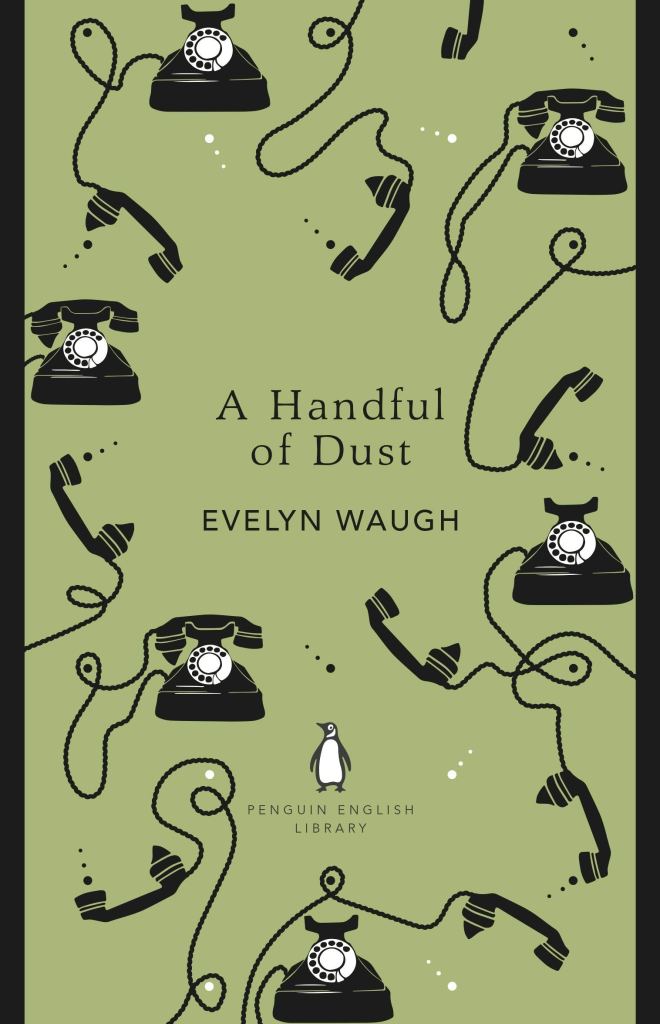
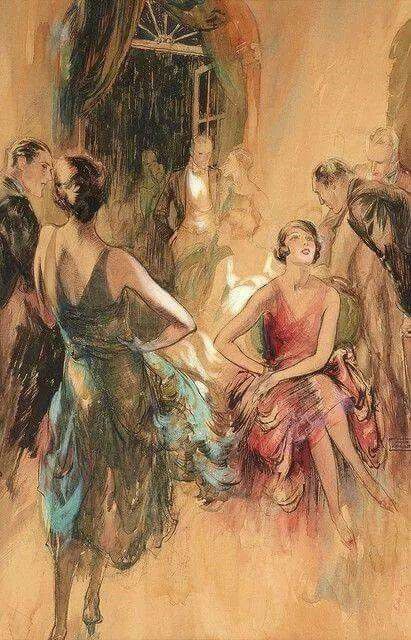
A Handful of Dust is the first book I have read by Evelyn Waugh, and it definitely won’t be the last. This novel is a bitingly funny snapshot of the perceived shallow and reckless nature of society circles in 1930s England. Waugh was a perceptive writer who often used experiences of those he met to humorous effect, so after reading this novel I can only wonder at the sort of people that he must have come across day to day. Lingering elements of Edwardian customs and norms are clear throughout, and it is always a joy to experience the eloquence of 1930s middle-class language.

The story focuses on Tony Last and his wife Lady Brenda, who reside in Tony’s pride and joy, the gothic monstrosity that is Hetton Abbey, out in the countryside. They have a young son named John Andrew. So wrapped up in living the life of a country Squire, Tony is oblivious to his wife’s boredom, so much so that he happily lets her “mug him off” by carrying on with an exceedingly shallow, dull young socialite named John Beaver in London – an aimless affair that everyone seems to know about except Tony. From here on out we witness the slow disintegration of their marriage, which reveals the superficial nature of all their friends, their wants, their attitudes and society in general.

This may sound somewhat depressing, but Waugh has interweaved subtle and not-so-subtle elements of wry, cynical humour throughout the text and this creates a satisfying level of dramatic irony for the reader. That is, we can see how shallow everything and everyone is, but the characters themselves are completely oblivious to their own superficiality. 

One example of Waugh’s humour is the names of certain characters. For example, one of Brenda’s friends is modestly named ‘Lady Cockpurse’. This makes the following exchange between Tony and his son John Andrew distinctly more amusing:

“Daddy, what does Lady Cockpurse eat?”

“Oh, nuts and things”

“Nuts and what things?”

“Oh, different kinds of nuts.”

I think Waugh has bestowed Tony and Brenda with the surname Last as they both end up rather unfortunate (finishing last if you will) by the end of the novel. Although Tony was perhaps not the most attentive husband, I found him to be a pretty harmless character. Brenda on the other hand I found to be extremely shallow, cruel and careless. However, when their son dies in a riding accident and both of them are fundamentally indifferent, their true apathetic, insincere natures are exposed.

Perhaps as karma for this, Waugh is not kind to either of them in the end. Although it is Brenda who brings down their marriage through infidelity, she is still ballsy enough to ask for an extortionate allowance per year from Tony as a condition of divorce. It is therefore extremely satisfying when he refuses her this privilege. Unsurprisingly, John Beaver loses interest in marrying or even having anything to do with Brenda when the prospect of wealth dries out, so he swans off to America leaving Brenda somewhat destitute and reliant on the “benevolent nature” of her circle of friends.

Tony on the other hand sets out on an ill-fated exploration mission to Brazil with the incompetent Dr Messinger. Abandoned by their guides in the middle of the rainforest, Tony falls ill and Dr Messinger comes to an untimely end at the hands of a waterfall. Waugh gives us some hope for Tony when he is found and nursed back to health by British Guianan gone rogue Mr Todd, but the atmosphere quickly becomes menacing when Tony is not allowed to leave and is condemned to read the complete collection of Dickens to the illiterate Mr Todd indefinitely. Presumed dead, Hetton is handed over to Tony’s cousins (known as the ‘impoverished Lasts’), and Brenda marries Tony’s friend Jock Grant-Menzies.

I am dissatisfied with this ending as I think Brenda should have received a worse fate than Tony, however I think it demonstrates Waugh’s move from bitter humour to disillusioned realism after the death of John Andrew. As Waugh muses himself in his letters, the theme of A Handful of Dust is a Gothic man in the hands of savages – first Brenda and the others in society, and then the real ones out in Brazil. Therefore, this is the only way the novel could have ended to see this theme through. 

This novel is absolutely worth the read for the level of sheer disbelief you will feel when experiencing the indifference and superficiality of Waugh’s characters, as well as for its sardonic humour. One thing that’s certain is that you will come away feeling thankful that you are not Brenda or Tony Last.

Happy reading,

Imo x

Categories
English literature nineteenth century

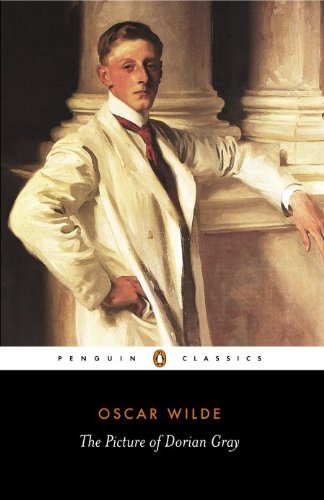
ImoReads… ‘The Picture of Dorian Gray’ (1890) by Oscar Wilde

Blog 9

“The horror, whatever it was, had not yet entirely spoiled that marvellous beauty”

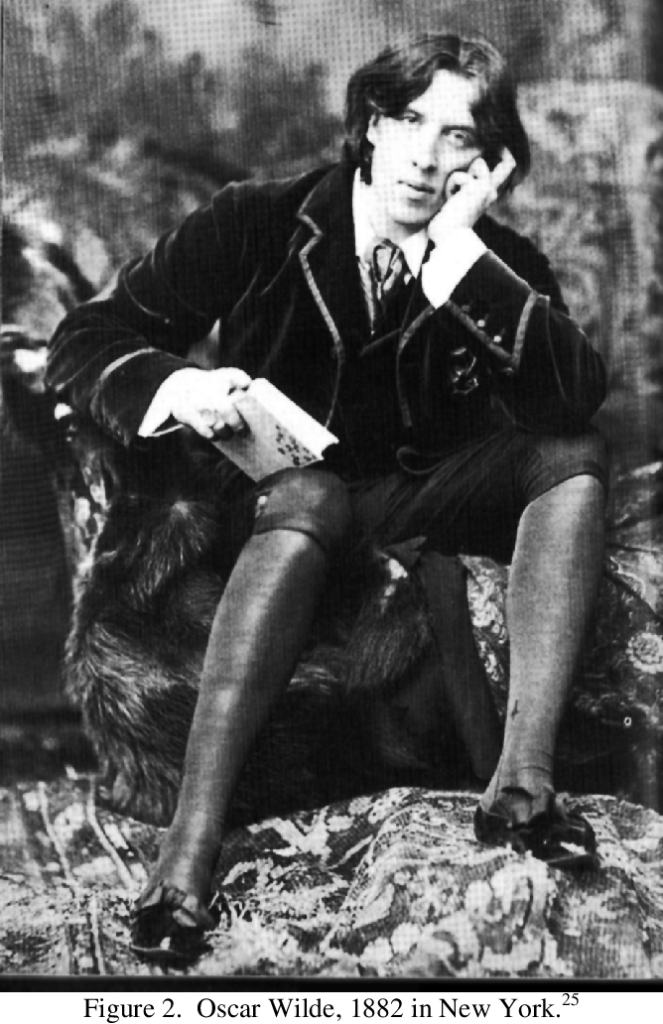
There is and always will be a soft spot in my heart for Oscar Wilde, certainly one of the most provocative literary figures of the nineteenth century. After going to a production of the brilliantThe Importance of Being Earnest (blog coming soon) with my mum some years ago, I became infatuated and have since read all his short stories, plays, essays and this, his only novel. He was even the subject of my 5000-word Extended Project Qualification (EPQ) undertaken alongside my A-Levels, in which I tasked myself with the question, ‘to what extent was the Victorian press responsible for Oscar Wilde’s celebrity?’ Research for this took me to the National Archives, where I felt privileged to read his handwritten letters from his time in prison. Humbly then, I consider myself to be the epitome of the Wildean ‘fangirl’ if such a thing exists. 

As part of my EPQ I examined the blatant homoeroticism running through The Picture of Dorian Gray, as it was used as evidence against Wilde in his sensationalised trial for ‘gross indecency with other men’ in 1895, a proceeding which certainly elevated his celebrity. Therefore, I am going to use this blog to discuss other key themes in the text such as Gothicism and aestheticism.

This novel is an ill-fated tale of moral decline and philosophic instruction for our unfortunate protagonist, the young aristocrat Dorian Gray. Basil Hallward, Dorian’s close friend and a professional artist, paints a portrait of Dorian because he is completely infatuated by his youth and extraordinary beauty. At first Dorian is delighted with the painting; it only dawns on him that his beauty – so perfectly preserved on the canvas – will fade with age after Basil’s amoral friend, Lord Henry Wotton, informs him of the fact. So enamoured with his own radiant portrait, Dorian exchanges his soul for eternal youth and beauty in an exquisitely Faustian twist. As a result, he is drawn into a corrupt and sinful double life, indulging unspeakable desires in secret while maintaining a gentlemanly façade to polite society. Only the painting bears evidence of his decadence while he himself retains his youthful innocence and beauty.

The lurking presence of the painting that becomes harder and harder for Dorian to ignore is one of my favourite gothic elements in the novel. The physical embodiment of his deal with the devil, the painting becomes more and more hideous each time Dorian does something terrible; as well as ageing repulsively, there is a chilling cruelty in the eyes and mouth of the painted Dorian that grows increasingly and unnervingly noticeable as the novel progresses. Locked away in a dark dusty room high up in the house, the strange horror of the painting is alike to a nightmare you can’t quite shake off. 

And yet, Dorian is not too concerned with the degradation of the painting at first. He is too busy engaging in debauched delights; think opium dens and licentious behaviour in the darkest corners of London.

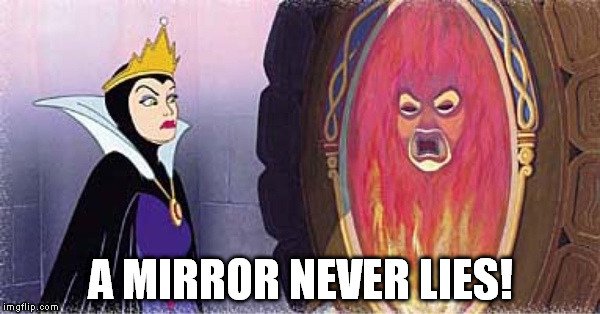
It is only when his manner and behaviour become too cruel for him to ignore – because indeed the soul can decay in more ways than one – that the painting and what he has done begins to weigh down upon him. In this way, the painting is a motif for an inverted magic mirror. It allows him to live for hedonistic pleasure for a time, but always reflects the ugly truth of his crimes back to him no matter how much he wishes it not to.

I find this very interesting in the context of Wilde’s ‘art for art’s sake’ aesthetic philosophy. Scathingly received by critics at the time for its homoeroticism and allusions to sins that were surely offensive to stiff Victorian moralities, Wilde fiercely defended The Picture of Dorian Gray. In a now infamous aphoristic preface to the non-censored 1891 edition, Wilde vigorously defends art for art’s sake. It is ironic that, although he was referring to the art of his writing, the idea of art for art’s sake is completely vilified in this story. That is, it turns out that the ‘work of art’ that is Dorian should have stayed on the canvas. His pursuit of eternal youth and beauty is his ruination, and it hurts many characters along the way. Wilde’s moral lesson here is that being good trumps looking good; a virtuous soul brings more happiness than beauty, which should only ever be ephemeral.

Dark though this tale is, I must laud its moments of comic relief, provided by Lord Henry ‘Harry’ Wotton. You cannot help but like this gentlemanly rogue despite his amorality due to the Wildean wit bestowed upon him. Many of Wilde’s most famous epigrams come from The Picture of Dorian Gray. An epigram is a phrase that expresses an idea in an interesting, clever, and surprisingly satirical way. Wilde always says the exact opposite of what you are expecting him to say. For example, Harry is of the opinion that ‘it is only shallow people who do not care about appearances’ which is decidedly not how that phrase is usually said. Wilde’s epigrams also turn out to be well-observed and pretty much true, such as in another golden example from Harry; ‘“It is perfectly monstrous”, he said, at last, “the way people go about nowadays saying things against one behind one’s back that are absolutely and entirely true”’. Harry’s enduring friendship with Dorian means that fortunately, readers are exposed to many a memorable epigram over the thirteen chapters.

So then, The Picture of Dorian Gray is a must-read Victorian novel, not only for its thought-provoking themes and intelligent narrative, but for its distinctly Wildean touch. An interesting question to ask yourself when reading it is, who is really to blame for the outcome of the novel? Is it Basil for painting the picture? Is it Harry for targeting Dorian with his bad influence and amoral philosophies? Or is it Dorian himself for enacting his fateful deal? It’s a moral conundrum but I’ll leave that for you to decide…

Happy reading,

Imo x