“Moonlight turns even the most civilised man into a primitive.”
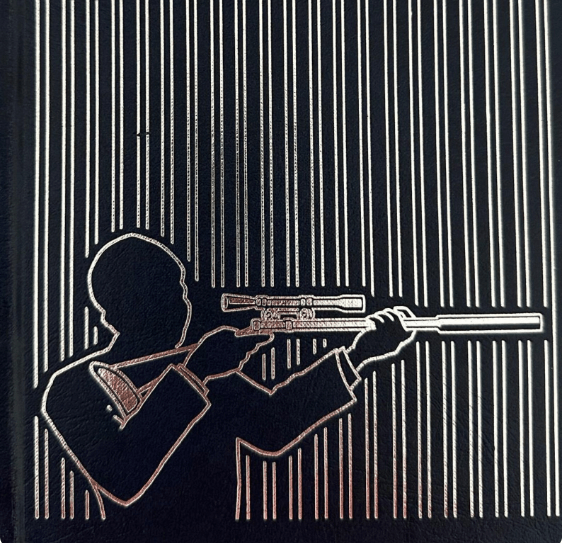
The Day of the Jackal has all the hallmarks of a classic thriller; a mysterious political organisation, the enigmatic outsider, a seemingly impossible task, a peek into the shady underworld, events playing out across the continent and more. It also manages to interweave real historical events seamlessly into a fictional narrative, making for a riveting read.
Following a botched attempt on French president Charles De Gaulle’s life in 1963 (for which Forsyth was actually present at), the novel’s premise involves dissident paramilitary group the OAS who remain committed to seeing through the assassination. OAS members have lost faith in De Gaulle and France due to the relinquishing of Algeria as a colony in 1962, but are struggling to work out how to carry out the assassination following multiple failed attempts and increasingly stringent security measures around the president.
Enter, ‘the Jackal’, a mysterious Englishman hired for the job. Always cool, professional, unsettlingly unreadable, he remains committed to the task at hand despite the French police closing in on him as the novel reaches its climactic moment.
The Jackal is a compelling character. He goes about his preparations for the assassination with clinical efficiency, yet takes time to indulge in the finer things in life while he’s at it. Swanning across Europe, he can present outwardly as a respectable Englishman but beneath lies a potent combination of brutality and fastidiousness, making him the ideal candidate for an undertaking of this magnitude. In one chapter, we see him wandering between Parisian cafes to vet potential vantage points and shooting angles before stopping off for coffee and a croissant.
The Jackal’s controlled detachment comes through in Forsyth’s writing style. He completed the book in little over a month and used his experience as a foreign correspondent with Reuters to really hone the reporting style central to the narrative’s impact.
A slow build to a gripping finale, The Day of the Jackal is the quintessential political thriller.
“We don’t know others. They are an enigma. We can’t know them, especially those we are most intimate with, because habit blurs us and hope blinds us with truth.”
The Guardian describes The Little Red Chairs as ‘a chilling masterpiece’, and after reading it I’m inclined to agree. In terms of style and content it is unique, making for a compelling and thought-provoking read.
The Little Red Chairs is set in the small fictional Irish village of Cloonoila where the community is tight-knit. It is here we meet Balkan war criminal Dr Vlad, who hides out in the village posing as a holistic healer and sex therapist. The story is told from the perspectives of the women he meets. One woman in particular, Fidelma, is drawn to Dr Vlad. Having suffered two miscarriages with her husband, she hopes Dr Vlad can cure her. Stuck in a lonely and somewhat suffocating marriage, Fidelma embarks on an affair with Dr Vlad and falls pregnant, which unfortunately coincides with Dr Vlad’s arrest and the revelation of his true identity to herself and the rest of the shocked community. The events that follow force us to confront morality, humanity and darkness in this novel that is at once uncomfortable intimate as well as daring and far-reaching.
Dr Vlad is loosely based on the real life ‘Butcher of Bosnia’ Radovan Karadžić, who is currently serving a life sentence after being convicted of genocide, crimes against humanity and war crimes by the International Criminal Tribunal for the former Yugoslavia after the Bosnian War. O’Brien has cleverly weaved him into the novel as Dr Vlad, the same way that she seamlessly swaps between tenses and character headspaces. All of this culminates in a distinctive narrative style. It can take some getting used to but it’s worth it for the impact the book will have on you.
The Little Red Chairs is an original novel which will leave you pondering world events, day-to-day struggles and pressing moral questions for some time after. Astonishing when you consider that O’Brien was 85 at the time of publication. A must-read!
Lord Marshmoreton: “I wish I could get you to see my point of view.”
George Bevan: “I do see your point of view. But dimly. You see, my own takes up such a lot of the foreground.”
I was given a lovely edition of this book for Christmas and it proved to be a delightful first foray into the world of P.G. Wodehouse. The speed at which I finished reading A Damsel in Distress is testament to how good the book is, but, as with all great books, I also found myself disappointed I wouldn’t get to experience reading it for the first time again.
The novel begins with a chance encounter between Lady Maud Marsh and American composer George Bevan in London. Maud is looking for another American, Geoffrey Raymond, who she met the previous year. Grappling with her parents’ disapproval of this match, Maud’s visit is on the sly and she enlists the help of a bemused George when she spots her brother Percy, who mistakes George for Geoffrey.
What follows is an amusing set of events at Maud’s family home, Belpher Castle, wherein a complicated network of friendships, romantic entanglements and household whisperings make for a delightfully funny read.
One of my favourite comic tropes in both theatre and fiction is the use of mistaken identities. A centuries-old device often used by Shakespeare, it never fails to bring a smile and a laugh to the reader. A Damsel in Distress is littered with examples of mistaken identity, some accidental and some rooted in purposeful deception. Wodehouse amplifies this technique by juxtaposing the drama between Belpher Castle’s residents with the presumptions of the ever-watchful household staff, always keeping the reader as the only one with the full picture of knowledge.
Wodehouse is known as one of the most accomplished and widely read humourists of the twentieth century but this was my first experience of reading one of his novels. Even in non-climactic moments, his writing style and narration had me grinning with amusement throughout. The humour is so quintessentially English that I wonder whether translations into foreign languages can really do his words justice.
I can now call myself a Wodehouse fan and since reading A Damsel in Distress I have acquired two more of his books. While it might be a bit ambitious to try and read his whole catalogue (which contains over ninety books, forty plays and two hundred short stories!) I look forward to delving into many more of his comic escapades.
“A lifetime of quiet watchfulness had convinced her that the truth about people was seldom to be found in the things they freely admitted. There was always more below the surface than above.”
My mum bought me this book for Christmas after reading it herself – compelled to recommend it to several others as well as myself, I knew I was in for a good read. I found Small Pleasures to be quietly humorous as well as gut-wrenchingly sad, and thought it revealed interesting insights into everyday life in the 1950s.
The novel focuses on Jean Swinney. Approaching 40, her hopes of achieving fulfilment in life are swiftly fading. Her time is taken up with the mundane routine of everyday life – namely caring for her live-in suffocatingly dependent mother and working at the local paper on content mostly related to housekeeping. With no social, romantic or family life to speak of, Jean takes her relief from her repetitive suburban existence in small pleasures – the first cigarette of the day, a glass of sherry before Sunday lunch.
Everything changes when Jean gets a new assignment; an investigative piece on a local woman (Gretchen Tilbury) who claims to have given birth to her now ten-year-old daughter Margaret without any involvement from a man. Jean conscientiously tries to substantiate Gretchen’s story by delving into her past and having medical tests done on both mother and daughter, all the while becoming closer to Gretchen, Margaret and Gretchen’s husband Howard.
Something that struck me about this novel is that the life Jean is living is one that many people probably found themselves stuck in during the post-war period. To the twenty-first century reader, the food eaten by Jean and her mother is lamentable. Livers and hearts and things in tins that really shouldn’t be. When paired with their rather drab furnishings & clothing attire, lack of treats and unwillingness to spend any money on anything, you do get a real sense of that continuing aftereffect of the war.
It is why you become very easily invested in the unexpected romance which blossoms between Jean and Howard as it brings both of them a new lease of life. While his marriage to Gretchen is more of a companionship anyway, you feel very pleased that these two unprepossessing individuals have found love in each other when they both previously felt that all hope was lost in that regard. As Jean becomes more and more intwined with the Tilburys – becoming friends with Gretchen, falling in love with Howard, becoming very fond of Margaret – her investigation into the so-called putative birth becomes complex and arguably, somewhat morally compromised.
Small Pleasures is a real page-turner; the plot line of the virgin birth investigation aligns seamlessly with that of Jean and Howard, both of which reach a particularly anguishing conclusion. I would highly recommend this novel – you will find yourself getting sucked in immediately and thinking about it for days afterwards.
“From old habit, unconsciously he thanked God that he no longer believed in Him.”
As soon as I began reading Of Human Bondage, I knew I had found something special. Often cited as Maugham’s masterpiece, this semi autobiographical novel might be the most important English bildungsroman since David Copperfield. It’s a novel rich in culture and intellect as well as taking us through tortured relationships and intense self-criticism. For me, Of Human Bondage has achieved a place on the list of books that I wish I could read again for the first time.
The novel follows protagonist Philip Carey, an orphan raised by his clergyman uncle and kindly aunt. Like Maugham, Philip is afflicted with a clubfoot. As a boy, Philip is chafing under the monotony of Victorian vicarage life and is desperate for experience, love and a miracle cure for his deformity. We follow him through boarding school where he loses faith in God when there is no improvement to his foot. He then escapes to study in Heidelberg before enjoying a brief period in Paris trying to make it as an artist. On his return to London, Philip encounters Mildred the waitress for the first time, and here begins the masochistic affair which almost ruins him.
Maugham always maintained that Of Human Bondage is “not an autobiography, but an autobiographical novel”, though he certainly poured a lot of himself into the character of Philip, making him an authentic, interesting character to follow. He is hungry for love, sexual encounters and is at times filled with an acute self-loathing, all of which young people today could relate to on some level. Astonishingly, Maugham first wrote the manuscript aged just 23, though it was not published until later on. Of Human Bondage is bursting with real emotion though some of the events are imagined or borrowed from elsewhere. Some time later Maugham said of writing the novel, “I found myself free from the pains and unhappy recollections that had tormented me”. The title of the book, borrowed from Spinoza’s Ethics, has meaning both for the author and for the protagonist then. Philip finds himself bound and then freed in many contexts throughout the novel and as the reader you find yourself rooting for him at each turn.
My favourite part of the novel is when Philip is living in Paris and attending art school. He is there during a vibrant period of French art, literature and culture and I enjoyed experiencing this vicariously through him. Though he doesn’t have much money, he and his group of friends engage in Parisian life as much as they can, have heated idealistic intellectual discussions and try their best with their artistic endeavours. Philip and his companions are just young people trying to make it in the world as best they can, with this astonishing backdrop of Paris at the turn of the century.
In fact, during the many strained episodes of the Philip and Mildred saga, I wished on Philip’s behalf that he had never left Paris. Given the sensitivities of the time at which the novel was written, the intimate details of the relationship are left off the pages of Of Human Bondage, but the tension, strife and mistreatment come through clearly enough through the pair’s other interactions. Mildred is an unextraordinary woman who manages to take advantage of Philip’s naiveté and desperation for love and acceptance. At many moments, the reader feels compelled to shake Philip to make him come to his senses. The amount of time, money and self-flagellating thoughts he wastes on the manipulative, ungrateful Mildred is painful to observe. Though it should be acknowledged, at several moments in the novel Philip describes Mildred in a way that is extremely misogynistic, making us question whether his lack of experience and understanding of women in general has led him to subconsciously hate them a little bit. Whether this is just Philip’s voice or Maugham’s voice remains to be seen. When Philip is free from Mildred for the last time, it is certainly a moment to rejoice.
I would absolutely recommend this novel to anyone interested in following one man’s story through it’s many interesting chapters – travel across Europe, experience growing pains and indulge in some art and culture.
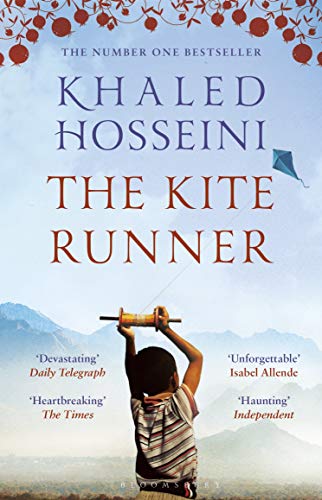
I am so glad that this blog has given me an excuse to re-read The Kite Runner, which is in my opinion one of the best books written so far in the 21st century. Its exploration of the strength and boundaries of friendship and familial ties against a backdrop of war, loss and regret makes for an extremely captivating and moving read.
The novel begins in vibrant and thriving 1970s Afghanistan, and is told from the perspective of Amir, then a young boy. He is the son of a vivacious, well-liked and well-off merchant and they live together in the wealthy Kabul district of Wazir Akbar Khan. He and his best friend Hassan, the son of his father’s servant, do everything together and want more than anything to win the local kite-fighting tournament. However, neither can predict the terrible fate that befalls Hassan that afternoon, completely shattering their lives. The subsequent invasion of Afghanistan by Russia means that Amir and his father are forced to flee to America, leaving Hassan and his father Ali behind. After 26 years of trying to live with what he had done to his best friend the day of the tournament, an unforeseeable turn of events forces Amir to return to Afghanistan under Taliban rule to find the one thing that he could not give himself in America: redemption.
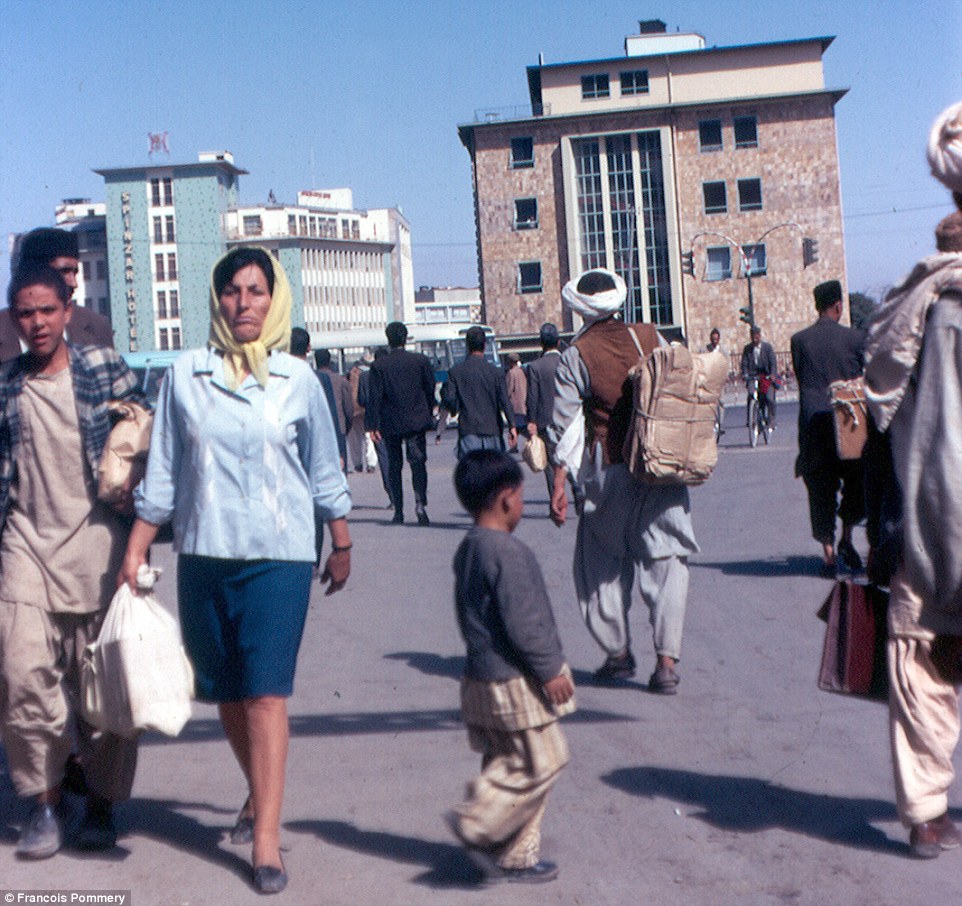
One great thing about The Kite Runner is that it teaches readers about the recent history of Afghanistan. My knowledge of the Soviet-Afghan War was hazy at best, but this book really lays bare the havoc it wreaked on the country, and how the desolation it caused paved the way for civil war and the rise of the Taliban. Sadly, because of all this turmoil that Afghanistan has suffered in recent decades, I had no idea how stable and prosperous the country had been beforehand. We learn through Amir’s upbringing that western influences were welcomed in Afghanistan and existed peacefully alongside the moderate Islamic way of life there. We learn about Afghan cultural traditions, architecture and cuisine, much of which has sadly been destroyed due to constant warfare and extremist regimes. I think it’s a shame that before reading The Kite Runner I only knew of Afghanistan as a ravaged victim of various world powers’ Cold War ambitions or as a nation living in fear of the Taliban. I hope that because this book has been so successful since its release in 2003, that many other people’s eyes have been opened to the worthy history of Afghanistan.
The central focus of The Kite Runner is the friendship between Amir and Hassan. Though Amir and Hassan have known each other since birth and have a deep yet also ordinary friendship, there is always a slight distance between them. This is because Amir is Pashtun, the majority ethnic group in Afghanistan, while Hassan and his father are Hazaras, a minority ethnic group native to the Hazarajat region of the country. Hazaras are considered one of the most oppressed groups in the world, and they have faced strong persecution in Afghanistan for centuries. Hosseini subtly emphasises the differences between the two boys all the time, building a presence of mutually unspoken but definitely mutually recognised tension between them. For example, Hassan is technically Amir’s servant and he and his father live in a shack outside Amir’s large residence. Amir goes to school and has prospects, while Hassan is illiterate and is destined to work in servile roles all his life.
Amir sometimes feels resentment towards Hassan because it seems that his own father values Hassan as much as, if not more than him, and this leads Amir to sometimes think spiteful thoughts or take advantage of Hassan’s loyalty and good natured-ness. And indeed, it is this divide that ensures Hassan will ‘run’ Amir’s kite for him – “for you, a thousand times over” – after Amir wins the kite-fighting tournament; the moment when Amir, out looking for Hassan who has not returned with the kite, chooses to stand by and watch his friend go through something horrifyingly traumatic because he is too gutless to stand up for him. The fallout from this event takes the reader on a long journey with Amir as he seeks the meaning of friendship and redemption for his actions.
Hosseini is a genius storyteller, filling The Kite Runner with raw emotion, a storyline that captivates across its 26-year timespan, and the most original plot twists that will leave you gawping with astonishment while also wondering how you didn’t see them coming. It’s no surprise that I read it in three days – it’s completely unputdownable. His use of backshadowing, symbolism, ‘coincidence’ and suspense are extremely shrewd and add so many dimensions to this exceptional story. Hosseini, who himself is Afghan-American, always features Afghan characters in his novels but in this case there are some outright similarities between himself and Amir. Hosseini also grew up in the Wazir Akbar Khan district of Kabul, had to seek asylum in America when the war began, and like Amir, grew up to be a writer. It is therefore interesting to wonder at what other parallels Hosseini sees between himself and his character – perhaps Amir’s journey of self-scrutiny was as cathartic for Hosseini as it was for his fictional creation.
I have purposefully not given away any spoilers so that anyone considering reading The Kite Runner can enjoy its twists and turns to the fullest and be as gripped as I was. It’s a truly wonderful book that will make you feel every emotion on the spectrum.







 ImoReads