Categories
Antiquity

ImoReads… ‘The Odyssey’ (c.700BC) by Homer, translated by Emily Wilson

Blog 3

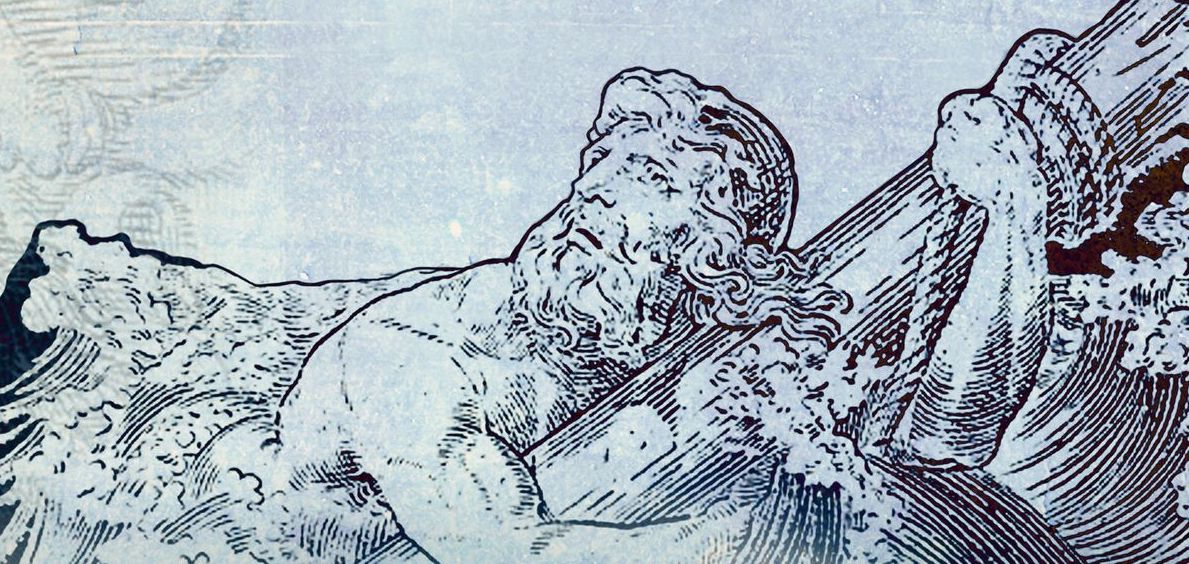
“The gods sat down for council, with the great

Thunderlord Zeus. Athena was concerned

about Odysseus’ many troubles,

trapped by the nymph Calypso in her house.”
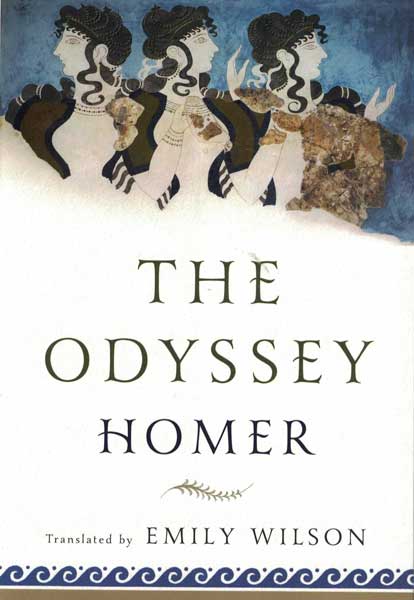
The Guardian  culture writer Charlotte Higgins calls Emily Wilson’s translation of Homer’s The Odyssey ‘a cultural landmark’ and believes it will ‘change the way the poem is read in English’. I have to agree with her wholeheartedly on this point.

This epic poem, one of the longest in recorded history, has been translated many times including over 60 attempts into English. And yet, Wilson’s version is the first to be done by a woman. I feel privileged that this is the first version I got to read; I thoroughly enjoyed it and found it enchanting on so many levels. 

The Odyssey tells the story of Odysseus’ decade-long struggle to return home to Ithaca after the Trojan War. En route he faces the wrath of many gods and faces off against mythical creatures such as sirens and cyclops. All the while his wife Penelope and son Telemachus are in a constant state of anxiety trying to ward off the mass of suitors vying for Odysseus’ title, home, riches and wife. The poem ends with Odysseus’ return and glorious fight to take back Ithaca from the suitors.

Wilson somehow manages to style the language as crisp and comprehensible whilst also still evoking a captivating sense of antiquity. I think one of the key earmarks of this is the use of epithets. Some of my favourite character examples are ‘sharp-eyed Athena’ and ‘crafty Odysseus’. These would not be common terms to describe someone today, and yet they are still perfectly understandable. Furthermore, the island of Pylos is always described as ‘sandy Pylos’, and the goddess Athena is always pouring ‘sweet sleep’ onto the eyes of the mortal characters. There is no opulence in Wilson’s epic voice; these are just simple adjectives, and yet they accentuate that memorable, rhythmic quality of the ancient bardic tradition of oral poetry that Homer used as inspiration for The Odyssey.

I love also that Wilson has chosen to write in the English epic metre of iambic pentameter. Immediately I was drawn in by the enchanting, methodical rhythm of the poem; it somehow makes you feel as if you are watching the events unfold first-hand but also like you are hearing a song about a tale that happened a long time ago.

Although I am glad this is the first version I have read, I feel I do it a slight disservice by having not read any of the previous male-translated versions, because it is harder for me to appreciate how Wilson overcomes certain masculine conventions. For example, as I read it, one of Odysseus’ key characteristics that I picked up on was his duplicity. He is a hero nonetheless, but he has a talent for cunning and self-preservation. He is the only member of his crew to return to Ithaca alive and according to Higgins, Wilson’s translation that ‘he failed to keep them safe’ is the truest translation of the ancient Greek. She compares this to two male versions which translate this line as ‘he could not save them from disaster’ and ‘but so their fates he could not overcome’. Wilson does not let Odysseus off the hook quite so easily and reveals him for what he is.

So, one of my upcoming assignments will be to read a different version of The Odyssey to compare it to this one. However, I know I will be hard-pressed to find one better than Wilson’s. I would absolutely recommend this work if you want an enchanting introduction to the myths and legends of Ancient Greece; it is as riveting as it is prestigious. Next on my list of ancient classics? Homer’s The Iliad and Ovid’s Metamorphoses (Emily Wilson if you’re reading, please gift us with translations of these too…)

Happy reading,

Imo x
Categories
English literature

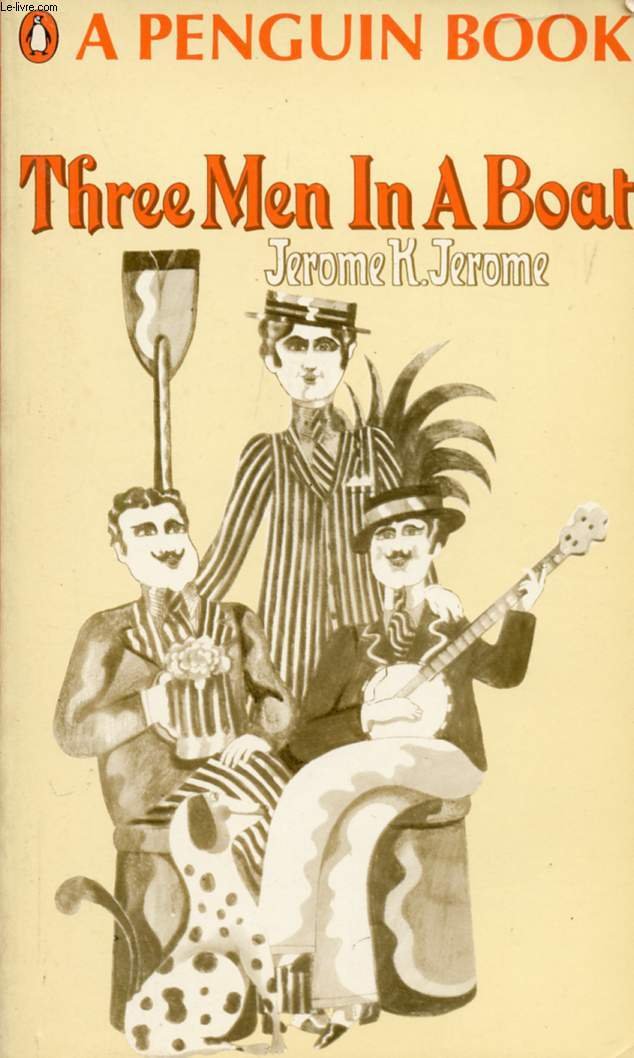
ImoReads… ‘Three Men in a Boat’ (1889) by Jerome K. Jerome

Blog 2

“What the eye does not see, the stomach does not get upset over”

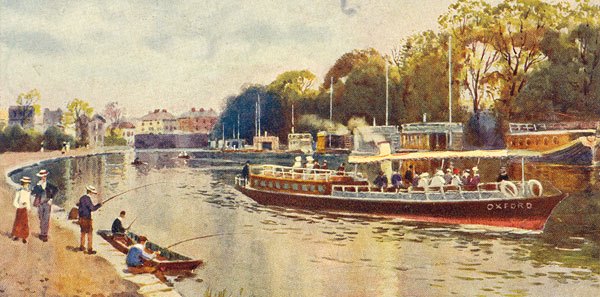
I thought I would kick-start my blog by discussing one of English literature’s most enduringly funny novels. Written in 1889, Jerome K. Jerome concocted the perfect comic tale to match the trend for recreational boating in the late Victorian era. I for one am very glad that this work, originally meant to be a travel piece for Home Chimes magazine, morphed into the hilarious escapades of three men holidaying in a boat. In the words of Jerome himself, ‘nothing else seemed right’.

The general premise of the novel is three City clerks – J. (the narrator), George and Harris – taking a two-week boating trip along the Thames from Kingston to Oxford and back again (which is particularly enjoyable for me to read as a Kingston-dweller). We cannot, of course, forget their canine companion Montmorency, not least because the subtitle of the book commands us not to (to say nothing of the Dog!). What follows is a humorous voyage of mishaps, both on this trip and through anecdotes that spring to the narrator’s mind along the way. 

What I enjoy the most about Jerome’s novel is its refreshing triviality. Unlike a lot of Victorian novels, there are no devastating plot twists or stories of unrequited love; like the boat, the novel trundles along, and is at once about lots of things and about nothing at all, and that’s where its charm derives. The most dramatic things to happen are perhaps one of the party falling into the river, or getting lost in Hampton Court Maze, or even that (shock horror!) there are no inns to stay in at a certain point of the trip. Such novels are sometimes overlooked in the rankings of great literature, but I think they are uniquely brilliant when they can still make us laugh over 100 years after publication.

Indeed, Jerome’s use of quintessentially English humour is such that an English audience can still very much relate and laugh along. For example, in one sentence he manages to sum up the immortal English outlook on the weather. That is, ‘but who wants to be foretold the weather? It is bad enough when it comes, without our having the misery of knowing about it beforehand’. If this does not define Englishness I don’t know what does. 

However, for me, one particularly funny incident stands out. After a long hard day on the river, our three “hangry” gentlemen despair that there is no mustard to go with their beef. However it is deemed that ‘life was worth living after all’ when they discover a tin of pineapple. Sadly for them (although happily for us), there is no tin-opener to be found, so what ensues is ‘a fearful battle’ between the men and the tin. A hilarious sequence of imaginative attempts to open the tin to no avail complete with extreme frustration from the protagonists provides an overwhelmingly relatable comic thread inspired by ordinary everyday inconveniences. 

Contributed to by the chuckle-worthy bumbling about of our three men in a boat and their beautifully eloquent nineteenth-century language, Jerome paints quite the picture of nonchalant, carefree joy and timeless Victorian farce. The fact that Three Men in a Boat sold staggeringly well at the time and has never gone out of print since it first appeared in 1889 suggests that the British reading public wholeheartedly agrees with my assessment.

If you’re looking for a light-hearted summer read to enjoy while sunbathing in your back garden (or, indeed, Thames-side) then Three Men in a Boat is the one for you. To really get into the spirit I would advise snacking on beef and mustard and/or tinned pineapple while reading… 

Happy reading!

Imo x

Categories
Uncategorized

What will you read on ImoReads?

Blog Nº1

Be yourself; Everyone else is already taken.

— Oscar Wilde.

Hello and welcome to my blog, ImoReads! My name is Imogen, I am 23 years old and as is hopefully apparent, I love to read.

My love of reading developed in my early childhood and without a doubt I have my parents to thank for it; I am forever indebted to them for reading me books every night before bed and encouraging me to read works of literature myself.

As a result of this, I have developed quite the repertoire of literature read over the years and I want to use this blog to share my thoughts and opinions on those works that have stood out to me particularly.

If you’re interested in the great literary classics, both of England and the world respectively, then this is the blog for you (hooray!). It is not limited to any century in particular – I welcome great works from any time period. However, I would say that there will be particular emphasis on the nineteenth century (think Dickens, Wilde and Twain) because I have a distinct historical interest in this era. Fundamentally though, you can expect analyses of works stretching from Ancient Greece all the way through to the twenty-first century. 🙂

To any French-speakers or Francophiles out there – enchanté because as a recent graduate of history and French, I will also be sharing my thoughts on works of francophone literature that I have enjoyed over the years.

I want to spread the message that actually, reading is COOL and everyone should do it! It is possible to strike a happy medium between a love of classic literature and the tech-savvy world we now live in, even for the apparently ‘disinterested’ youth of today. If you love to read, be proud of it! It’s an educational, thought-provoking, immersive activity that can teach us so much about society, history, and ourselves.

So that’s it, that is the premise of ImoReads. Expect a mixture of analysis, reviews, personal reflections and recommendations. Expect threads by author, genre, and time period. And finally, expect an honest, enthusiastic and creative response to some of the world’s finest literature. 🙂

Happy reading,

Imo x