

Blog Nº 20
“There is a way to be good again “
Rahim Khan
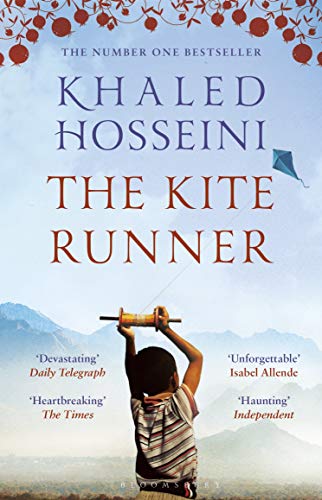
I am so glad that this blog has given me an excuse to re-read The Kite Runner, which is in my opinion one of the best books written so far in the 21st century. Its exploration of the strength and boundaries of friendship and familial ties against a backdrop of war, loss and regret makes for an extremely captivating and moving read.
The novel begins in vibrant and thriving 1970s Afghanistan, and is told from the perspective of Amir, then a young boy. He is the son of a vivacious, well-liked and well-off merchant and they live together in the wealthy Kabul district of Wazir Akbar Khan. He and his best friend Hassan, the son of his father’s servant, do everything together and want more than anything to win the local kite-fighting tournament. However, neither can predict the terrible fate that befalls Hassan that afternoon, completely shattering their lives. The subsequent invasion of Afghanistan by Russia means that Amir and his father are forced to flee to America, leaving Hassan and his father Ali behind. After 26 years of trying to live with what he had done to his best friend the day of the tournament, an unforeseeable turn of events forces Amir to return to Afghanistan under Taliban rule to find the one thing that he could not give himself in America: redemption.
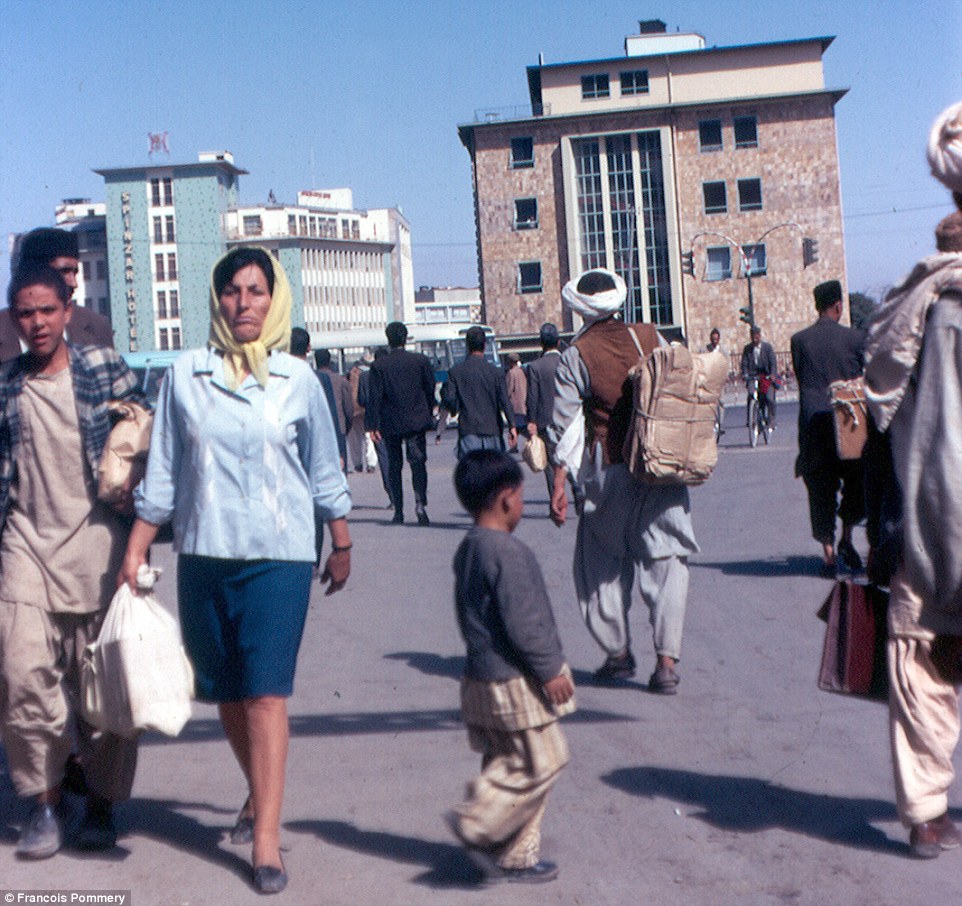
One great thing about The Kite Runner is that it teaches readers about the recent history of Afghanistan. My knowledge of the Soviet-Afghan War was hazy at best, but this book really lays bare the havoc it wreaked on the country, and how the desolation it caused paved the way for civil war and the rise of the Taliban. Sadly, because of all this turmoil that Afghanistan has suffered in recent decades, I had no idea how stable and prosperous the country had been beforehand. We learn through Amir’s upbringing that western influences were welcomed in Afghanistan and existed peacefully alongside the moderate Islamic way of life there. We learn about Afghan cultural traditions, architecture and cuisine, much of which has sadly been destroyed due to constant warfare and extremist regimes. I think it’s a shame that before reading The Kite Runner I only knew of Afghanistan as a ravaged victim of various world powers’ Cold War ambitions or as a nation living in fear of the Taliban. I hope that because this book has been so successful since its release in 2003, that many other people’s eyes have been opened to the worthy history of Afghanistan.
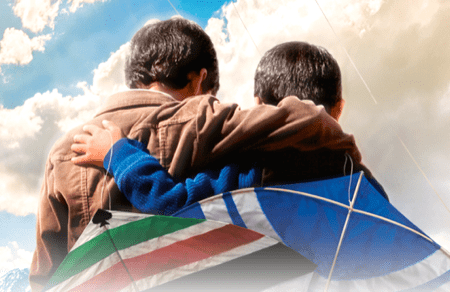
The central focus of The Kite Runner is the friendship between Amir and Hassan. Though Amir and Hassan have known each other since birth and have a deep yet also ordinary friendship, there is always a slight distance between them. This is because Amir is Pashtun, the majority ethnic group in Afghanistan, while Hassan and his father are Hazaras, a minority ethnic group native to the Hazarajat region of the country. Hazaras are considered one of the most oppressed groups in the world, and they have faced strong persecution in Afghanistan for centuries. Hosseini subtly emphasises the differences between the two boys all the time, building a presence of mutually unspoken but definitely mutually recognised tension between them. For example, Hassan is technically Amir’s servant and he and his father live in a shack outside Amir’s large residence. Amir goes to school and has prospects, while Hassan is illiterate and is destined to work in servile roles all his life.
Amir sometimes feels resentment towards Hassan because it seems that his own father values Hassan as much as, if not more than him, and this leads Amir to sometimes think spiteful thoughts or take advantage of Hassan’s loyalty and good natured-ness. And indeed, it is this divide that ensures Hassan will ‘run’ Amir’s kite for him – “for you, a thousand times over” – after Amir wins the kite-fighting tournament; the moment when Amir, out looking for Hassan who has not returned with the kite, chooses to stand by and watch his friend go through something horrifyingly traumatic because he is too gutless to stand up for him. The fallout from this event takes the reader on a long journey with Amir as he seeks the meaning of friendship and redemption for his actions.
Hosseini is a genius storyteller, filling The Kite Runner with raw emotion, a storyline that captivates across its 26-year timespan, and the most original plot twists that will leave you gawping with astonishment while also wondering how you didn’t see them coming. It’s no surprise that I read it in three days – it’s completely unputdownable. His use of backshadowing, symbolism, ‘coincidence’ and suspense are extremely shrewd and add so many dimensions to this exceptional story. Hosseini, who himself is Afghan-American, always features Afghan characters in his novels but in this case there are some outright similarities between himself and Amir. Hosseini also grew up in the Wazir Akbar Khan district of Kabul, had to seek asylum in America when the war began, and like Amir, grew up to be a writer. It is therefore interesting to wonder at what other parallels Hosseini sees between himself and his character – perhaps Amir’s journey of self-scrutiny was as cathartic for Hosseini as it was for his fictional creation.
I have purposefully not given away any spoilers so that anyone considering reading The Kite Runner can enjoy its twists and turns to the fullest and be as gripped as I was. It’s a truly wonderful book that will make you feel every emotion on the spectrum.
Happy reading,
Imo x





 ImoReads