Categories
French Literature

ImoReads… ‘Maria Chapdelaine’ (1914) by Louis Hémon

Blog 6

“La terre est bonne; mais il faut se battre pour l’avoir”

Upon publication, this novel – although written by a français de France – was hailed as a completely accurate representation of the idyllic rural Quebecois lifestyle centred on religion, family values, and land cultivation, that was supposedly at the heart of the French-Canadian ethos. I must admit, I was not inspired to eschew modernity and take flight for the woods after reading it. This novel is great, but not because of the apparent pastoral paradise it depicts. It is great because of the ominous and quite frankly disturbing presence of the forest, and the fact that actually, the human characters are locked in hopeless struggle with the cruel and vindictive wilderness for the land that leaves readers feeling tense and uneasy.

Maria Chapdelaine tells the story of the Chapdelaine family. We have Samuel, Laura and their children, who include eighteen-year-old Maria. They are habitants intent on faire de la terre to fulfil their French-Canadian rural destinies. In search of good land, they have pushed so far into the wilderness that the nearest town is eight miles away and they are completely surrounded by the looming forest. Three suitors vie for Maria’s hand in marriage, most notably François Paradis. François lives the coureur du bois lifestyle which exists in stark contrast to the Chapdelaines’ ideology. He lives and trades off the land and is always on the move; to him the woods are everything. Maria loves him for the freedom and adventure he would bring to her life. And yet, when he tragically perishes in the woods during a punishing winter, Maria is left devastated and disillusioned.

Despite the novel being titled Maria Chapdelaine, she is not given much air time. It is all about the battle with the wilderness. The forest is the enemy that blocks the Chapdelaines from their future prosperity. They are ‘des gens qui commencent une longue guerre’ and seem to always be at the land clearance stage of proceedings. This book is many things, but I found it impossible to escape the overwhelming sense of bleakness. Hémon scorns human attempts to dominate the land; ‘la petitesse de l’église de bois, la petitesse des quelques maisons de bois’ emphasises that they are not but insignificant specks on this vast hinterland. What really unnerved me was that at every turn, the characters are faced with ‘la lisière sombre du bois’, always gloomy, always impenetrable, always watching. It must be mentioned at least thirty times throughout. 
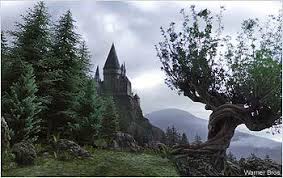
As I read on, I came to realise that it was not a battle between humans and the wilderness at all; the wilderness is personified as having a ‘sévérité divine’ against which the humans ‘n’avaient aucune révolte, même pas d’amertume’, in fear of worse retribution. When poor Maria’s true love François is cruelly taken away from her, we hear that ‘le froid assassin et ses acolytes se sont jetés sur lui comme sur une proie’. If this would not instil the fear of God into you as a reader about venturing into the Canadian woodland then I don’t know what would.

I realise that perhaps I am not selling this book; if you want something that will send shivers down your spine and leave a distinct impression on you, then I would strongly recommend it. And don’t forget, to be hailed as a novel representing a glorious rural idyll, there must be some evidence of this in the text.

Even I admit, Maria Chapdelaine has its moments, and all of these moments come in the short and sweet summer months. The wilderness becomes a beautiful, romantic backdrop for Maria and François’ budding romance and there is jovial sense of purity and simple living for this family in the woods. So perhaps it is the long Canadian winter rather than the wilderness itself that is the master of cruelty? I’ll leave that up to you to decide…

Happy reading,

Imo x

Categories
English literature

ImoReads… ‘The Prisoner of Zenda’ (1894) by Anthony Hope

Blog 4

“For my part, if a man must needs be a knave I would have him a debonair knave… It makes your sin no worse as I conceive, to do it à la mode and stylishly”

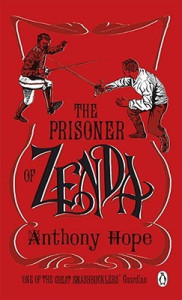
The Prisoner of Zenda  is without a doubt one of my favourite adventure novels. There is just something charming about this Victorian escapade; it’s got the setting, it’s got the action, it’s got the romance, it’s got the glory. 

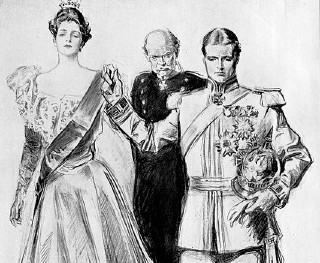
The story centres on the English gentleman and loveable rogue Rudolf Rassendyll and his trip to the fictional central European country of Ruritania. He happens to arrive on the eve of the king’s coronation, and he just so happens to be the king’s distant cousin, namesake, and spitting image replica. When the king’s dastardly younger half-brother, the Duke Michael of Strelsau, drugs and imprisons the king in the Tower of Zenda in a bid to take the throne, the king’s trusty attendants come up with a brilliant yet risky plan. Colonel Sapt and Fritz von Tarlenheim enlist Rassendyll to play the part of the king until they can rescue the real deal. What follows are swords-drawn encounters with Michael’s henchmen, plots and counterplots from both sides, and a jolly good adventure.

Of course, the story would not be complete without a little romance; Rudolf enjoys playing the king although he is committed to the plan to free him, but what he did not expect was to fall in love with the king’s fiancé, the princess Flavia. With the help of the Duke’s mistress Antoinette de Mauban, our trio of heroes manage to outwit the Duke and his henchmen to free the king, but Rudolf and Flavia, both bound by duty, must sadly part at the end.

What is great about this plot is that apart from the small group of people who knew about the identity of the ‘false king’ (which eventually includes Flavia herself), the rest of the world remains none the wiser. It is amazing how such a gamble paid off and gives the reader a sense of satisfaction by being in on this great secret. When I imagine Hope’s country of Ruritania, I see a Germanic-inspired nation with fairy-tale castles and a black forest, which only add to the adventure. If you like a good urgent gallop through such scenery, then thanks to The Prisoner of Zenda you can eat your heart out.

Rudolf Rassendyll is undoubtedly my favourite character, and I am glad Hope made him the first-person narrator. Although he already lives a life of leisure being from an aristocratic background, even he admits being tempted to usurp the Ruritanian throne forever. Indeed, when offered a kingdom who wouldn’t say yes? It is this honesty plus his frank humour and in the end stronger sense of morality and bravery that make Rudolf a king by nature, if not truly by right. You can’t help but root for him, so whenever there is a showdown between him and one of the Duke’s henchmen – Rupert of Hentzau in particular – you can’t put the book down until you know the outcome. (This explains why I read the book in two days). He risks his life, gives up his crown and his true love for his distant cousin, and this is the truest picture of Victorian heroism.

Are you thinking that ‘Ruritania’ sounds familiar? Hope’s novel had such an impact that it kickstarted the genre of ‘Ruritanian romance’ in literature, theatre and film. That is, stories set in a fictional central or eastern European country that are, like The Prisoner of Zenda, swashbuckling tales of adventure and intrigue, with the themes of romance and honour being the most prominent and focusing exclusively on the ruling classes. In general usage, Ruritania is a placeholder country name used to make points in academic or political discussion. The impact of Hope’s novel is undeniably far-reaching.

I enjoyed my trip to Ruritania so much that I will shortly be returning via the sequel, Rupert of Hentzau (1898). If you want to be taken on an exciting adventure that you just can’t find in today’s world, take a leap back in time to the nineteenth century yourself and be dazzled by Rudolf, Ruritania and romance.

Happy reading,

Imo x

Categories
Antiquity

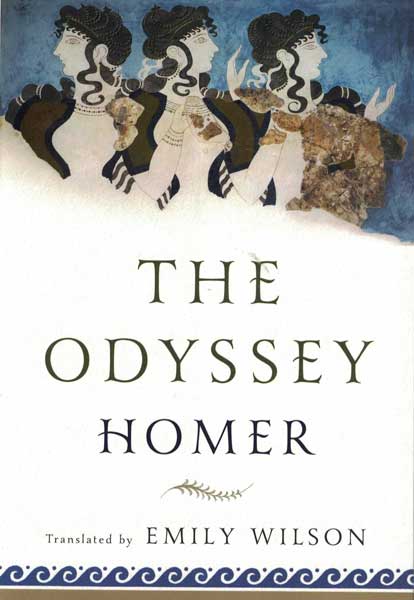
ImoReads… ‘The Odyssey’ (c.700BC) by Homer, translated by Emily Wilson

Blog 3

“The gods sat down for council, with the great

Thunderlord Zeus. Athena was concerned

about Odysseus’ many troubles,

trapped by the nymph Calypso in her house.”

The Guardian  culture writer Charlotte Higgins calls Emily Wilson’s translation of Homer’s The Odyssey ‘a cultural landmark’ and believes it will ‘change the way the poem is read in English’. I have to agree with her wholeheartedly on this point.

This epic poem, one of the longest in recorded history, has been translated many times including over 60 attempts into English. And yet, Wilson’s version is the first to be done by a woman. I feel privileged that this is the first version I got to read; I thoroughly enjoyed it and found it enchanting on so many levels. 

The Odyssey tells the story of Odysseus’ decade-long struggle to return home to Ithaca after the Trojan War. En route he faces the wrath of many gods and faces off against mythical creatures such as sirens and cyclops. All the while his wife Penelope and son Telemachus are in a constant state of anxiety trying to ward off the mass of suitors vying for Odysseus’ title, home, riches and wife. The poem ends with Odysseus’ return and glorious fight to take back Ithaca from the suitors.

Wilson somehow manages to style the language as crisp and comprehensible whilst also still evoking a captivating sense of antiquity. I think one of the key earmarks of this is the use of epithets. Some of my favourite character examples are ‘sharp-eyed Athena’ and ‘crafty Odysseus’. These would not be common terms to describe someone today, and yet they are still perfectly understandable. Furthermore, the island of Pylos is always described as ‘sandy Pylos’, and the goddess Athena is always pouring ‘sweet sleep’ onto the eyes of the mortal characters. There is no opulence in Wilson’s epic voice; these are just simple adjectives, and yet they accentuate that memorable, rhythmic quality of the ancient bardic tradition of oral poetry that Homer used as inspiration for The Odyssey.

I love also that Wilson has chosen to write in the English epic metre of iambic pentameter. Immediately I was drawn in by the enchanting, methodical rhythm of the poem; it somehow makes you feel as if you are watching the events unfold first-hand but also like you are hearing a song about a tale that happened a long time ago.

Although I am glad this is the first version I have read, I feel I do it a slight disservice by having not read any of the previous male-translated versions, because it is harder for me to appreciate how Wilson overcomes certain masculine conventions. For example, as I read it, one of Odysseus’ key characteristics that I picked up on was his duplicity. He is a hero nonetheless, but he has a talent for cunning and self-preservation. He is the only member of his crew to return to Ithaca alive and according to Higgins, Wilson’s translation that ‘he failed to keep them safe’ is the truest translation of the ancient Greek. She compares this to two male versions which translate this line as ‘he could not save them from disaster’ and ‘but so their fates he could not overcome’. Wilson does not let Odysseus off the hook quite so easily and reveals him for what he is.

So, one of my upcoming assignments will be to read a different version of The Odyssey to compare it to this one. However, I know I will be hard-pressed to find one better than Wilson’s. I would absolutely recommend this work if you want an enchanting introduction to the myths and legends of Ancient Greece; it is as riveting as it is prestigious. Next on my list of ancient classics? Homer’s The Iliad and Ovid’s Metamorphoses (Emily Wilson if you’re reading, please gift us with translations of these too…)

Happy reading,

Imo x

Categories
Uncategorized

What will you read on ImoReads?

Blog Nº1

Be yourself; Everyone else is already taken.

— Oscar Wilde.

Hello and welcome to my blog, ImoReads! My name is Imogen, I am 23 years old and as is hopefully apparent, I love to read.

My love of reading developed in my early childhood and without a doubt I have my parents to thank for it; I am forever indebted to them for reading me books every night before bed and encouraging me to read works of literature myself.

As a result of this, I have developed quite the repertoire of literature read over the years and I want to use this blog to share my thoughts and opinions on those works that have stood out to me particularly.

If you’re interested in the great literary classics, both of England and the world respectively, then this is the blog for you (hooray!). It is not limited to any century in particular – I welcome great works from any time period. However, I would say that there will be particular emphasis on the nineteenth century (think Dickens, Wilde and Twain) because I have a distinct historical interest in this era. Fundamentally though, you can expect analyses of works stretching from Ancient Greece all the way through to the twenty-first century. 🙂

To any French-speakers or Francophiles out there – enchanté because as a recent graduate of history and French, I will also be sharing my thoughts on works of francophone literature that I have enjoyed over the years.

I want to spread the message that actually, reading is COOL and everyone should do it! It is possible to strike a happy medium between a love of classic literature and the tech-savvy world we now live in, even for the apparently ‘disinterested’ youth of today. If you love to read, be proud of it! It’s an educational, thought-provoking, immersive activity that can teach us so much about society, history, and ourselves.

So that’s it, that is the premise of ImoReads. Expect a mixture of analysis, reviews, personal reflections and recommendations. Expect threads by author, genre, and time period. And finally, expect an honest, enthusiastic and creative response to some of the world’s finest literature. 🙂

Happy reading,

Imo x