Categories
Caribbean Literature World literature

ImoReads… ‘The Mermaid of Black Conch’ (2020) by Monique Roffey

Blog Nº 29

“The sea, that expanse of nothingness, could reflect a man back on himself. It had that effect. It was so endless and it moved around underneath the boat. It wasn’t the same thing at all as being on any expanse of earth. The sea shifted. The sea could swallow the boat whole. The sea was the giant woman of the planet, fluid and contrary. All the men shuddered as they gazed at her surface.”

I have always enjoyed stories that contain elements of myth and legend, but this is the first time I have delved into the world of Caribbean folklore. The Mermaid of Black Conch is arresting and powerful while unravelling all pre-conceived notions of what a mermaid is. It gives an insight into the long and fascinating history of the Caribbean through the unique story of Aycayia, the girl cursed to be a mermaid for all eternity.

The story begins in 1976 in the small town of St Constance, located on the island of Black Conch in the Lesser Antilles. An unsuspecting young fisherman, David Baptiste, is out in his pirogue boat singing and playing the guitar whilst waiting for a catch. What he doesn’t expect to attract is the mermaid Aycayia, a beautiful young woman cursed long ago by jealous wives who has been swimming in the Caribbean Sea ever since. So entranced by his music, when Aycayia hears David’s boat engine again she follows it, only to find herself a target for American tourists visiting the island for its annual fishing competition. Dragged out of the sea by the Americans and strung up on the dock like a trophy, Aycayia believes her fate is sealed. However, when night falls it is David who rescues her and takes her home. Slowly, Aycayia begins to transform back into a woman, much to the joy of David who has become completely enamoured with her. Unfortunately, transformations are not always permanent, especially when centuries-old jealousy is at play. Even the love between Aycayia and David may not be enough to break the curse.
Author Monique Roffey has succeeded in producing a spellbindingly rhythmic narrative often through simple literary devices such as repetition. For example, “she was floating port side of his boat, cool cool, like a regular woman on a raft, except there was no raft”, “I am an ol’ man now, and sick sick so I cyan move much”, or “after the fish-rain I realise curse strong strong.” She uses this technique frequently throughout the novel, indicating that it has been inspired by folkloric tales passed down for centuries through nothing but spoken word, made memorable by repetition. The fact that all dialogue is spelled phonetically – “Dou dou. Come. Mami wata! Come. Come, nuh” – only adds to the significance that spoken word has in stories like this. Roffey continues to show how important different voices are in The Mermaid of Black Conch by having several narrators sharing the storytelling duties. We hear from David through his retrospective diary entries in 2016, an unknown narrator present in 1976 who tells us the words and actions of all characters, and Aycayia herself who speaks in verse, which further emphasises the memorable quality of the narrative and her difference from the other characters. Furthermore, Aycayia always speaks in the present tense, yet it is clear she is looking back on events, suggesting that being stuck in an everlasting curse has made all notion of time and tense completely meaningless. This fusion of unique voices and narrative styles makes for a highly enchanting read.

It’s also important to focus on Aycayia herself. She in no way conforms to the trope of a siren sitting atop a rock, combing her hair and luring men to their deaths with her beauty. In fact, Aycayia is distinctly ‘unbeautiful’ when compared to Disney-esque mermaids. She has matted dreadlocks which are full of sea creatures who have made a home there, her teeth are sharp and pointed, she has dorsal fins on her back, she smells of salt and fish, she has webbed hands, and her tail is enourmous and scaly. Personally, I think she is a more authentic mermaid because she is at one with the sea, and is striking in a magical, sharp kind of way. Significantly, she has no idea how to lure in a man because she was cursed to this fishlike form when she was just on the brink of womanhood. It transpires that she used to dance for the men of her village centuries ago, not realising in her innocence why the men enjoyed it so much. Consumed by jealousy, the wives of these men chose to make her a mermaid when cursing her because they knew her tail would bind her ‘sex’, making her unable to seduce a man let alone sleep with one. It is not until she is on land, tailless and human, that she is able to finally ‘become a woman’ and understand what it is to physically love a man, a joy that she finds with David. Even though the long-dead wives can still wield their power over Aycayia, it is satisfying to know that whatever her fate, she has bested them through her relationship with David and this can never be taken away from her, despite the eternal cruelty of these scorned women.
I have read several books featuring mermaids, but I have to say that The Mermaid of Black Conch is now my standout favourite. It encompasses myth and legend, love and the cruelty of human nature as well as the beauty of the Caribbean and its complex history. I highly recommend this captivating and unique novel.

Happy reading,

Imo x

Categories
Caribbean Literature World literature

ImoReads… ‘The Orchid House’ (1953) by Phyllis Shand Allfrey

Blog Nº 28

“Miss Joan paused on the threshold, for a beautiful thing was holding her prisoner there. Just outside the orchid house was a frosted pink hibiscus bush, one of the rare ones which Old Master cultivated. A little fou-fou humming-bird had chosen the largest and most perfect of flowers to drain its sweetness. The flower was three times larger than the bird which was only like a flashing black-and-emerald moth. The bird was fluttering and humming at such a speed that it seemed to lie still along the bright warm air, its tiny claws curled up; its long sharp bill was deep in the bedecked trumpet of the hibiscus. Seconds and seconds it remained suspended there, appearing rigid, then like a drunken spirit it reeled away and wiped the sword of its beak on some lichen. Shocked by this exquisite sight, Miss Joan sighed deeply and sat down again.”

The Orchid House is Allfrey’s only novel, and it certainly makes a statement. Heavily autobiographical, the novel is set in Dominica in the Caribbean and explores themes including love, money, politics and family relations, all seen through the lens of colonial decay. 

Three sisters are returning to their childhood home in the Caribbean after being away for several years. Though the family are directly descended from colonial settler heavyweights, the family has sunk into a state of near poverty with the coming of the end of empire. Each sister wants to change the family’s fortunes but in different ways. I believe that Joan is the sister that is based upon Allfrey herself – she is concerned with empowering the locals through politics, influenced by her strong socialist ideals. Interestingly, Allfrey has chosen to have the sisters’ childhood nurse Lally narrate the book. Throughout the book we see Lally’s devotion to the family come up against her awareness of the destruction left in the wake of colonialism on the island.

The choice of narrator is interesting to me. Given the time of the book’s publication, the character of Lally is in some ways reminiscent of the ‘loyal faithful slave’ character depicted in many novels written by white authors in the nineteenth and early twentieth centuries. Lally is completely devoted to the family she has been serving her whole life, and even looks down on other black characters for being unsuitable associates of said family. She always speaks about each family member with care and compassion. Though Allfrey was engaged in socialist politics and activism, it seems unlikely that she was not influenced by these stereotypes as she herself did grow up in the very same colonial environment with house servants who it would be assumed were completely loyal. On the other hand, Lally is becoming more and more aware of the downward turn in fortunes for the island. Furthermore, there are times when she wonders why at her age she is still as active in her service to the family as she was several decades ago. The narrator being black also means the reader interacts more with other black characters than if one of the sisters had been narrating. Therefore, I would say this is a slightly more well-balanced portrayal than some other books I’ve read.

A standout feature of The Orchid House is its descriptions of Dominica’s vibrant nature juxtaposed with its colonial decline. An example of a powerful quote from Lally is, “beauty and disease, beauty and sickness, beauty and horror: that was the island.” There are many similar moments in the novel that evoke the same emotions. The occurrence of a formidable storm also indicates the power that nature wields in the Caribbean, suggesting that it is strong enough to battle against the decay being brought on by its colonial past.

This book lives up to its reputation as a Caribbean classic – it deals with a lot of important themes whilst also regaling a very personal story. I would recommend it to anyone with an interest in recent Caribbean history.

Happy reading,

Imo x

Categories
Australian Literature World literature

ImoReads… ‘My Brilliant Career’ (1901) by Miles Franklin

Blog Nº 23

“I am afflicted with the power of thought, which is a heavy curse. The less a person thinks and inquires regarding the why and the wherefore and the justice of things, when dragging along through life, the happier it is for him, and doubly, trebly so, for her.”

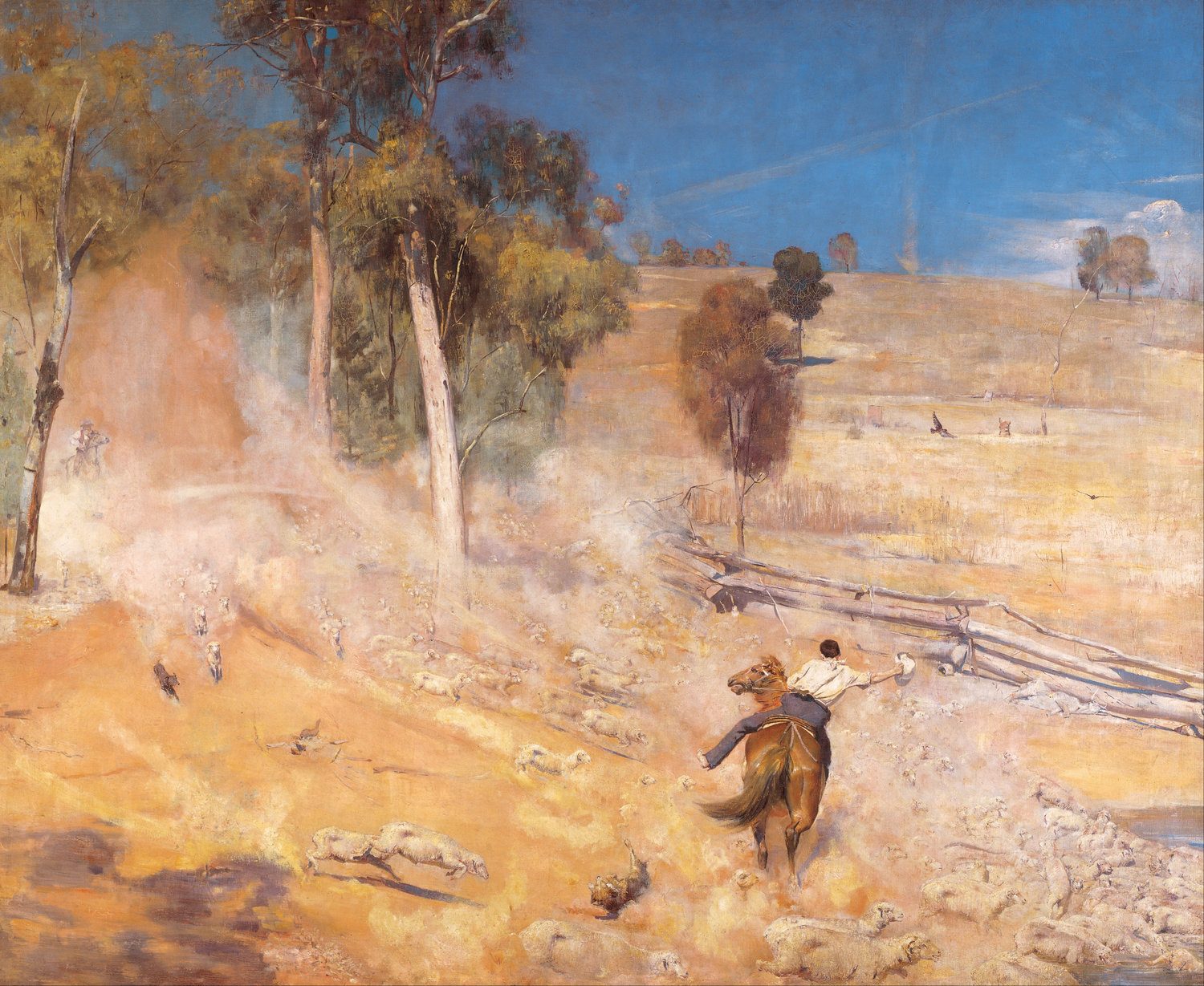
Anyone who knows me knows that I love a good old Australian novel, and I was not disappointed by My Brilliant Career. Written in 1901, the year of the Federation of Australia, this novel is unashamedly sharp, romantic and vivacious. I read it in a matter of days, being so taken in by the entirely convincing narrative voice and vivid display of Australian life.

My Brilliant Career is told in the first-person narrative by sixteen-year-old protagonist Sybylla Melvyn. For the first part of her childhood, Sybylla loves life with her family in rural Australia. She is clever and devours any book in sight, reading works extremely advanced for her age. When a series of poor business decisions from her father relegate the family from owning a sprawling cattle station to subsistence farming in the outback, teenage Sybylla becomes frustrated and bored with the hardship and monotony of life. She longs for a more refined lifestyle where she would be surrounded by likeminded others who enjoy intellectual thinking, reading and music. To aid the struggling family, Sybylla’s grandmother offers to take Sybylla in to live with her at her gracious property Caddagat. Sybylla fits right in at Caddagat; her sharp tongue, wit and frankness are a triumph among her extended family and for Caddagat’s wealthy neighbour, the handsome Harold Beecham, who becomes completely enamoured with her. Over the next two years, Sybylla will find herself choosing between everything a conventional life offers and her own plans for a ‘brilliant career’.

What is amazing about this book is the link between Sybylla and the author. Sybylla Melvyn is based on the author Miles Franklin (Stella Maria Sarah Miles Franklin). Sybylla’s childhood timeline is very similar to that of Franklin’s – for example, Franklin’s grandmother’s property Talbingo was simply renamed Caddagat in My Brilliant Career. Like Sybylla, Franklin was set on having a career in music. Reduced family circumstances making this impossible, Franklin turned to writing and as such wrote My Brilliant Career at age sixteen. The sheer literary skill, wide-ranging vocabulary and vibrant narrative are simply astonishing given that the author is a sixteen-year-old girl with an unconventional education, notwithstanding that the book was “conceived and tossed off in a matter of weeks” as a romance to amuse her friends. Furthermore, Franklin’s (and therefore Sybylla’s) burning desire to have her own career rather than do what was expected and marry is a view far more akin to feminists of the 1960s and 70s rather than of a teenage girl born and raised in the Australian outback at the turn of the century. For me, this novel indicates that someone’s sheer genius can shine through no matter what circumstances they have grown up in.

I think the fact that Franklin is the same age as the protagonist really helps legitimise Sybylla’s narrative voice. As you read, it is completely clear that the author is also a teenage girl – on the one hand Sybylla is unapologetically passionate and unpredictable, while on the other she carries insecurities about her looks and personality, portrayed like this in a way that only someone feeling the same things could. The narrative style is quite different to other books from the time that I’ve read; it is impetuous and brazen much like the mind of a teenage girl. Towards the end of My Brilliant Career, when the romance is heating up between Sybylla and Harry Beecham, I was completely hooked as Sybylla lays bare her emotions – torn between her desire for independence and her affection for Harry. I, like many other female readers I’m sure, felt that whatever decision she made, the outcome would be bittersweet. 

Overall, I was completely blown away by My Brilliant Career and think it is an essential read for any young person, especially young women. It is engaging, emotional, humorous and offers a candid representation of Australian life in the late 1800s/early 1900s. This was only the beginning of Franklin’s success and I take comfort in the fact that she did indeed get to have a ‘brilliant career’.

Happy reading,

Imo x

Categories
American Literature World literature

ImoReads… ‘The Kite Runner’ (2003) by Khaled Hosseini

Blog Nº 20

“There is a way to be good again “

Rahim Khan

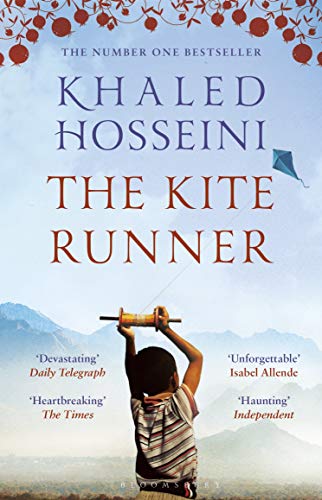
I am so glad that this blog has given me an excuse to re-read The Kite Runner, which is in my opinion one of the best books written so far in the 21st century. Its exploration of the strength and boundaries of friendship and familial ties against a backdrop of war, loss and regret makes for an extremely captivating and moving read. 

The novel begins in vibrant and thriving 1970s Afghanistan, and is told from the perspective of Amir, then a young boy. He is the son of a vivacious, well-liked and well-off merchant and they live together in the wealthy Kabul district of Wazir Akbar Khan. He and his best friend Hassan, the son of his father’s servant, do everything together and want more than anything to win the local kite-fighting tournament. However, neither can predict the terrible fate that befalls Hassan that afternoon, completely shattering their lives. The subsequent invasion of Afghanistan by Russia means that Amir and his father are forced to flee to America, leaving Hassan and his father Ali behind. After 26 years of trying to live with what he had done to his best friend the day of the tournament, an unforeseeable turn of events forces Amir to return to Afghanistan under Taliban rule to find the one thing that he could not give himself in America: redemption. 

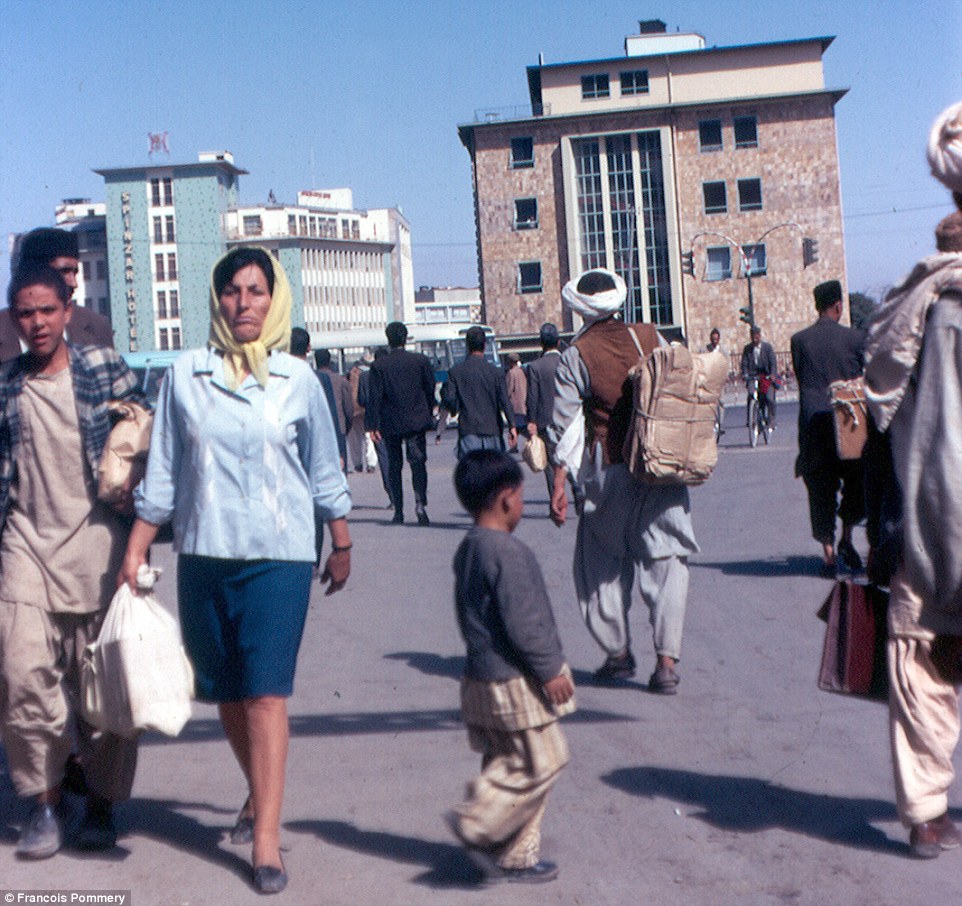
One great thing about The Kite Runner is that it teaches readers about the recent history of Afghanistan. My knowledge of the Soviet-Afghan War was hazy at best, but this book really lays bare the havoc it wreaked on the country, and how the desolation it caused paved the way for civil war and the rise of the Taliban. Sadly, because of all this turmoil that Afghanistan has suffered in recent decades, I had no idea how stable and prosperous the country had been beforehand. We learn through Amir’s upbringing that western influences were welcomed in Afghanistan and existed peacefully alongside the moderate Islamic way of life there. We learn about Afghan cultural traditions, architecture and cuisine, much of which has sadly been destroyed due to constant warfare and extremist regimes. I think it’s a shame that before reading The Kite Runner I only knew of Afghanistan as a ravaged victim of various world powers’ Cold War ambitions or as a nation living in fear of the Taliban. I hope that because this book has been so successful since its release in 2003, that many other people’s eyes have been opened to the worthy history of Afghanistan.

The central focus of The Kite Runner is the friendship between Amir and Hassan. Though Amir and Hassan have known each other since birth and have a deep yet also ordinary friendship, there is always a slight distance between them. This is because Amir is Pashtun, the majority ethnic group in Afghanistan, while Hassan and his father are Hazaras, a minority ethnic group native to the Hazarajat region of the country. Hazaras are considered one of the most oppressed groups in the world, and they have faced strong persecution in Afghanistan for centuries. Hosseini subtly emphasises the differences between the two boys all the time, building a presence of mutually unspoken but definitely mutually recognised tension between them. For example, Hassan is technically Amir’s servant and he and his father live in a shack outside Amir’s large residence. Amir goes to school and has prospects, while Hassan is illiterate and is destined to work in servile roles all his life.

Amir sometimes feels resentment towards Hassan because it seems that his own father values Hassan as much as, if not more than him, and this leads Amir to sometimes think spiteful thoughts or take advantage of Hassan’s loyalty and good natured-ness. And indeed, it is this divide that ensures Hassan will ‘run’ Amir’s kite for him – “for you, a thousand times over” – after Amir wins the kite-fighting tournament; the moment when Amir, out looking for Hassan who has not returned with the kite, chooses to stand by and watch his friend go through something horrifyingly traumatic because he is too gutless to stand up for him. The fallout from this event takes the reader on a long journey with Amir as he seeks the meaning of friendship and redemption for his actions.

Hosseini is a genius storyteller, filling The Kite Runner with raw emotion, a storyline that captivates across its 26-year timespan, and the most original plot twists that will leave you gawping with astonishment while also wondering how you didn’t see them coming. It’s no surprise that I read it in three days – it’s completely unputdownable. His use of backshadowing, symbolism, ‘coincidence’ and suspense are extremely shrewd and add so many dimensions to this exceptional story. Hosseini, who himself is Afghan-American, always features Afghan characters in his novels but in this case there are some outright similarities between himself and Amir. Hosseini also grew up in the Wazir Akbar Khan district of Kabul, had to seek asylum in America when the war began, and like Amir, grew up to be a writer. It is therefore interesting to wonder at what other parallels Hosseini sees between himself and his character – perhaps Amir’s journey of self-scrutiny was as cathartic for Hosseini as it was for his fictional creation.

I have purposefully not given away any spoilers so that anyone considering reading The Kite Runner can enjoy its twists and turns to the fullest and be as gripped as I was. It’s a truly wonderful book that will make you feel every emotion on the spectrum.

Happy reading,

Imo x

Categories
Australian Literature World literature

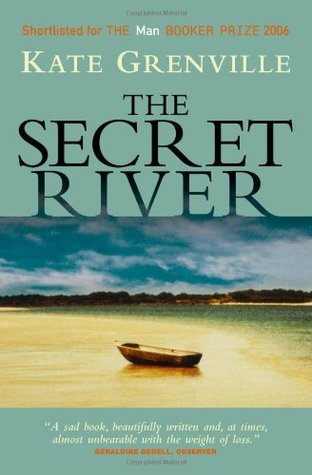
ImoReads… ‘The Secret River’ (2005) by Kate Grenville

Blog 8

“Ain’t nothing in this world just for the taking… A man got to pay a fair price for taking… Matter of give a little, take a little” – Thomas Blackwood

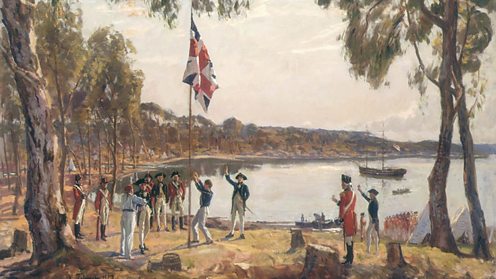
As a British colonial history enthusiast, I found The Secret River deeply thought-provoking in its portrayal of the settlement of Australia by British convicts sentenced to transportation in the nineteenth century. I actually read this novel about a year ago, but I recently went to see the critically acclaimed Sydney Theatre Company’s stage adaptation of it at the National Theatre. Unlike most of the critics, I was left somewhat disappointed by the stage version, so I was inspired to write this blog in the format of ‘novel vs play’ (hence the longer post).

Sadly, the flaws in the play begin in the first scene; astoundingly, it opens with lead character William Thornhill and his family arriving at their secluded 200 acre plot of land up the Hawkesbury River in New South Wales, which he has persuaded his wife Sal that once settled and cultivated, will make them their fortune. I had to do a double take; where indeed was the journey up to this point? Arriving at ‘Thornhill’s Point’ as it comes to be known, is a landmark event in the plot and yet the exclusion of all that comes before completely lessens the impact of this moment. We are missing the whole first section of Grenville’s novel, detailing William’s Dickensian poverty-stricken upbringing in Southwark, London and his constant struggle to rise above his lowly class and status. We miss his marriage to Sal and how an icy winter bars him from working as a boatman, and how this change in fortunes forces him to turn to stealing. He is caught and sentenced to transportation along with Sal, his son Willie, and unborn child.

And then, it is not as if William could simply walk onto a 200 acre plot of land on arrival. He arrives a convict, and over 12 months works tirelessly in the colony until he can buy his freedom. Here we see a crucial change in William’s attitude; he is befriending those above his station, he is mimicking their dress and manners, and most importantly he begins to feel a personal sense of authority and superiority over his peers. The family’s move to Thornhill’s Point is not easy; Sal’s heart is set on returning to London, and agrees only on the basis that they will stay five years maximum to make their fortune before going ‘home’. William agrees, but with his newfound ‘status’ it is clear he has other ideas.

The play erases some very crucial plot and character development points here and this causes a problem for what it chooses to leave in. For example, Sal’s daily tally for how many days they have been there, her constant pining for London and singing of folk songs like ‘The Bells of St Clements’ doesn’t really make sense without the backstory. The play gives William his superior attitude over his peers, but it has not altered his dress, manner or speech from destitute London beggar so it appears confusing and inconsistent, and again nonsensical without the context. 

In the stage version, we are thrown straight into the Thornhills settling their land and the encounters they begin to have with the Aboriginal population. The portrayal of the Aboriginals is something the play should be applauded on. As the novel is told from the perspective of the Thornhills, naturally we are not given much insight into the lives or claims on the land of the Aboriginals. Onstage, we see them living their lives and interacting, lessening the idea of them being the ‘other’ to be feared in the eyes of the audience. The cast playing the Dharug tribal family are Aboriginal performers, and the music and staging was conceived in collaboration with Aboriginal artists, so the play has done well in terms of representation and diversity. Furthermore, the actors playing the Thornhills have ghoulish white paint on their bodies and faces; I thought this was a very effective way of demonstrating how strange and how freakishly white settlers must have looked to Aboriginal peoples, showing that white skin is only ‘normal’ in the eyes of those who have white skin themselves.

The interactions between the Thornhills (plus other white settlers along the river) and the Dharugs are done well; they are sometimes tense, sometimes curious, sometimes funny and always slightly cautious. The prejudice-free childhood friendship between Thornhill’s youngest son Dick and an Aboriginal boy of around the same age is heartwarming to see. This brings me to the other fatal flaw the play has made in terms of adapting the plot. In the novel, following the settlers’ massacre of the Aboriginals (more on this below), Dick cannot forgive his father for his role in this crime. He leaves his family and goes to live upriver with Blackwood, a settler who had already made a life with an Aboriginal woman. He never speaks to his family again and to me this plot point is very effective in showing the stark horror of what the settlers had done, i.e. of what much of colonial settlement was. Of course, in the book the characters age, so Dick is old enough to understand what has happened and make this choice. The actors/characters do not age in the play, which is a shame because the full impact of the massacre in terms of betrayal is not realised. That is, the settlers and Aboriginals were neighbours for years before this assault, whereas in the play their relationship appears much more brief.

However, the massacre itself was staged extremely well. It was emotional, heart-wrenching and almost too difficult to watch. Each Aboriginal was cut down in slow motion, one by one, with the white characters blowing powder from their hands to represent gunshots. Paired with the music and lighting, this was a raw and guilt-tripping depiction of colonial violence. The music and lighting were superb throughout the production in fact, and really helped bring out the setting and emotion of key scenes.

To conclude then, if I were Kate Grenville I’m not sure I would be especially happy with this production. I think her novel is excellent (so I would definitely recommend reading it), and I appreciate what the play tries to do in terms of bringing her moral messages about nineteenth-century colonial activity in Australia to light. But, the careless and almost lazy adaptation of the plot in this production takes away from the progressive steps it takes to do this. It’s an excellent story that needs to be told, but I think in this instance it could have been told much better (sorry, script-writers).

Happy reading,

Imo x