“Rain they take as a personal affront, shaking their heads and commiserating with each other in the cafés, looking with profound suspicion at the sky as though a plague of locusts is about to descend, and picking their way with distaste through the puddles on the pavement.”
I confess that I have not read many memoirs, let alone travel themed ones, but after reading A Year In Provence I can see why it has a reputation for revolutionising this kind of writing and accidentally creating a new genre. Once an exclusively high-brow preserve, Peter Maybe brought travel writing to the reading public and A Year in Provence remains one of the most successful travel books of all time.
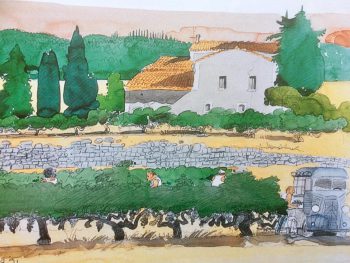
The book follows the author as he and his wife up sticks from London and move to the village of Menerbes in the south of France in the late eighties. Mayle said that he had intended to write a novel upon moving but got so distracted by the ways of the Provencaux that he couldn’t help but write about that instead. Set out in chapters following the months of the year, we experience Peter and his wife navigating all sorts, everything underpinned by amusing and unexpected cultural differences. The cuisine and meals out, work on the couple’s house, garden and vineyard, grappling with strange local customs and a strong local dialect, wanted and unwanted guests, truffle hunting, goat races and coming to terms with the infuriating complexity of French bureaucracy all feature in this year of learning curves and growing pains.
While I don’t envy some of the more challenging experiences in A Year in Provence I couldn’t help but wish I could teleport to Provence every time I opened the book. In many ways Mayle perfectly captures the idyllic quality of French rural life. The sense of community and the kindness of the locals, the beautiful surroundings and the exceptional gastronomy to name a few. Mayle writes with incredible wit, making me smile with delight or even laugh out loud on several occasions.
Written 35 years ago, it is interesting to compare the experience of expats then and now. Though they only moved across the channel, they may as well have moved to a new world. No internet or mobile phones to help with translating, navigation or pre-departure regional research. No FaceTime to see home anytime you want. Reading A Year In Provence as a borderline millenial/Gen Z-er, I know that if I moved somewhere with an unfamiliar culture and language it would never be such full immersion as experienced by the Mayles due to the advancements of technology in an increasingly connected world. In this sense, the book represents a precious snapshot in time.
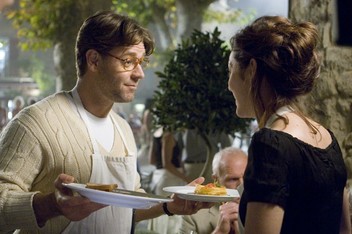
A Year In Provence did so well that it even became a bestseller in France, following some initial resistance. Mayle continued to write about his life in Provence, having to move away for a few years just to escape the hordes of tourists coming to Menerbes to seek him out. He even wrote a novel partly inspired by his own memoir in 2004 called A Good Year, which was subsequently made into a film starring Russell Crowe and Marion Cotillard. As we head into winter here in England, I highly recommend A Year in Provence as a suitable escape to the idylls of southern France.
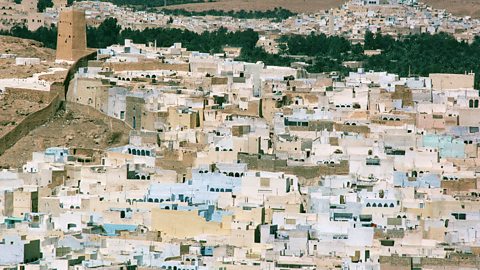
A Bookshop in Algiers, the third novel from young Algerian author Adimi (and the first to be translated to English),is a true love letter to literature, written through the changing fortunes of a small bookshop in Rue Hamani, formerly Rue Charras, in Algiers. This short but moving story is a celebration of bookshops, literature, creativity and those who dare to dream.
The novel revolves around Les Vraies Richesses bookshop, first opened in 1936 by young dreamer Edmond Charlot. Through diary entries we follow the shop through history – it was the heart of Algerian cultural life where Camus launched his first book and the Free French printed propaganda during the Second World War. The bookshop exists through the political drama of Algeria’s turbulent twentieth century of war, revolution and independence with Charlot and many important authors still working tirelessly to publish manuscripts, launch magazines and more. By the time young student Ryad comes to clear out Les Vraies Richesses in the modern day it has been operating only as a government lending library for years, but now is to be shuttered forever. Not a keen reader himself and just keen to get the job done and get back to Paris as soon as possible, even Ryad starts to understand that a bookshop can be much more than a shop that sells books.
Adimi is clearly a remarkable researcher – using archives, books, interviews, documentaries and meeting with Charlot’s friends to bring the French-Algerian publisher and editor to life through fictional but entirely plausible diary entries. Charlot was a truly remarkable individual who should be admired for his commitment to literature and discovering new writers. I had not heard of him before but I’m glad to have read A Bookshop in Algiers to learn about such a significant French cultural figure.
“Paul again: ‘Faith comes by hearing.’ But faith in the Sun is not taught. All one must do is look up.”
I would describe Civilisations as the ultimate counterfactual historical romp, full of wit and bold ideas. Though Binet has turned history on its head here, it highlights more than ever the truth about Europe’s painfully slow progress towards cultural and religious tolerance.
Civilisations takes place over several eras, starting with the brave Vikings of Vinland who move south to Central America around the year 1,000. We then deal with the ‘what ifs’ of Columbus’ famed expedition to the Americas in 1492; alas, in Binet’s world, he does not succeed in his mission. All this paves the way for Atahualpa, co-ruler of the Inca empire to set off across the ‘ocean sea’ from Cuba, where he has been driven due to civil war. In 1531, Atahualpa arrives in Lisbon accompanied by Cuban princess Higuénamota, 181 other Incas, 37 horses and 1 ceremonial puma. This company manages to change the course of European history with startling ease, as the ‘nailed god’ of Christianity comes face to face with the Temple of the Sun.
The Incas take to many European customs quickly, such as red wine, but are confused and horrified at the events of Inquisition taking place in Toledo in the 1530s. Atahualpa and co watch on as Jews, Muslims, heretics, witches and other non-conformers are burned at the stake. In retaliation they massacre the Christians and find their nailed god to be ‘no help at all’.
To the Incas, anyone is welcome in the religion of the Sun, and anyone may practice any religion they like as long as the Sun takes precedence, which immediately gains them support and converts from marginalised groups. In our real history, Cortèz and Pizarro made impressive conquests with unlikely odds, and this is exactly what Atahualpa does here. Soon he is Regent of Spain and on his way to becoming Holy Roman Emperor, to the horror of figures like Thomas More. Paired with trade back across the ocean sea for Inca silver and gold, Seville becomes the axis of Europe under Atahualpa’s watch.
Binet uses an Enlightenment-style critique of Europe from afar, emphasised by the counterfactual nature of the story, to show us the absurdity of the lack of freedom in Europe at this time. The wit and literary pastiches in Civilisations make for a thought-provoking, plausible and knowing novel, and I for one enjoyed reading about the impact of the Incas in Europe – even Henry VIII converts to the religion of the Sun. Unfortunately in reality Atahualpa was captured and executed during the Spanish conquest, but I’m glad that he got to have his day, albeit fictionally, in Civilisations.
“It’s necessary to have wished for death in order to know how good it is to live.”
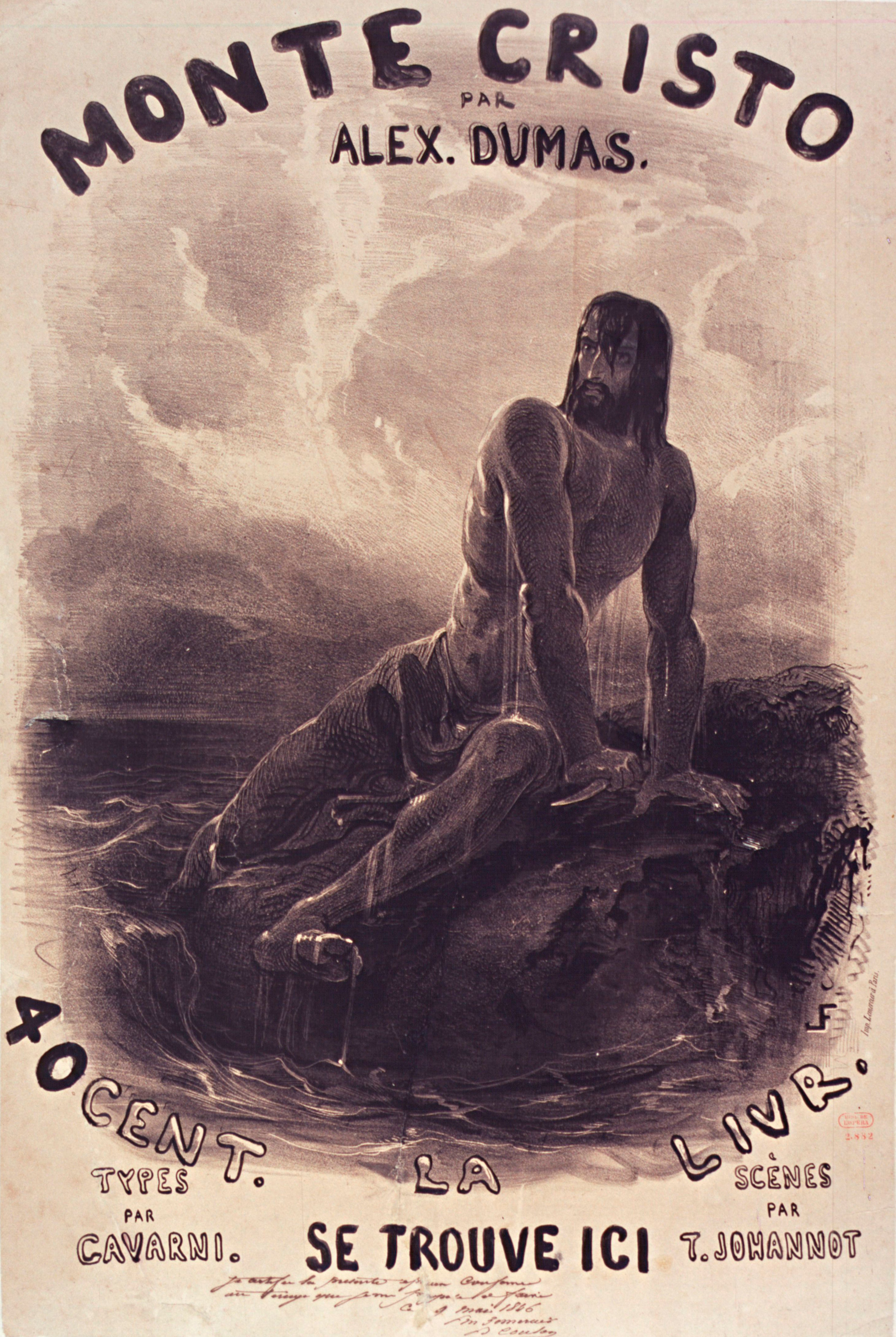
The Count of Monte Cristo has overtaken Gone With the Wind as the longest book I have ever read, coming in at 1,243 pages. This did not stop me racing through it because it is one of the most engaging, clever and thrilling novels I have ever read. It certainly deserves its reputation as one of the greatest books of all time. A story of adventure, hope, justice, revenge and forgiveness, The Count of Monte Cristo will whirl you away into a turbulent period of French history and will stir up all your emotions as you follow one man’s struggle for almost thirty years.
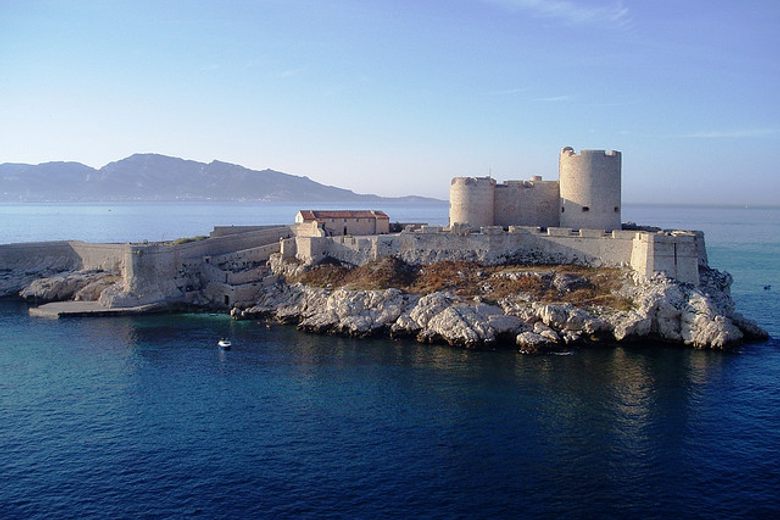
Our story begins in the French port city of Marseille in 1815, and the novel’s protagonist is the young, dashing and thoroughly good Edmond Dantès, who at just nineteen years old is a talented sailor. Despite coming from humble beginnings, Edmond could not be happier with life. He is engaged to the beautiful Mercédès and he is first mate of the Pharaon, owned by the kindly shipowner Morrel. On the day of his wedding, Edmond is falsely accused of treason and Bonapartism and is sent without trial to the island fortress prison off the coast of Marseille, the Château d’If.
Marseille
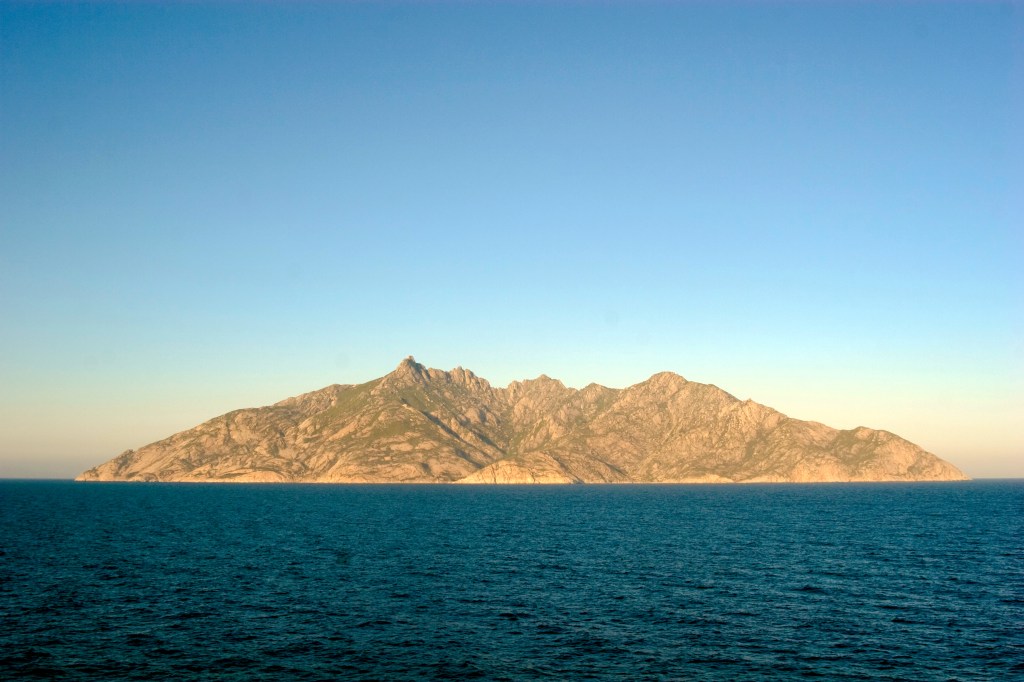
While imprisoned in the darkest dungeon of the prison Edmond befriends Abbé Faria, a fellow prisoner who had been trying to tunnel out of the prison when he arrived at Edmond’s cell. From Edmond’s story, the Abbé is able to deduce who falsely accused and turned in Edmond for their own gain – namely, jealous love rival Fernand Mondego, envious crewmate Danglars and the double-crossing magistrate De Villefort. During their dark years of imprisonment, the Abbé teaches Edmond history, languages, science, literature and more, but most importantly tells of a vast wealth of treasure on the small uninhabited island of Monte Cristo close to the Château d’If that he believes exists from intense historical research. Together they plot their escape, but when the Abbé becomes too ill and is on the verge of death, bequeaths all the treasure to Edmond. After 14 years of wrongful imprisonment, Edmond is able to escape the hellish prison and to his astonishment, discovers that the Abbé was right about the treasure when he arrives at Monte Cristo.
Monte Cristo Island
Fast forward ten years and Edmond arrives in Paris from the Orient, unrecognisable as the mysterious and infinitely wealthy Count of Monte Cristo, secretly set on exacting revenge upon Fernand, Danglars and De Villefort, who have all achieved high levels of success, wealth and status, in part due to their betrayal of Edmond. As the novel progresses it becomes clear how the Count has spent the last ten years patiently and masterfully doing his research and setting up his plan, which will send the reader into a fever pitch as the Count embeds himself in the lives of his enemies. The Count of Monte Cristo is an interesting look into the inner morality of man, as even those who have endured much suffering at the hands of others can still wage a battle within themselves about the choice between revenge and forgiveness as emotions run high and old wounds are reopened.
This novel spans from 1815 to 1839, and Dumas should be praised for keeping up such a fast-paced and involving narrative, despite the complexities of the story and the many strands of the tale that make up the story of Edmond. Interestingly, the bones of the novel are taken from the real-life story of shoemaker François Picaud, who was denounced by his friends as an English spy and imprisoned shortly after becoming engaged to a young woman named Marguerite. After serving part of his sentence under house arrest, his master left all his money to Picaud and informed him as to the whereabouts of a hidden treasure. Unlike Dantès, Picaud went around killing all of his enemies but it is clear how inspired Dumas was by this story, and how skilled he is as a storyteller to bring the story to life and adding in so many nuances, links and plotlines. A key shift is the Mediterranean angle that Dumas gave to The Count of Monte Cristo, by starting the novel in Marseille. The idea of the Mediterranean as the exotic and intoxicating meeting point between the cultures of Europe and the Orient fascinated French authors during this period, and this novel uses the character of the Count to fulfil many Orientalist tropes. The Count has a colourful, rich and vibrant sense of dress, interior design and always lays out an exotic feast for his guests. His household staff include the Nubian mute slave Ali and his devoted companion Haydée, a beautiful Turkish girl he rescued in Constantinople. Additionally, his knowledge of the Orient (as idealised by Europeans during this time) and his mastery of languages lead many of the other characters to believe he must be from the Orient, if not for his very pale skin, which unknown to them is a result of his long period of imprisonment. Many come to the conclusion that he must be from a point between Europe and the Orient like Malta, when in fact he is French through and through.
What I find the most satisfying and intelligent about The Count of Monte Cristo is the fact that despite the Count’s plot to bring down his enemies, he is still only the indirect avenger of his misfortune. In fact, it is their own past misdeeds that destroy the ‘victims’ Danglars, De Villefort and Fernand, all of which are simply uncovered and exploited by the Count. Furthermore, having been educated by the Abbé Faria and armed with limitless wealth, Dantès is able to come back as an instrument of divine justice in the guise of the Count, though that still does not stop him being plagued by insecurity and doubt as his plans take hold. Another interesting perspective is that the Count and the Abbé are early forerunners of the ‘detective’ figure in literature. There are certainly some Holmesian aspects to the novel. For example, the Abbé’s deduction of who betrayed Edmond and why, simply from Edmond’s retelling of the tale. Secondly, the logic behind the Count’s plans only becoming visible to the reader later on while the Count has been the master of events all along. Haydée is a key example. While at first perceived to be simply the Count’s exotic young companion acquired on his travels, she is also the daughter of Ali, Pasha of Janina, a man whom Fernand secretly betrayed to acquire a huge fortune and earn a misplaced military respect in France. Therefore, she is revealed as the proof that would help to bring him down.
The Count of Monte Cristo is an exciting and moving adventure, and after following the Count for so long it is satisfying to see good winning out over evil. However, it is hard not to be struck by the sense that despite the Count’s fulfilment of his plan and achieving the rare opportunity of obtaining education and limitless wealth as a result of his imprisonment, no amount of money can replace a lost life and destiny. Though able to find some peace, the Count will never be able to get back the happy life he once lived as Edmond Dantès, the young sailor with little to his name in terms of money or education, but who had his whole life ahead of him and was surrounded by love and joy. The true tragedy of the novel is that Dantès’ life ended the moment his so-called friends turned him in, and his struggle to forge a new life as the Count will still always be secondary to who he once was.
“Nature’s creative power is far beyond man’s instinct of destruction.”
I am already a fan of Jules Verne after having read Around the World in Eighty Days last year. In terms of an adventure story, Twenty Thousand Leagues Under the Sea did not disappoint, and also happens to cover vast swathes of the globe (albeit exclusively by sea!). This novel is full of exciting moments and makes you marvel at the world below the surface.
Twenty Thousand Leagues Under the Sea is narrated by Professor Pierre Aronnax, a French marine biologist, who happens to be in New York City when the story begins in 1866. Various ships coming in to port have reported sightings of a mysterious sea monster, thought by some to be a giant narwhal. When an expedition to find and kill the creature is authorised by the US government, Aronnax and his faithful assistant Conseil are invited along to offer their expertise. Master whaler and harpooner Ned Land is also among the invitees. When their ship the Abraham Lincoln eventually finds and faces off with the creature, Aronnax, Conseil and Ned Land are thrown from the ship. They hold onto the ‘monster’ for survival, which they shortly realise is in fact some sort of submarine vessel. They are taken within by its mysterious Captain Nemo, and then follows a five month adventure aboard the Nautilus. Verne portrays a world filled with marvellous sea creatures, lost cities, treasure, coral forests and more in this non-stop adventure novel.
What is staggering about this novel is the amount of research Verne must have done to make Aronnax and Conseil’s knowledge of marine biology seem accurate and to be able to describe the seabed and everything around it in such vivid detail, not to mention the geographical precision which is present throughout the book. Undoubtedly, Twenty Thousand Leagues Under the Sea is as educational as it is adventurous. For example, when walking in scuba suits through the underwater forest of Crespo Island, Aronnax reels off names including zoophytes, fishflies, brain coral, ribbon kelp and more, not to mention technical species names like caryophillia and dactylopterae. I was consistently impressed by this throughout the book, and wonder how many hours Verne spent painstakingly researching this to make a fantastic novel.
The adventure in this novel has many layers. It is of course fascinating to see the group travelling across the world – at one point Aronnax muses over some of the things they have encountered during their stay on board the Nautilus: “the underwater hunting forays, the Torres Strait, the tribesmen of Papua, the time we ran aground, the coral cemetery, crossing under the Suez, the island of Santorini, the Cretan diver, the Bay of Vigo, Atlantis, the South Pole ice cap, being trapped under the ice, the battle with the squids, the hurricane in the Gulf Stream, the Vengeur, the horrific sinking of the warship with the loss of all hands!…” The mind boggles at the twists and turns faced by Aronnax, Conseil and Ned Land. The adventure goes deeper however, thanks in the main to mysterious Captain Nemo, who secretly built this ahead-of-its-time submarine and spends his time travelling the seas. Nemo lives in a self-imposed exile on board the Nautilus, both for the purpose of scientific discovery but also to escape human civilisation. Though the trio are afforded every privilege and unbelievable experiences on board the ship, there is always a sinister undercurrent running through the story, as Nemo says from the start that they can never leave the vessel for fear of discovery by the rest of the world. Eventually, an escape must be plotted so Aronnax, Conseil and Ned Land are not doomed to spend the rest of their lives on the Nautilus.
Twenty Thousand Leagues Under the Sea is a fascinating and gripping tale of marine adventure, with a deeper exploration of the lengths to which people will go to overcome personal tragedy. I highly recommend diving in to this novel and immersing yourself in the wonderful world beneath the waves.
“Everybody knows that England is the world of betting men, who are of a higher class than mere gamblers; to bet is in the English temperament”
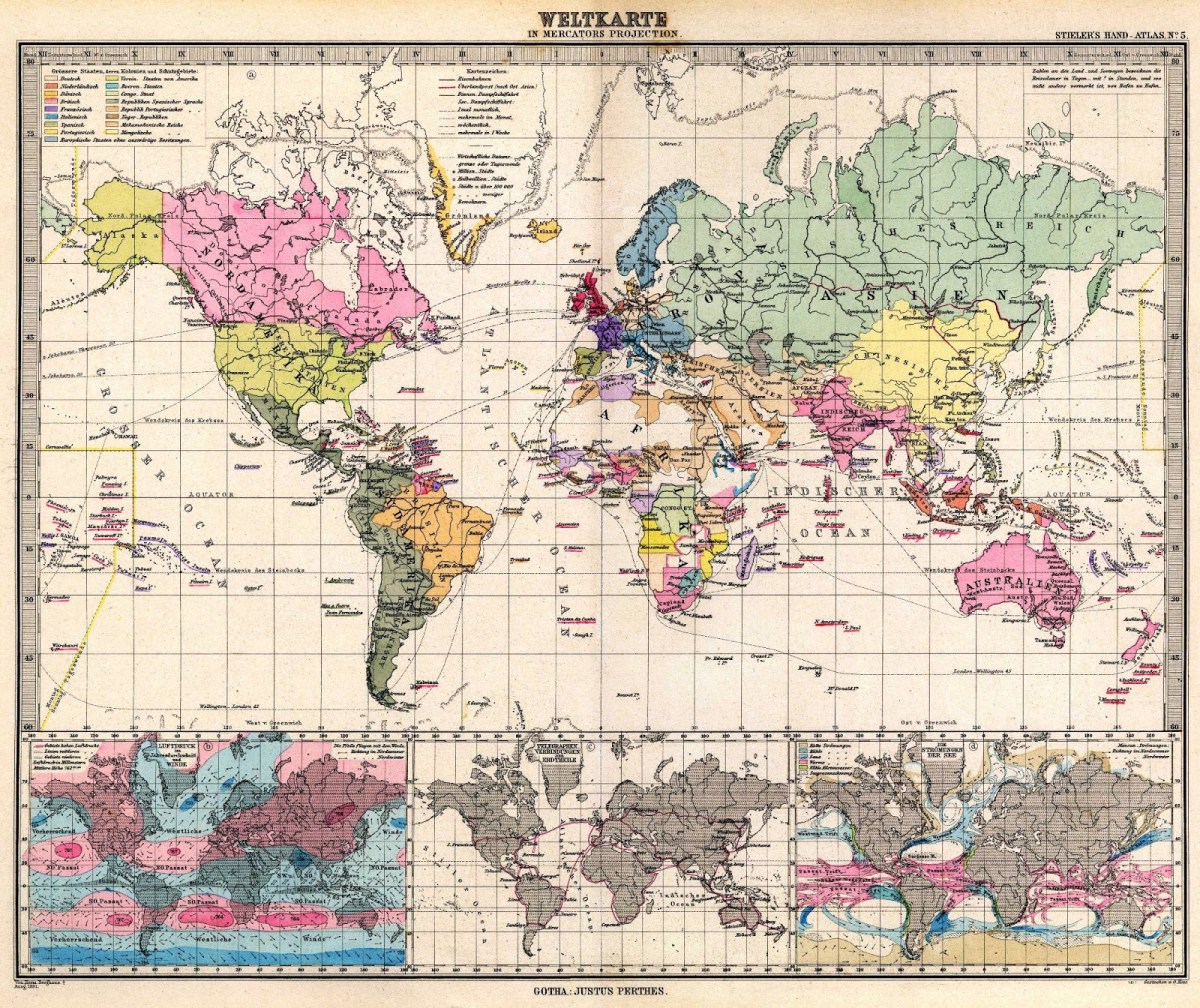
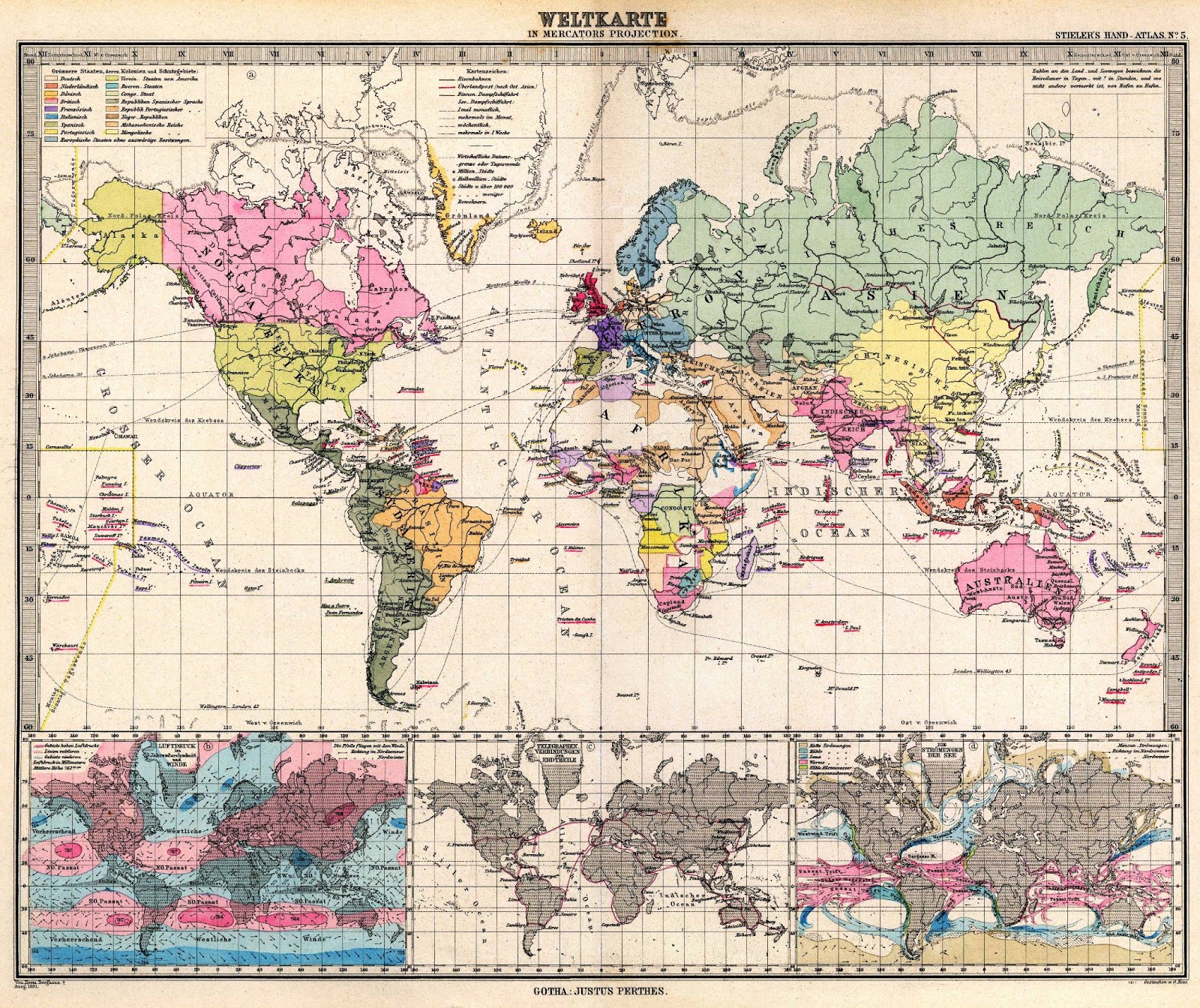
Hooray, I’m back in the rollicking world of Victorian adventure thanks to Jules Verne’s Around the World in Eighty Days (1873). My parents bought me a lovely edition for Christmas and it took me all of a week to devour it and see if it was in fact possible to pull off such a feat.
Of course, this book was originally written in French (and perhaps I should have read it comme ça) but I thought the English translation worked really well, in part because London is the home setting and the main character is an English gentleman, Phileas Fogg.
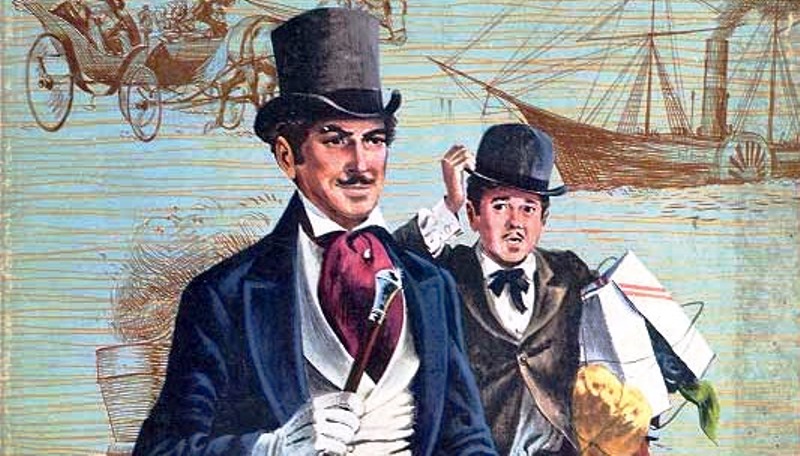
Whose idea was it to take on this crazy trip I hear you cry, which brings me to the premise of the story. Our protagonist Mr Fogg has just taken on a new servant, a Frenchman named Passepartout (meaning ‘goes everywhere’ – oh the irony) who is looking for a quiet, easy life with little to do after a career in the circus. Luckily for Passepartout Mr Fogg is a very meticulous gentleman who schedules every minute of his life to a T, going nowhere else but between his house on Savile Row and the Reform Club. He takes lunch and dinner at the club and spends an awful lot of time playing a card game called Whist. This creature of habit is not someone you would suspect of undertaking a journey so foreign and full of unforeseen risk.
And yet, it transpires that after a conversation with some fellow club members, Mr Fogg has calmly bet £20,000 (half of all the money to his name no less!) that he can indeed travel around the world in 80 days, starting from that very moment. Much to the glee of the gentlemen and the dismay of Passepartout, the adventure had begun.
What follows is a rich and exciting journey around the world using every mode of transport available – including an elephant and a sledge. The nineteenth-century world, particularly the British or ex-British colonies is of particular historical interest to me, so I especially enjoyed being able to traverse through the likes of India, Singapore and America with the characters. Not that Mr Fogg shows any interest in anywhere for the duration of the trip, much to the astonishment of Passepartout and me the reader, however this does add a consistent element of humour to the novel. Indeed, this imperturbably cool-headed gentleman is quite remarkable, and his inexplicably calm nature comes in very useful in the many crises faced en route. He is the antidote to the chaos of Passepartout, who always seems to be getting himself into scrapes.
Towards the end of the voyage, Mr Fogg has got himself quite the motley crew of fellow travellers who have become as invested in this bet as if it were their own, including the conniving police inspector Mr Fix. Together they face a multitude of exciting incidents and mishaps, not least fighting off an attack by a tribe of Sioux native Americans in the middle of a train journey.
Verne’s novel is not only thrilling but witty. Even in English, all his wry comments on the nature of colonialism, stock markets, and Mr Fogg himself for example make for a drily amusing and engaging read alongside all the adventure.
The question now on your mind is probably – but did Mr Fogg and the gang manage to do it? That one I will leave up to you to find out in what is quite frankly a nail-biting and unexpected ending.
“La terre est bonne; mais il faut se battre pour l’avoir”
Upon publication, this novel – although written by a français de France – was hailed as a completely accurate representation of the idyllic rural Quebecois lifestyle centred on religion, family values, and land cultivation, that was supposedly at the heart of the French-Canadian ethos. I must admit, I was not inspired to eschew modernity and take flight for the woods after reading it. This novel is great, but not because of the apparent pastoral paradise it depicts. It is great because of the ominous and quite frankly disturbing presence of the forest, and the fact that actually, the human characters are locked in hopeless struggle with the cruel and vindictive wilderness for the land that leaves readers feeling tense and uneasy.
Maria Chapdelaine tells the story of the Chapdelaine family. We have Samuel, Laura and their children, who include eighteen-year-old Maria. They are habitants intent on faire de la terre to fulfil their French-Canadian rural destinies. In search of good land, they have pushed so far into the wilderness that the nearest town is eight miles away and they are completely surrounded by the looming forest. Three suitors vie for Maria’s hand in marriage, most notably François Paradis. François lives the coureur du bois lifestyle which exists in stark contrast to the Chapdelaines’ ideology. He lives and trades off the land and is always on the move; to him the woods are everything. Maria loves him for the freedom and adventure he would bring to her life. And yet, when he tragically perishes in the woods during a punishing winter, Maria is left devastated and disillusioned.
Despite the novel being titled Maria Chapdelaine, she is not given much air time. It is all about the battle with the wilderness. The forest is the enemy that blocks the Chapdelaines from their future prosperity. They are ‘des gens qui commencent une longue guerre’ and seem to always be at the land clearance stage of proceedings. This book is many things, but I found it impossible to escape the overwhelming sense of bleakness. Hémon scorns human attempts to dominate the land; ‘la petitesse de l’église de bois, la petitesse des quelques maisons de bois’ emphasises that they are not but insignificant specks on this vast hinterland. What really unnerved me was that at every turn, the characters are faced with ‘la lisière sombre du bois’, always gloomy, always impenetrable, always watching. It must be mentioned at least thirty times throughout.
As I read on, I came to realise that it was not a battle between humans and the wilderness at all; the wilderness is personified as having a ‘sévérité divine’ against which the humans ‘n’avaient aucune révolte, même pas d’amertume’, in fear of worse retribution. When poor Maria’s true love François is cruelly taken away from her, we hear that ‘le froid assassin et ses acolytes se sont jetés sur lui comme sur une proie’. If this would not instil the fear of God into you as a reader about venturing into the Canadian woodland then I don’t know what would.
I realise that perhaps I am not selling this book; if you want something that will send shivers down your spine and leave a distinct impression on you, then I would strongly recommend it. And don’t forget, to be hailed as a novel representing a glorious rural idyll, there must be some evidence of this in the text.
Even I admit, Maria Chapdelaine has its moments, and all of these moments come in the short and sweet summer months. The wilderness becomes a beautiful, romantic backdrop for Maria and François’ budding romance and there is jovial sense of purity and simple living for this family in the woods. So perhaps it is the long Canadian winter rather than the wilderness itself that is the master of cruelty? I’ll leave that up to you to decide…
“En transformant des relations familiales en relations hasardeuses, Dickner porte atteinte à l’institution familiale, la réduisant au hasard des croisements sanguins, et réduisant ceux-ci à une matérialité non signifiante”
Isabelle Boisclair
Nikolski is one of the most interesting yet frustrating novels I have ever read. Hailing from Quebec, Dickner brings age-old questions about Quebecois identity and place in the world to the fore in this humorous and thought-provoking novel. There are many themes that stand out in the text, but I am going to examine incidences of chance and coincidence because for me they are the most impacting. It is times like these when I feel privileged to have studied French, because it means I can read and understand important French-language works.
In brief, Nikolski centres
on three protagonists. We have Noah, Joyce, and an unnamed narrator who are all
(unbeknown to each other) related thanks to the womanising ways of one Jonas
Doucet, who we never meet. This makes it very “coincidental” that for one
reason or another, they all end up converging on the same neighbourhood in
Montreal.
Now, like many a reader of this book I’m sure, I
experienced the classic satisfaction you get from dramatic irony. Knowing about
the protagonists’ relation and proximity before they did meant that I was
convinced I would just keep reading until they all met by chance and experienced
a glorious family reunion, and then I could think smugly, ‘I told you so’.
Dickner, sly now I see he is, teases this and makes it seem a sure thing by
interweaving smaller incidences of chance and coincidence into the novel. These
include but are not limited to:
Near-misses or brief encounters between the
protagonists
Links through secondary characters
Kinship of mentality through the protagonists
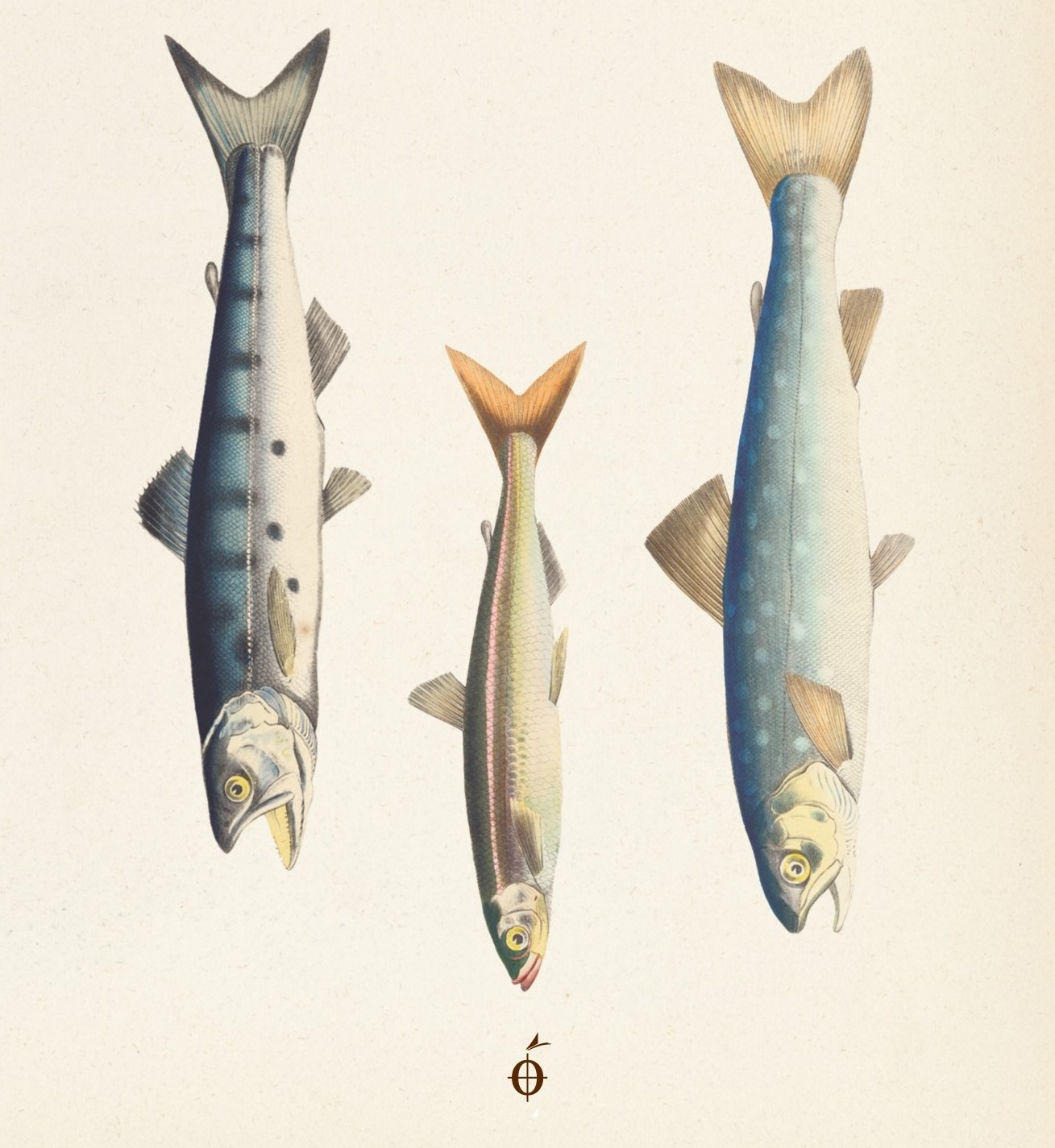
regularly speaking in metaphors and allusions to fish, the sea, boats and all
things water
Repeated appearances of items or characters
to different characters, e.g. le livre à
trois têtes, Garifuna maps and a homeless man sporting a maple leaf hat
He also builds these up to an infuriating level; for
example, we go from Noah whizzing past Joyce on a bike to the two of them
chatting at the airport along with Noah’s son; I was left stunned and
incredulous that nothing had come of this opportunity. My reaction was such
because all the little episodes of chance and coincidence, that could easily go
unnoticed, make us as readers think that there is a deeper meaning to
randomness and fate. Surely there must be, if it is woven so much and so easily
into everyday life.
So then the awaited day was upon me, the day of reading
the last chapter. Finally, the end to this tense build-up and the agonising
near misses. You can imagine my horror therefore when the novel just ended; the
protagonists never discover their familial links, and they all continue to lead
their own lives, running parallel and only momentarily bumping into each other,
but never intertwining. Dickner has cleverly constructed a world in which we believe
in chance and coincidence; indeed, despite the actual ending being the more
realistic outcome given the circumstances, we as readers are more suspicious of
the fact that there was no grand reunion than if there had been one.
I have been thinking about this novel and its ending
since I finished reading it a couple of months back. Even though I know Dickner
has minutely engineered every event in his book, meaning there is no real
chance and coincidence at all, I still can’t help but believe in this world he
has constructed. If you fancy feeling extremely frustrated, have a read of Nikolski, either in the original French,
or in the English translation.





























 ImoReads