Categories
English literature nineteenth century

ImoReads… ‘The Picture of Dorian Gray’ (1890) by Oscar Wilde

Blog 9

“The horror, whatever it was, had not yet entirely spoiled that marvellous beauty”
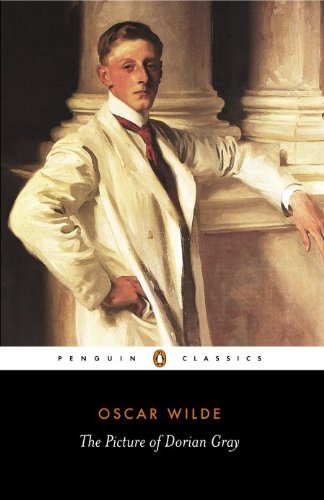
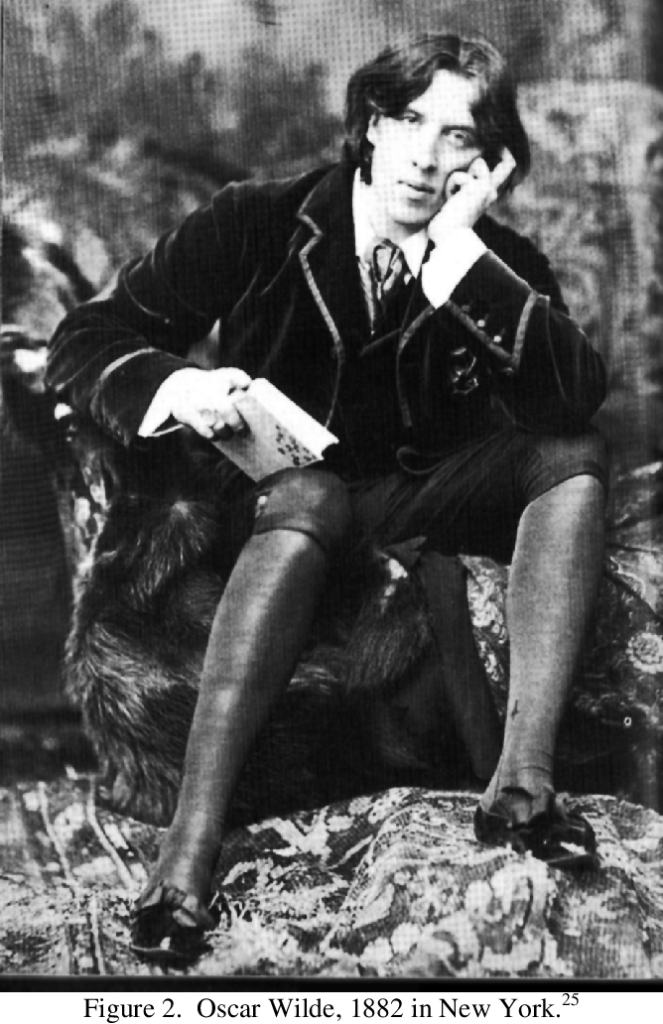
There is and always will be a soft spot in my heart for Oscar Wilde, certainly one of the most provocative literary figures of the nineteenth century. After going to a production of the brilliantThe Importance of Being Earnest (blog coming soon) with my mum some years ago, I became infatuated and have since read all his short stories, plays, essays and this, his only novel. He was even the subject of my 5000-word Extended Project Qualification (EPQ) undertaken alongside my A-Levels, in which I tasked myself with the question, ‘to what extent was the Victorian press responsible for Oscar Wilde’s celebrity?’ Research for this took me to the National Archives, where I felt privileged to read his handwritten letters from his time in prison. Humbly then, I consider myself to be the epitome of the Wildean ‘fangirl’ if such a thing exists. 

As part of my EPQ I examined the blatant homoeroticism running through The Picture of Dorian Gray, as it was used as evidence against Wilde in his sensationalised trial for ‘gross indecency with other men’ in 1895, a proceeding which certainly elevated his celebrity. Therefore, I am going to use this blog to discuss other key themes in the text such as Gothicism and aestheticism.

This novel is an ill-fated tale of moral decline and philosophic instruction for our unfortunate protagonist, the young aristocrat Dorian Gray. Basil Hallward, Dorian’s close friend and a professional artist, paints a portrait of Dorian because he is completely infatuated by his youth and extraordinary beauty. At first Dorian is delighted with the painting; it only dawns on him that his beauty – so perfectly preserved on the canvas – will fade with age after Basil’s amoral friend, Lord Henry Wotton, informs him of the fact. So enamoured with his own radiant portrait, Dorian exchanges his soul for eternal youth and beauty in an exquisitely Faustian twist. As a result, he is drawn into a corrupt and sinful double life, indulging unspeakable desires in secret while maintaining a gentlemanly façade to polite society. Only the painting bears evidence of his decadence while he himself retains his youthful innocence and beauty.

The lurking presence of the painting that becomes harder and harder for Dorian to ignore is one of my favourite gothic elements in the novel. The physical embodiment of his deal with the devil, the painting becomes more and more hideous each time Dorian does something terrible; as well as ageing repulsively, there is a chilling cruelty in the eyes and mouth of the painted Dorian that grows increasingly and unnervingly noticeable as the novel progresses. Locked away in a dark dusty room high up in the house, the strange horror of the painting is alike to a nightmare you can’t quite shake off. 

And yet, Dorian is not too concerned with the degradation of the painting at first. He is too busy engaging in debauched delights; think opium dens and licentious behaviour in the darkest corners of London.

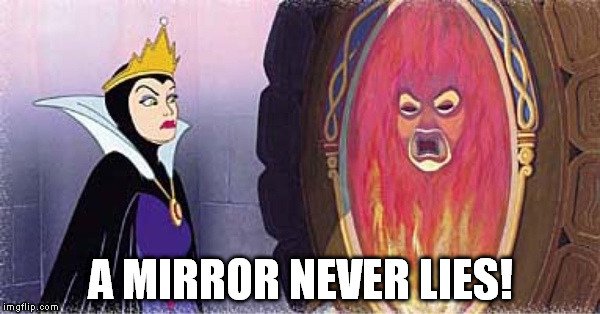
It is only when his manner and behaviour become too cruel for him to ignore – because indeed the soul can decay in more ways than one – that the painting and what he has done begins to weigh down upon him. In this way, the painting is a motif for an inverted magic mirror. It allows him to live for hedonistic pleasure for a time, but always reflects the ugly truth of his crimes back to him no matter how much he wishes it not to.
I find this very interesting in the context of Wilde’s ‘art for art’s sake’ aesthetic philosophy. Scathingly received by critics at the time for its homoeroticism and allusions to sins that were surely offensive to stiff Victorian moralities, Wilde fiercely defended The Picture of Dorian Gray. In a now infamous aphoristic preface to the non-censored 1891 edition, Wilde vigorously defends art for art’s sake. It is ironic that, although he was referring to the art of his writing, the idea of art for art’s sake is completely vilified in this story. That is, it turns out that the ‘work of art’ that is Dorian should have stayed on the canvas. His pursuit of eternal youth and beauty is his ruination, and it hurts many characters along the way. Wilde’s moral lesson here is that being good trumps looking good; a virtuous soul brings more happiness than beauty, which should only ever be ephemeral.
Dark though this tale is, I must laud its moments of comic relief, provided by Lord Henry ‘Harry’ Wotton. You cannot help but like this gentlemanly rogue despite his amorality due to the Wildean wit bestowed upon him. Many of Wilde’s most famous epigrams come from The Picture of Dorian Gray. An epigram is a phrase that expresses an idea in an interesting, clever, and surprisingly satirical way. Wilde always says the exact opposite of what you are expecting him to say. For example, Harry is of the opinion that ‘it is only shallow people who do not care about appearances’ which is decidedly not how that phrase is usually said. Wilde’s epigrams also turn out to be well-observed and pretty much true, such as in another golden example from Harry; ‘“It is perfectly monstrous”, he said, at last, “the way people go about nowadays saying things against one behind one’s back that are absolutely and entirely true”’. Harry’s enduring friendship with Dorian means that fortunately, readers are exposed to many a memorable epigram over the thirteen chapters.

So then, The Picture of Dorian Gray is a must-read Victorian novel, not only for its thought-provoking themes and intelligent narrative, but for its distinctly Wildean touch. An interesting question to ask yourself when reading it is, who is really to blame for the outcome of the novel? Is it Basil for painting the picture? Is it Harry for targeting Dorian with his bad influence and amoral philosophies? Or is it Dorian himself for enacting his fateful deal? It’s a moral conundrum but I’ll leave that for you to decide…

Happy reading,

Imo x

Categories
English literature

ImoReads… ‘The Prisoner of Zenda’ (1894) by Anthony Hope

Blog 4

“For my part, if a man must needs be a knave I would have him a debonair knave… It makes your sin no worse as I conceive, to do it à la mode and stylishly”

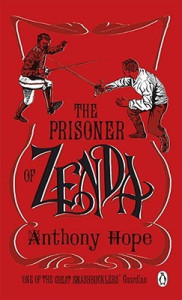
The Prisoner of Zenda  is without a doubt one of my favourite adventure novels. There is just something charming about this Victorian escapade; it’s got the setting, it’s got the action, it’s got the romance, it’s got the glory. 

The story centres on the English gentleman and loveable rogue Rudolf Rassendyll and his trip to the fictional central European country of Ruritania. He happens to arrive on the eve of the king’s coronation, and he just so happens to be the king’s distant cousin, namesake, and spitting image replica. When the king’s dastardly younger half-brother, the Duke Michael of Strelsau, drugs and imprisons the king in the Tower of Zenda in a bid to take the throne, the king’s trusty attendants come up with a brilliant yet risky plan. Colonel Sapt and Fritz von Tarlenheim enlist Rassendyll to play the part of the king until they can rescue the real deal. What follows are swords-drawn encounters with Michael’s henchmen, plots and counterplots from both sides, and a jolly good adventure.

Of course, the story would not be complete without a little romance; Rudolf enjoys playing the king although he is committed to the plan to free him, but what he did not expect was to fall in love with the king’s fiancé, the princess Flavia. With the help of the Duke’s mistress Antoinette de Mauban, our trio of heroes manage to outwit the Duke and his henchmen to free the king, but Rudolf and Flavia, both bound by duty, must sadly part at the end.

What is great about this plot is that apart from the small group of people who knew about the identity of the ‘false king’ (which eventually includes Flavia herself), the rest of the world remains none the wiser. It is amazing how such a gamble paid off and gives the reader a sense of satisfaction by being in on this great secret. When I imagine Hope’s country of Ruritania, I see a Germanic-inspired nation with fairy-tale castles and a black forest, which only add to the adventure. If you like a good urgent gallop through such scenery, then thanks to The Prisoner of Zenda you can eat your heart out.

Rudolf Rassendyll is undoubtedly my favourite character, and I am glad Hope made him the first-person narrator. Although he already lives a life of leisure being from an aristocratic background, even he admits being tempted to usurp the Ruritanian throne forever. Indeed, when offered a kingdom who wouldn’t say yes? It is this honesty plus his frank humour and in the end stronger sense of morality and bravery that make Rudolf a king by nature, if not truly by right. You can’t help but root for him, so whenever there is a showdown between him and one of the Duke’s henchmen – Rupert of Hentzau in particular – you can’t put the book down until you know the outcome. (This explains why I read the book in two days). He risks his life, gives up his crown and his true love for his distant cousin, and this is the truest picture of Victorian heroism.

Are you thinking that ‘Ruritania’ sounds familiar? Hope’s novel had such an impact that it kickstarted the genre of ‘Ruritanian romance’ in literature, theatre and film. That is, stories set in a fictional central or eastern European country that are, like The Prisoner of Zenda, swashbuckling tales of adventure and intrigue, with the themes of romance and honour being the most prominent and focusing exclusively on the ruling classes. In general usage, Ruritania is a placeholder country name used to make points in academic or political discussion. The impact of Hope’s novel is undeniably far-reaching.

I enjoyed my trip to Ruritania so much that I will shortly be returning via the sequel, Rupert of Hentzau (1898). If you want to be taken on an exciting adventure that you just can’t find in today’s world, take a leap back in time to the nineteenth century yourself and be dazzled by Rudolf, Ruritania and romance.

Happy reading,

Imo x

Categories
English literature

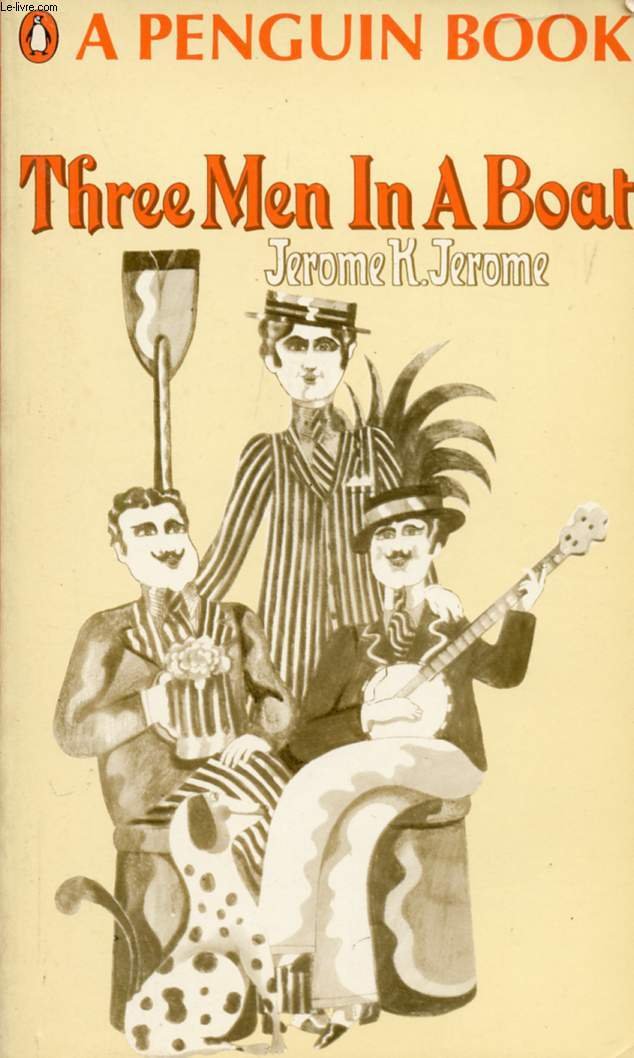
ImoReads… ‘Three Men in a Boat’ (1889) by Jerome K. Jerome

Blog 2

“What the eye does not see, the stomach does not get upset over”

I thought I would kick-start my blog by discussing one of English literature’s most enduringly funny novels. Written in 1889, Jerome K. Jerome concocted the perfect comic tale to match the trend for recreational boating in the late Victorian era. I for one am very glad that this work, originally meant to be a travel piece for Home Chimes magazine, morphed into the hilarious escapades of three men holidaying in a boat. In the words of Jerome himself, ‘nothing else seemed right’.

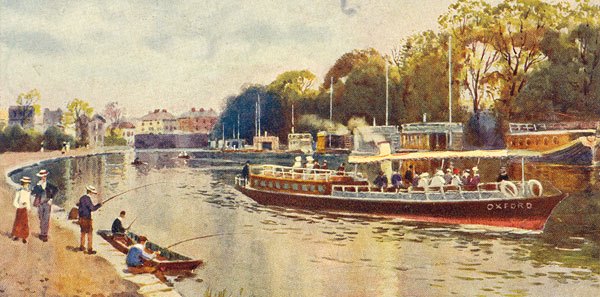
The general premise of the novel is three City clerks – J. (the narrator), George and Harris – taking a two-week boating trip along the Thames from Kingston to Oxford and back again (which is particularly enjoyable for me to read as a Kingston-dweller). We cannot, of course, forget their canine companion Montmorency, not least because the subtitle of the book commands us not to (to say nothing of the Dog!). What follows is a humorous voyage of mishaps, both on this trip and through anecdotes that spring to the narrator’s mind along the way. 

What I enjoy the most about Jerome’s novel is its refreshing triviality. Unlike a lot of Victorian novels, there are no devastating plot twists or stories of unrequited love; like the boat, the novel trundles along, and is at once about lots of things and about nothing at all, and that’s where its charm derives. The most dramatic things to happen are perhaps one of the party falling into the river, or getting lost in Hampton Court Maze, or even that (shock horror!) there are no inns to stay in at a certain point of the trip. Such novels are sometimes overlooked in the rankings of great literature, but I think they are uniquely brilliant when they can still make us laugh over 100 years after publication.

Indeed, Jerome’s use of quintessentially English humour is such that an English audience can still very much relate and laugh along. For example, in one sentence he manages to sum up the immortal English outlook on the weather. That is, ‘but who wants to be foretold the weather? It is bad enough when it comes, without our having the misery of knowing about it beforehand’. If this does not define Englishness I don’t know what does. 

However, for me, one particularly funny incident stands out. After a long hard day on the river, our three “hangry” gentlemen despair that there is no mustard to go with their beef. However it is deemed that ‘life was worth living after all’ when they discover a tin of pineapple. Sadly for them (although happily for us), there is no tin-opener to be found, so what ensues is ‘a fearful battle’ between the men and the tin. A hilarious sequence of imaginative attempts to open the tin to no avail complete with extreme frustration from the protagonists provides an overwhelmingly relatable comic thread inspired by ordinary everyday inconveniences. 

Contributed to by the chuckle-worthy bumbling about of our three men in a boat and their beautifully eloquent nineteenth-century language, Jerome paints quite the picture of nonchalant, carefree joy and timeless Victorian farce. The fact that Three Men in a Boat sold staggeringly well at the time and has never gone out of print since it first appeared in 1889 suggests that the British reading public wholeheartedly agrees with my assessment.

If you’re looking for a light-hearted summer read to enjoy while sunbathing in your back garden (or, indeed, Thames-side) then Three Men in a Boat is the one for you. To really get into the spirit I would advise snacking on beef and mustard and/or tinned pineapple while reading… 

Happy reading!

Imo x