“No one knows the worst thing they’re capable of until they do it.”
The Confessions of Frannie Langton is an astonishing debut from Sara Collins. It’s a fast-paced, authentic gothic novel that you won’t be able to put down.
The novel is written as a monologue from Frannie to her lawyer – she is on trial at the Old Bailey in 1826 for allegedly killing Mr and Mrs Benham, to whom she was a housemaid, though she has no recollection of the murders. The damning testimonies against her range from slave to seductress to whore, but this is not the whole truth. To discover what really happened at the Benham household, Frannie takes us back to the beginning of her story when she was a young girl learning to read on a Jamaican sugar plantation. Through her fevered confessions and examination of her life, Frannie repeatedly asks herself the question – could she have killed the only person she really loved?
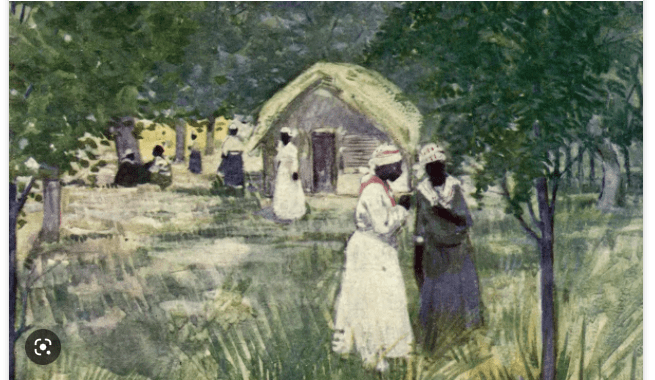
One of the key elements of The Confessions of Frannie Langton is slavery, which was still legal across the British Empire in 1826. We learn that Frannie, who is mixed race, grew up as a maid in the main house of a sugar plantation ironically named Paradise in Jamaica. She is taught to read and then forced to work for the Mengele-esque plantation owner as a lab assistant on his horrific experiments designed to prove that Africans are not human. She is intelligent but brought up in a terrible life with no real outlet to express herself, so she often comes across as awkward due her stifled cleverness. Even though technically freed by the law when she is brought over to England by her master, she finds herself a new sort of slave in the Benham household. It is here that she meets her Mistress, Benham’s wife, a morally ambiguous opium-eater who Frannie is soon enamoured with, though Mistress’s affections for Frannie are soon diverted to a rival. Then, in unknown circumstances, the Benhams are murdered.
Sara Collins has given us all the elements of the original gothic novel in The Confessions of Frannie Langton, while also echoing other brilliant novels like Sarah Waters’ Fingersmith and Margaret Atwood’s Alias Grace. It’s gripping, thought-provoking and dark and I look forward to seeing what Sara Collins does next.
“…I take some pride in the fact that while thrones were toppling and governments melting away overnight, I was heading for home with a set of crown jewels. There’s a moral there, I think, if I could only work out what it was.”
Having previously read and blogged about three Flashman novels that I had in an omnibus volume, I was delighted to revisit one of the most engaging characters in literature in another Flashman adventure, Royal Flash. This is the second novel chronologically in the series and as hoped, our hero Harry Flashman is no less roguish, scoundrelly or cunning than before.
Royal Flash has two sections which take place between 1842 – 43 and 1847 – 88. In the first section, Harry is enjoying being off military duty in London, still surfing on his heroic reputation from his escapades in Afghanistan (which readers of Flashman will know are not quite as they seem to the general public). It is here he has a dalliance with the beautiful Lola Montez and meets the dastardly Otto Von Bismarck.
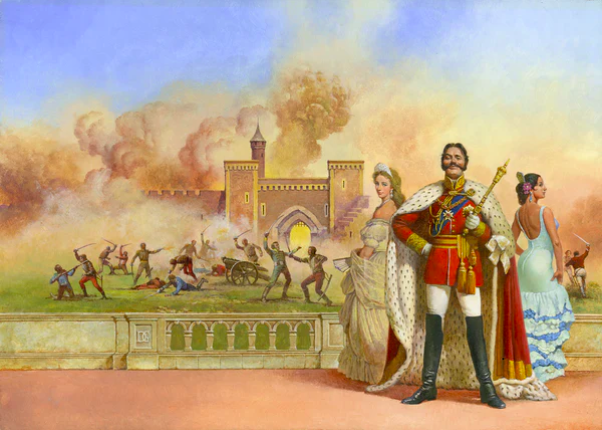
It is not until section two however that Flashman comes to realise how much he regrets having met Bismarck in the first place. Unwittingly delivered to him in Germany by femme fatale Lola, Flashman needs all his cunning, seductive charm and impressive will to escape in order to extricate himself from a fiendish plot that will ultimately decide the fate of Europe. Flashman takes the reader on an exciting, amusing adventure through the dungeons and throne-rooms of Europe, engaging in swordplay, amours, disguise and deceit to escape his desperate situation and return to London.
With the risk of sounding like a broken record, the Flashman novels are magic because of the Harry Flashman character himself. A self-confessed coward and rascal keeping up the façade of a brave, respectful British Officer, in his memoirs he is unapologetically honest about his escapades and how he is always looking out for himself above all else. He is witty and refreshingly blunt to the reader, but always manages to maintain a heroic image to his unsuspecting foes. You can’t help but like him, and paradoxically he often ends up being the hero people think he is because the situations he finds himself in require courage to escape, even though like his enemies he is never averse to using underhand tactics, treachery and cunning to do so.
Royal Flash is a rollicking adventure across the continent, and once again George MacDonald Fraser has seamlessly integrated our fictional hero into real historical events with real characters, making you wish Flashy really had locked horns with the likes of Bismarck.
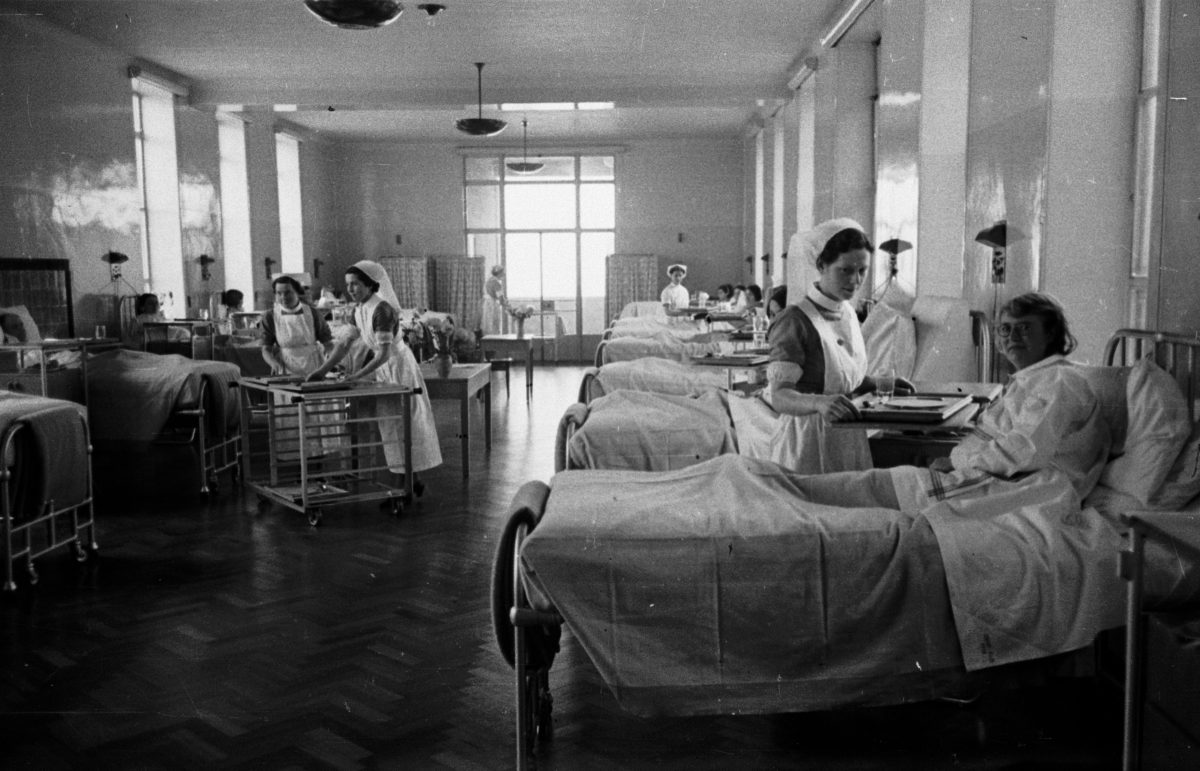
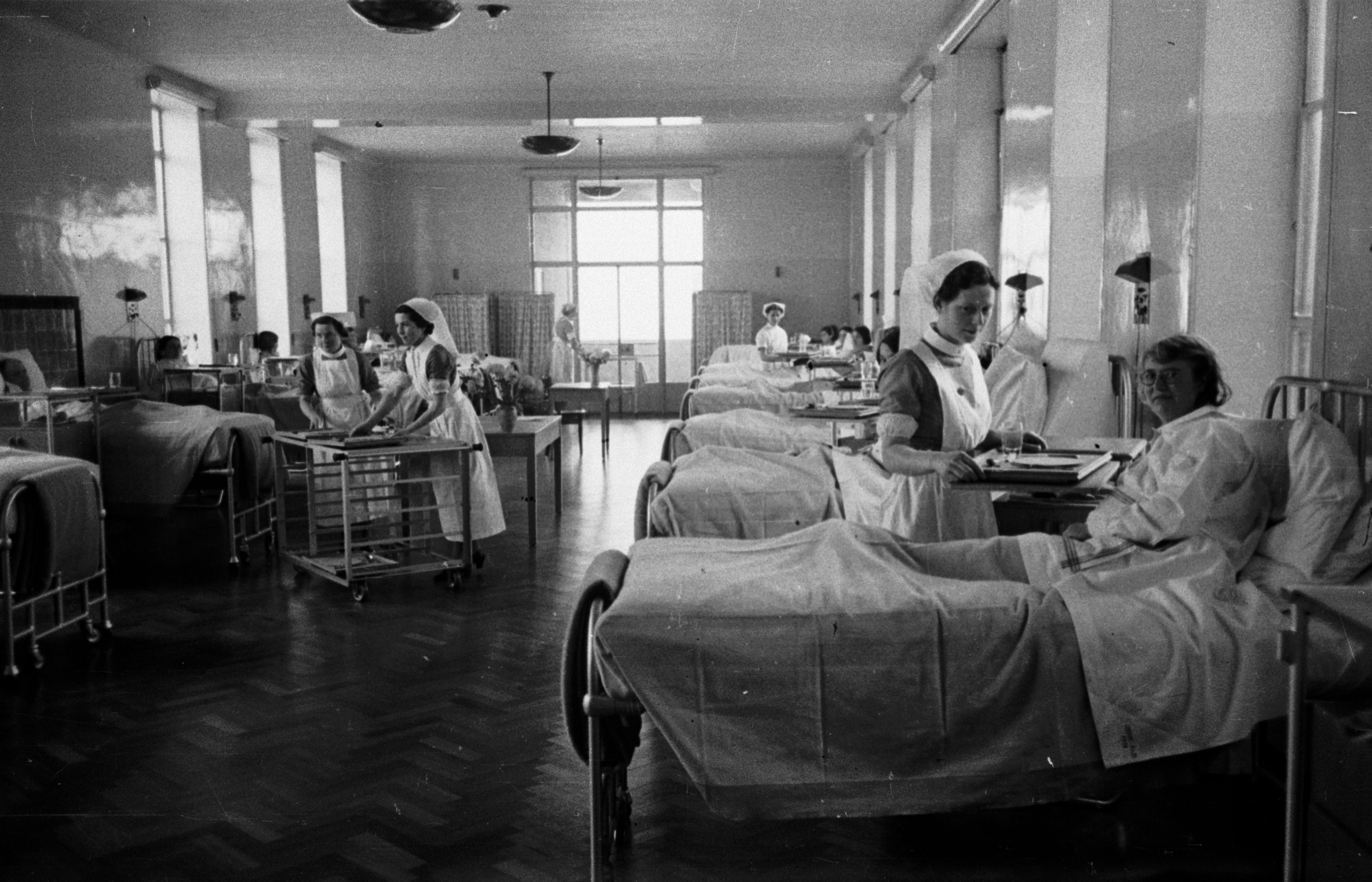
21st January 1939: A nurse serves lunch to patients at a Birmingham hospital. Original Publication: Picture Post - 79 - Birmingham - pub. 1939 (Photo by Humphrey Spender/Picture Post/Getty Images)
Blog Nº 45
“If we go on trying to make out that everything’s wrong outside the profession and everything is right within, it means the death of scientific progress.”
I have now read The Citadel twice; I can say without a doubt that it ranks on my top ten favourite books of all time. Cronin is a skilled storyteller who in this novel draws on his own experience as a doctor to paint an unsparing picture of medical ethics in pre-NHS Britain.
The Citadel takes place over a number of years, opening in 1924 when idealistic young doctor Andrew Manson has just qualified from university in Scotland and takes up an assistant job to a Dr Page in the South Wales mining town of Drineffy. Realising on arrival that Dr Page is medically incapacitated, he has to take on the entire practice for a meagre salary. Andrew is appalled at the unsanitary conditions faced by the townspeople and, eager to improve the lives and health of his patients, works to change things, helped by surgeon Phillip Denny. His next post in South Wales is as an assistant doctor for a medical aid scheme in the mining town of Aberalaw. On the strength of this new position he marries junior schoolteacher Christine Barlow whom he met in Drineffy. They are very happy together. Andrew remains committed to improving the lives of the miners and dedicates many hours to his research on the link between lung disease and coal mining. He is granted the MRCP and an MD when his research is published. Though this leads to a post with the Mines Fatigue Board in London Andrew resigns after six months, frustrated at the lack of action taken on issues discovered in his research and being cooped up in an office.
The next part of the novel sees the gradual estrangement of Andrew and Christine after Andrew sets up a private practice in London. At first Andrew does not receive many patients and those that he does receive are poor so cannot pay much for treatment. However, ultimately Andrew is seduced by the thought of easy money from wealthy, hypochondriac patients and seemingly abandons all morals in pursuit of status and wealth. The more wealthy Andrew becomes, the more Christine longs for their previous life. To her, money does not equal happiness; she would be happy with a simple country practice with the moral and committed Andrew she once knew and loved. Andrew is frustrated that Christine cannot be pleased by all that they can now afford – cars, fancy meals out, new clothes and acquaintances in high places. It takes a truly horrifying incident which lays bare the unethical system he has become party to to shock Andrew back to his true self, though he has much still to face before the novel’s end.
The fact that Cronin was a doctor himself adds serious credibility to The Citadel. Its treatment of medical ethics was groundbreaking at the time and is credited for laying the foundations for the NHS which was created just a decade later. Cronin once stated in an interview, “I have written in The Citadel all I feel about the medical profession, its injustices, its hide-bound unscientific stubbornness, its humbug … The horrors and inequities detailed in the story I have personally witnessed. This is not an attack against individuals, but against a system.”
The more personal storyline of Andrew and Christine’s relationship only heightens the reader’s anguish. We not only witness a heartbreaking disintegration of a once strong marriage between two characters we have grown to like, but also understand the severity of Andrew’s descent into immorality by contrasting it with Christine’s staunch goodness and incorruptibility. As is true in so many books, films, TV shows and indeed real instances, money and hollow success often lead only to misery.
Cronin is a master writer – even if you are not remotely interested in British medical history you will become invested in The Citadel after just a few pages. Additionally, as I have said in previous blogs the English of the 20s and 30s is a joy to read and makes me wish people still spoke like that today. Read this book – you won’t regret it!
“The English are polite by telling lies. The Americans are polite by telling the truth.”
I am fortunate to be able to work in the world of books, and one day when a publisher had spare books to give away during a warehouse relocation, my colleagues and I were able to take home our choice for free. I was lucky enough to spot Stepping Westward; the title and cover art by Stephen Martin piqued my interest. I instantly liked this novel – Bradbury is known for his satirical wit and it shines through in this amusing and observant campus story.
Stepping Westward opens in Nottingham in the 60s. James Walker is a liberal author with three ‘promising’ novels to his name and lives with his wife and daughter. A little overweight, lacking drive and commitment and socially inadequate, Walker is a man mildly irritated with his drab life. Then one day he is invited to Benedict Arnold University in America’s Midwest as its Creative Writing Fellow for the year. We follow Walker on his journey to America, the people he meets en route and through his first term in post, all while determining whether he is quite up to the role he has been asked to fill. Stepping Westward is a comic, shrewd observation of a clash of cultures and mocks both British and American ideals as the story unfolds.
Bradbury has created a sharply funny novel. Throughout Stepping Westward Walker’s ‘Britishness’ is caricatured, whether it be discomfort at displaying or interpreting emotions, wearing the wrong suit, getting a cold or failing to acclimatise to the weather. ‘Americanness’ is also not let off the hook. The university is located n the fictional town of Party. There is no alcohol sold in Party even though everybody drinks and the university is still in the grip of McCarthyism and staunch loyalty to America. The push pull between 50s reservation and 60s modernism is apparent in the different staff factions, and this is exacerbated when Walker refuses to sign the university’s loyalty oath by dint of his Britishness. Both Walker and the American professors who hired him had different visions of what the experience of Walker being the Creative Writing Fellow would be like and this sets up an engaging and knowing story about social interaction, academia and cultural differences.
I would highly recommend this book to anyone interested in witty, astute social and cultural observation, in a novel that is still relevant today.
“I shouldn’t think even millionaires could eat anything nicer than new bread and real butter and honey for tea.”
I Capture the Castle is a novel that has been ‘capturing’ people’s hearts for over 50 years thanks to Dodie Smith’s witty and charming narrative. Smith, of The Hundred and One Dalmatians fame, is an important twentieth-century writer and many consider I Capture the Castle as her seminal work. It has earned its place amongst my favourite books of all time and I hope this blog will convince you to give it a go.
The novel is set in the 1930s and is written in diary format by seventeen-year-old Cassandra Mortmain. The Mortmains are a bohemian but impoverished family living in a crumbling castle in rural Suffolk. Cassandra documents her life alongside her beautiful, restless sister, twenty-one-year-old Rose, her schoolboy brother Thomas, the family’s dashing young lodger Stephen, her ethereal and glamorous stepmother Topaz and her eccentric novelist father, whose writer’s block has financially crippled the family. Despite the family’s precarious situation, Cassandra’s diary is cheerful and unguardedly funny. However, when the American heirs to the castle estate arrive unexpectedly, the Mortmains’ lives are changed dramatically and Cassandra finds herself falling in love for the first time.
The magic of this novel lies with its narrator and diarist Cassandra. Her characterful and amusing personality would make any reader smile while her guileless charm is refreshing and only adds to the humour of the story. The opening line of I Capture the Castle, “I write this sitting in the kitchen sink”, is probably one of the most memorable of twentieth-century literature. The Mortmains’ family friend the vicar perceptively says of Cassandra that she is “Jane Eyre with a touch of Becky Sharp” – she is at once fanciful, whimsical, sensible and intelligent, while her good-naturedness has continued to charm readers since the book’s publication. Through Cassandra, Smith has managed to create a very convincing diary novel. The improving fortunes of the family are also mirrored in the three notebooks Cassandra completes throughout the course of I Capture the Castle, going from the sixpenny book to the shilling book to the two-guinea book. There are sometimes jumps in time when she runs out of paper, or gentle reminders to herself to relay events in chronological order which add a keen sense of reality to her diary. In all, Cassandra is one of the most vibrant, engaging and memorable characters I have come across in literature.
Two key themes running through I Capture the Castle are poverty and love, and with the arrival of Simon and Neil Cotton the American heirs, these themes soon collide. Before their arrival the sisters long for romantic entanglements and worry about never meeting any marriageable men, “even hideous, poverty-stricken ones”, Cassandra writes. Despite their precarious financial situation, the Mortmains are very upbeat and maintain a make do and mend attitude. Even when hungry, cold or sighing over worn, too-small clothes, there is always fun to be had and a hopeful outlook. However, like most young women the sisters long for romantic encounters. The arrival of Simon and Neil who have inherited the Godsend Castle estate and Scoatney Hall, the nearby manor house, causes quite the stir within the family. In typical Pride and Prejudice fashion, Rose is determined to marry the elder brother (and heir) Simon – despite her aversion to his beard – for the good of the family. But of course, as the Mortmain sisters grow closer to the Cotton brothers, complications arise and all parties find themselves conflicted by aspects of young love.
Overall, I Capture the Castle is an enchanting and joyful read, and through Cassandra’s colourful narration the reader will feel an affinity with the majority of the characters.This is a novel I know I will re-read several times and I would encourage others to do the same.
“The past is a foreign country; they do things differently there.”
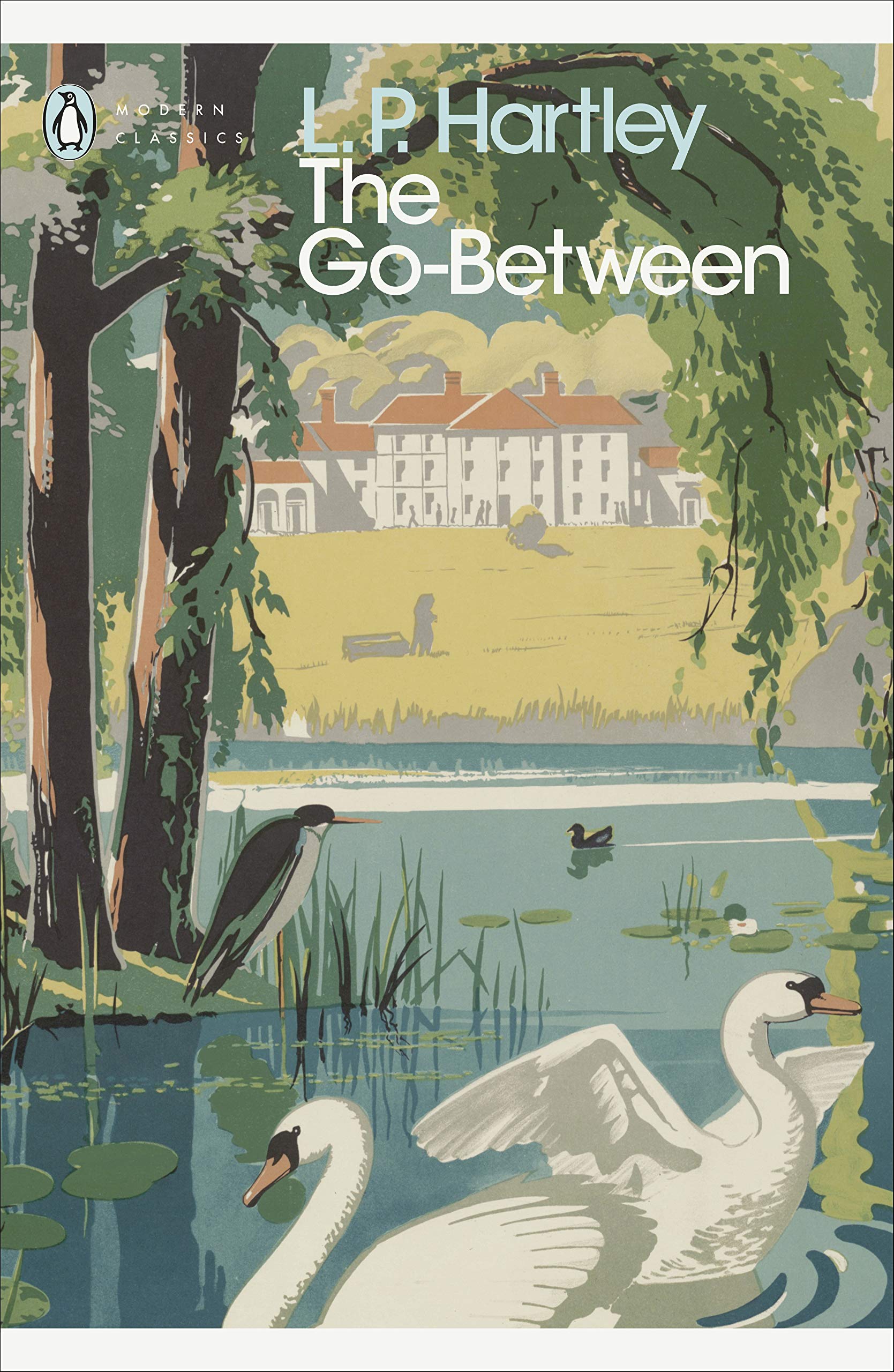
I find the late Victorian/early Edwardian period historically fascinating, so I am always keen to read books set during this era. The Go-Between is Hartley’s best known work and it certainly lives up to its reputation as a haunting story about lost innocence and a lucid critique of the society in which it takes place.
The novel is narrated by protagonist Leo Colston. The story is framed by adult Leo looking back on ‘the incident’ that happened during the long hot summer of 1900, after he finds a diary that he wrote at the time when he was almost 13. Older Leo had blocked out what happened but delving back into this diary forces him to piece it back together.
During the summer holidays, Leo is invited by his schoolfriend Marcus Maudsley to come and stay for several weeks at his home in Norfolk, Brandham Hall. Leo is from an unpolished middle-class background while the Maudsleys are of the wealthy upper-class. Whilst there, Leo becomes completely enamoured with Marcus’ older sister Marian. It is a crush that Leo cannot fully understand because he is still young enough that sexual attraction does not occur to him. Capitalising on Leo’s infatuation when Marcus falls ill and is kept in bed, Marian enlists Leo as a secret messenger to send letters between herself and tenant farmer Ted Burgess, with whom she is in a clandestine relationship. Marian is also due to become engaged to Viscount Hugh Trimingham, who Leo also likes. Unaware of the nature of their relationship at first, Leo is happy to carry the notes because he enjoys Marian’s attention and he likes Ted. When he begins to suspect that their relationship is not to do with ‘business’ as Marian and Ted told him, he naively believes that news of the engagement should automatically end their relationship. Feeling increasingly uncomfortable with the level of risk and deception by carrying the messages to and fro, Leo tries to get out but is manipulated and pressured psychologically by Marian and Ted to continue as their go-between. Eventually Leo’s unwillingness and naivety plus his exploitation by Marian and Ted comes to a head, with chillingly disastrous consequences for all involved.
The Go-Between examines the impact of the collision of childish innocence and the world of adult relationships. The reader knows immediately what is going on between Marian and Ted, and understands why they are both so indulgent of Leo, while Leo is blissfully unaware that he is being unconsciously flattered and coerced into the go-between role. Such a high level of dramatic irony makes for an intriguing read.
Though it is the summer holidays, the influence of school has a profound effect on Leo’s outlook and actions. Him and Marcus feel bound by their boarding school’s social rules not only in the schoolyard but in their everyday lives, and Leo has a reputation among his classmates as a successful magician after he cursed two boys that were bullying him and they subsequently fell off the school roof and were injured. Such strong belief in these rules confuses Leo’s relationship with the adult world which he encounters at Brandham Hall, adding to the ticking time bomb of what was to come.
It is also clear when reading The Go-Between that Leo feels emotions very strongly, suddenly, almost uncontrollably, which is a constant reminder of his young age and maturity level while he is being slowly dragged into a an risky situation of very grown-up proportions. In the end, older Leo says that what happened traumatised him so much that it led to a nervous breakdown and has irrevocably affected his adult life in terms of his ability to form relationships and deal with emotions. Hartley’s superb examination of the interplay between childhood and adulthood in The Go-Between has made it a hugely influential work. For example, Ian McEwan describes his acclaimed novel Atonement (2001) as a kind of homage to Hartley’s novel.
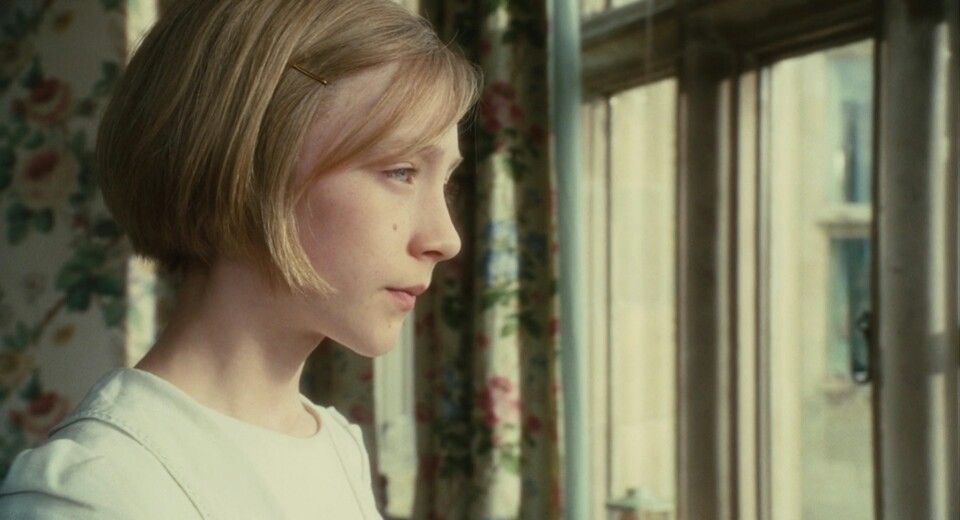
Saoirse Ronan in ‘Atonement’ (2007)
As mentioned, the turn of the twentieth century is an era I enjoy delving into and The Go-Between is in many ways faithful to the time it was set. Descriptions of cricket matches, picnics and river bathing conjures up a beautiful impression of a classic summer in the English countryside, accompanied by late Victorian dress, social customs and manner of speech. Though the novel is overall a critique of society at this time, there are some favourable moments to be had thanks to these elements.
All in all, The Go-Between is a clever and arresting story about class, innocence and relationships at the turn of the century that will leave you thinking about it long after you have finished reading it.
“We’re not colonising the Savages. They’re colonising us.”
Several critics have called Black Robe an extraordinary novel, and I would have to agree. Moore has created a work that is highly suspenseful and full of physical and spiritual adventure, as well as raising questions of morality, faith and identity.
Black Robe is set in seventeenth-century New France, or Canada, shortly after settlement by the French. The central theme of the book is the collision of European and Native American cultures, and we witness this through the story of idealistic Jesuit priest Laforgue. In Quebec, in exchange for muskets from the French, a group of Algonquin agree to take Laforgue and his young assistant Daniel upriver to help them reach a Huron settlement to relieve a priest at the Jesuit mission there. This mission is long and treacherous, and along the way both parties suffer identity crises as they struggle to understand each other’s culture and faith.
(NB: First Nations people historically called Jesuit priests ‘black robes’ due to their religious attire.)
Undoubtedly, Black Robe is a harsh, uncensored and bleak portrayal of life in this era, meaning there are many shocking moments throughout the story. The wilderness that the group travels through is totally unforgiving and Laforgue struggles to navigate it the way the Algonquin do. Furthermore, the native Americans are portrayed as having no filter when it comes to language, humour, sexual relations and more. When members of the group are captured by some hostile Iroquois, we witness some horrifying scenes of torture, cannibalism and sexual harassment. Jesuitism comes across to the reader as a thoroughly miserable experience, full of self-deprecation, fear of God and the inner struggle between human desire and the abstinence required by the religion. We hear in detail about Laforgue’s battle with this, and there are several moments where he succumbs, often by methods as uncomfortable as secretly observing his assistant Daniel and an Algonquin girl having sex, for which he punishes himself afterwards.
The most interesting aspect of this novel is the impact of this early colonialism both on the Native American and French sides. Black Robe demonstrates this mainly through the clash of religions. Whereas the Algonquin believe in the power of nature and the presence of spirits in the world around them, Jesuits belong to Catholicism and believe in the teachings of the christian God and the Bible. Moore said of his book, ‘the only conscious thing I had in mind when writing it was the belief of one religion that the other religion was totally wrong. The only thing they have in common is the view that the other side must be the Devil.’
On the journey, the Algonquin begin to suspect Laforgue is a demon due to his beliefs while Laforgue tries (unsuccessfully) to convert the Algonquin to Christianity because he believes their “heathen” religion will see them end up in Hell. However as the journey wears on, both sides struggle with an identity crisis. Once faithful assistant Daniel renounces his Jesuit faith completely when he falls in love with Annuka, an Algonquin girl. She also struggles to understand why with him she wants to be monogamous because her tribe has always been more free when it comes to sexual relations. Other Algonquin start to realise with dismay that since the French arrived, materialism and desire for ‘things’ has seeped into their culture when it wasn’t there before. Laforgue, who set out on this mission full of idealism and a passion to convert as many as possible, is really struggling with disillusionment by the time he eventually reaches the Huron settlement which is rife with fever and death. Black Robe culminates in one of the most powerful, thought-provoking final chapters I have ever read, which lays bare the confusion and desperation of both the Hurons and Laforgue caused by an unprecedented clash of culture, faith and moral direction.
Though not for the faint-hearted, I would highly recommend Black Robe because it looks at a pivotal moment in history and does not hold back in its portrayal of the complexities of a collision of worlds.
“Independence is all very well, but we animals never allow our friends to make fools of themselves beyond a certain limit.”
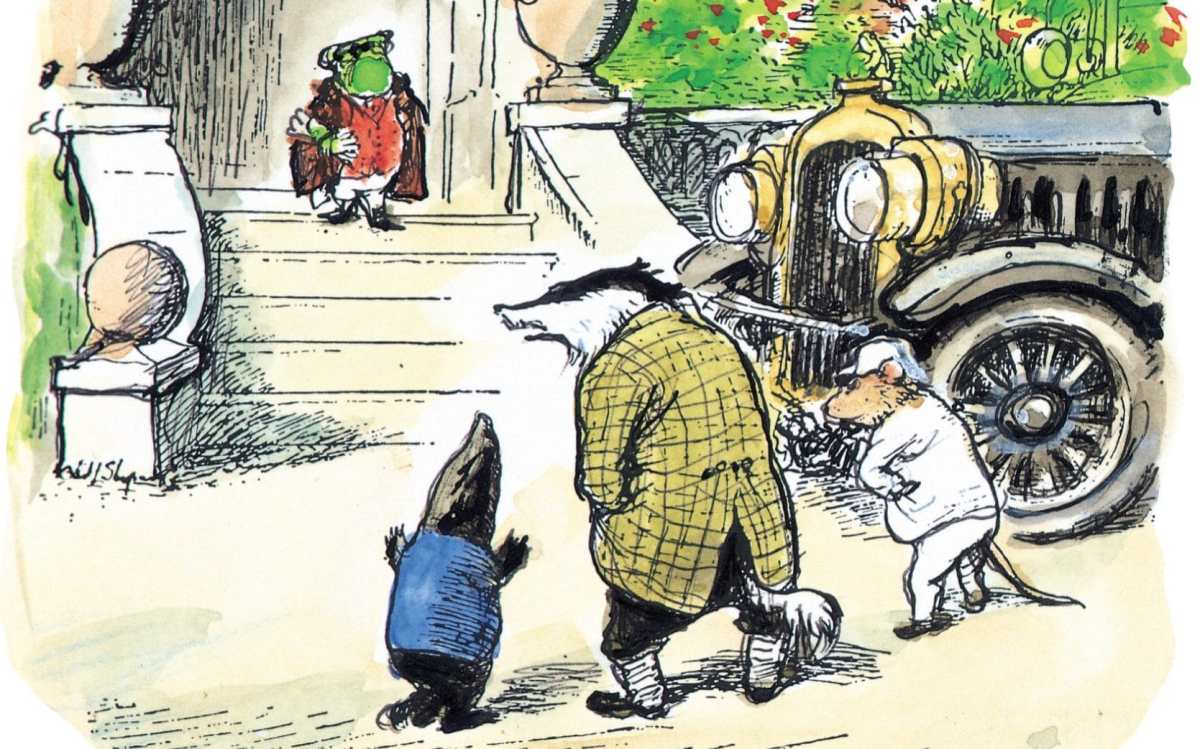
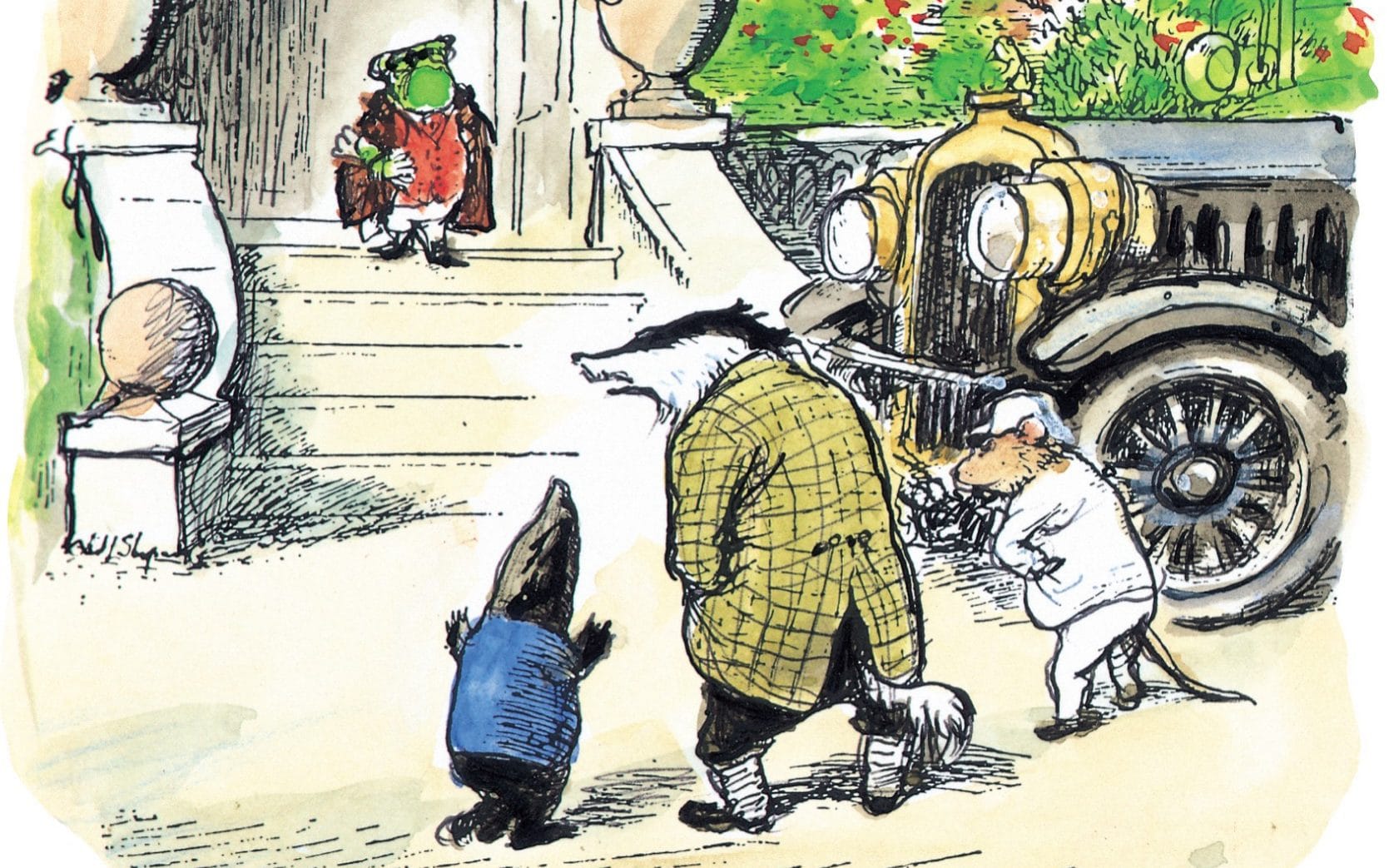
I was thrilled to receive a beautiful hardback copy of The Wind in the Willows, complete with the masterful original illustrations by E.H. Shepard, for Christmas. Though I have read and re-read many children’s classics over the years, this was my first time reading The Wind in the Willows and it was an absolute joy. It truly is timeless and can be enjoyed by all age groups.
The novel begins with Mole venturing out of his burrow to experience the world above. There he meets the brave Ratty, the kind Badger and the mischievous Toad. These four unlikely friends are in for adventures galore in the English countryside, much to the enjoyment of all readers.
What is brilliant about The Wind in the Willows is how Grahame has managed to create a story about animals, but has given them enough human characteristics to create a charming and amusing novel. For example, Ratty, Mole and Badger all live in their expected habitats – the riverbank, a burrow and a set. And then there is Toad, the aristocrat of the group, who lives in the mansion Toad Hall and has an obsession with motor cars. They are all finely clad in waistcoats and tweed jackets, they enjoy rowing down the river and always love a feast. Ratty in particular loves a picnic, containing delicacies like cold beef, cress sandwiches and ginger beer. They are constantly referring to each other as ‘old fellow’ and similar terms of endearment popular at the time, further adding to the impression that they are classic English gentlemen. And yet, we are still acutely aware that they are animals. Referring to living through winter and hibernation we learn that, “no animal, according to the rules of animal-etiquette, is ever expected to do anything strenuous, or heroic, or even moderately active during the off-season of winter.” Grahame has somehow created a world in which being an animal and an English gentleman makes perfect sense, and this makes for a witty, joyful read.
The world in which The Wind in the Willows takes place further emphasises that we are peeking into an English paradise. The summer is always warm and sunny, and the action mainly takes place along the beautiful blue river, where we have the luscious green riverbank and fields, we have the wild wood and of course Toad Hall which is reminiscent of a typical English country estate. The animals even have a few encounters with local villages, but they do not ever venture past a certain point, into the ‘Wide World.’ Grahame was partially inspired by Henley-on-Thames in Oxfordshire when writing The Wind in the Willows.
This novel came about based on the stories that Grahame used to tell his son Alastair at bedtime, and it is said that his son was the inspiration for the rascally character of Toad. I am so glad that many generations since have got to enjoy this tale which started off as a bedtime story between father and son. Grahame has created something magical and memorable, with humour and charm that will never fade.
“Mistrust all men, and slay him whom thou mistrustest overmuch; and as for women, flee from them, for they are evil, and in the end will destroy thee.”
She is without a doubt an extraordinary novel, one which will leave you deep in thought for days after finishing it. Haggard uses the English language in a thoroughly captivating way to tell this tale of myth, imperialism, horror and fascination, which has remained so popular with readers that it has never gone out of print since its first release over 130 years ago.
The novel is narrated by protagonist Horace Holly, and tells the tale of how he, a Cambridge professor, and his ward Leo Vincey came to be in the presence of Ayesha, the mysterious white queen of a Central African tribe. Her full title, She-who-must-be-obeyed, is a testament to how she can at once mesmerise with her eternal beauty and magical powers, but also be cruel and manipulative whenever the mood takes her. Holly and Leo’s journey to her hidden realm – which they are unsure is even real because it’s based on a 2,000-year-old quest – sees them battle shipwreck, fever, starvation and cannibals all to reach the goal of finding She. Both men are at once horrified and entranced by Ayesha, symbolising her as one of the most compelling and ambivalent figures in Western mythology – a female who is both monstrous and desirable, and without a doubt, more deadly than the male.
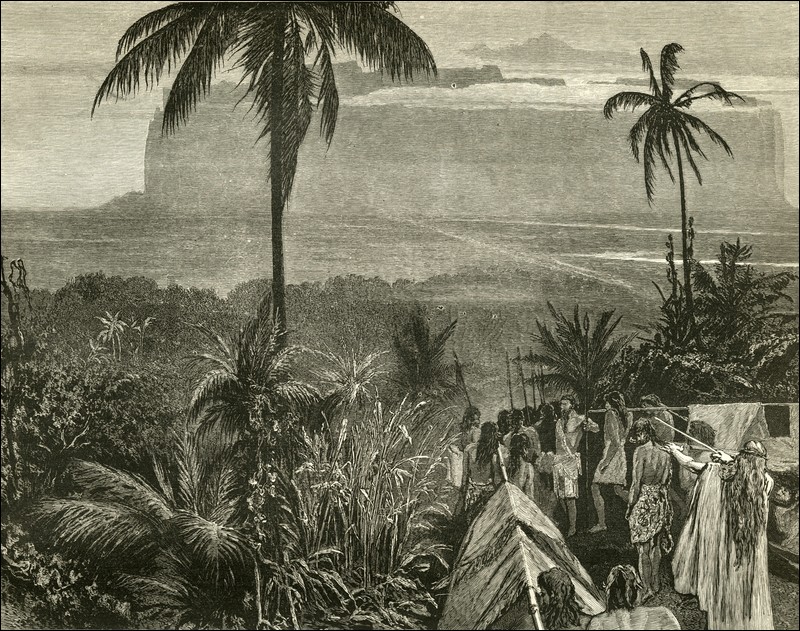
She is a vivid example of imperialist literature. As such, it embraces many hallmarks typical of this genre including ideas of racial and cultural hierarchy that were popular in the late Victorian period and adventuring to a ‘lost world’ (Haggard developed many conventions of this genre), in this case deep in the wild interior of Africa. Before writing this novel Haggard lived in South Africa for seven years, working in a very senior position of the British colonial administration, and he was heavily inspired by his time there when writing She. The sense of adventure in this novel is intoxicating, and since its publication She has been popular with readers across the age and gender spectrum. Like Holly and Leo, we are intrigued by this secret tribe living in an arresting, undiscovered pocket of land in Central Africa, and even more intrigued as to how they are so entirely ruled over by an eternal, beautiful, magical queen who commands power, fear and obedience with as little as a title, She-who-must-be-obeyed.
Significantly, She provides us with an interesting exploration of themes including female authority and womanhood. Some scholars have noted that the publication of She coincided with Queen Victoria’s Golden Jubliee and suggested that She is an ominous literary tribute to the Queen on her 50 years on the throne. Both women are also chaste and devoted to one man – Victoria to Albert and Ayesha to Kallikrates, an ancient lover for whom she has waited patiently for 2,000 years to return to her. While Victoria is seen as a benign figure, Ayesha embodies late Victorian fears of a feminist movement desiring absolute female independence and absolute control over men. Anxiety over all-consuming female authority is present throughout the novel, particularly when both Holly and Leo – who represent ‘superior’ male intellect and physicality respectively – quickly fall under her will. Even their rational minds and Holly’s self-confessed misogyny are no defence against Ayesha, and they both worship her “as never woman was worshipped”. Even in the tribe that She rules over, women are respected and not subservient to men and there is no such thing as monogamy. Women select their partners, and they can have as many as they like. In one sense this is positive, because we see women taking control of their lives in a time where they were largely oppressed and thought of as the inferior sex. However, Ayesha also falls into the category of seductive femme fatale, which is a part of a centuries-old tradition of Western male sexual fantasy that includes other characters such as Homer’s Circe, Flaubert’s Salammbô, and Shakespeare’s Cleopatra.
In conclusion She is a novel which will take hold of you, as it has taken hold of many generations since its publication in 1887; it is not only the characters that become fascinated by the unknowable She-who-must-be-obeyed. Experience romance, adventure, danger, horror and get a intriguing insight into the Victorian imperial mindset with this astonishing work of fiction.
“I’ve been a Danish prince, a Texas slave-dealer, an Arab sheik, a Cheyenne Dog Soldier, and a Yankee navy lieutenant in my time, among other things, and none of ’em was as hard to sustain as my lifetime’s impersonation of a British officer and gentleman.”
Flashman and the Great Game
It is difficult to know how to start this blog – in a nutshell, this collection of stories is just brilliant, and has earned itself a place in my top 5 books of all time. This particular omnibus includes three of the series of novels entitled ‘The Flashman Papers’, and I’m already chomping at the bit to read the rest. The stories are the memoirs of the fictional character General Sir Harry Paget Flashman, VC, KCB, KCIE, who is slotted into a series of real historical events between 1839 to 1894.
This edition contains the very first novel, Flashman (1969), which sees the young Harry Flashman, newly expelled from Rugby School, join the 11th Dragoons. With this regiment he is reluctantly sent off to fight in the first Anglo-Afghan War, where we first discover his extraordinary ability for self-preservation through any means necessary.
In Flash for Freedom! (1971), we reconvene with Flashman in his late 20s, where we find him pressganged into crewing on slave ship the Balliol College, hiding out in New Orleans, being on the run with an escaped slave and bumping into up and coming politician Abraham Lincoln.
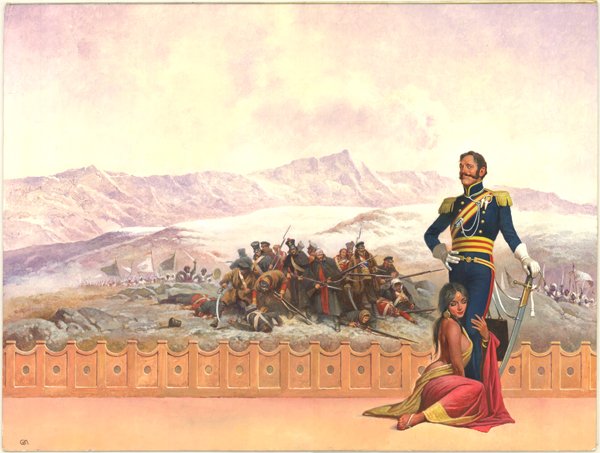
Finally, in Flashman in the Great Game (1975), we are transported across to British India, in which Flashman finds himself spying for the British government, becoming enamoured with a ruthless Maharani and getting caught up in the brutal Sepoy Rebellion of 1857.
What makes these books so brilliant is the character of Flashman himself. Up until this point it would seem obvious to assume that ‘Flashy’ is a gallant military hero. In fact, he is a self-confessed rogue, scoundrel, liar, cheat, coward and womaniser, who in every instance is just trying to save his own skin, but happens to have the charm, wit and good luck to fool those around him that he is in fact the hero he appears to be. He will happily screw over those around him in pursuit of self-preservation and is entirely truthful in what he relays to the reader. And yet he is totally and utterly likeable. His honesty is refreshing and comical to read, but also when he tells of his exploits it really does seem like he escaped each situation in the only possible way. Flashman puts it all down to his heartlessness, but in many situations it does also show him as choosing duty to his country over personal feelings towards others. Of course, he would always do whatever it takes to survive, but quite often this supposed coward does have to act with extreme courage and intelligence simply in the interest of self-preservation. By the end, Flashman has almost become the hero he says that he isn’t, in spite of himself and his actions. Furthermore, though his behaviour is audacious, completely self-centred and deplorable, he is often the voice of sanity and reason in a world full of corruption, stupidity and false piety. His wit, sarcasm and pragmatism cuts through the craziness around him which is very entertaining to read. You are guaranteed to enjoy reading how Flashman romps his way through decades of Victorian history, and how through spectacular acts of spinelessness he manages to win military glory and nationwide respect.
The character of Flashman is brought even more to life by Fraser’s unbelievably accurate replication of swaggering Victorian English, particularly when discussing his numerous exploits with various women throughout the books, which cements his reputation as a cad and a rake. In fact, Fraser’s accuracy in all elements of these books is something to be applauded. He manages to seamlessly insert Flashman and other fictional characters into real historical events without causing a ripple in the factual accuracy of the given moment. The way each battle or political event and the opinions surrounding them is relayed is so precise that you would not believe these books were written a century after they were set. On first publication, Fraser prefaced his novel with the discovery of the Flashman Papers at a house auction in Ashby, Leicestershire in 1965, and named himself only as the humble editor of the twelve instalments of the Flashman memoirs, which he called ‘packets’. He also surrounded the text with explanatory notes and scholarly additions such as maps and appendices, always using an editorial voice reminiscent of an assiduous bibliographer or archivist. Paired with the perceived accuracy and detail of the novel, almost half the initial book critics believed the Flashman novels to be real memoirs of a forgotten soldier in their reviews.
Fraser’s genius is making the historical accuracy of the Flashman stories come to life through the abounding use of comedy throughout. We have the aforementioned sarcastic, witty and outrageous voice of Flashman himself, but there is also sexual farce and intrigue, satirical dialogue and gallows humour. Fraser also expertly utilises syntax to provide humour throughout the novel, choosing just the right words to describe situations or people in an amusing manner. And yet, because he does not shy away from the awfulness, death and bloodshed encountered by Flashman and others throughout the series, the perceived reality of the memoirs remains intact. The books are undeniably entertaining and suspenseful, but the harsh historical realities of each period are illustrated truthfully. For example, Flash for Freedom! contains one of the most shocking and harrowing portrayals of the slave trade that I have ever read, while Flashman in the Great Game lays bare the horror of the Indian mutineers’ massacre of the wives and children of British military men during the Sepoy rebellion. Fraser has a knowledge of Victorian social and military history that is simply staggering for someone who is an amateur historian, and he manages to interweave this with a fictional narrative to create an astounding series of adventure, intrigue and mischief.
These books are an absolute joy to read – you will grow fond of the roguish Harry Flashman while getting a stellar education about important events of nineteenth-century history relating to the British Empire and antebellum America. In fact, you will almost be disappointed that Flashy is only fictional, as his life story really is one of the most astonishing out there.









 ImoReads