Categories
Australian Literature World literature

ImoReads… ‘Cloudstreet’ (1991) by Tim Winton

“Life was something you didn’t argue with, because when it came down to it, whether you barracked for God or nothing at all, life was all there was. And death.”

One of the great Australian novels, I was gifted Cloudstreet by my parents ahead of a big solo trip to Australia – my first visit to one of my now favourite countries. There was something extra special about reading it while I was in Australia. I am a fan of epic novels and have reviewed several on this blog to date, and this one certainly doesn’t disappoint.

Forced by separate personal tragedies, in 1943 two poor families – the Pickles and the Lambs – leave their rural homes and come to Perth, Western Australia, where they share a large house called Cloudstreet. Left to the Pickles by a relative, they rent out half the house to the Lambs, who open a grocery store on the ground floor. The Pickles family comprises parents Sam and Dolly, plus children Rose, Ted and Chub. Sam and Oriel Lamb are parents to Mason (nicknamed Quick), Samson (nicknamed Fish), Hattie, Elaine, Red and Lon.

Over the next twenty years, the two families live side by side and we live with them through their experiences, relationships and hardships. While major events in the world occur throughout the story such as the end of WWII, the Korean War and the assassination of JFK, these only distantly impact the Pickles and the Lambs. Cloudstreet filters worldly events through a domestic, rooted lens. We learn that the Pickles have got by on luck and will shirk work where possible whereas the Lambs are devoutly religious and value hard work to achieve God’s grace.

The theme of community persists throughout Cloudstreet – it celebrates it as the two families learn to live alongside each other. Connections to the past, to each other and to one’s environment also come through strongly. While some family members do at points venture away from Cloudstreet, the house is at the centre of the novel.

Winton’s writing style in Cloudstreet is beguiling and quite unlike any other epic novel I have read. Paired with the ups, downs and growing up that the families go through over the twenty year period, Cloudstreet makes for a captivating read and an eye-opening look into the lives of ordinary people in mid-century Australia.

Happy reading,

Imo x

Categories
Australian Literature World literature

ImoReads… ‘The Thorn Birds’ (1977) By Colleen McCullough

Blog 43

“When we press the thorn to our chest we know, we understand, and still we do it.”

I was so glad to be able to read The Thorn Birds for a second time for the blog. It is one of those novels that stays with you a long time after you finish reading it. Australia’s best-selling novel to date, this epic story spanning five decades is a tale of family, hard work and relationships set against the intoxicating backdrop of the beautiful but unforgiving New South Wales.

The central character of The Thorn Birds is Meggie Cleary, though several characters get their own sections. We begin in 1915 on Meggie’s 4th birthday. The Clearys – parents Paddy and Fee and their children Bob, Jack, Hughie, Stu, Meggie and Frank (Fee’s son from a previous relationship) – are a poor but hard-working family living in New Zealand. In 1921, Paddy’s wealthy sister Mary Carson offers Paddy a job on her huge sheep farming station in New South Wales, Australia. Drogheda, after its namesake in Ireland, is where most of the novel takes place.

It is here that we meet the ambitious young priest, Father Ralph de Bricassart, who is described as a ‘beautiful man’. He is a frequent visitor to Mary Carson in the hope that a large financial bequest from her will see him rise up in the Catholic Church and freed from the remote parish of Gillanbone, not far from Drogheda. He immediately develops a fondness for Meggie, and their complex relationship over the years is central to the novel.

Across the fifty-year span of The Thorn Birds the Clearys encounter birth, death, marriage, heartbreak, separation and the untamed might of the Australian wilderness in this truly absorbing novel.

A standout feature of The Thorn Birds for me are the descriptions of the Australian landscape. Whether it’s tumbling hibiscus and Bougainvillea, ghost gum and bottle trees standing tall or the endlessly sprawling paddocks of Drogheda, it is hard not to be mesmerised by such a rich environment. It also becomes very apparent how much humans are at the mercy of nature. Across the novel we see how drought and heat can cripple a community, while intense torrents of rain can be relentless all wet season. During one tragic moment, one strike of lightning engulfs much of Drogheda in a blazing fire, causing loss and heartache for all the Clearys. The environmental aspect of the novel emphasises that though it is beautiful, the kind of life led by the Clearys is neither gentle nor easy.

The novel’s central storyline is the relationship between Meggie and Ralph. When they meet, Meggie is nine years old and Ralph is twenty-seven. There is an immediate chemistry between them; Meggie is instantly enchanted by Ralph, while Ralph becomes extremely infatuated with and protective of her. As Meggie grows into womanhood, their relationship grows more complex. It is quite clear that Ralph desires a sexual and romantic relationship with Meggie, but his vow of celibacy as a priest forbids him from pursuing this. Meggie has been in love with Ralph in one form or another since her childhood, and this also becomes a romantic and sexual desire in her late teens.

When I first read the novel several years ago, I think I was more taken with the common view that their love story was tragically romantic. Ralph is consistently described as a very handsome, kind man who even for the love of his life will not abandon his vow. For many years Meggie will not give any other man the time of day and has dreamed of only Ralph since her childhood.

However, upon second reading I found the relationship to be much more disturbing. What is abundantly clear to me is that Ralph de Bricassart, an adult for the entire story, manipulates Meggie Cleary from her childhood for an eventual sexual relationship once both are adults. During their first time having sex, Ralph admits to himself that he groomed or “molded” Meggie all along, albeit unconsciously. 

Truly she was made for him, for he had made her; for sixteen years he had shaped and molded her without knowing that he did, let alone why he did. And he forgot that he had ever given her away, that another man had shown her the end of what he had begun for himself, had always intended for himself, for she was his downfall, his rose; his creation.”

Father Ralph de Bricassart

The Thorn Birds was written in the 1970s and the focus is on a romanticised struggle between Ralph’s duty to the church and his feelings towards Meggie as a mere mortal man. The repeated emphasis on Ralph’s handsomeness and his rise up the church portrays him as being alluring and forbidden – it is playing into the trope of priests being fetishized due to their celibacy. Meggie’s lifelong love and pursuance of Ralph could also be seen as enduringly romantic and something to root for.

However, through the modern lens it is difficult to see it this way, particularly given the numerous stories that have been unearthed about sexual abuse within the Catholic church. The idea of fetishising a priest these days would therefore be wholly unusual. The large age gap also raises concerns for the modern reader. Meggie’s entire misguided idea of what love is, is based on Ralph. From girlish daydreams to repeated attempts to get him to break his vow. Ralph does not instil appropriate boundaries with her when she is an impressionable child; he is overbearingly affectionate, protective and it is something that would not be acceptable in today’s society.

Despite this, The Thorn Birds remains a captivating and emotionally charged novel, with every character gaining the reader’s sympathy, pity and disdain at various points throughout the story. I would absolutely recommend this novel – it is an unputdownable epic novel.

Happy reading,

Imo x

Categories
Australian Literature World literature

ImoReads… ‘My Brilliant Career’ (1901) by Miles Franklin

Blog Nº 23

“I am afflicted with the power of thought, which is a heavy curse. The less a person thinks and inquires regarding the why and the wherefore and the justice of things, when dragging along through life, the happier it is for him, and doubly, trebly so, for her.”

Anyone who knows me knows that I love a good old Australian novel, and I was not disappointed by My Brilliant Career. Written in 1901, the year of the Federation of Australia, this novel is unashamedly sharp, romantic and vivacious. I read it in a matter of days, being so taken in by the entirely convincing narrative voice and vivid display of Australian life.

My Brilliant Career is told in the first-person narrative by sixteen-year-old protagonist Sybylla Melvyn. For the first part of her childhood, Sybylla loves life with her family in rural Australia. She is clever and devours any book in sight, reading works extremely advanced for her age. When a series of poor business decisions from her father relegate the family from owning a sprawling cattle station to subsistence farming in the outback, teenage Sybylla becomes frustrated and bored with the hardship and monotony of life. She longs for a more refined lifestyle where she would be surrounded by likeminded others who enjoy intellectual thinking, reading and music. To aid the struggling family, Sybylla’s grandmother offers to take Sybylla in to live with her at her gracious property Caddagat. Sybylla fits right in at Caddagat; her sharp tongue, wit and frankness are a triumph among her extended family and for Caddagat’s wealthy neighbour, the handsome Harold Beecham, who becomes completely enamoured with her. Over the next two years, Sybylla will find herself choosing between everything a conventional life offers and her own plans for a ‘brilliant career’.

What is amazing about this book is the link between Sybylla and the author. Sybylla Melvyn is based on the author Miles Franklin (Stella Maria Sarah Miles Franklin). Sybylla’s childhood timeline is very similar to that of Franklin’s – for example, Franklin’s grandmother’s property Talbingo was simply renamed Caddagat in My Brilliant Career. Like Sybylla, Franklin was set on having a career in music. Reduced family circumstances making this impossible, Franklin turned to writing and as such wrote My Brilliant Career at age sixteen. The sheer literary skill, wide-ranging vocabulary and vibrant narrative are simply astonishing given that the author is a sixteen-year-old girl with an unconventional education, notwithstanding that the book was “conceived and tossed off in a matter of weeks” as a romance to amuse her friends. Furthermore, Franklin’s (and therefore Sybylla’s) burning desire to have her own career rather than do what was expected and marry is a view far more akin to feminists of the 1960s and 70s rather than of a teenage girl born and raised in the Australian outback at the turn of the century. For me, this novel indicates that someone’s sheer genius can shine through no matter what circumstances they have grown up in.

I think the fact that Franklin is the same age as the protagonist really helps legitimise Sybylla’s narrative voice. As you read, it is completely clear that the author is also a teenage girl – on the one hand Sybylla is unapologetically passionate and unpredictable, while on the other she carries insecurities about her looks and personality, portrayed like this in a way that only someone feeling the same things could. The narrative style is quite different to other books from the time that I’ve read; it is impetuous and brazen much like the mind of a teenage girl. Towards the end of My Brilliant Career, when the romance is heating up between Sybylla and Harry Beecham, I was completely hooked as Sybylla lays bare her emotions – torn between her desire for independence and her affection for Harry. I, like many other female readers I’m sure, felt that whatever decision she made, the outcome would be bittersweet. 

Overall, I was completely blown away by My Brilliant Career and think it is an essential read for any young person, especially young women. It is engaging, emotional, humorous and offers a candid representation of Australian life in the late 1800s/early 1900s. This was only the beginning of Franklin’s success and I take comfort in the fact that she did indeed get to have a ‘brilliant career’.

Happy reading,

Imo x
Categories
Australian Literature World literature

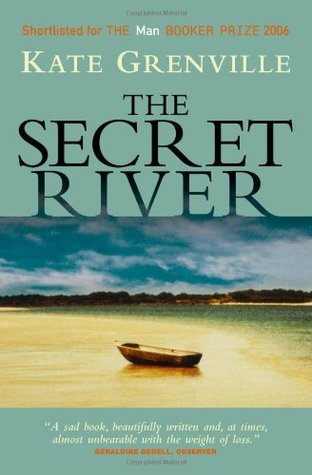
ImoReads… ‘The Secret River’ (2005) by Kate Grenville

Blog 8

“Ain’t nothing in this world just for the taking… A man got to pay a fair price for taking… Matter of give a little, take a little” – Thomas Blackwood

As a British colonial history enthusiast, I found The Secret River deeply thought-provoking in its portrayal of the settlement of Australia by British convicts sentenced to transportation in the nineteenth century. I actually read this novel about a year ago, but I recently went to see the critically acclaimed Sydney Theatre Company’s stage adaptation of it at the National Theatre. Unlike most of the critics, I was left somewhat disappointed by the stage version, so I was inspired to write this blog in the format of ‘novel vs play’ (hence the longer post).

Sadly, the flaws in the play begin in the first scene; astoundingly, it opens with lead character William Thornhill and his family arriving at their secluded 200 acre plot of land up the Hawkesbury River in New South Wales, which he has persuaded his wife Sal that once settled and cultivated, will make them their fortune. I had to do a double take; where indeed was the journey up to this point? Arriving at ‘Thornhill’s Point’ as it comes to be known, is a landmark event in the plot and yet the exclusion of all that comes before completely lessens the impact of this moment. We are missing the whole first section of Grenville’s novel, detailing William’s Dickensian poverty-stricken upbringing in Southwark, London and his constant struggle to rise above his lowly class and status. We miss his marriage to Sal and how an icy winter bars him from working as a boatman, and how this change in fortunes forces him to turn to stealing. He is caught and sentenced to transportation along with Sal, his son Willie, and unborn child.

And then, it is not as if William could simply walk onto a 200 acre plot of land on arrival. He arrives a convict, and over 12 months works tirelessly in the colony until he can buy his freedom. Here we see a crucial change in William’s attitude; he is befriending those above his station, he is mimicking their dress and manners, and most importantly he begins to feel a personal sense of authority and superiority over his peers. The family’s move to Thornhill’s Point is not easy; Sal’s heart is set on returning to London, and agrees only on the basis that they will stay five years maximum to make their fortune before going ‘home’. William agrees, but with his newfound ‘status’ it is clear he has other ideas.

The play erases some very crucial plot and character development points here and this causes a problem for what it chooses to leave in. For example, Sal’s daily tally for how many days they have been there, her constant pining for London and singing of folk songs like ‘The Bells of St Clements’ doesn’t really make sense without the backstory. The play gives William his superior attitude over his peers, but it has not altered his dress, manner or speech from destitute London beggar so it appears confusing and inconsistent, and again nonsensical without the context. 

In the stage version, we are thrown straight into the Thornhills settling their land and the encounters they begin to have with the Aboriginal population. The portrayal of the Aboriginals is something the play should be applauded on. As the novel is told from the perspective of the Thornhills, naturally we are not given much insight into the lives or claims on the land of the Aboriginals. Onstage, we see them living their lives and interacting, lessening the idea of them being the ‘other’ to be feared in the eyes of the audience. The cast playing the Dharug tribal family are Aboriginal performers, and the music and staging was conceived in collaboration with Aboriginal artists, so the play has done well in terms of representation and diversity. Furthermore, the actors playing the Thornhills have ghoulish white paint on their bodies and faces; I thought this was a very effective way of demonstrating how strange and how freakishly white settlers must have looked to Aboriginal peoples, showing that white skin is only ‘normal’ in the eyes of those who have white skin themselves.

The interactions between the Thornhills (plus other white settlers along the river) and the Dharugs are done well; they are sometimes tense, sometimes curious, sometimes funny and always slightly cautious. The prejudice-free childhood friendship between Thornhill’s youngest son Dick and an Aboriginal boy of around the same age is heartwarming to see. This brings me to the other fatal flaw the play has made in terms of adapting the plot. In the novel, following the settlers’ massacre of the Aboriginals (more on this below), Dick cannot forgive his father for his role in this crime. He leaves his family and goes to live upriver with Blackwood, a settler who had already made a life with an Aboriginal woman. He never speaks to his family again and to me this plot point is very effective in showing the stark horror of what the settlers had done, i.e. of what much of colonial settlement was. Of course, in the book the characters age, so Dick is old enough to understand what has happened and make this choice. The actors/characters do not age in the play, which is a shame because the full impact of the massacre in terms of betrayal is not realised. That is, the settlers and Aboriginals were neighbours for years before this assault, whereas in the play their relationship appears much more brief.

However, the massacre itself was staged extremely well. It was emotional, heart-wrenching and almost too difficult to watch. Each Aboriginal was cut down in slow motion, one by one, with the white characters blowing powder from their hands to represent gunshots. Paired with the music and lighting, this was a raw and guilt-tripping depiction of colonial violence. The music and lighting were superb throughout the production in fact, and really helped bring out the setting and emotion of key scenes.

To conclude then, if I were Kate Grenville I’m not sure I would be especially happy with this production. I think her novel is excellent (so I would definitely recommend reading it), and I appreciate what the play tries to do in terms of bringing her moral messages about nineteenth-century colonial activity in Australia to light. But, the careless and almost lazy adaptation of the plot in this production takes away from the progressive steps it takes to do this. It’s an excellent story that needs to be told, but I think in this instance it could have been told much better (sorry, script-writers).

Happy reading,

Imo x