“Naturally they were not a happy family, but they had good hearts, and did their best to console each other in bereavement and impoverishment.”
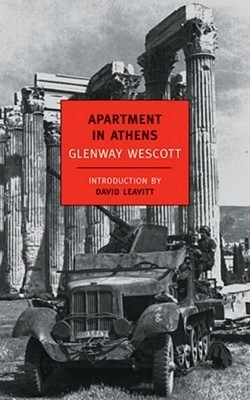
After reading Apartment in Athens for the first time, I am wholly convinced that it should be more widely-known and read as one of the great novels to come out of World War Two. I didn’t know much about Germany’s occupation of Greece during WWII and as such, Apartment in Athens was an educational and eye-opening read. In addition, I was surprised and enthralled by Wescott’s unique narrative style. It’s extremely frank, and this style compliments the plot beautifully to build up an atmosphere of tension, high emotion and exhaustion in an apartment in war-torn Athens.
Wescott’s novel focuses on Greek couple Mr and Mrs Helianos who are struggling to get by in Nazi-occupied Athens. Their favourite son Cimon has been killed in the Battle of Greece, leaving them with their two younger children – sickly Alex who wants to kill a German and simple Leda who is plain and strange, neither of whom the Helianos’ particularly love or understand. The family is forced to share their modest apartment with German officer Kalter who is not shy about his clear and unadulterated disgust for Greeks. The novel takes place exclusively between the walls of this small apartment in Athens, and within this space Wescott stages a disquieting and intense triangular drama between Mr Helianos, Mrs Helianos and Kalter, with the added collateral of the children. As the novel goes on the issues of accommodation and rejection, resistance, and compulsion reach a boiling point; Wescott effectively depicts a great and terrible war through the lens of one family’s everyday existence. The plot takes some unexpected turns, and despite Wescott’s starkness of language it is almost impossible to decipher between triumph and defeat in this unusual tale of spiritual struggle.
As I mentioned, the language in Apartment in Athens is striking for its ability to multitask as being so simple and frank yet so demonstrative of emotion. On a practical level, Wescott was writing the novel as the war played out meaning that paper was hardly in ample supply – it would have been difficult to publish a novel in a more unwieldy and passionate style. Besides, I think the language style he has used is extremely effective in stressing the intensity of emotion experienced by the Helianos’ throughout the novel; sometimes silences and fewer words say more than long and impassioned speeches. The simplicity of language even extends to the characters themselves – never do we find out the first name of Mrs Helianos, and we are only told once that Mr Helianos is called Nikolas right towards the end of the book. They are just referred to as Mr and Mrs Helianos or even just ‘Helianos’ and it’s up to the reader to distinguish who is being talked about.
Language and setting combined are what make Apartment in Athens a potent tale of repressed emotions reaching an unbearable boiling point. Setting the novel strictly in the apartment means that interestingly, the wider war itself does not really get much airtime. It is all about one German officer invading the space of one Greek family, which of course mirrors Germany’s invasion of Greece as a nation, but for the reader it creates an atmosphere of high drama, claustrophobia and emotion in one tiny cross-section of the war. Relationships between the conquerors and the conquered were a popular literary topic during the war, with one notable French novel being La Silence de la Mer (1942) by Jean Bruller (under the pseudonym Vercors). This novel is also a striking read in terms of language because the old man and his niece who must house a German officer show resistance to his presence by refusing to speak a single word to him for the duration of his stay.
A key turning point in Apartment in Athens is Kalter’s sudden change of attitude towards the family from disgust to civility and almost kindliness after suffering a personal tragedy. At first this bodes well for the Helianos’, but it eventually leads to their hopeless disintegration as a family between the crushing walls of their apartment. As a reader you can’t help but hope for a happy outcome for the Helianos’ but the novel ends abruptly and ambiguously as the family deals with its helpless situation. Of course, Wescott was writing in 1944 so he himself could not know the outcome of the war or Germany’s occupation of Greece, and he perhaps represents this through ending his novel on a cliffhanger.
I have read many books and watched many films set in WWII and I always find that stories which revolve around individuals are just as important as those that take in the war as a whole. This is because stories like Apartment in Athens are impactful to our understanding of individual human experience of the conflict rather than the political, economic and cultural impact on a global scale.
I thoroughly recommend Apartment in Athens; it’s an intense and gripping read which will see you ensconced in one of the many human struggles that contributed to WWII.
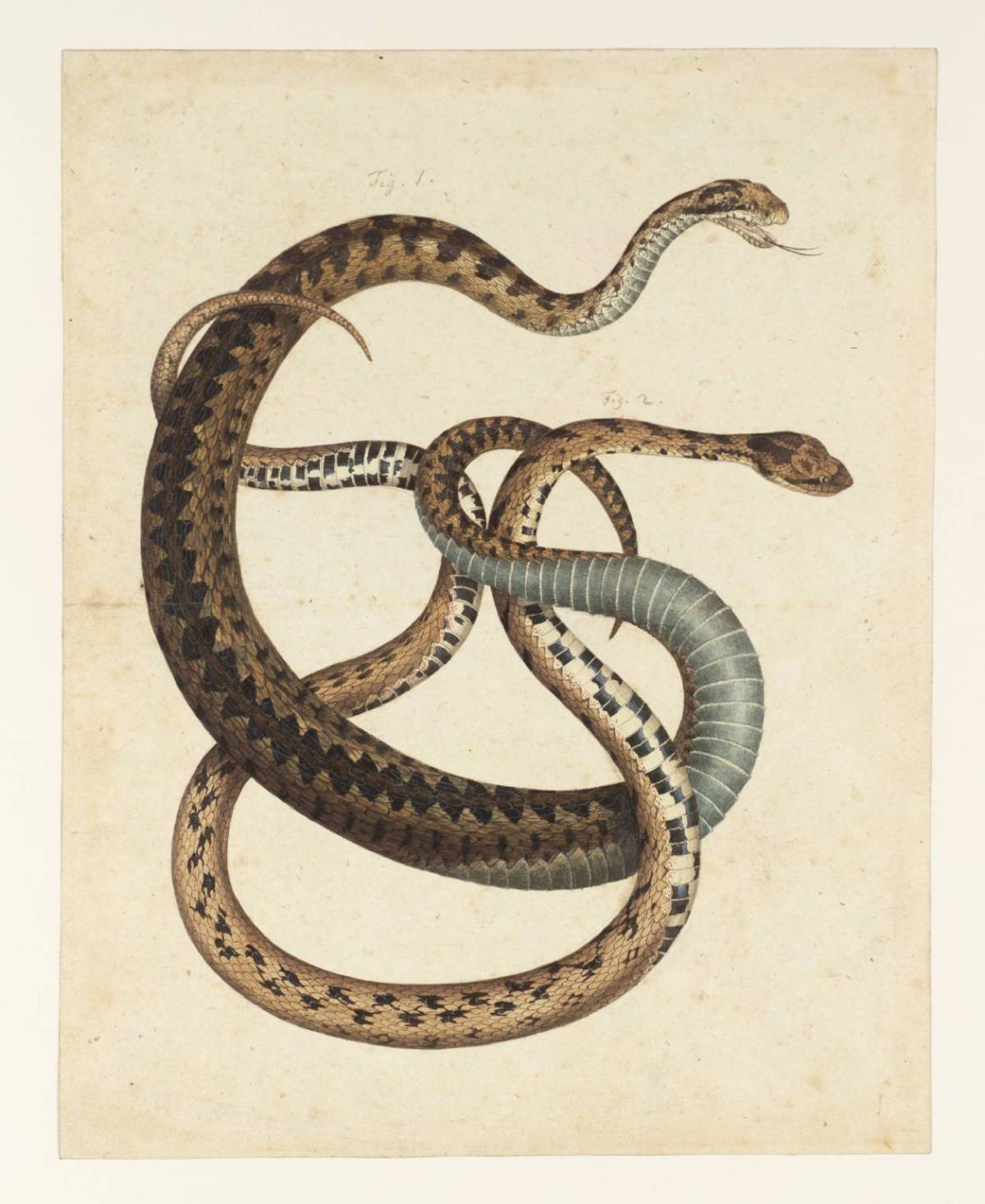
Two Snakes null Albertus Seba null Purchased as part of the Oppé Collection with assistance from the National Lottery through the Heritage Lottery Fund 1996 http://www.tate.org.uk/art/work/T10693
Blog Nº 15
“She was young still, and the chains had not yet grown tight around her ankles…Whatever was to be done, she would do it.”
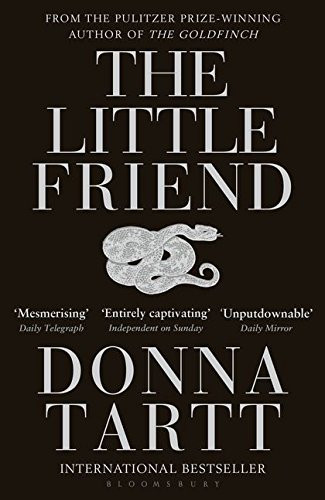
Ever since reading Donna Tartt’s beguiling and thrilling first novel The Secret History (1992 – blog coming soon!) a couple of years back, I knew that she was a literary force to be reckoned with. So, when I came to read her sophomore novel The Little Friend, published ten years later, I expected great things; I can safely say that it didn’t disappoint. Tartt has only published three novels thus far, the third being the Pulitzer prize-winning The Goldfinch (2014) that I have yet to read. However, I think we can all agree that if it takes a decade to craft each work, then we are dealing with fiction that is incredibly well-researched, intensely vibrant and detailed, with impressively complex plots and characters (meaning this is another long blog – sorry!)
Plot
Although famously elusive about her private life, we do know that Donna Tartt grew up in Greenwood, Mississippi, a town known for its thriving cotton plantation culture in the nineteenth century. The Little Friend is set in the fictional Mississippi town of Alexandria in the late 1970s, but I imagine that many of the cultural references are reminiscent of her own upbringing in Greenwood.
The story centres on twelve-year-old Harriet Cleve Dufresnes over one school summer holidays. Harriet is quick-witted, engaging, persuasive, a total bookworm and certainly has an intelligence beyond her years. When she was just a baby, her nine-year-old brother Robin (who was the unquestionable darling of the family) was found hanged in the backyard in broad daylight on Mother’s Day. This haunting crime, told to us in the prologue, has never been solved and has left irrevocable tears in the fabric of the family.
Harriet, who has grown up in the aftermath of this tragedy, takes it upon herself to solve the mystery of her brother’s murder this one summer, and for this task she enlists the help of her friend eleven-year-old Hely; he is so hopelessly devoted to Harriet that she knows he will do whatever she says. However, what starts as a childish mission soon turns menacing and dark as they dig deeper into the mystery.
Race relations
Anyone who has read my blog on Gone With The Wind will know that novels set in the American Deep South are of great historical interest to me. The time period of the book is never explicitly stated – and it took me a while to work out that it is in fact set in the late 70s. This is because in terms of the race relations between black and white characters, it could easily have been set in Scarlett O’Hara’s time of nearly one hundred years earlier.
That is, Harriet is from an ‘old money’ white family, and many references are made to their Civil War-era ancestral home, a now destroyed house named Tribulation. Like all the other respectable white families in town, the Dufresnes live in a big house and employ a black housemaid and gardener.
In her childish innocence Harriet adores the family housemaid Ida Rhew more than her own mother, and yet will refer to the ‘black’ neighbourhood as ‘niggertown’ as she has heard other adults do, without realising the racism in what she is saying.
Throughout the novel it becomes obvious that there has been no upward mobility for the black population of Alexandria. They are employed in menial jobs only, they live in the poorer end of town and they are still viewed with contempt and irrational suspicion by many of the white adult characters, even those who are the most ‘reasonable’. In fact, it was only cultural references to certain television shows, car models and current affairs that allowed me to place the novel in the late 1970s. This novel is an unnerving indication of how deep-set and rigid casual racism and attitudes of white superiority still are in the Deep South.
Narrative voices
The Little Friend is told from the perspectives of two characters – Harriet and her main murder suspect, a poor white man named Danny Ratliff who was a classmate and friend of Robin. Now a young man, Danny is a methamphetamine dealer and addict who just wants to escape his destructive family and start over. The Ratliffs are notorious in Alexandria; Danny and his brothers have all served time for various offences, and they live in a state of poverty and depravity in a trailer outside of town.
It becomes obvious to the reader pretty quickly that Danny is unlikely to be Robin’s killer and is in many ways a victim of the American class system (which places poor whites at the very bottom of the hierarchy), but Harriet and Hely become convinced it was him due to the subconscious effect of the town’s prejudice towards the Ratliffs, and years-old rumours that Danny had bragged about committing the murder.
The excellence of this novel is that Tartt can observe with the skewed lucidity of a child – and that of a drug addict – to give a stark view of the world as unforgiving, scary, bleak and inconclusive, filtered through the bright colours and impossible clarity of childhood assumptions and drug highs.
As The Little Friend progresses, Harriet and Hely’s attempts to flush out Danny become more and more daring as their misplaced fear of him intensifies, while Danny becomes more and more tormented by the mysterious little girl plaguing his existence.
Genre
Although at its heart The Little Friend is a crime novel, it also fits well within the genre of adventure fiction as that is how Harriet and Hely perceive the whole escapade. There is peril, excitement and a series of events that are completely out of the ordinary in these children’s daily lives – all tropes of the adventure genre. We discover early on that Harriet has a keenness for adventure; multiple times throughout the novel she can be found reading about/referring to/imagining famed British explorer Robert Falcon Scott who led two expeditions to the Antarctic, included the ill-fated Terra Nova voyage.
Tartt’s merging of genres creates a fast-paced, tense, exciting and at times humorous story which may not have been the case if the protagonist had been an adult lacking the imagination, creativity and enthusiasm possessed by children like Harriet and Hely.
The intense detail in the settings, descriptive passages and the many sub-plots which I have not had space to mention here are a credit to Tartt and her ability to impeccably weave together seemingly unrelated details into a crucial plot point.
I won’t reveal what happens in the nail-biting finale, but what I will say is that this tale has a strong message about morality, conscience and guilt which will leave you thinking about it long after finishing reading.
For me The Secret History still has the edge, but The Little Friend is still an excellent follow up which is completely unputdownable. Next, The Goldfinch …
“Dear Scarlett! You aren’t helpless. Anyone as selfish and determined as you are is never helpless. God help the Yankees if they should get you.” – Rhett Butler
Introduction
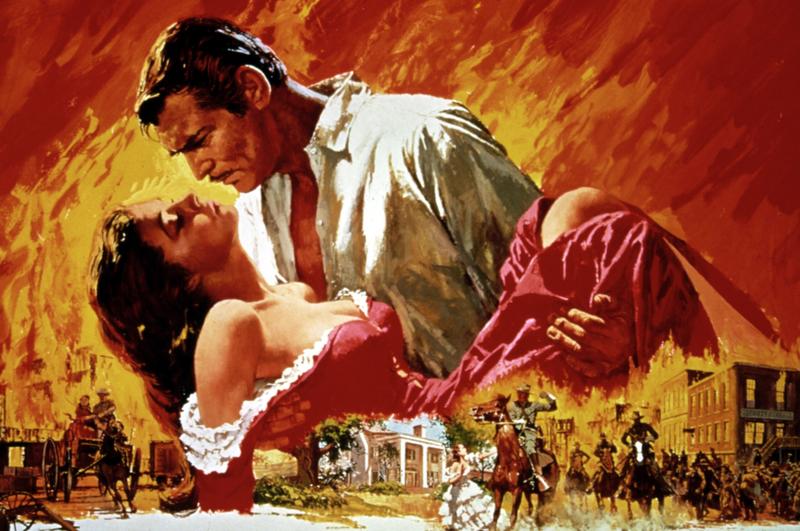
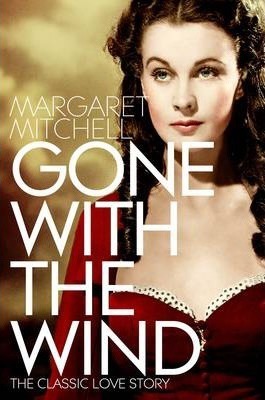
Without a doubt, Gone with the Wind (GWTW) has earned its place firmly within my top five novels of all time. I can see why it took Margaret Mitchell ten years to write it, because it truly is a masterpiece of literature and joins other heavyweights on the roster of Great American Novels. Hopefully after reading this blog, you will want to lose yourself in the US Civil War era and gorge on this story of love, loss, war, survival, coming of age and so much more.
Disclaimer: there was a lot to say so this is an essay-length blog (sorry!)
Structure & Background
GWTW is the crème de la crème of epic novels, structured into five parts spanning the twelve years between 1861 and 1873. In other words, the novel opens on the eve of the American Civil War (1861-1865) and ends during the post-war Reconstruction era (1863-1877). This is a time period that I have studied in some depth and I find it fascinating. In fact, GWTW has become a crucial reference point for any historian researching this era.
The novel follows the life of protagonist Scarlett O’Hara, a typical southern belle, through these turbulent times. The daughter of a rich planter, Scarlett’s home and one of the two main settings of the novel is the family cotton plantation, Tara, located in Clayton County, Georgia. Mitchell evokes a vivid and romantic vision of the Southern plantation lifestyle with her vibrant descriptive passages of Tara. The other key setting, and where Scarlett mostly resides after the war has begun is Atlanta, Georgia, which at that time was the up-and-coming city of the Deep South.
Fundamentally, at the novel’s opening, Scarlett is a rather superficial 16-year-old whose only real concerns are maintaining her eighteen-inch waist, stealing the beaux of her friends for fun, and trying to ensnare the one man she thinks she loves, Ashley Wilkes. Scarlett could not care less when, two weeks into the war, her first husband Charles is killed in battle. This marks a crucial turning point in the novel as it is when Melanie Wilkes, the sister of Charles and wife of Ashley, invites Scarlett to come and stay with her and her Aunt Pittypat in Atlanta.
Though she secretly hates Melanie, Scarlett loves society life in Atlanta. The war only really starts to impress on her mind as something of relevance when the Confederates begin to lose. The Yankee General Sherman’s destructive ‘March to the Sea’ through Georgia was the event that really put the nail in the coffin for the antebellum South; it is from this point onwards that we see Scarlett’s remarkable coming of age story begin as she fights to claw her way out of the poverty she has suddenly been plunged into.
History
Mitchell was born in Atlanta in 1900 and grew up on stories of the Civil War and Reconstruction from relatives that had lived through it all, making her extremely well-disposed to write such a novel. I was very impressed throughout by her level of historical detail and accuracy, all while maintaining a superb level of readability and shrewd commentary as the omniscient narrator.
Mitchell has been criticised for her portrayal of certain groups in GWTW, but in my opinion she doesn’t let anybody off the hook. For example, sexist comments made about the lesser mental capabilities of women often come from the female characters as well as the men, and is simply representative of what Scarlett’s generation would have been brought up to believe. Men don’t get an easy ride either – on the whole they are portrayed as impetuous and overly proud beings who secretly need the quiet sense of a woman to maintain them.
However, it is the portrayal of various racial groups that has come under the most scrutiny since the novel’s publication. Evidently, the issue of slavery was inextricably tied up in the American Civil War. It’s not key to the plot of the novel, but it’s an important backdrop. The motif of the faithful and devoted slave permeates GWTW via house slave characters like Mammy, Pork and Uncle Peter. GWTW is typical of southern plantation fiction in that it is written according to the viewpoint and values of the slaveholder, and so mostly depicts slaves as docile and happy. You may criticise this, but in many ways, it is a realistic depiction of white slaveholder mentality of the time. Furthermore, within the caste system that existed in the South, topped by the white planter class, house slaves were seen as an integral part of the wealthy white family and were almost respected more than groups like the poor whites. Scarlett and other characters frequently use the term ‘darky’ to refer to both familiar and unfamiliar slaves in GWTW. This is undeniably racist, but it often used as a term of endearment, revealing the interestingly paradoxical nature of racial intricacies in the South.
Mitchell stays true to this Southern racial hierarchy in emphasising that poor whites, field slaves and perceived insolent freedmen were together at the very bottom. Any racist comments made about slaves concerning a thieving, childlike or brutish nature are really only applied to this group. As a modern reader it can be quite shocking to read some of the offhand comments made about African-Americans and many have condemned their portrayal as perpetuating racist myths. Whether Mitchell wrote this way because she held those opinions or whether she was simply trying to be true to the time I do not know. Whatever the reason, I think it’s important that she wrote how she did because it means that irrefutable elements of American racial history have not been erased.
Protagonists / Coming of age
Of course, the main element of the story that captivates the reader is the intertwining journeys of Scarlett O’Hara and the dashing rogue Captain Rhett Butler. When they first meet at a society barbecue Scarlett is 16 and Rhett is 28. However, it is not until Scarlett moves to Atlanta that Rhett becomes of any importance to her and even then, she still believes herself in love with Ashley. Both protagonists are refreshingly different in the sense that they are unapologetically selfish, judgemental, arrogant, bitingly sarcastic and indifferent to the Confederate cause. Evidently these are not qualities revered by the South, so it is only with each other that Scarlett and Rhett can truly be themselves. In spite of myself, I liked them both a lot.
When the Civil War hardships begin, Scarlett is as ruthless as ever but this time for her own and her family’s survival, hinting at a change in her moral psyche no matter how much she begrudges herself for it. It is at this stage of the novel that we see Scarlett develop from a superficial teen to a strong, imperturbable woman. The immediate aftermath of the war is a harrowing part of GWTW to read as we see all the familiar characters plunged into uncertainty and desolation in a Georgia that has been decimated by the Union. Scarlett almost buckles under the weight of her newfound responsibilities more than once, but it is her aforementioned qualities that give her the gumption to eventually rise up again.
Even Rhett, who believed the Confederacy was a lost cause from the start, feels morally bound to enlist eight months before the end of the war meaning he is pretty absent from this part of the book.
Love
Saving the best until last – GWTW is known as ‘the classic love story’. It is one of the best and most emotional love stories I have read, but it is in no way classic. It is extremely frustrating as the reader to see the Scarlett and Rhett romance continue to not happen throughout the novel. It is clear that he is in love with her for years – among other things, he continues to put himself at risk coming to see her while working as a blockade runner and quietly making sure she is alright, despite the laddish bravado he keeps up. Scarlett often finds herself thinking about Rhett, but she doesn’t know why – it is at this point that you want to shake her and shout ‘because you love him of course!’
Eventually, Rhett asks her to marry him. Yes, I thought, this is the moment we’ve all been waiting for. Undoubtedly, their marriage is fun for a while. Scarlett finds him an interesting and devilish companion who is as wilful as herself, and he spoils her with whatever she likes. This is a screamingly obvious sign to the reader that he is attempting to make her realise her true feelings by indulging her every whim, but still her lingering teenage fantasy of Ashley clouds her vision.
They even have a child together, Bonnie, and there are so many moments where one of them is on the brink of expressing their true feelings before their Southern pride forces them to keep their mouths shut. It is not until a series of tragedies strike at the end of the novel that Scarlett realises how blind she has been. It is a great moment indeed when, aged 28, she can finally relinquish her fantasy of Ashley, which had been the albatross around her neck since she was 16.
I can say with confidence that I have never finished a book so feverishly as I did GWTW. Scarlett’s run home to tell Rhett how she feels seems to go on forever and I remember literally praying that he would still feel the same, despite all their recent struggles. When he eventually rejects her after a long and emotionally charged conversation, I felt as heart-broken and bereft as Scarlett. This is a tragedy on par with Shakespeare’s star-crossed lovers – if only she had only realised her feelings all those years ago, or if only Rhett’s intensely passionate true love could have held a bit longer before burning out completely, the climax of this 12-year tale would not have been so awfully sad. As the reader who could see it all along and was willing it to happen all throughout, the feeling of frustrated helplessness is almost too much to bear – and I’m not ashamed to say that I cried for a full hour after finishing it, and was thinking about it for much longer still.
Closing thoughts
Mitchell took the title Gone with the Wind from the poem Non Sum Qualis Eram Bonae sub Regno Cynarae by British poet Ernest Dowson.
I have forgot much, Cynara! gone with the wind, Flung roses, roses riotously with the throng, Dancing, to put thy pale, lost lilies out of mind …
Scarlett uses the phrase to wonder if Tara was still standing after Sherman’s March to the Sea, or if it had ‘gone with the wind that had swept through Georgia’. In this way, the title is a metaphor for the demise of the pre-Civil War way of life in the South.
In the poem, Dobson uses the phrase to indicate an erotic loss. He is expressing the regrets of someone who has lost their feelings for their old passion, Cynara, who in this context therefore represents a lost love. Undoubtedly, this is an allusion to Rhett’s love for Scarlett finally exhausting itself; so really Mitchell tells us the ending before we even begin reading. In fact, I was taken aback to discover that she wrote the ending first and then spent all those years writing the novel to build up to this heart-wrenching moment.
There is a slight glimmer of hope at the end in Scarlett vowing to win back Rhett’s heart, as she had won it before and held it for many years and the art of captivating men in general is something she mastered a long time ago. Her steely determination got her everything else she wanted in GWTW, and she believes it can do the same with Rhett.
Based on their enduring relationship, I don’t doubt that Scarlett and Rhett would reunite and finally have their happily ever after. This is what I am choosing to believe happens after the end of the novel, but Mitchell choosing to end it so ambiguously will always play on my mind.
This novel is one of those life-changing reads that will stay with me forever. It is thoroughly enjoyable despite the sadness of the ending and will consistently stir up every emotion within you. It is the sign of a great work of literature to be able to make a reader cry and think about the words long after finishing reading them, while also transporting you so easily back to an era long past with the vibrancy and accuracy of historical detail.
“As they say, history does not repeat itself, but it rhymes”
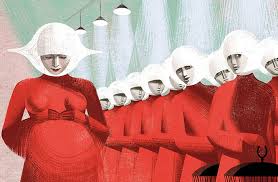
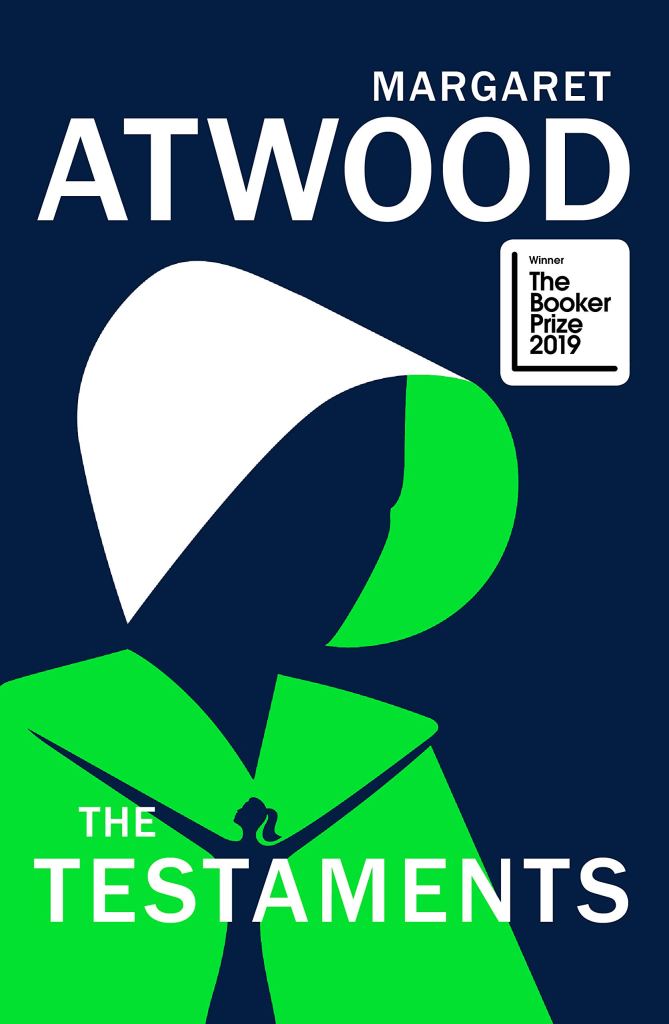
Like many female readers, I was profoundly affected by Margaret Atwood’s seminal work The Handmaid’s Tale (1985). A dystopian novel set in a near-future New England, an uprising sees the imposition of a totalitarian and theocratic state called Gilead, in which any and all women endure some form of extreme subjugation. Anyone who has read The Handmaid’s Tale will know that the protagonist Offred’s fate at the end of the book is ambiguous. Therefore, when I heard that Atwood was writing the next chapter, I was very excited to find out what became of both her and Gilead itself.
However, when I came to read The Testaments, I quickly realised that a straightforward sequel it was not. I admit I was disappointed at first, but after the first chapter I was completely hooked. In fact, Atwood has undoubtedly crafted the most fitting, satisfying and simply sublime second instalment of the saga of Gilead, set 15 years after The Handmaid’s Tale.
The novel sees us alternate between three ‘witness testimonies’ who narrate the novel. We have the infamous Aunt Lydia from the first novel, Agnes, a young woman growing up in a privileged Gilead family, and Daisy, a young woman on the outside looking in from Canada. This certainly provides a range of perspectives, particularly when comparing the two young women with the old and ever-cunning Aunt Lydia. Each is told retrospectively, but as the novel goes on the reader begins to see them intertwining in unexpected and clever ways, for an ending that is as gloriously satisfying as it is compelling.
Although completely different in their outlook, Daisy and Agnes are both recognisable and comparable throughout the novel as idealistic teenage girls who unlike Lydia, do not live for the game of plotting, betrayal and power. From Atwood’s previous novel, we are naturally predisposed to dislike Lydia, so it is certainly interesting, albeit chilling, to learn about her experience of Gilead’s foundation; she tells of her role in creating and leading the order of Aunts with a disturbing vigour.
As with the first novel, the hypocrisy and dog-eat-dog attitude of this supposedly God-fearing state is undeniable. The author uses the character of Agnes extremely effectively to demonstrate this. Agnes, like all the young girls in Gilead, feels real terror and guilt about accidentally enticing any man to succumb to his apparent overwhelming sexual urges simply by existing in a female body. When Dr Grove assaults Agnes in his office, she doesn’t know that a woman cannot and should not be blamed for any such irrepressible urges a man may have that could lead to sexual assault and rape. This is dramatic irony, and as the reader you are shocked that Agnes feels so surely that she is in the wrong.
Indeed, Atwood felt compelled to write a second instalment of the Gilead saga as a reaction to events concerning for women in modern America, namely the misogyny of Trump and the rise of the Christian right wing. It is worrying that in the 35 years since The Handmaid’s Tale was published, any progress made across the pond has somewhat regressed.
Overall though, this novel IS about female solidarity and overcoming estrictions put upon women by the men. I won’t ruin the ending but what I will say is this – you will feel that sweet elation of revenge, karma and vengeance all at once when you come to understand the fall of Gilead. Although by no means an innocent party, only this person could be the one to bring Gilead down in a way to give you such a level of satisfaction and expose it for the sham it really is.














 ImoReads