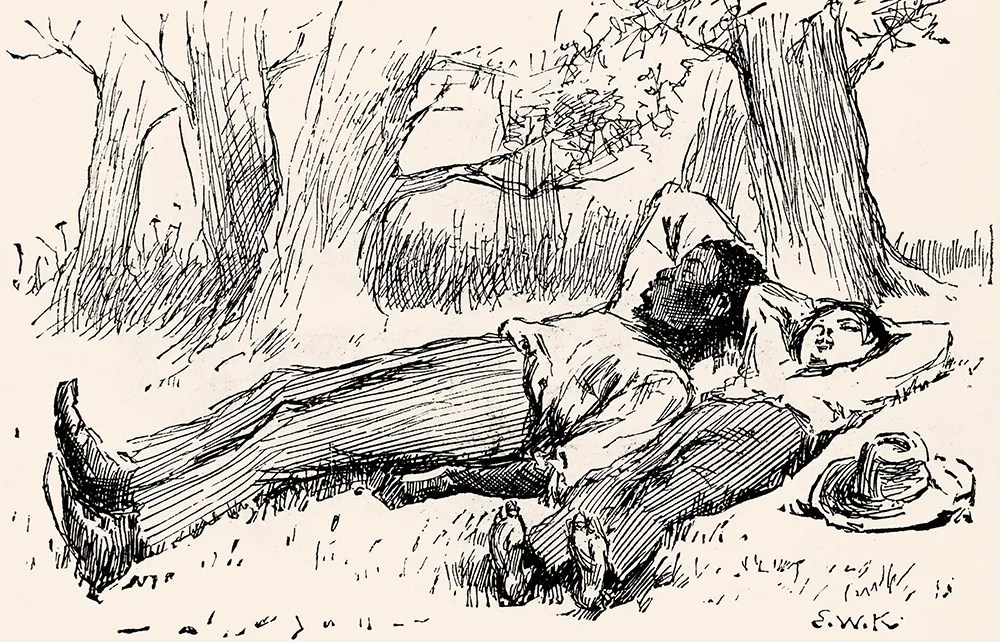
I remember being bought a beautiful edition of The Adventures of Huckleberry Finn for Christmas a few years back, which also featured Twain’s other work, Tom Sawyer. I enjoyed both books and can see why they have status as great American novels, despite the moral quandaries they both raise for the modern reader. The Guardian calls James a ‘gleeful reboot’ of Mark Twain which puts the enslaved character Jim in the spotlight in this ‘horrifying, painful and funny’ novel.
As in Huckleberry Finn, James follows an unlikely pair of runaways, young Huck and the enslaved Jim (here known as James) as they raft up the river in antebellum Mississippi. Huck has fled home to avoid his abusive father while James has run away before he can be sold away from his wife and children.
In James, the entire escapade is narrated by James himself, offering an entirely different viewpoint. In Twain’s novel, there are moments where Huck and Jim are separated and we only hear what happens to Huck. In James, we get to hear Everett’s ruminations on what happens to James during these periods, as well as James’ imagined conversations with Enlightenment thinkers Voltaire and Locke, in which he calmly deconstructs their narrow views on human rights. There are adventures and escapes in full force throughout; we see James sold to a minstrel troupe, temporarily sold to a new slaveowner, caught up in a scam by vagrants posing as a respectable gentlemen and navigating the fallout of a shipwreck.
The most important aspect of Everett’s novel, which makes James a work which employs American history and real-life dystopia simultaneously, is the calculated put on adopted by all the black characters in the novel when it comes to abilities in reading, writing and spoken language. “White folks expect us to sound a certain way and it can only help if we don’t disappoint them… The better they feel, the safer we are”, or “Da mo’ betta dey feels, da mo’ safer we be”, in “the correct incorrect grammar” required by what James calls “situational translations.”
This inversion of Twain’s work is immediately gripping and also allows for a steady build of wry comedy throughout the novel. However, as the reader you also become acutely aware that in James, roleplay goes hand in hand with survival as James and other black characters we meet along the way carefully navigate their precarious situations.
James is a compelling, thought-provoking read which excels at making the reader both uncomfortable and amused as this portrayal of a dark time in America’s history unfolds through Huck and James’ adventures. This novel will keep you thinking long after you’ve finished.
“There was silence. Something real was happening: this was, as it were, her life. If she could keep that in mind she would be able to play it through, do the right thing, whatever that meant.”
Play It As It Lays is my first foray into the writing of famed twentieth-century writer Joan Didion. I agree with its label of an instant classic and can see why it is credited for helping to define modern American fiction.
The relatively short novel follows 31-year-old former model and actress Maria Wyeth. It is made up of Maria’s stream of consciousness after a stint in a psychiatric hospital as well as flashbacks which hint at her impending mental breakdown. We hear about several disturbing occurrences that play a part in Maria’s collapse and indicate why she chooses to withdraw from the world and become entirely numb to her surroundings, even when they are morally ambiguous.
Play It As It Lays is undoubtedly a blistering dissection of American life in the late 1960s. Set in California, the novel captures not only the illusory glamour of life in Hollywood but also the culture at the time – namely, an entire generation feeling the ennui of contemporary society in a swiftly modernising world. The sparse, intense prose further emphasises this, showing not only Maria in crisis but a whole society.
Divorce, illegal abortion, drug and alcohol abuse, infidelity, mistreatment by men and loneliness plague Maria and her friends’ lives. Maria begins compulsively driving into the Mojave Desert for hours at a time as well as suffering from delusions as a result. It is a compelling but disturbing look at the gradual shattering of a young woman who should be in her prime.
I would highly recommend Play It As It Lays – while not particularly joyful, it is a riveting look at the broken façade of the young Hollywood American Dream.
“So go, girl. We should have been one person all along, not two.”
I thoroughly enjoyed Cassandra at the Wedding, getting through it in a couple of days as I was so enthralled by the impossible, brilliant protagonist Cassandra Edwards. Baker has produced what the blurb describes as an ‘entrancing tragicomic novella’ and I can only agree with this conclusion.
Our heroine Cassandra is a graduate student at Berkeley, who is on her way home to her family ranch in the foothills of the Sierras to attend her identical twin Judith’s wedding to a young doctor from Connecticut. However, Cassandra – at once brilliant, frenzied, nerve-wracked and miserable – is determined to do whatever it takes to ruin the wedding and ‘save’ her sister. It is impossible to predict the course of action which Cassandra at the Wedding takes; besides the plan to sabotage, Cassandra must also grapple with her complex feelings towards her family. Namely Judith who Cassandra believes should be her alter-ego, plus her whiskey-soaked father, her dead mother and her kindly grandmother. This book is a story of self-discovery, family relationships and facing your feelings.
There is something about characters named Cassandra; though the Cassandra in this novel is more emotionally unstable, she is as vibrant and interesting to read as the Cassandra of Dodie Smith’s I Capture the Castle. Both are frank, open and highly captivating. Throughout the course of Cassandra at the Wedding, we witness Cassandra variously as heartbroken, pitiful, conniving, unsure, self-aware, absurd, intelligent – yet always impossibly sympathetic and at times highly amusing. Despite the book being published just over 60 years ago, Cassandra is enduringly modern, insightful and relatable to twentysomethings today. Baker clearly has an adept understanding of the complexities of the heart and soul, and I was very sad to say goodbye to Cassandra as I reluctantly finished the novel.
An enduring theme of Cassandra at the Wedding is sisterhood, which is particularly strong in this instance because Cassandra and Judith are identical twins. For Cassandra, it is difficult to accept the fact that Judith decided to go to a different college and there met a man she wants to marry, who will thus become extremely important in her life. It is quite clear that Cassandra is in some ways enveloped in a childlike fantasy of the sisters always remaining inseparable and Judith remaining under her influence; this indicates why she feels compelled to sabotage the wedding and ‘save’ her sister from a situation that Cassandra cannot believe she would want to be in. Yet at the same time, Cassandra is desperate to establish herself as an independent person from her sister, creating an interesting paradox. It is significant that for a small section of the novel, Baker switches the narrator from Cassandra to Judith so we hear her perspective first-hand, understanding them both as individuals but also witnessing the unknowable bond shared between twins.
I would highly recommend Cassandra at the Wedding for anyone seeking a read full of freshness, emotion, plot twists and vigor. For me, it will become one of those books that I wish I could read again for the first time!
“A kid is a terrible thing to be, in charge of nothing.”
Demon Copperhead
I had high hopes for Demon Copperhead based on how much I enjoyed Kingsolver’s The Poisonwood Bible, and it did not disappoint. The novel is a re-telling of Dickens’ quasi-autobiographical Bildungsroman David Copperfield; it’s a brave thing for Kingsolver to transpose such a popular, quintessentially English novel to her home turf of Appalachia in the States but she does it extremely well in this powerful, considered novel.
The novel’s hero Damon Fields, known as Demon and nicknamed Copperhead for his ginger hair, is born to a drug-using teenage single mother in a trailer in Lee County, Virginia. Even in such a deprived neighbourhood, Demon and his mother are particularly destitute. The kind-hearted Peggot family act as Demon’s secondary caregivers as his mother is in and out of rehab or shacking up with merciless boyfriends, but there is only so much outsiders can do for a child in such circumstances. Those familiar with the plot of David Copperfield may guess what happens next, but we follow Demon to young adulthood through the apathy and incompetence of the foster care system, the good and bad influences of friends he makes along the way, the struggle against the opioid crisis sweeping America and his ultimate battle to transcend the failure of those around him.
As a reader, you can’t help but feel shocked at what Demon and swathes of children like him must deal with from such a young age. He is born into a dead-end situation which reeks of the failed American Dream – for Demon, simply surviving against the odds is success when you’re born into a life without choices. The themes of idealism and social justice chime with Dickens’ own impassioned social criticism, and while what we deem as immoral has shifted greatly since the mid-nineteenth century, the earnest critique of institutional poverty and its detrimental impact on children is as relevant as ever. For me, Demon Copperhead also bears striking similarities to Donna Tartt’s The Goldfinch, where a young boy also falls victim to the failings of modern America – drugs, poverty, apathy – after the loss of a parent, and must struggle on to adulthood alone.
Kingsolver has created a masterful retelling of a classic novel which is both faithful to the source material and tells its own story, making the reader question whether anything has really changed for the better in the past 150 years for those less fortunate.
“The seas are rising, whatever you believe. Soon we will all be wet together, and together we will gasp for air.…”
My Monticello is Johnson’s debut novel, and it is a truly American tragedy. It explores racist violence in the nation and how its controversial history is still impacting ideologies and attitudes in the modern day.
The novel covers a period of only nineteen days, though things escalate quickly. Power outages and storms are battering America when the neighbourhood of First Street in Charlottesville, Virginia is attacked by white supremacists. A motley crew of residents manage to flee the scene by commandeering an empty city bus and seek refuge at Monticello, the nearby historic plantation-home of Thomas Jefferson. Narrated by student Da’Naisha Love, a young black descendant of Jefferson and Sally Hemings, one of his slaves, she and the other escapees have a complex relationship with the plantation. The group must shelter within its walls, forage the grounds and think about their next move, as the terror from the town creeps ever closer. My Monticello is a stark criticism of past and present racism, and its characters tell a story of courage, reclamation, resistance, community and hope.
The chilling aspect of My Monticello is that you could relate the events of the story to any period in modern American history, indicating that race relations have not much improved since the era of slavery. Indeed, Charlottesville did face a racist attack in 2017 when a white supremacist drove headlong into a crowd peacefully protesting against a Unite the Right rally in the city, killing one and injuring many others. My Monticello spirals out from here, set in the near future when the impact of climate change is being keenly felt, with the resulting blackouts and floods providing opportunities for white supremacist groups to once again lay siege to Charlottesville’s black neighbourhoods with little intervention from police. It is a worrying look into the future for America as racial tensions continue to escalate and warnings about irrevocable damage to the planet become more urgent. There is a terrible irony about Da’Naisha and the others, including her elderly grandmother, having to seek refuge in the Monticello mansion house – they are driven up there by the cold and looming threat of the attacks after initially remaining down in the outbuildings. It is a macabre homecoming for these descendants of Jefferson and only adds to the American nightmare they are suffering.
Johnson’s narrative style for Da’Naisha is precise and remains graceful despite the fearful situation of the group. Short sentences, brief and incomplete dialogue exchanges and the air of concern for the future among the refugees adds to the urgency of their situation. Readers will be impressed by the group’s pragmatism and resistance despite their being heavily outnumbered and out-resourced by the encroaching attackers, mirroring historic resistance from black slaves against their white owners. And yet, the reader is also horrified by the hopelessness of their situation in a country that is seemingly unravelling.
My Monticello is a severely critical take on racism past and present, highlighting many of America’s issues in only 178 pages. It is a unique and thought-provoking debut novel that tackles uncomfortable subject matter in an imaginative and memorable way.
“Caring too much for objects can destroy you. Only—if you care for a thing enough, it takes on a life of its own, doesn’t it? And isn’t the whole point of things—beautiful things—that they connect you to some larger beauty?”
I have now finished Donna Tartt’s trifecta of outstanding novels. For me, none can beat The Secret History, but The Goldfinch is still worthy of its reputation as an outstanding novel and a modern epic. It is an emotional and melancholy look into just how murky life can become after experiencing tragedy, trauma and neglect.
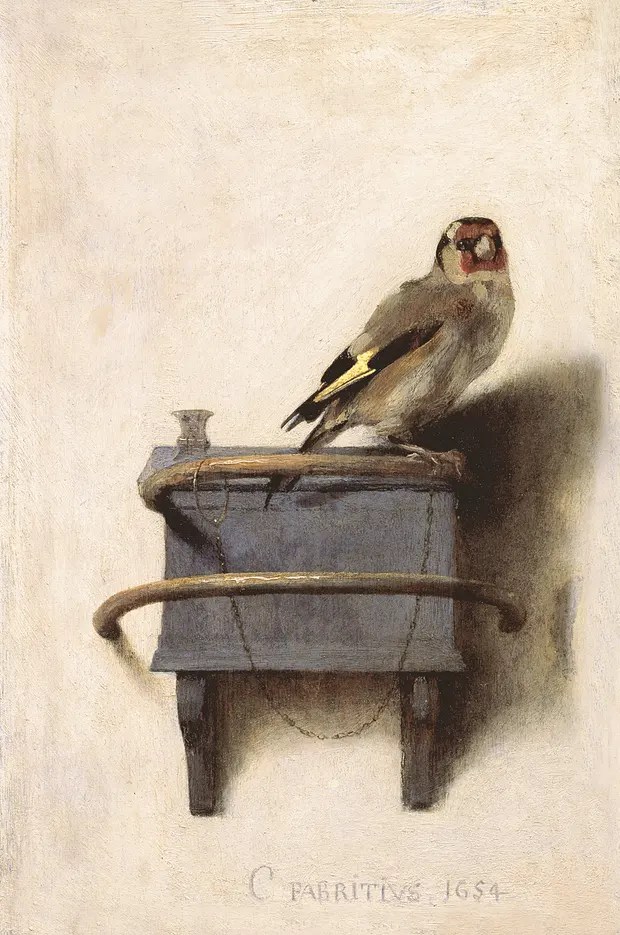
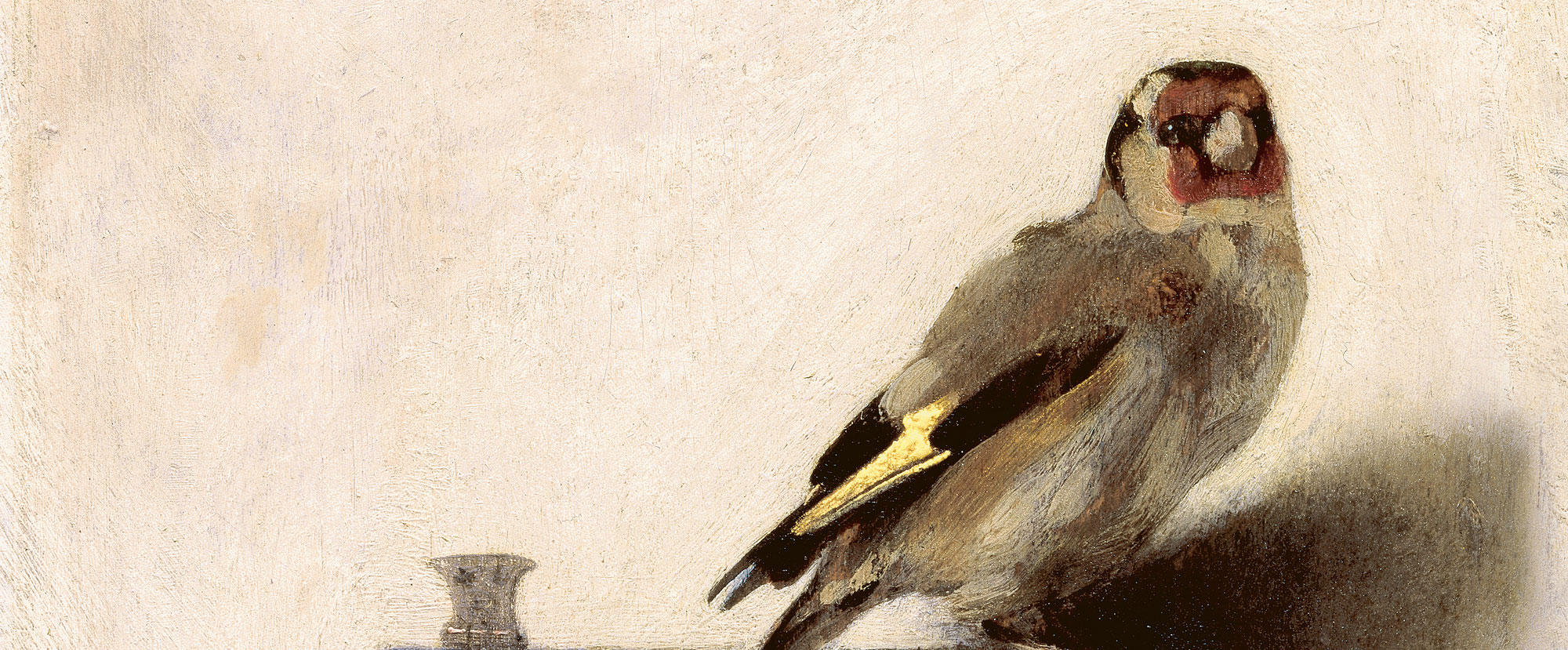
The Goldfinch opens in New York City on thirteen-year-old Theodore Decker, the son of a devoted mother and an absent father. One unfortunate day, Theo’s life is ripped apart when his mother is killed in a terrorist explosion while they are visiting Metropolitan Museum of Art together. Utterly alone and longing for his mother, he is taken in by the family of a wealthy friend, before being shipped off to Las Vegas to live with his father and his girlfriend. Traumatised by the loss of his mother, he holds dear something that reminds him of her, their favourite painting from the Met, The Goldfinch. Known only to Theo is that he has the original 1654 painting by Dutch artist Fabritius in his possession, which he took from the gallery in the wake of the explosion. Faced with neglect and indifference in Las Vegas, Theo finds solace in his friend Boris and in their descent into drugs and alcohol. Ultimately, in adulthood the painting draws him back to New York to revive old acquaintances and slowly drives him into the criminal underworld.
For me, one of the most poignant sections of The Goldfinch is Theo’s time as a young teenager in a Las Vegas suburb. Comprising of soulless new-build homes cut off from the city, most of which are empty or crumbling and some of which have even reclaimed by the Nevada desert, it feels like a metaphor for the failed American Dream. This becomes even more evident when we witness how neither Theo nor Boris have anyone in the world who cares about them, despite the fact that they both live with a parent. They often go hungry because nobody thinks to feed them and they resort to stealing. Theo’s situation at home improves only when his father’s gambling habits are going well. Both affected by trauma and with nothing to do and nobody to wonder about them, Theo and Boris are in and out of school, and spend their evenings getting drunk and high on whatever drug they can find. It is quite shocking to read about such young teenagers drinking until they’re sick or taking acid with no parental awareness or care for what they’re doing. Theo narrates this portion of his life in such a lucid and resigned way that it feels like he has accepted the fact that one tragic incident knocked him into a different life, one that is consumed by loneliness, substance abuse and monotony.
Like Tartt’s other two novels, the research and attention to detail are remarkable. The Goldfinch allows a rare glimpse into the world of art and antiques, and the murky underworld that accompanies them. As an adult Theo has learnt the antiques trade, including how to restore pieces falling to ruin. He works in New York with Hobie, the business partner of a man who spent his last minutes with Theo in the aftermath of the explosion. Every choice and every relationship Theo has comes back to the incident and the taking of the Goldfinch painting. Twists and turns, his continued reliance on drugs and his guardianship of the painting eventually brings him back in touch with old friends from the city and Boris, and reluctantly pulls him into the greedy world of criminal art fraud and theft which leads to a page-turning bid for escape. The Goldfinch has many elements of a Shakespearean tragedy set against a modern and truly American backdrop.
Overall, The Goldfinch is an extraordinary novel that opens up a world that most of us know little about. Through watching Theo’s life and how young he experiences darker elements of adulthood, it is hard not to think that he is just a boy trying to muddle through after the devastating loss of his mother.
“She had everything she wanted, but she still felt, at times, that there were other things she might want if she knew about them.”
I have already read two of Edith Wharton’s most famed novels, The Age of Innocence (1920) and The House of Mirth (1905), so I had high hopes for The Custom of the Country. Like many of Wharton’s works the subject is marriage, meaning that the subtext is divorce. The Custom of the Country thrusts us into pre-World War One New York, focusing on an aristocratic society struggling to maintain its old word social conventions in the face of modernity and new ideas.
The novel takes place over several years of the early twentieth century and centres on the beautiful but amoral young woman Undine Spragg. Undine and her parents have just moved from the Mid-West town of Apex to New York City, and her goal is to marry a rich man admired in society to kickstart her social career. Though divorce is possible at this time, it is heavily frowned upon by the upper echelons of society and yet, by the end of The Custom of the Country Undine has succeeded in dissolving three marriages in her pursuit of social “triumph” and is starting to become dissatisfied with her fourth. Undine is single-minded in her goal and is indifferent to who she may hurt along the way. Her various exploits take us from New York to France and back, providing an eye-opening look into society, respectability and the female struggle in this era.
Many have drawn comparisons between Undine Spragg and Becky Sharp, the central character of Thackeray’s Vanity Fair (1848). Like Undine, Becky comes from outside society but is determined to marry her way in; she is ruthless, cold and uses men to get to the top, and like Undine, she reluctantly bears a son who she would go on to neglect. However, unlike in Vanity Fair, there are no moralising elements in The Custom of the Country. No normative friends, no narratorial passages condemning the corruption of the anti-heroine – the literary tradition is closer to that of Trollope in The Way We Live Now (1875), which he wrote as a reproach of the financial scandals of the 1870s and how they revealed the levels of dishonesty and corruption present in respectable society.
Undine’s first ‘high society’ marriage is to Ralph Marvell, who comes from an Old New York Society aristocratic family. For Undine, marriage is not about getting a husband; it is instead an entry into the world of money, society and position, which to her are everything. Frankly, who her husband is does not matter too much to Undine, as long as he can fund her lifestyle and is respectable enough to allow her a life of amusement in the right social circle. Undine uses her dazzling beauty to manipulate men into doing what she wants, and the artistic, intelligent Ralph finds out too late that Undine has no interest in intellectual or creative pursuits and that she is mercenary and extravagant. However, Wharton critiques Ralph as much as she does Undine – he sees her as a blank page on which he will create his ideal wife who will fit right in to his fantasy life. As with her second husband, the French aristocrat Raymond de Chelles, once Ralph pierces the veil of her beautiful façade that he himself has imagined based on her striking good looks, he realises in a moment as comic as it is tragic, that there is not much substance to Undine at all.
Though Undine is not a likeable character, we can draw some comparisons between her and Wharton. When The Custom of the Country was published in 1913 Wharton was newly divorced after a long and unhappy marriage and she had permanently settled in France, where she would remain until her death. Undine is completely enamoured with Paris and it is there she sets her sights on the aristocrat de Chelles, and when we hear of her string of divorces and the fact that she somehow continues to be accepted in society, there is undoubtedly a hint of admiration in the narrative voice.
It is also interesting to note the cultural differences between the United States and France when Undine marries de Chelles. In some ways they are portrayed as very positive; speaking of America, a character named Charles Bowen comments that society marriages are unhappy because men take little to no interest in what their wives have to say, and do not let them in to the world of business. Instead, they furnish their wives with material things which they in turn pretend constitute a happy marriage to their fellow female friends. In France, women are deemed to have much more intellectual independence, and men respect and are interested in women with opinions, knowledge and academic and cultural interests, suggesting that marriage is more of a partnership. It is this fundamental difference that is ultimately the last straw in the internal disintegration of Undine’s marriage to de Chelles – once he realises there is no intellectuality beneath her ‘beautiful façade’, he becomes indifferent to her. However, this intellectual independence does not allow French women to escape the everyday tedium that comes with marriage – Undine’s expectations of a dazzling life in Paris with Raymond come crashing down when she is forced to remain at the de Chelles’ country estate for ten months of the year, fulfilling her wifely duties and always having to submit to the will and age-old traditions of the family. It is this portion of the book which displays French social customs as even more stifling than those of New York, and it is perhaps the only part in which we feel Undine has some justification for wanting out of the marriage.
Interestingly, Undine’s first and last marriages are to fellow Apex alumni Elmer Moffatt. The first time was a youthful elopement hastily terminated by Undine’s parents before their move to New York, and the second time was when Moffatt had made it big in business in New York and Undine had divorced de Chelles. Moffatt is of the same background as Undine and is abundantly wealthy, so provides her with everything she had ever wanted throughout the entirety of the novel, yet even then her inexhaustible selfishness sees her wanting more still at the close of the novel.
The Custom of the Country is a sharp and fascinating commentary on early twentieth century society, and expertly demonstrates how veils of respectability hide a world of self-centred ambition and a mutual disconnection between men and women. Marriage is portrayed as universally unsatisfying, while the triumph of divorce as an escape is only ephemeral, as it leads only to the next disappointing marriage. Though it may seem too cynical, I would definitely recommend this book because it forces you to realise the cutthroat nature of people trying to make it in the world through a string of scandals.
“I could recognize him by touch alone, by smell; I would know him blind, by the way his breaths came and his feet struck the earth. I would know him in death, at the end of the world.”
I have wanted to read The Song of Achilles ever since being blown away by another of Miller’s novels, Circe. Much like how Circe is an imaginative homage to the goddess encountered by Odysseus in Homer’s The Odyssey, The Song of Achilles is an original take on The Iliad, one of the best known stories in the West. The heroes and villains of the Trojan War are brought to life like never before in this story of love, friendship, power and violence.
The Song of Achilles is narrated by Patroclus, an awkward young prince living in the age of Greek heroes. Exiled to the court of King Peleus on the small island of Pthia, he strikes up an unlikely friendship with Peleus’ son, the golden boy Achilles. As the two boys become young men, their bond develops into something deeper, despite the displeasure of Achilles’ mother, the sea goddess Thetis. Over the years, their companionship grows stronger and the two boys are still enjoying their carefree youth when Helen of Sparta gets kidnapped. This turn of events means that Achilles must go to fight a war in distant Troy to fulfil his destiny. Torn between love and fear for Achilles, Patroclus goes with him.
The relationship between Achilles and Patroclus is highly significant in all stories relating to the Trojan War. In The Iliad Homer describes their relationship as deep and meaningful but never says explicitly that it is a sexual relationship. However, they were represented as lovers in Greek literature during the archaic and classical periods and it has been debated and contested ever since. Strong bonds between men was a custom in Ancient Greece, and this relationship could be intellectual, political and sometimes sexual. Miller has chosen to make their relationship deep and meaningful on many levels including sexual, and as such has created a moving, heartbreaking story.
As Patroclus narrates the novel, we are aware of his awe and admiration for the beautiful Achilles from the moment he arrives in Pthia. After several stolen glances and chance encounters, the pair finally speak, and a tentative friendship begins. In fact, they are good friends for a long time before anything else develops between them, though it’s clear they both desire each other. Miller’s smooth prose conveys their relationship as sexy and intense as well as thoughtful and sensitive, making the reader extremely emotionally invested in their bond, particularly as the danger of war looms.
Miller spent ten years researching and writing this book but has succeeded in crafting a seemingly effortless narrative that takes all the key elements of The Iliad and other stories to create a highly affecting version of Achilles. Where once stood the callous, cold superhero is now a man with depth who can be kind as well as godlike. He is not just a hero but a lover, a friend, a son, a father, a husband and most importantly, a normal human being. This makes the reader all the more emotionally engaged in the relationship between Achilles and Patroclus, because it is clear they are the only people for each other.
The Song of Achilles is an epic novel, with several years passing before the ten year long Trojan War. I enjoy epic novels because you really become invested in the characters, their development and their world. A key moment in the book is when the pair realise that Achilles must go to Troy because it is decreed in a prophecy with a heartbreaking end. As a reader who has been following their story since boyhood it is natural to be as sad and fearful as Patroclus about this. Though for years they agree to fight the battles but purposefully avoid the terms of the prophecy, in the end it is their love for each other that eventually sees it fulfilled with all the tragedy as befits an Ancient Greek tale.
This book is a vividly atmospheric, enthralling and emotional read which sees the deepest human connections challenged against a backdrop of violence, politics and power. It is a joy to read this depiction of Achilles and Patroclus’ relationship – it is certainly a poignant story about love and friendship. I would highly recommend this book to anyone and everyone!
“I want to bring them down,—down, down, down! I want to turn the tables upon them—I want to mortify them as they mortified me. They took me up into a high place and made me stand there for all the world to see me, and then they stole behind me and pushed me into this bottomless pit, where I lie howling and gnashing my teeth! I made a fool of myself before all their friends; but I shall make something worse of them.”
The American is my third foray into James’ literary repertoire (after The Bostonians & What Maisie Knew) and once again I was not disappointed. However, this novel is different from the previous two that I’ve read, given that as well as the tragicomedy typical of James, there are also overwhelming elements of a crime thriller. I found The American to be a gripping read that at once reveres and admonishes the unbreakable customs of European polite society, from the perspective of an American outsider.
James’ protagonist is wealthy American businessman Christopher Newman. Having made his millions, Newman descends on Europe seeking a beautiful wife to complete his fortune. While staying in Paris, he meets the arrestingly beautiful Claire de Cintré of the ancient House of Bellegarde. Newman is determined to make Claire his wife and while Claire likes him back, she is always cautious due to her family’s haughty expectations. The House of Bellegarde is a longstanding unbroken aristocratic French bloodline; as a result of the family’s pride in keeping their ancestry ‘pure’, they are running out of money. This is perhaps the only reason Claire’s mother, the intimidating Old Marquise, and Claire’s eldest brother, Urbain, even consider Newman’s courtship of Claire, given his immense riches. The only family member truly allied with Newman is Claire’s energetic younger brother Valentin, who becomes a firm friend of the American. James uses this dilemma to tell a tale of clashes between the old and new world, resulting in thwarted desire, comedy, tragedy, romance and crime.
The tensions that arise from the collision of the old and new world in the novel are worthy of further discussion. In the late 1800s, American society was less constrained by stiff social customs than its European counterparts. For example, it celebrated people from any background, such as Newman, going out and making their own fortune, both socially and financially, from commercial enterprise. In fact, many upper-class Americans at this time were self-made. Newman, and others like him, were ‘nouveau riche’. There was also such a thing as the ‘American Gentry’, quasi-aristocratic families whose wealth stretched back to the British colonial period, but I’m not sure that someone from this background would even be good enough for the Bellegardes.
Newman’s bid for Claire’s hand is met with an extremely icy reaction from her mother and eldest brother, though they let him visit Claire frequently for six months. Evidently, they are trying to see if they can swallow their pride and stomach Newman’s American manners, outlook and background for the sake of the boost of wealth that he would bring them. In his innocence to the deeply ingrained prejudices and traditions of the Bellegardes, Newman believes his visits and introductions to their friends are all working in his favour, meaning it is an even bigger blow when they simply say, after all that time, ‘no’. It is interesting to observe the struggle between Newman and the Old Marquise; their views of the world are completely incongruous and represent the wider tensions between old and new money in the West. It is at this point sadly that Claire rejects Newman’s proposal after being forced to do so by her mother, even though she loves him and would like to escape with him to America. This leads the devastated Newman to sniff around for the leverage the Bellegardes have over Claire, resulting in a shockingly criminal discovery.
As an American who lived much of his adult life in Europe, I wonder how many comparisons James drew between himself and Newman. In his early novels such as The American and The Portrait of a Lady (1881), his aim was to analyse the impact of older European civilisations on American life. James himself had a distinct affiliation with Great Britain rather than France, living in London for twenty years before moving to Rye, East Sussex. I have seen his house in De Vere Gardens many times while strolling through Kensington. Some people find James’ writing style unwieldy, but I rather like it; he has managed to use consistent, extremely long sentences to excellent narrative effect in each novel of his that I’ve read so far. While reading The American, I was nothing short of hooked, firstly by the colourful nature of the characters and secondly by the climactic finale, in which James uses the tensions built up throughout the novel to culminate in a melodramatic and unexpected end.
Generally, it is James’ later novels that are considered his greatest, but I think a case should be made for The American to join this roster. If you’re after an eye-opening insight into the social norms of late nineteenth-century Europe and America, with a good dose of drama thrown in, then please step this way.
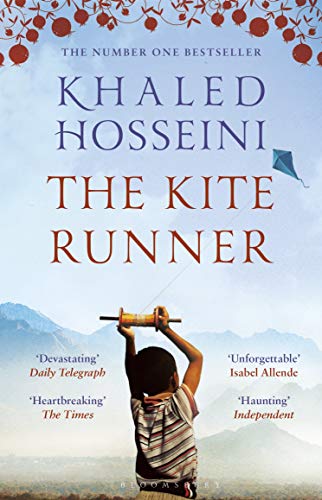
I am so glad that this blog has given me an excuse to re-read The Kite Runner, which is in my opinion one of the best books written so far in the 21st century. Its exploration of the strength and boundaries of friendship and familial ties against a backdrop of war, loss and regret makes for an extremely captivating and moving read.
The novel begins in vibrant and thriving 1970s Afghanistan, and is told from the perspective of Amir, then a young boy. He is the son of a vivacious, well-liked and well-off merchant and they live together in the wealthy Kabul district of Wazir Akbar Khan. He and his best friend Hassan, the son of his father’s servant, do everything together and want more than anything to win the local kite-fighting tournament. However, neither can predict the terrible fate that befalls Hassan that afternoon, completely shattering their lives. The subsequent invasion of Afghanistan by Russia means that Amir and his father are forced to flee to America, leaving Hassan and his father Ali behind. After 26 years of trying to live with what he had done to his best friend the day of the tournament, an unforeseeable turn of events forces Amir to return to Afghanistan under Taliban rule to find the one thing that he could not give himself in America: redemption.
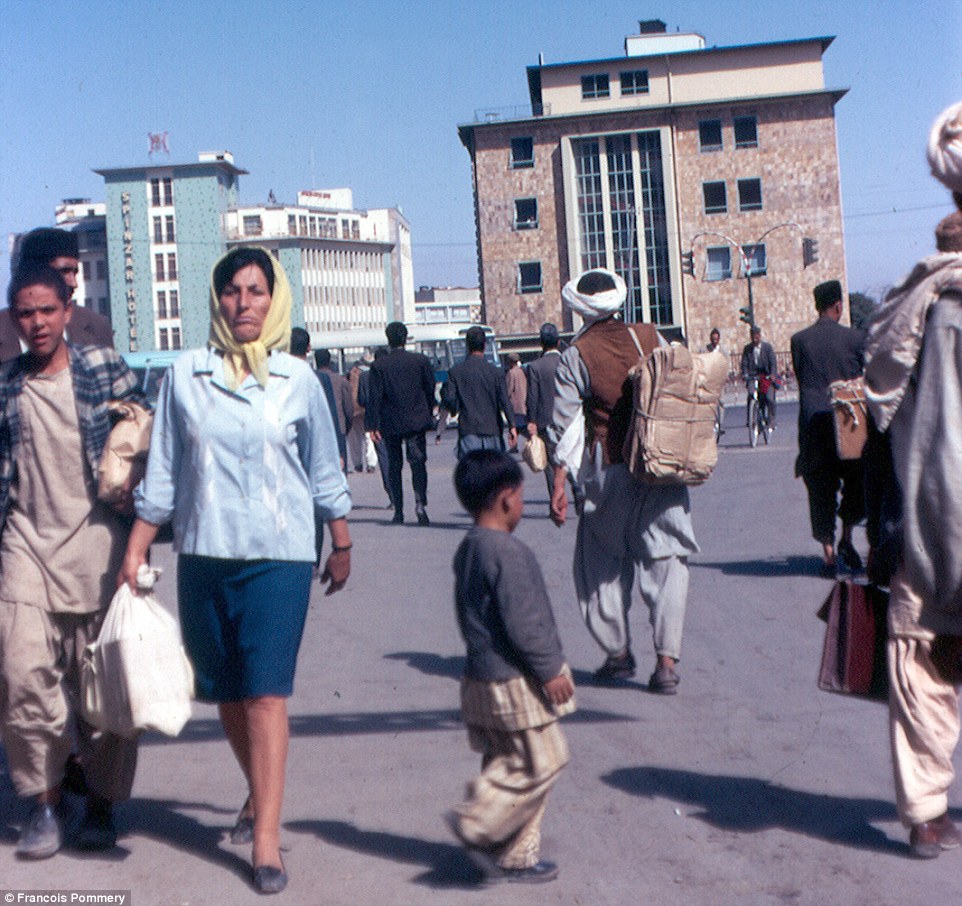
One great thing about The Kite Runner is that it teaches readers about the recent history of Afghanistan. My knowledge of the Soviet-Afghan War was hazy at best, but this book really lays bare the havoc it wreaked on the country, and how the desolation it caused paved the way for civil war and the rise of the Taliban. Sadly, because of all this turmoil that Afghanistan has suffered in recent decades, I had no idea how stable and prosperous the country had been beforehand. We learn through Amir’s upbringing that western influences were welcomed in Afghanistan and existed peacefully alongside the moderate Islamic way of life there. We learn about Afghan cultural traditions, architecture and cuisine, much of which has sadly been destroyed due to constant warfare and extremist regimes. I think it’s a shame that before reading The Kite Runner I only knew of Afghanistan as a ravaged victim of various world powers’ Cold War ambitions or as a nation living in fear of the Taliban. I hope that because this book has been so successful since its release in 2003, that many other people’s eyes have been opened to the worthy history of Afghanistan.
The central focus of The Kite Runner is the friendship between Amir and Hassan. Though Amir and Hassan have known each other since birth and have a deep yet also ordinary friendship, there is always a slight distance between them. This is because Amir is Pashtun, the majority ethnic group in Afghanistan, while Hassan and his father are Hazaras, a minority ethnic group native to the Hazarajat region of the country. Hazaras are considered one of the most oppressed groups in the world, and they have faced strong persecution in Afghanistan for centuries. Hosseini subtly emphasises the differences between the two boys all the time, building a presence of mutually unspoken but definitely mutually recognised tension between them. For example, Hassan is technically Amir’s servant and he and his father live in a shack outside Amir’s large residence. Amir goes to school and has prospects, while Hassan is illiterate and is destined to work in servile roles all his life.
Amir sometimes feels resentment towards Hassan because it seems that his own father values Hassan as much as, if not more than him, and this leads Amir to sometimes think spiteful thoughts or take advantage of Hassan’s loyalty and good natured-ness. And indeed, it is this divide that ensures Hassan will ‘run’ Amir’s kite for him – “for you, a thousand times over” – after Amir wins the kite-fighting tournament; the moment when Amir, out looking for Hassan who has not returned with the kite, chooses to stand by and watch his friend go through something horrifyingly traumatic because he is too gutless to stand up for him. The fallout from this event takes the reader on a long journey with Amir as he seeks the meaning of friendship and redemption for his actions.
Hosseini is a genius storyteller, filling The Kite Runner with raw emotion, a storyline that captivates across its 26-year timespan, and the most original plot twists that will leave you gawping with astonishment while also wondering how you didn’t see them coming. It’s no surprise that I read it in three days – it’s completely unputdownable. His use of backshadowing, symbolism, ‘coincidence’ and suspense are extremely shrewd and add so many dimensions to this exceptional story. Hosseini, who himself is Afghan-American, always features Afghan characters in his novels but in this case there are some outright similarities between himself and Amir. Hosseini also grew up in the Wazir Akbar Khan district of Kabul, had to seek asylum in America when the war began, and like Amir, grew up to be a writer. It is therefore interesting to wonder at what other parallels Hosseini sees between himself and his character – perhaps Amir’s journey of self-scrutiny was as cathartic for Hosseini as it was for his fictional creation.
I have purposefully not given away any spoilers so that anyone considering reading The Kite Runner can enjoy its twists and turns to the fullest and be as gripped as I was. It’s a truly wonderful book that will make you feel every emotion on the spectrum.



































 ImoReads