Blog Nº 16
“It does not do to leave a live dragon out of your calculations, if you live near him”
Dedicated to: OJP
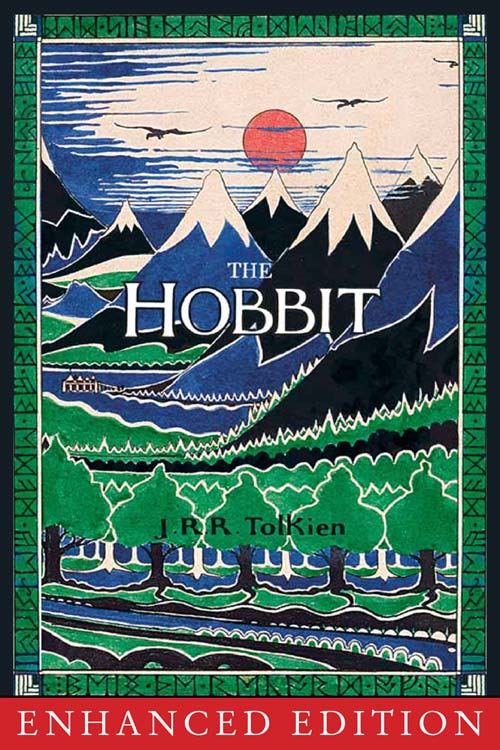
The Hobbit is a great example of a novel that caught me off guard in how much I actually really enjoyed it. Alas, I admit that before I was bought a beautiful set of all the novels in the Middle-earth saga and was convinced to read them, I had never felt compelled to enter into Tolkien’s world of magic and myth. I’m embarrassed to say that I’d pretty much written off the Lord of the Rings series as being ‘for boys’, but how wrong I was. In fact, The Hobbit is one of the best adventure novels I have read; Tolkien’s mastery of plot, language, humour and imagination is superb, and somehow it retains an element of something quintessentially English despite its setting in a fabled, faraway land.

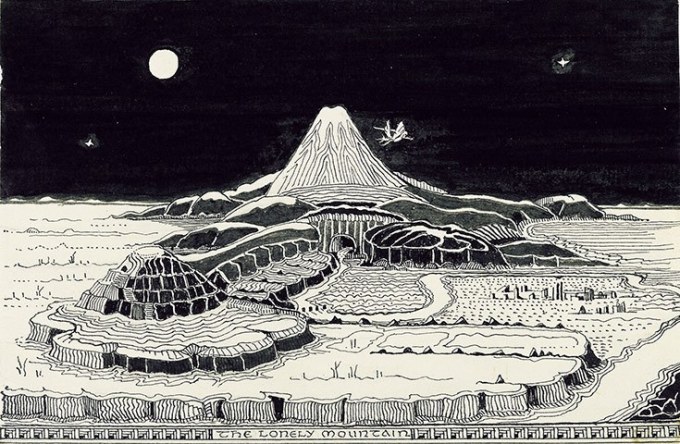
Although a relatively short novel, The Hobbit is rich in plot and detail. It tells the tale of an unassuming and unambitious hobbit named Bilbo Baggins, resident of Bag End in the Shire, who one day receives a visit from the wizard Gandalf the Grey and a company of dwarves led by Thorin Oakenshield. Quite suddenly, Bilbo is whisked away on an adventure to reach the faraway Lonely Mountain where resides the terrible dragon, Smaug the Magnificent, whose treasure they plan to raid in order to reclaim the dwarves’ homeland. Many trials and tribulations befall the company en route before the showdown with the dragon, and though at first Bilbo feels completely out of his depth, he soon surprises everyone (including himself) with his bravery, resourcefulness and strength in the face of peril.

I must dedicate a section purely to language here. Tolkien, aside from his world-famed career as an author, was recognised as one of the world’s leading philologists (philology: the branch of knowledge that deals with the structure, historical development, and relationships of a language or languages). His expertise comes through continually in The Hobbit, most obviously in Middle-earth character and place names, and his own creation of viable languages. Across all the Lord of the Rings books there are fifteen invented languages present, the most developed of which are the Elvish tongues. Amazingly, Tolkien started working on these while he was at school and continued refining their grammar and fictional history until his death in 1973.
However, on a more familiar level, I was captivated by Tolkien’s use of English. There is an urgency to his language that really allows the reader to feel the tension of various perilous situations along with the characters, whether they be trying to trick trolls or escape from the clutches of giant spiders in Mirkwood forest. The descriptive passages are phenomenal – particularly of the Elf stronghold Rivendell and of the Lonely Mountain itself – as a reader you become lost in these vibrantly imagined landscapes. And yet, not so lost that you miss the elements of quintessential ‘Englishness’ that permeate The Hobbit. I confess that I am always charmed by 1930s English diction so, even though the story is timeless, I can still appreciate the novel as completely of its era thanks to the diction (a particular highlight – Bilbo’s rather eloquent chat with Smaug the Magnificent amongst the treasure troves).
Amidst all the Middle-earth gallivanting, we should not omit the quiet country life of the Shire (a name which itself evokes a rural English county). Its humble, jolly folk who love a drink on occasion and its pleasant, familiar rural surroundings and lifestyle are not so far removed from the idealised English country life that has been the subject of many a non-fantasy novel across the centuries. I think Tolkien has imagined the Shire this way to help us bond with Bilbo, meaning we can be just amazed as him upon encountering all the elements of magic later on.
Tolkien initially wrote The Hobbit as a story for his children and despite its maturity (as all great children’s books possessed in the 19th& 20thcenturies), there are certainly some ‘children’s book’ elements that come through. Apart from the magical elements like dragons, elves, wizards, goblins and orcs facing off in a mythical land – which would likely have the earnest attention of most children – we must acknowledge the notion of ‘hobbits’ themselves. Kid-sized, friendly, human-esque creatures who love fireworks, food and adventures would certainly be relatable to children – this familiarity with hobbits would surely encourage children to imagine themselves in Bilbo’s shoes throughout the quest, making it even more exciting. I’m 23 and was fully enraptured!

I’m so glad I have finally delved into Middle-earth to discover the delights of The Hobbit – from now on I’ll be making a more conscientious effort not to judge books by their covers so to speak. Next, The Fellowship of the Ring…
Happy reading,
Imo x
 ImoReads
4 replies on “ImoReads… ‘The Hobbit’ (1937) by J.R.R Tolkien”
I tried reading The Hobbit around age 12 and admit that I didn’t really get on with it! I think it was probably just too “fantasy” for me. This review (almost) makes me wish I had persevered 🙂
LikeLiked by 1 person
I think I would’ve been the same at 12 ! 🙂 xx
LikeLiked by 1 person
Very astute and engaging review! A good review is one which makes the person reading it want to go off in a fit if enthusiasm to investigate the book discussed. You succeed completely here.
LikeLiked by 1 person
Thanks !! 🙂 maybe you will re read it now ! 🙂 xx
LikeLike